

Torticollis in Babies: A Gentle Parent's Guide to Head Tilt and Flat Head
Dr. Grayson Fox, DC
A warm, reassuring guide for parents who notice a head tilt, a favored side, or a flat spot, and want to understand torticollis in babies and gentle next steps.
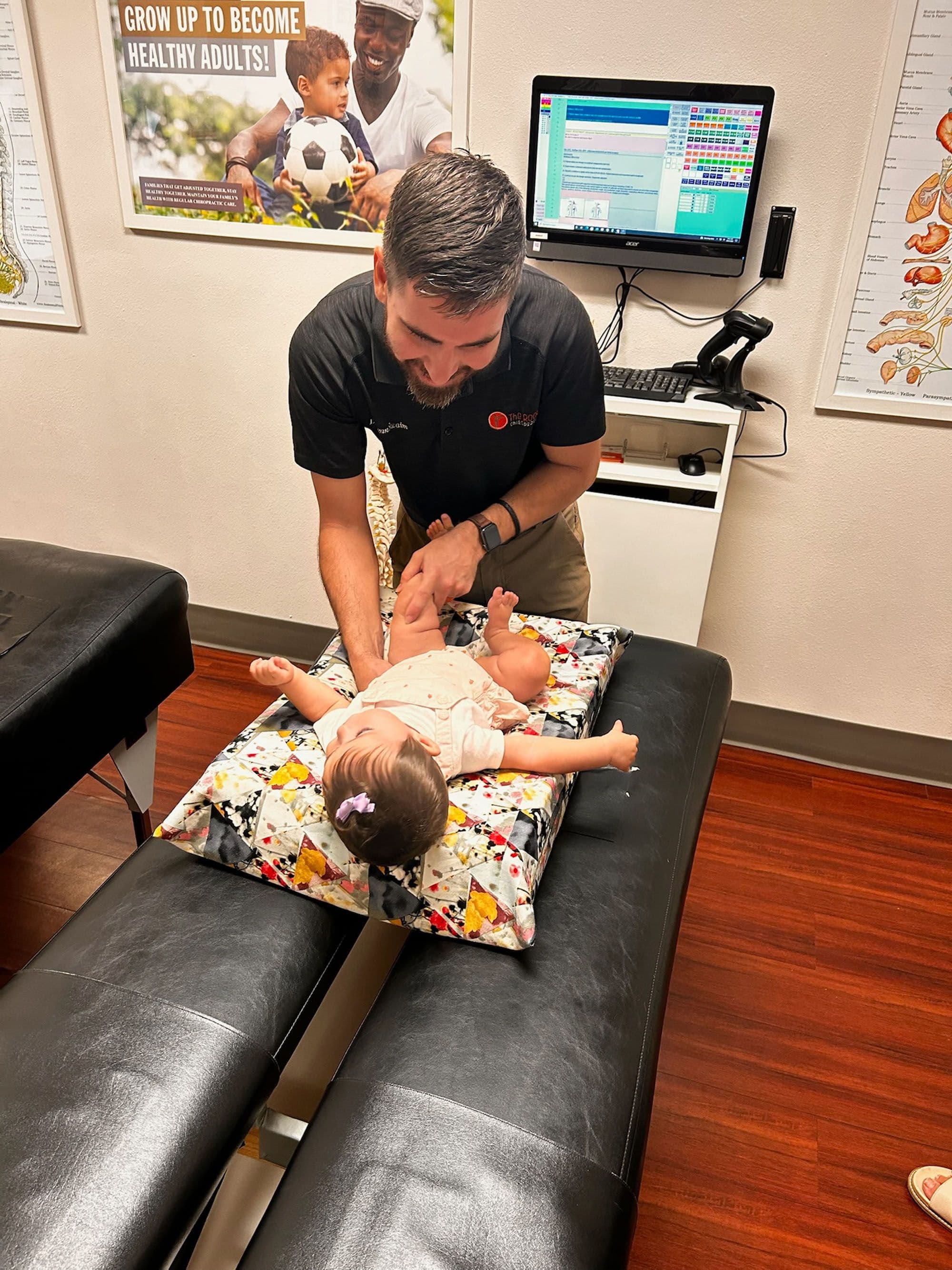
If you have noticed your baby favoring one side, tilting their head, or developing a flat spot, you are likely looking at torticollis in babies — a common, treatable tightness in the neck muscles that makes it harder for your little one to turn their head both ways. It is one of the most frequent things we see in young infants, it is rarely cause for alarm, and gentle care tends to help. Your pediatrician is always your first call and your steady partner through this, and the warm support of pediatric chiropractic can sit comfortably alongside that medical guidance. Take a breath. You caught something early, and that is exactly the right start.
What Torticollis in Babies Actually Means
Torticollis simply means a tight, shortened muscle on one side of the neck. The muscle most often involved runs from behind the ear down to the collarbone, and when it is tight on one side, your baby's head tends to tilt toward that side while the chin turns the opposite way.
The word can sound scary, but the picture is usually gentle: a sweet baby who just prefers one direction. You might notice your little one always looking the same way in the crib, turning more easily toward one shoulder than the other, or resting with a consistent head tilt.
Most infant torticollis is what doctors call muscular — it comes from how the neck muscle developed or got positioned, not from anything you did. You can read more about how we think about it on our torticollis page.
Signs Parents Often Notice First
You know your baby better than anyone, and your everyday observations matter. Parents often tell us they first noticed one or more of these:
- A head that tilts to one side during rest, feeding, or play
- A strong preference to look in one direction and resistance turning the other way
- Trouble turning the head fully toward one shoulder
- A favored side during nursing or bottle feeding (latching more easily on one side)
- A small, firm bump in the neck muscle in the early weeks (this often softens on its own)
- The start of a flat spot on one side or the back of the head
If you spot any of these, mention them to your pediatrician at the next visit, or sooner if you feel something is off. Trust that instinct. You are not overreacting by asking.
How Torticollis and Flat Head (Plagiocephaly) Connect
Flat head syndrome, known medically as plagiocephaly, often travels hand in hand with torticollis, and the reason is simple. A baby's skull is soft and moldable in the first months. When a tight neck keeps your little one resting on the same spot again and again, gentle, constant pressure can gradually flatten that area.
So the chain often looks like this:
- A tight neck muscle makes turning one way harder.
- Your baby rests on the same side most of the time.
- Steady pressure on that one spot leads to a flattening of the head.
The encouraging part: because the two are linked, helping the neck move more freely often takes pressure off the flat spot and gives the head room to round back out as your baby grows. Easing the tightness early is one of the kindest things you can do for both.
What Causes Torticollis in Babies
Parents almost always wonder, did I cause this? You did not. Infant torticollis usually traces back to positioning before or during birth — things entirely outside a parent's control. Common contributors include:
- In-utero crowding — limited room near the end of pregnancy, common with bigger babies, twins, or a first pregnancy, can hold the neck in one position
- Birth positioning — a breech position or a long, assisted, or complicated delivery can strain the delicate neck muscles
- A consistent resting position after birth that the neck simply got used to
Whatever the cause, the path forward is the same: gentle, patient support and plenty of reassurance. This is common, your pediatrician sees it often, and babies tend to respond beautifully to early, loving care.
Why Gentle, Early Care Matters
A baby's body is wonderfully adaptable in the first year, which is exactly why noticing a head tilt early is such good news. When the neck can move freely both ways, your little one can look around, reach, roll, and meet their movement milestones with more ease and comfort.
We never put your baby on a clock or a quota, because every child is different and we take a personalized approach based on what your child's body is showing us. What we can say warmly is that gentle support tends to be most comfortable when it starts early, while everything is soft and growing.
Left unaddressed, a strong one-sided preference can sometimes make tummy time and certain movements harder for a baby, which is one reason it can connect to broader developmental delays or early motor delays. Catching it early simply keeps the road smoother. None of this is meant to worry you — it is meant to reassure you that the gentle steps below genuinely help.
What You Can Do at Home
Alongside your pediatrician's guidance, a few gentle, everyday habits give your baby more reasons to look and move toward their less-favored side. Always check with your doctor before starting, and keep every movement soft and slow — never force your baby's head.
Make tummy time a daily ritual. Supervised tummy time while your baby is awake strengthens the neck and back and takes pressure off the back of the head. Start with short, happy stretches and build up as your little one enjoys it.
Invite the non-favored side.
- Lay your baby down so toys, windows, and your face are on the side they turn to less
- Move around the crib so they look both directions to find you
- Alternate which arm you feed from when feeding allows
Carry and hold with variety. Switch up how you hold and carry your baby through the day so neither side gets all the attention.
Limit time in flat-back gear. Car seats, swings, and bouncers are useful, but lots of awake time in your arms or on a play mat gives the head a break from steady pressure.
Gentle stretching is sometimes recommended too, but please learn any torticollis exercises directly from your pediatrician, a pediatric physical therapist, or our team in person. Hands-on coaching makes them safe and effective in a way a screen never can.
How Gentle Pediatric Chiropractic Can Support Your Baby
Parents are often surprised by how soft and calm infant chiropractic care really is. For a baby, our care looks nothing like the adjustments you may picture for an adult. There is no twisting, no popping, no force.
Our doctors use feather-light pressure — about the amount you would use to check the ripeness of a tomato — to gently encourage easier movement and more comfortable, balanced posture. Many babies stay relaxed, drift off to sleep, or nurse contentedly right through their visit.
The goal is simple and gentle: to support your baby's nervous system and help the neck and head move more freely both ways, so your little one is comfortable turning in either direction. We work with your pediatrician's care, never in place of it, and we will always encourage you to keep your medical team in the loop. You can learn more on our infant chiropractic page, and explore ongoing gentle support through our pediatric wellness care.
If the tilt or flat spot is more involved, your pediatrician may also suggest physical therapy or, occasionally, a helmet. Gentle chiropractic care can sit comfortably alongside any of those, all working toward the same goal: a comfortable, freely moving baby.
When to Talk to Your Pediatrician
Your pediatrician is your home base through all of this, so loop them in early and often. Please reach out to your doctor if you notice:
- A head tilt or strong side preference that is not easing with home strategies
- A flat spot that seems to be growing or changing
- Trouble feeding, or a clear struggle to turn the head one way
- Any new concern about your baby's movement, comfort, or development
There is no such thing as a silly question when it comes to your child. Asking early is always the right move, and it is exactly what a good pediatrician wants you to do. The information here is educational and meant to help you feel informed and calm — it is not medical advice or a diagnosis. For care woven gently around your pediatrician's plan, you are always welcome to reach out to our team.
A Gentle Word Before You Go
Noticing a head tilt or a flat spot can tug at your heart, but please hold onto this: torticollis in babies is common, it is gentle to address, and you caught it. That awareness is one of the most loving things you can offer your little one. With your pediatrician guiding the way, simple home habits, and soft hands-on support, most babies move through this comfortably. You are doing a wonderful job, and you are not walking it alone.
Frequently Asked Questions
Is torticollis in babies serious?
Most infant torticollis is muscular and gentle to address, not serious. It simply means a tight neck muscle limiting head movement. Always have your pediatrician confirm what is going on, since they can rule out less common causes and guide your next steps.
Will my baby's flat head round out on its own?
Many flat spots improve as a baby gains head control, spends more time off the back of the head, and the neck moves more freely. Tummy time and varied positioning help a great deal. Your pediatrician can track the shape over time and let you know if anything more is needed.
Can torticollis affect my baby's development?
A strong one-sided preference can sometimes make movements like tummy time and rolling harder, which is why early gentle support matters. Easing the tightness helps your baby explore both sides. If you have any concerns about milestones, share them with your pediatrician and our team.
What torticollis exercises are safe for babies?
Gentle stretching and positioning can help, but the safest exercises are the ones taught to you in person by your pediatrician, a pediatric physical therapist, or our doctors. Never force your baby's head. Hands-on coaching keeps every movement gentle and right for your child.
Is chiropractic care safe for an infant?
Infant chiropractic uses only feather-light pressure — no twisting, no popping, no force — and many babies stay calm or sleep right through it. Our team works alongside your pediatrician, never instead of them. You can read more on our infant chiropractic page.
Could a head tilt be connected to colic, reflux, or fussiness?
Some parents of babies with a head tilt also notice feeding struggles or extra fussiness. Tightness and comfort can be related, which is why we look at the whole baby. If your little one also deals with colic, reflux, or frequent crying, mention it to your pediatrician and our team.
How do I start gentle care for my baby at Little Roots?
Start with a warm, no-pressure conversation. You can book an appointment online or call us at (941) 932-4611, and we will listen to everything you have noticed. We always encourage you to keep your pediatrician involved every step of the way.
When you are ready, the gentlest first step is simply reaching out. At Little Roots Pediatric Chiropractic in Lakewood Ranch, FL, our doctors — including Dr. Grayson Fox — would be honored to meet your little one, listen to your observations, and offer soft, supportive care alongside your pediatrician. Book an appointment anytime, or call us at (941) 932-4611. You are welcome here, and so is your baby.
Written by Dr. Grayson Fox, pediatric chiropractor at Little Roots Pediatric Chiropractic in Lakewood Ranch, FL. Dr. Fox offers gentle, parent-centered care for infants and children and partners closely with families and their pediatricians. Explore more about our team, the conditions we support, and the symptoms families ask us about.
Learn More
Conditions we help with
Torticollis & Head Shape
Head tilt, flat spots, asymmetric jaw — these are often the same story told from different angles. Gentle in-arms work helps the system release the holding pattern that's keeping your baby stuck on one side.
Learn moreDevelopmental Delays
Motor milestones, speech development, cognitive processing — all of it runs through a nervous system. When that system holds structural tension, it can limit what's available to your child. Gentle care creates more capacity, and more capacity compounds.
Learn moreColic
Colic isn't a personality trait — it's often a baby's nervous system stuck on high alert. Gentle chiropractic care helps the system downshift so feeding, sleeping, and being held start to feel okay again.
Learn moreReflux
Spit-up is normal. Arching through feeds, crying after eating, sleeping fitfully, and never seeming satisfied — that's reflux, and it's almost always a nervous-system regulation story before it's a digestion story.
Learn moreRelated Services
Keep Reading
More for growing families

Toddler Snoring: When It's Normal and When to Look Closer
Hearing your toddler snore can be sweet or worrying. Here is what is often normal, which signs are worth mentioning to your pediatrician, and gentle ways to support better sleep.
Breastfeeding Back Pain: Posture Tips for Nursing Moms
Hours of feeding can leave your neck, shoulders and back aching. Here is why breastfeeding back pain happens and the gentle posture changes that may help.

Baby Spit-Up vs. Vomit: How to Tell the Difference
Your baby just brought up a feed, and you're wondering if it's normal spit-up or something more. Here's how to tell the difference and when to call your pediatrician.
Questions about your child?
Schedule a consultation and let's talk through your family's needs together.
Book a Consultation(941) 932-4611