

Condition
Colic
When your baby just can't settle
Colic isn't a personality trait — it's often a baby's nervous system stuck on high alert. Gentle chiropractic care helps the system downshift so feeding, sleeping, and being held start to feel okay again.
By Dr. Logan Swaim · Last updated July 17, 2026
Get help with Colic
Three quick questions — we'll call you within 24 business hours.
Understanding Colic
What it is & why it shows up
If your baby cries for what feels like hours, arches their back through every feed, and can't be soothed by the usual list of fixes, you're probably exhausted and second-guessing everything. You're not failing. And your baby isn't trying to be hard.
What we see in our office is a nervous system that's stuck in 'too much.' Pregnancy and birth — even uncomplicated ones — can leave tension in a newborn's neck, jaw, cranial bones, and upper spine. That tension keeps the vagus nerve (the calm-and-digest nerve) from doing its job. The result looks like colic from the outside; from the inside, it's a baby who can't downshift.
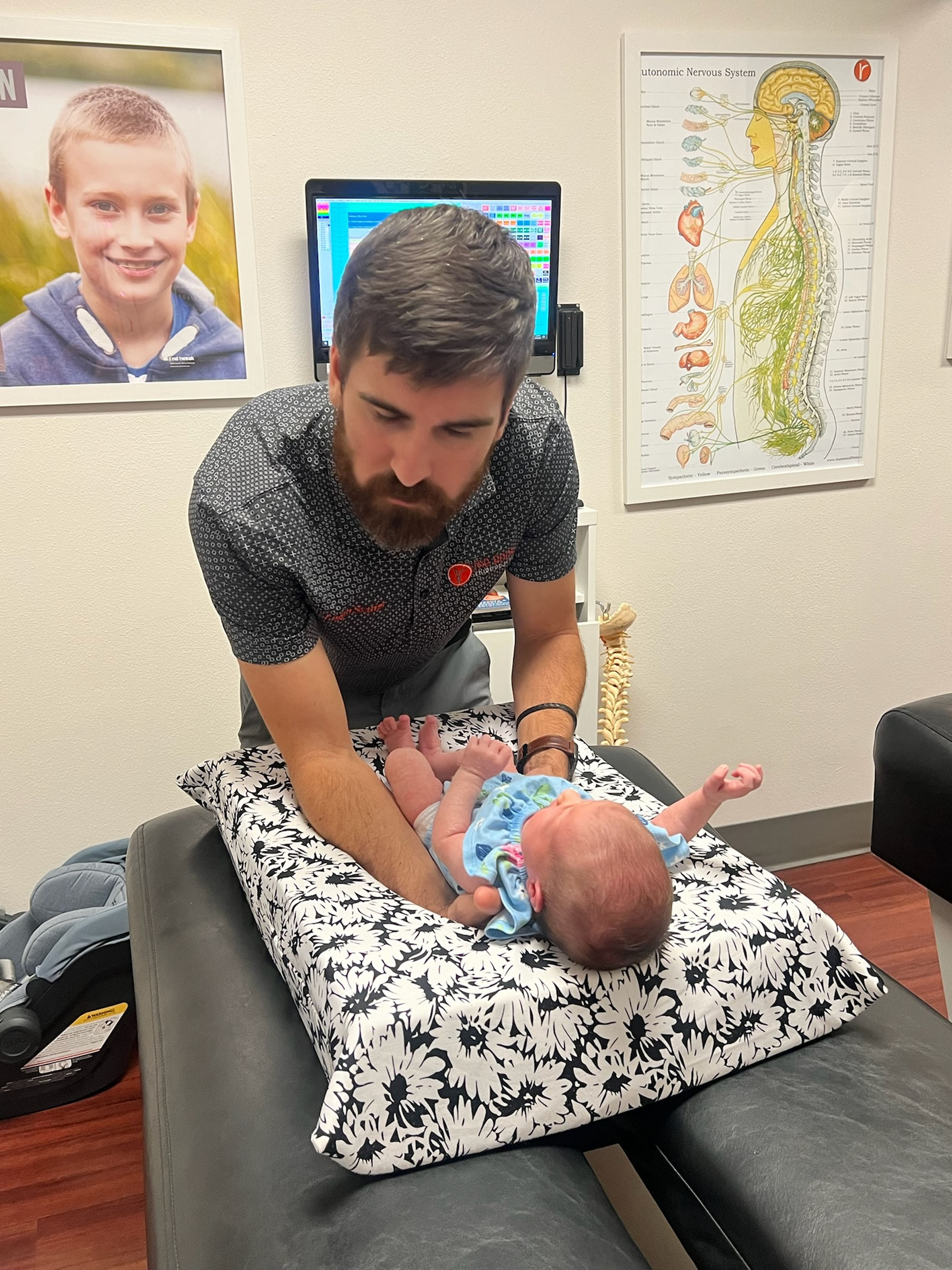
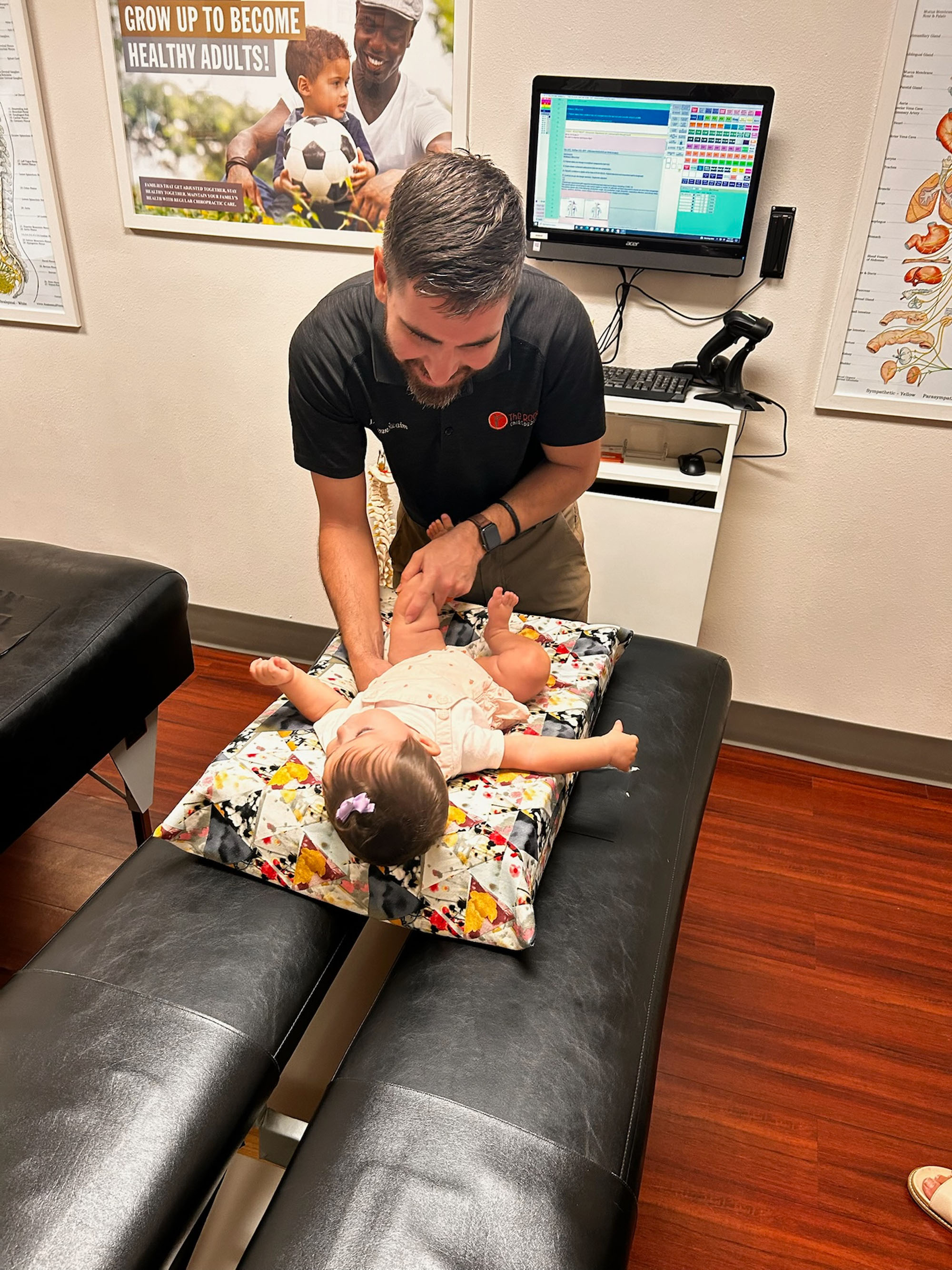
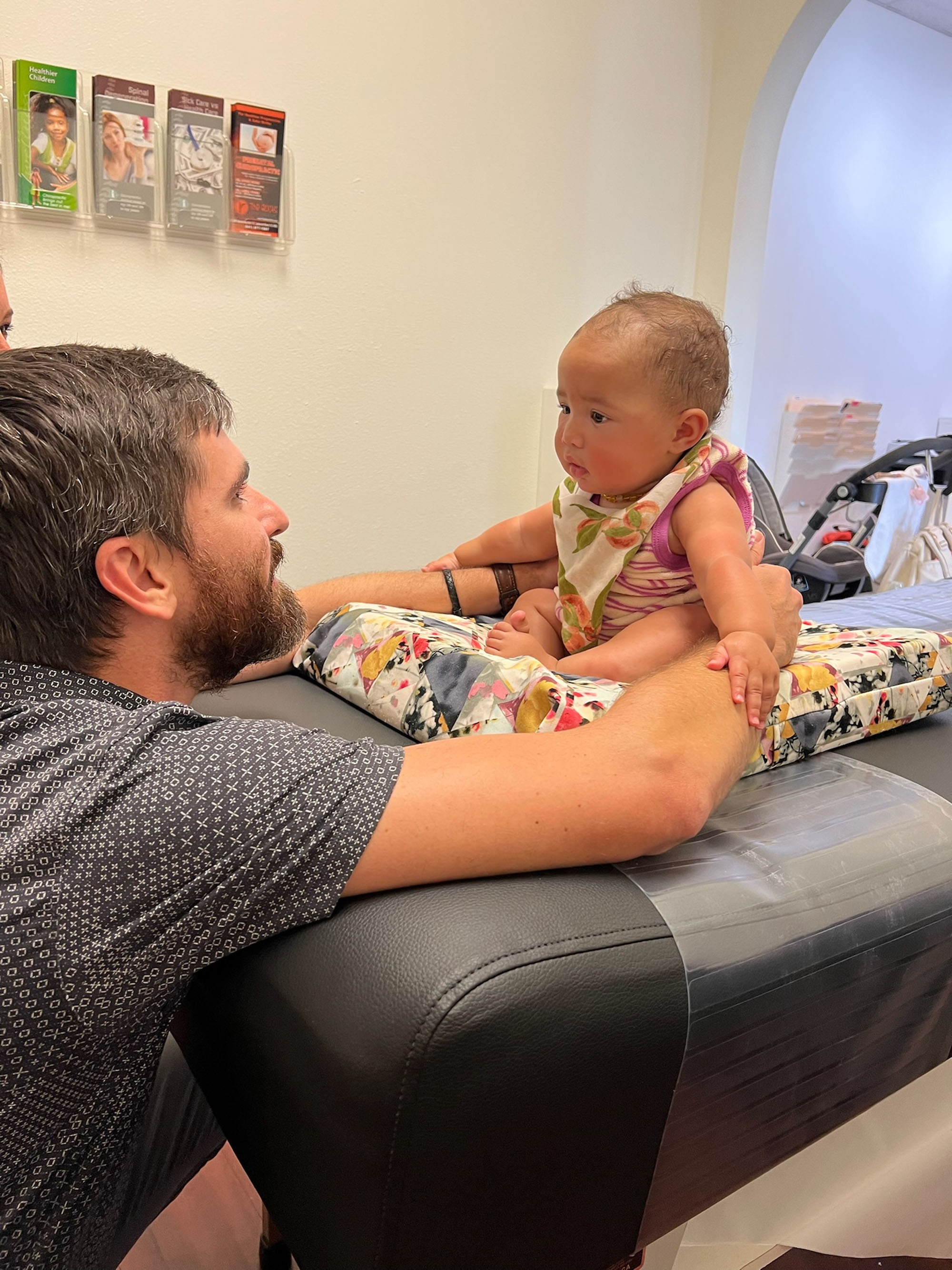
Gentle, featherlight intraoral and cranial work — no pressure greater than testing a ripe tomato — helps the system release that tension. Most parents notice longer stretches of calm, fewer arched-back feeds, and easier evenings within a few visits. Care complements (never replaces) your pediatrician's evaluation.
What parents notice
Signs that bring families in
- Crying for 2+ hours a day, often the same time each evening
- Arched back during or right after feeding
- Hard to console — the usual swaddling, swinging, shushing doesn't work
- Pulled-up legs and clenched fists
- Gas, grunting, visible discomfort
- Difficulty falling asleep or staying asleep
How we help
Our approach to colic
- Listen first — every colic story has clues in the birth + feeding history
- Gentle cranial assessment — looking at jaw, neck, and skull mobility
- Featherlight adjustments where the system is asking for release
- Coordinate with your lactation consultant or pediatric dentist if a feeding mechanic issue is part of the picture
- Parent-friendly tools — positioning tips, calming holds, what to watch for
From the Clinic
Hear it from our doctors
Dr. Grayson Fox — Why Pediatric Chiropractic”
Inside Little Roots
What gentle care looks like.
Services that support this
Care we offer for colic

Read more
Articles for parents
Colic and the Nervous System: Why Your Baby Can't Stop Crying
Colic is often a nervous system problem, not a stomach problem. Learn why babies get colic, what's really happening, and how gentle pediatric chiropractic care helps.
Is Chiropractic Safe for Babies? What the Research Actually Shows
Parents ask us every week: is chiropractic safe for my baby? Here is what the published safety data says, what a newborn adjustment actually looks like, and how to find a qualified pediatric chiropractor in Lakewood Ranch.


Common questions
Frequently asked questions
Our Doctors
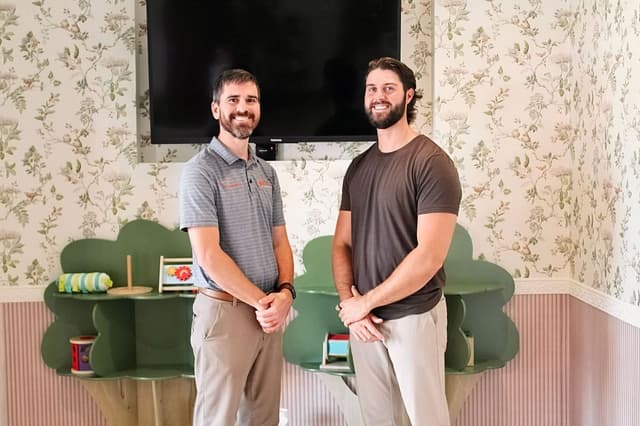
A pediatric-trained team behind every visit
Little Roots is led by co-directors Dr. Logan Swaim, MS, DC and Dr. Laura Swaim, DC — both Webster Certified, Dr. Laura through the ICPA — alongside Dr. Grayson Fox, DC, who is PX-Certified with advanced training in chiropractic neurology and a dedicated pediatric focus. Carly Lovato, our office and lead case manager, and Yohanna Miller, our patient care coordinator, complete the team your family sees at every visit.
Meet the whole team →Want a personalized look at
your child's nervous system?
Start with a complimentary consultation. We listen first, evaluate gently, and recommend only if there's something we can help with.