

Is Chiropractic Safe for Babies? What the Research Actually Shows
Dr. Logan Swaim, MS, DC
Parents ask us every week: is chiropractic safe for my baby? Here is what the published safety data says, what a newborn adjustment actually looks like, and how to find a qualified pediatric chiropractor in Lakewood Ranch.
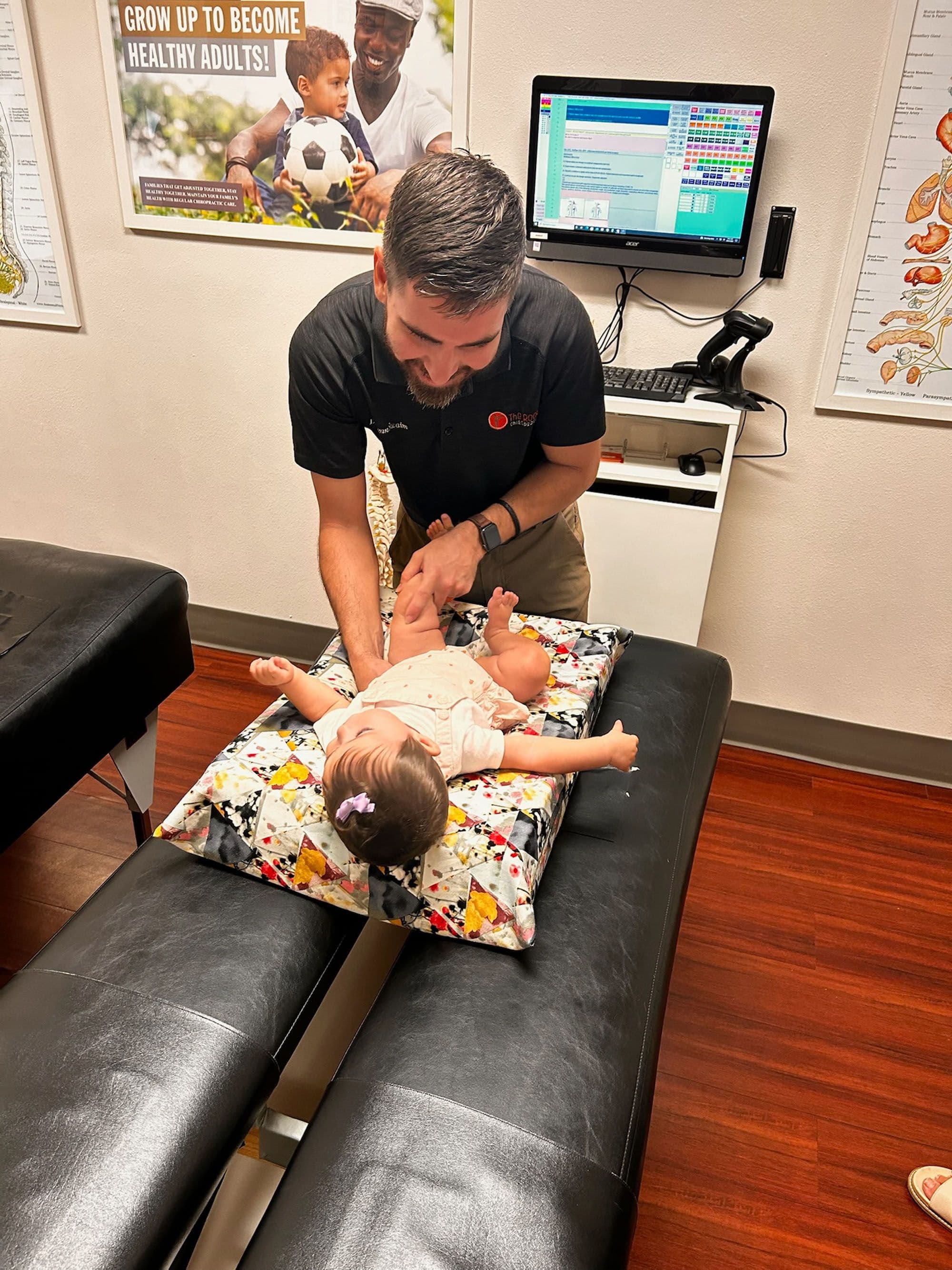
Yes, chiropractic is safe for babies when performed by a pediatric chiropractor trained in infant-specific techniques. A systematic review published in the Journal of Manipulative and Physiological Therapeutics (JMPT) analyzed data across more than 31,000 pediatric chiropractic visits and found that serious adverse events were exceptionally rare — and that the mild reactions occasionally reported (brief fussiness, temporary crying) resolved on their own within hours. For context, that adverse-event profile is considerably lower than the known side effects of infant reflux medications routinely prescribed in conventional pediatrics.
If you are a parent in Lakewood Ranch or Sarasota searching "is chiropractic safe for babies," you are asking the right question. Below, the Little Roots team — ICPA and PX-Certified pediatric chiropractors — walk through the evidence, explains what a newborn adjustment actually involves, and addresses the most common concerns head-on.
How Gentle Is a Chiropractic Adjustment on a Newborn?
The single biggest misconception about pediatric chiropractic is that it looks anything like an adult adjustment. It does not. There is no twisting. No cracking. No popping.
The amount of pressure used on a newborn is roughly the same pressure you would use to test whether a tomato is ripe at the grocery store. That is not a metaphor — it is literally the amount of force involved. You press your fingertip into the side of a tomato just enough to feel whether it gives. That is the force on a baby's spine during a pediatric adjustment.
At Little Roots, our doctors use Torque Release Technique (TRT) — a gentle, instrument-assisted method that delivers a precise, low-force impulse through a small handheld device called the Integrator. Babies routinely sleep through it. Parents watching for the first time almost always say some version of: "Wait — that was the adjustment? When does the real part happen?"
That was the real part. A baby's tissues are soft, their nervous system adapts quickly, and their spine is still forming. They do not need force to respond. A whisper is enough.
Why Would a Baby Need Chiropractic Care?
Birth is the most physically demanding event a newborn's body will ever go through. Even a textbook, uncomplicated vaginal delivery involves:
- Compression through the birth canal
- Rotation of the head through the pelvic outlet
- Traction applied during crowning and delivery of the shoulders
When birth is not textbook — prolonged labor, vacuum or forceps assistance, C-section, rapid delivery — the mechanical forces increase significantly. Published research has documented that routine deliveries can apply forces to the infant cervical spine that would be considered excessive if applied to an adult neck.
The result is that many newborns arrive with subtle misalignments in the upper cervical spine and sacrum. Those misalignments can lock the baby's nervous system into a sympathetic-dominant state (the body's fight-or-flight mode) that the baby cannot self-correct. When the nervous system is stuck in that state, you see downstream effects: digestive trouble, sleep disruption, feeding difficulty, muscle tension.
Pediatric chiropractic does not "fix" colic or reflux directly. It supports the nervous system in releasing the tension pattern driving those symptoms — and the symptoms often resolve as a downstream effect.
What Conditions Bring Families to a Pediatric Chiropractor?
The most common reasons parents bring babies into Little Roots:
- Colic and excessive crying — inconsolable episodes, back arching, knees pulled up. Often linked to a dysregulated nervous system and a sympathetic-dominant digestive tract.
- Reflux and frequent spit-up — responds to the same nervous-system tension release that helps colic.
- Latching and breastfeeding difficulty — frequently traced to tension in the jaw, upper cervical spine, or base of the skull.
- Sleep disruption — babies who wake constantly, never settle into deep sleep, or seem wired. Read more in Baby Sleep and the Nervous System.
- Torticollis — a persistent head tilt or strong turn preference.
- Plagiocephaly — flat spots on the skull, often related to positional preference from torticollis.
- General fussiness — the "something is off" baby that the pediatrician says looks fine on paper.
Colic is the number one reason families walk through our door. We see meaningful shifts — sometimes after a single session — and parents describe it as "getting their baby back." For a deeper dive into the colic-nervous-system connection, read Colic and the Nervous System.
What Does the Safety Research Actually Say?
Parents searching for "dangers of chiropractic care for infants" deserve a straight answer grounded in published data, not reassurance from a marketing page.
Here is what the research shows:
- The JMPT systematic review — the most comprehensive pediatric chiropractic safety study to date — analyzed outcomes across more than 31,000 visits. Serious adverse events were virtually nonexistent. The mild reactions that were occasionally reported (short-lived fussiness, brief crying) resolved spontaneously and required no medical intervention.
- A 2014 study in Chiropractic & Manual Therapies examined over 2,000 infant patients specifically and confirmed that adverse events were rare and mild.
- The International Chiropractic Pediatric Association (ICPA) maintains active research databases and publishes ongoing safety and outcomes data through the Journal of Clinical Chiropractic Pediatrics.
The evidence base continues to grow. Most existing studies are observational rather than randomized controlled trials — RCTs in infant populations are ethically and logistically difficult to design. But the consistent finding across the literature is clear: when performed by a properly trained provider using pediatric-specific techniques, gentle chiropractic care for infants has an excellent safety profile.
To put it in perspective: the documented risk profile of pediatric chiropractic is lower than the known side-effect rates of proton pump inhibitors and H2 blockers routinely prescribed for infant reflux.
What Should You Look for in a Pediatric Chiropractor?
Not every chiropractor is trained to work with babies. The credentials that matter:
- ICPA Webster Technique Certification — the gold-standard prenatal and pediatric-adjacent credential from the International Chiropractic Pediatric Association
- CACCP (Certified by the Academy of Chiropractic Family Practice) — the ICPA's advanced pediatric certification
- PX Certification — advanced pediatric-specific training in chiropractic neurology
- Instrument-assisted gentle techniques — TRT, Activator, or similar low-force methods rather than manual thrusts
- A substantial pediatric caseload — or a pediatric-exclusive practice where infants and children are the primary population, not an occasional patient
Our doctors are trained specifically for pediatric and prenatal care — ICPA Webster Technique Certified and PX-Certified — and have worked with hundreds of newborns and infants at Little Roots. Dr. Grayson Fox is PX-Certified with advanced training in chiropractic neurology. Both are experienced with newborns through teens.
What Does a Baby's First Visit Look Like?
Knowing what to expect helps most parents relax before the appointment. Here is how a typical first visit unfolds at Little Roots:
- History and intake — Your doctor asks about pregnancy, birth (type of delivery, duration, interventions), feeding patterns, sleep, milestones, and the specific concerns that brought you in.
- Gentle hands-on evaluation — your baby stays on your lap or lies on a soft padded table. The doctor checks cranial motion, cervical mobility, pelvic balance, and tension patterns. It looks more like a careful assessment than a medical exam.
- Demonstration — before any adjustment, your doctor fires the Integrator on your own hand so you can feel the force involved. Every parent gets this demo.
- The adjustment itself — a tiny, precise tap to the indicated area, usually the upper cervical spine, sacrum, or cranium. The entire impulse lasts a fraction of a second.
The first visit typically takes 15 to 20 minutes. Follow-up visits are shorter. Each child is different — we take a personalized approach based on what your child's nervous system is showing us.
When Should You NOT Bring a Baby to the Chiropractor?
Responsible pediatric chiropractors know their scope. There are situations where we ask families to address the primary concern first and come back afterward:
- Active high fever in a newborn under 2 months — this needs a pediatrician immediately
- Suspected non-accidental trauma or unexplained injury — requires appropriate medical workup
- Unusual neurological signs — one-sided weakness, unresponsive episodes, abnormal muscle tone — needs a pediatric neurologist
- Certain congenital spinal conditions — instability or structural abnormalities that may contraindicate specific techniques
- Acute illness or significant distress — reschedule when your baby is more stable
Chiropractic does not replace your pediatrician. Every baby we see should also have a pediatrician they trust, regular well-child visits, and all appropriate medical care on schedule. Chiropractic fills a specific gap that conventional pediatrics is not designed to address — the mechanical and neurological consequences of birth and early development.
What Do Parents Say After the First Few Visits?
We do not make outcome predictions. But we can share what parents tell us:
- "She is sleeping through the night for the first time."
- "He is nursing without fighting the latch."
- "The crying episodes just stopped."
- "She turns her head both directions now."
- "The reflux is gone."
- "He seems like a different baby — calmer, more settled."
Babies whose nervous systems have been supported in releasing held-tension patterns tend to eat better, sleep more consistently, move more symmetrically, and process the world with less agitation. Parents notice the effects before they can name them. The phrase we hear more than any other is some version of: "We got our baby back."
Frequently Asked Questions About Chiropractic for Babies
At what age can a baby see a chiropractor? Newborns can be evaluated within the first days of life. The earlier held-tension patterns from birth are addressed, the more responsive they tend to be. Many families bring their baby in within the first two weeks.
Does the adjustment hurt the baby? No. The force is lighter than what you would use to press a key on your phone. Babies typically sleep through adjustments, nurse during them, or show no reaction at all. Brief fussiness afterward is occasionally reported and resolves on its own.
How many visits does a baby need? Each child is different. We take a personalized approach based on what your child's nervous system is showing us during the evaluation and progress checks.
Is chiropractic safe for premature babies? Premature infants can benefit from gentle chiropractic care, but the timing and technique must be carefully considered. We evaluate each case individually and coordinate with your pediatrician or neonatologist.
Can chiropractic help with breastfeeding problems? Many breastfeeding difficulties — shallow latch, preference for one side, jaw tension — are linked to upper cervical and cranial tension from birth. Releasing that tension often improves latch mechanics. Lactation consultants in the Lakewood Ranch area regularly refer to us for this reason.
What is the difference between a regular chiropractor and a pediatric chiropractor? Training, technique, and caseload. A pediatric chiropractor has completed specialized coursework (ICPA, CACCP, or PX certification), uses instrument-assisted low-force techniques specifically designed for infants, and works with babies and children as a primary focus — not an occasional patient.
The Bottom Line for Parents
The published research is clear: gentle, pediatric-specific chiropractic care is safe for babies when performed by a qualified provider. The techniques used at Little Roots bear no resemblance to adult chiropractic. There is no twisting, no cracking, no force that would concern any parent who sees it firsthand.
If your newborn is struggling with colic, reflux, torticollis, sleep disruption, latching difficulty, or general fussiness — and you have been told "they will grow out of it" — your baby's nervous system may be telling a different story.
The next step is a complimentary newborn evaluation with the Little Roots team Pediatric Chiropractic in Lakewood Ranch. No commitment. No pressure. Just an honest assessment of whether gentle chiropractic care is a good fit for your baby.
Call (941) 932-4611 to schedule.
Learn More
Conditions we help with
Torticollis & Head Shape
Head tilt, flat spots, asymmetric jaw — these are often the same story told from different angles. Gentle in-arms work helps the system release the holding pattern that's keeping your baby stuck on one side.
Learn moreSleep Disturbance
Poor sleep is rarely just a sleep problem. For many adults, chronic pain, nerve compression, and an overactivated nervous system are the actual barriers to restful sleep — and a chiropractic care plan that addresses those drivers can change the picture.
Learn moreRelated Services
Related Reading
Related articles
Colic and the Nervous System: Why Your Baby Can't Stop Crying
Colic is often a nervous system problem, not a stomach problem. Learn why babies get colic, what's really happening, and how gentle pediatric chiropractic care helps.
Read articleBaby Won't Sleep? The Nervous System Connection Most Parents Never Hear About
When your baby won't sleep no matter what you try, the problem may not be environmental. Learn how a dysregulated nervous system keeps infants stuck in alert mode — and what gentle pediatric chiropractic care can do to help.
Read articleTorticollis in Babies: A Gentle Parent's Guide to Head Tilt and Flat Head
A warm, reassuring guide for parents who notice a head tilt, a favored side, or a flat spot, and want to understand torticollis in babies and gentle next steps.
Read articleKeep Reading
More for growing families

Toddler Snoring: When It's Normal and When to Look Closer
Hearing your toddler snore can be sweet or worrying. Here is what is often normal, which signs are worth mentioning to your pediatrician, and gentle ways to support better sleep.
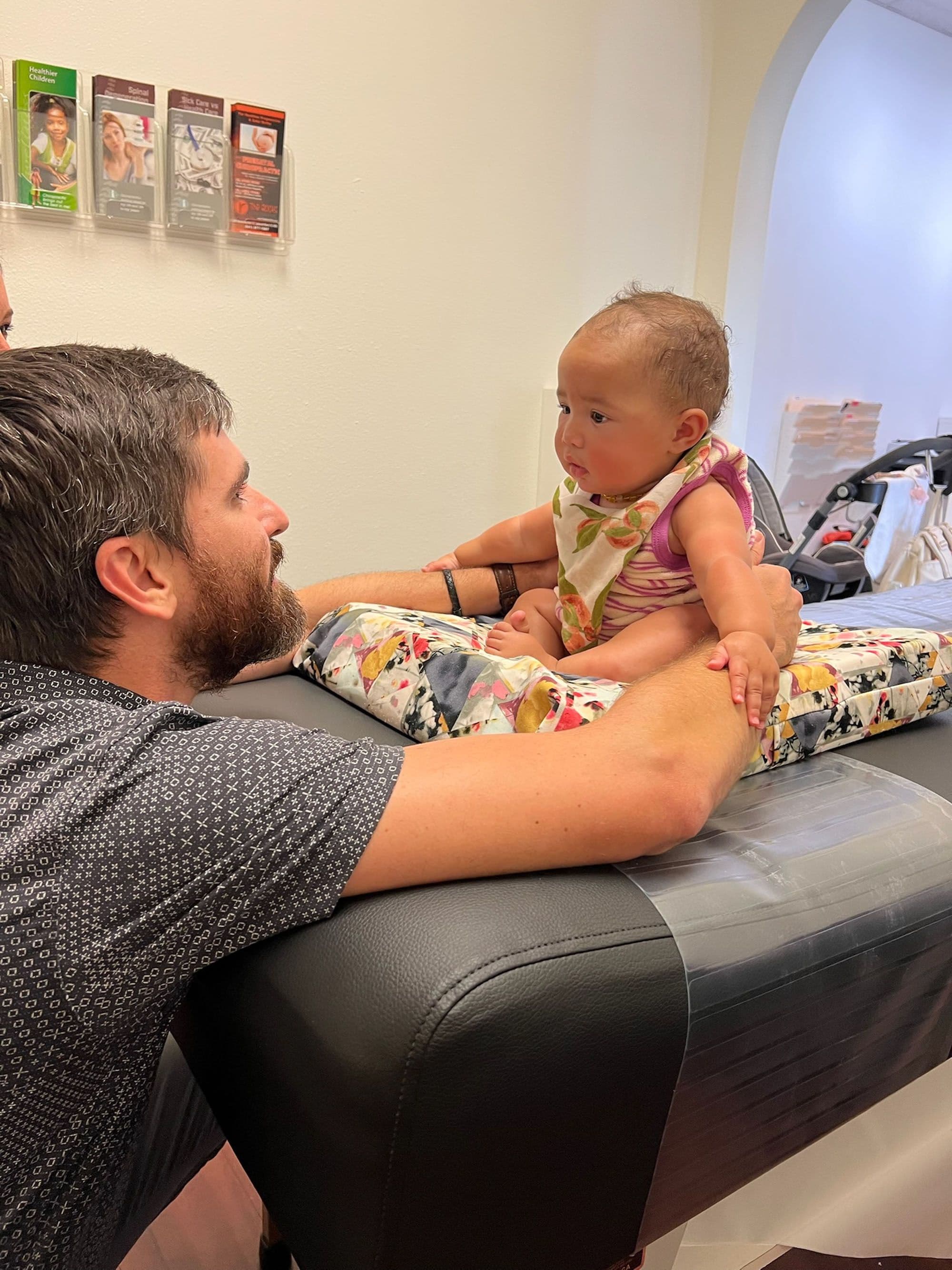
Breastfeeding Back Pain: Posture Tips for Nursing Moms
Hours of feeding can leave your neck, shoulders and back aching. Here is why breastfeeding back pain happens and the gentle posture changes that may help.

Baby Spit-Up vs. Vomit: How to Tell the Difference
Your baby just brought up a feed, and you're wondering if it's normal spit-up or something more. Here's how to tell the difference and when to call your pediatrician.
Questions about your child?
Schedule a consultation and let's talk through your family's needs together.
Book a Consultation(941) 932-4611