
Condition
Torticollis & Head Shape
When the head tilts and the world tilts with it
Head tilt, flat spots, asymmetric jaw — these are often the same story told from different angles. Gentle in-arms work helps the system release the holding pattern that's keeping your baby stuck on one side.
By Dr. Logan Swaim · Last updated July 17, 2026
Get help with Torticollis & Head Shape
Three quick questions — we'll call you within 24 business hours.
Understanding Torticollis & Head Shape
What it is & why it shows up
Torticollis literally means 'twisted neck' — but in babies, it shows up as a head consistently turned the same direction, sometimes with a visible tilt. It's the most common reason families are referred to us in the first few months. The other thing parents often notice: a flat spot starting to develop on one side of the head, asymmetric jaw movement, or a strong preference for feeding from one breast.
What's actually happening is a holding pattern — muscles, fascia, and joints in the neck and upper spine that locked into one position during pregnancy or birth and can't release on their own. Cranial bones are still moldable in the first year, so a head that's spent weeks pressed into one direction starts to flatten there. Plagiocephaly is the downstream sign, not the cause.
Gentle, in-arms work with the baby in your lap — no force, no cracks, no positioning your baby can't tolerate — helps the system release the holding pattern. Care often pairs with parent stretches you can do at home and, occasionally, a referral to physical therapy or a helmet specialist if the flattening is advanced. Most families see the head turn open up in a handful of visits.
What parents notice
Signs that bring families in
- Head consistently turned to the same side
- Visible tilt of the head toward one shoulder
- Flat spot developing on one side of the back of the head
- Asymmetric face or jaw — one side fuller than the other
- Strong feeding preference for one breast / one side
- Difficulty breastfeeding on the 'wrong' side
- Limited neck range — your baby can't easily turn one way
How we help
Our approach to torticollis & head shape
- Full neck and cranial mobility assessment with you holding your baby
- Featherlight in-arms work to release the locked side
- Cranial work to encourage symmetric skull growth where appropriate
- Parent stretches and positioning tips for at-home work
- Referral coordination with PT, OT, or helmet clinic if needed
From the Clinic
Hear it from our doctors
Dr. Grayson Fox — Why Pediatric Chiropractic”
Inside Little Roots
What gentle care looks like.
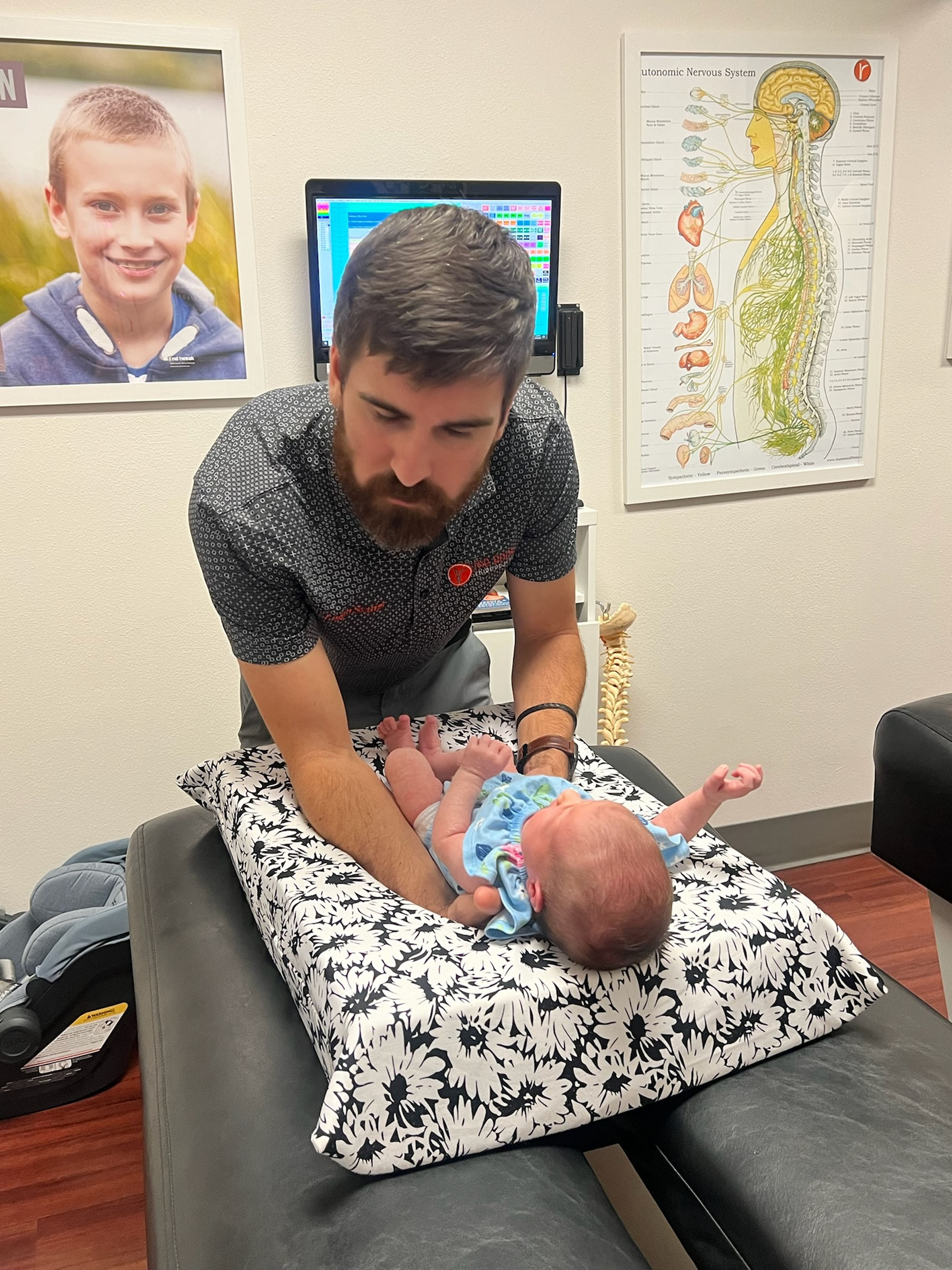
Nervous-system first. Always.
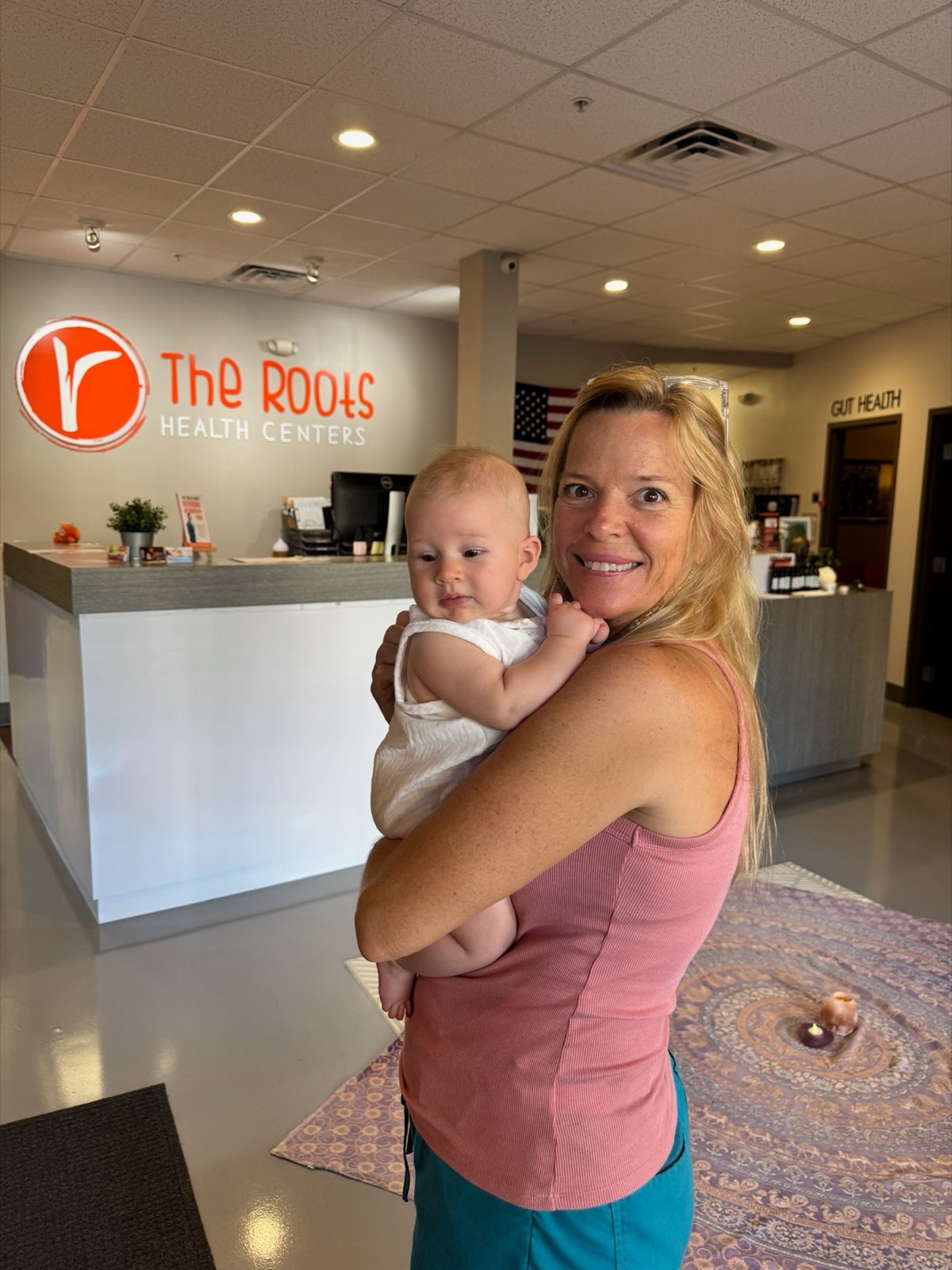
When mom is supported, the whole family thrives.
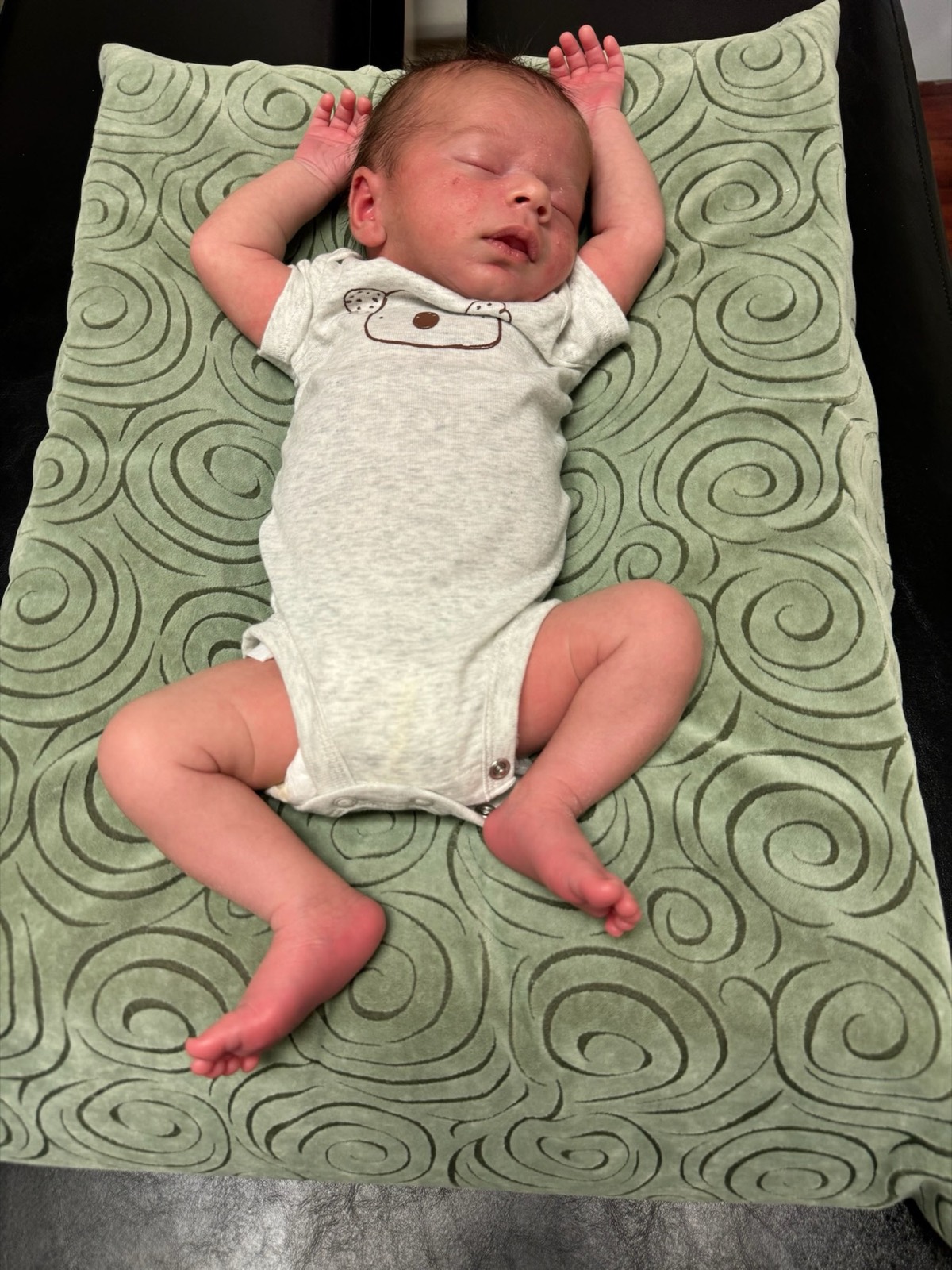
Most newborns sleep right through it.
Keep Exploring
Meet our team
Services that support this
Care we offer for torticollis & head shape
Read more
Articles for parents
Is Chiropractic Safe for Babies? What the Research Actually Shows
Parents ask us every week: is chiropractic safe for my baby? Here is what the published safety data says, what a newborn adjustment actually looks like, and how to find a qualified pediatric chiropractor in Lakewood Ranch.
Breech Baby? How the Webster Technique Supports Natural Turning
The Webster Technique does not turn a breech baby. It restores pelvic balance so your baby has room to move into a head-down position on their own.

Common questions
Frequently asked questions
Our Doctors
A pediatric-trained team behind every visit
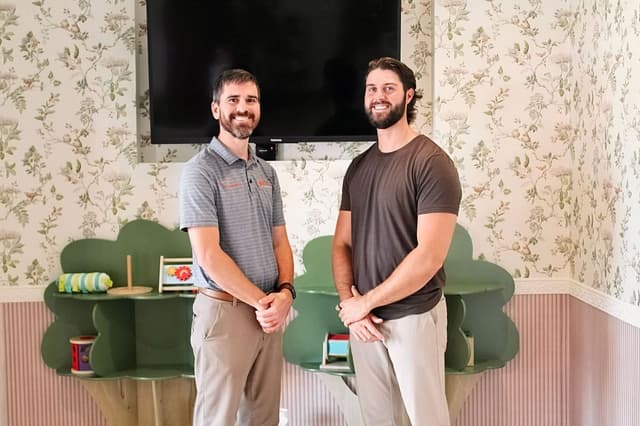
Little Roots is led by co-directors Dr. Logan Swaim, MS, DC and Dr. Laura Swaim, DC — both Webster Certified, Dr. Laura through the ICPA — alongside Dr. Grayson Fox, DC, who is PX-Certified with advanced training in chiropractic neurology and a dedicated pediatric focus. Carly Lovato, our office and lead case manager, and Yohanna Miller, our patient care coordinator, complete the team your family sees at every visit.
Meet the whole team →Want a personalized look at
your child's nervous system?
Start with a complimentary consultation. We listen first, evaluate gently, and recommend only if there's something we can help with.