

Tongue Tie · Latching · Cranial · Infant TMJ
When feeding feels like a battle, something's usually stuck.
If your baby clicks while nursing, dribbles milk, refuses one breast, holds their head tilted, or works twice as hard to feed and still falls behind — you're not imagining it. We'll help find what's tight and release it, gently.
Tell us what you're seeing.
Share three quick details and we'll call within one business day. No pressure — just a real conversation about your baby.
Most pediatricians weren't trained to spot the structural piece behind feeding issues — and so for a lot of families, this is the first time someone's actually looked at it. We'll listen first. Then we'll tell you straight what we see.
Conditions & Symptoms
Does your baby do any of these?
These are the moments parents recognize. None of them mean something is wrong — they mean something is worth looking at.
Clicking or smacking sounds while feeding
Air slipping past a tongue that can't fully seal at the breast or bottle.
Milk dribbles out the corner of the mouth
A latch that breaks the seal partway through every swallow.
Prefers one breast — refuses the other
Often a structural asymmetry that makes one side painful or awkward.
Asymmetric jaw, mouth, or smile
One side stronger than the other, or a jaw that drifts when crying.
Flat spot on one side of the head
Plagiocephaly that's often a downstream sign of a cranial restriction.
Holds the head tilted to one shoulder
Torticollis — the soft-tissue tightness almost always pairs with jaw and feeding issues.
Sleeps with the mouth open
Often signals a palate that hasn't dropped, or a tongue that can't rest on the roof of the mouth.
Reflux, arching, fussiness during or after feeds
When the latch is shallow, babies swallow more air and struggle to settle.
Slow weight gain despite long feeds
A baby who works hard at every meal and still falls behind on the curve.








If two or more sound familiar, it's worth a visit. We'll look, we'll listen, and if this isn't the right care for your baby we'll tell you — and point you to who is.
How We Help
Gentle work that goes inside the mouth — for a reason.
The way a baby's palate, jaw, and tongue work together shapes nearly everything: latching, swallowing, the way air moves in and out of the nose, even how the head holds its shape. When something in that system is restricted — often from in-utero positioning or a hard birth — the downstream signs show up in feeding first.
The technique we use to address this is called the Pediatric Intraoral Palate Specific (PIPS) technique. In plain English: a chiropractor with advanced training uses a gloved fingertip to assess and gently release tension in the palate, jaw, and the cranial bones that meet inside the mouth. The work is featherlight. Most babies fall asleep through it.
It's a small piece of the pediatric chiropractic world, but for the right baby — the one with the click, the dribble, the tilted head — it's often the missing piece that nothing else has been able to address. Many families pair this care with our newborn chiropractic care for full-body support. If torticollis is part of the picture, we address that too.
For expecting parents, prenatal chiropractic care can prepare the body for a smoother delivery — which often means fewer feeding complications for baby. Read family stories to see how coordinated care makes a difference.
Who You'll Meet
Pediatric chiropractic with intraoral training
Co-Director
Dr. Logan Swaim
DC, MS
- Advanced training in the Pediatric Intraoral Palate Specific (PIPS) chiropractic technique
- Webster Technique Certified
Dr. Logan is one of the few pediatric chiropractors in the Sarasota / Lakewood Ranch area doing intraoral palate work on infants. The training is specialized, the technique is rare in this market, and the families who find it usually do so because someone else — a lactation consultant, a pediatric dentist, a friend — pointed them here.
He works alongside Dr. Laura Swaim, Dr. Grayson Fox, and the rest of the Little Roots team. For families who need a coordinated approach — a frenectomy, an IBCLC, body work — we sit in the middle of that network, not at the edge of it.
What to Expect
What an intraoral visit actually looks like
The thought of someone putting a finger inside your baby's mouth is a lot. Here's exactly what happens, so nothing feels like a mystery.

We listen first
You tell us everything you're seeing — the feeding, the sleep, the head shape, what your pediatrician said, what your gut is telling you. We listen.

A gentle full-body check
Spine, neck, hips, jaw — the same featherlight assessment we do for any newborn. Most of this happens with your baby in your arms.

Intraoral assessment, if it's indicated
If the outside picture points to a palate or jaw restriction, we'll explain what we want to check inside the mouth and ask before we proceed. Pressure is no more than what you'd use to test a ripe tomato. You stay with your baby the entire time.

We tell you straight
If we found something we can help with, we'll show you what we found and what care looks like. If we didn't — or if your baby would be better served by a frenectomy, a lactation consultant, or your pediatrician — we'll tell you that too.
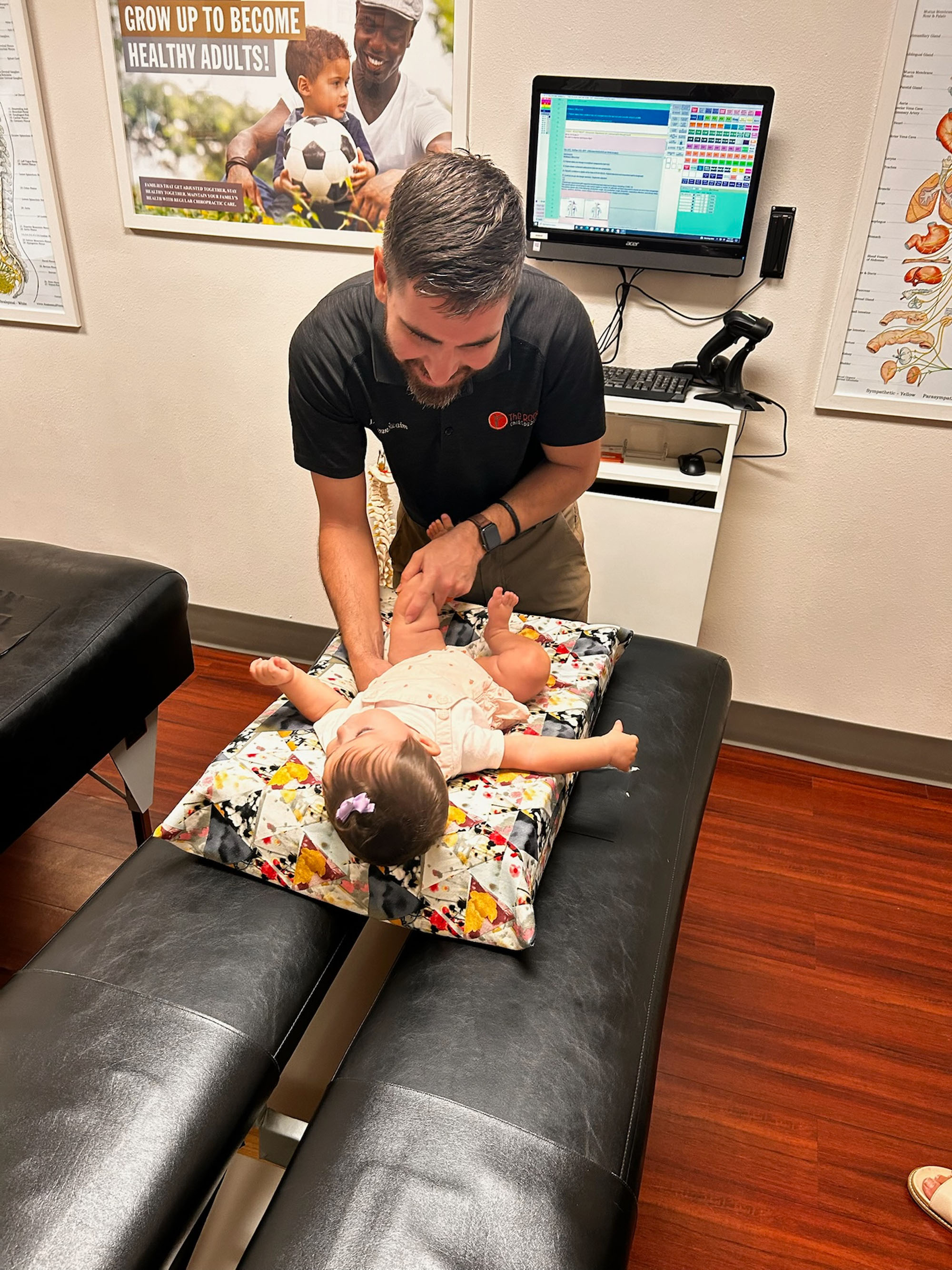
The gentlest discipline in chiropractic
Less than the
weight of a dime.
A Coordinated Care Team
We work alongside the rest of your baby's team
Tongue tie and latching issues almost never resolve from one provider alone. We sit in the middle of a network of pediatric specialists — and we're happy to refer out when your baby would be better served somewhere else.

Lactation Consultants (IBCLCs)
The latch experts. When the mechanical side of feeding needs work, IBCLCs and chiropractors handle the two halves of the same problem.

Pediatric Dentists
If a frenectomy is the right move, your dentist does the release. We help the surrounding muscles and palate actually use the new range of motion — before and after.

Speech-Language Pathologists
For older infants and toddlers with feeding, articulation, or oral-motor concerns, we coordinate care with SLPs already on your team.
Are you a provider who'd like to discuss a referral relationship? Get in touch →
Common Questions
What parents ask us most
Inside the visit
Warm room, quiet check, parent's hands on the baby.
Gentle from day one.
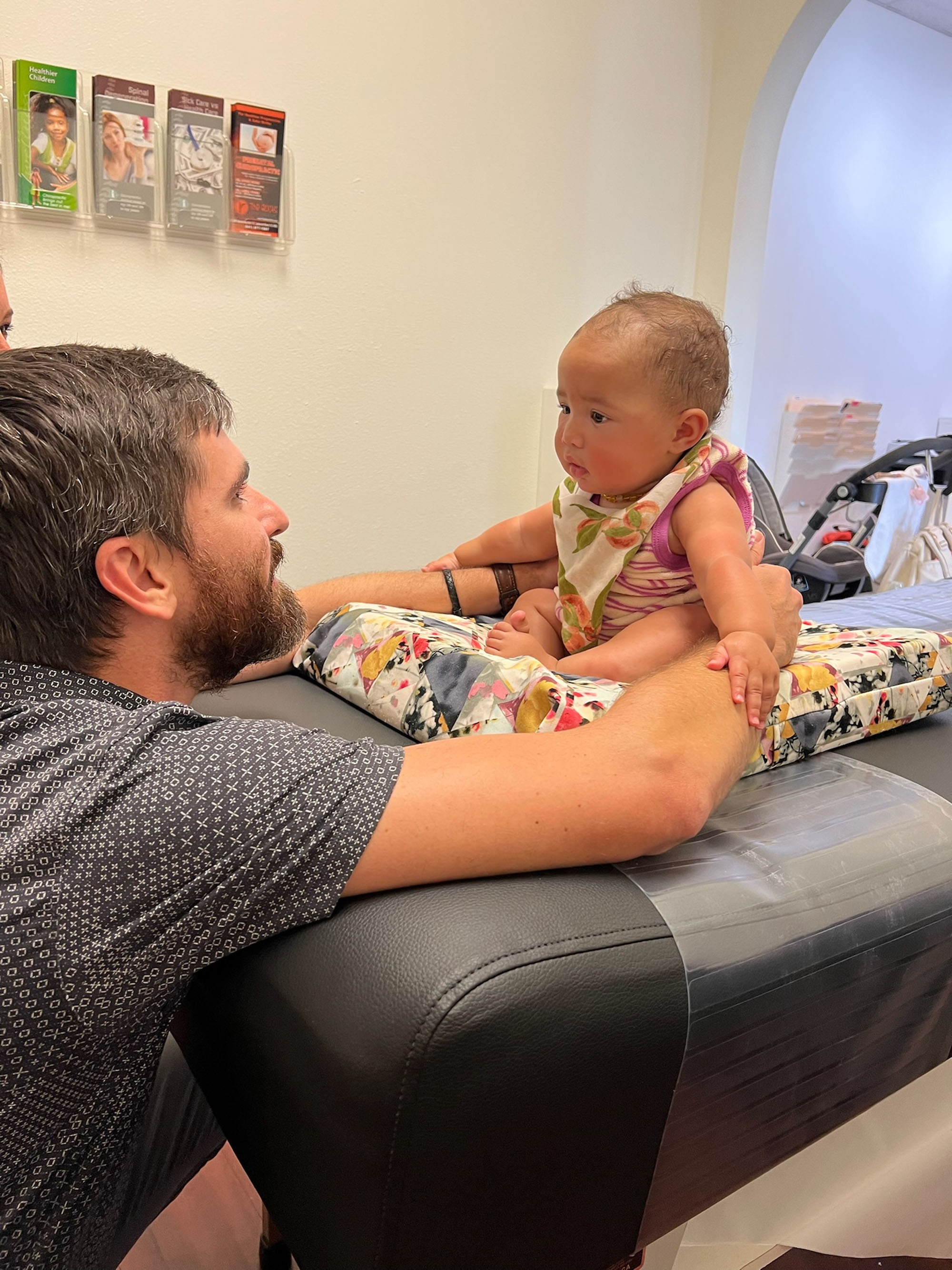
Connection before care.
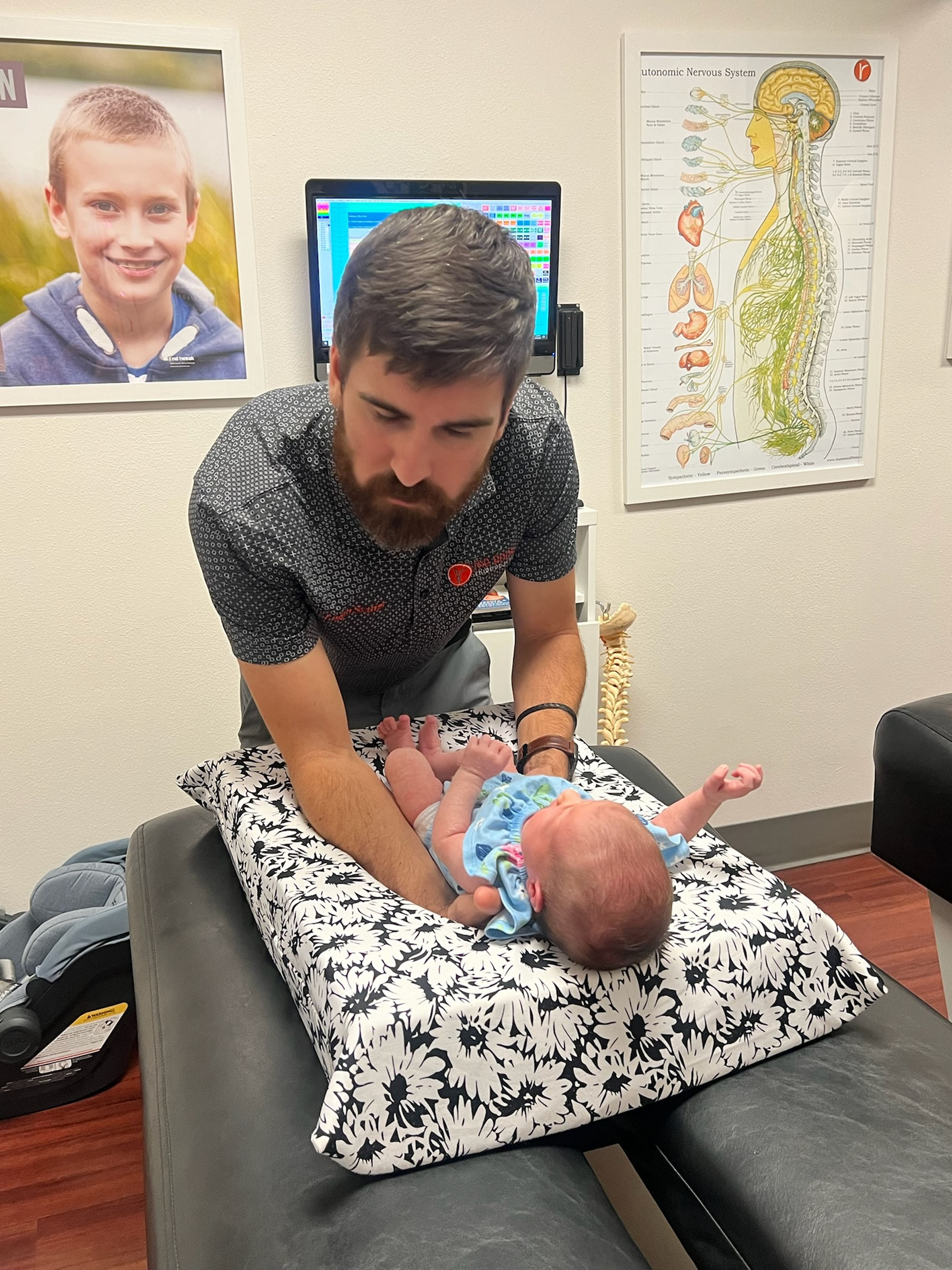
Nervous-system first. Always.
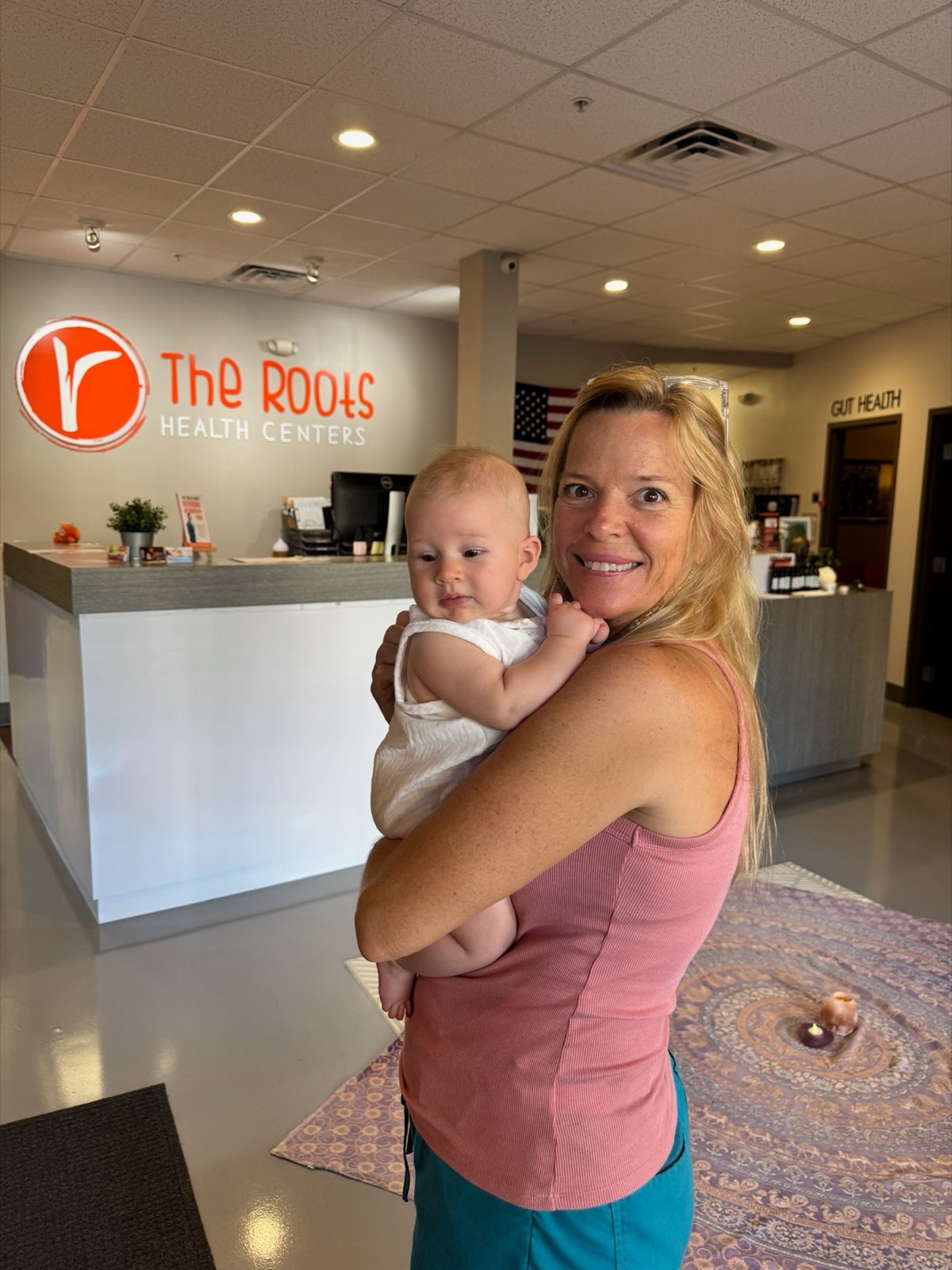
When mom is supported, the whole family thrives.

Most newborns sleep right through it.
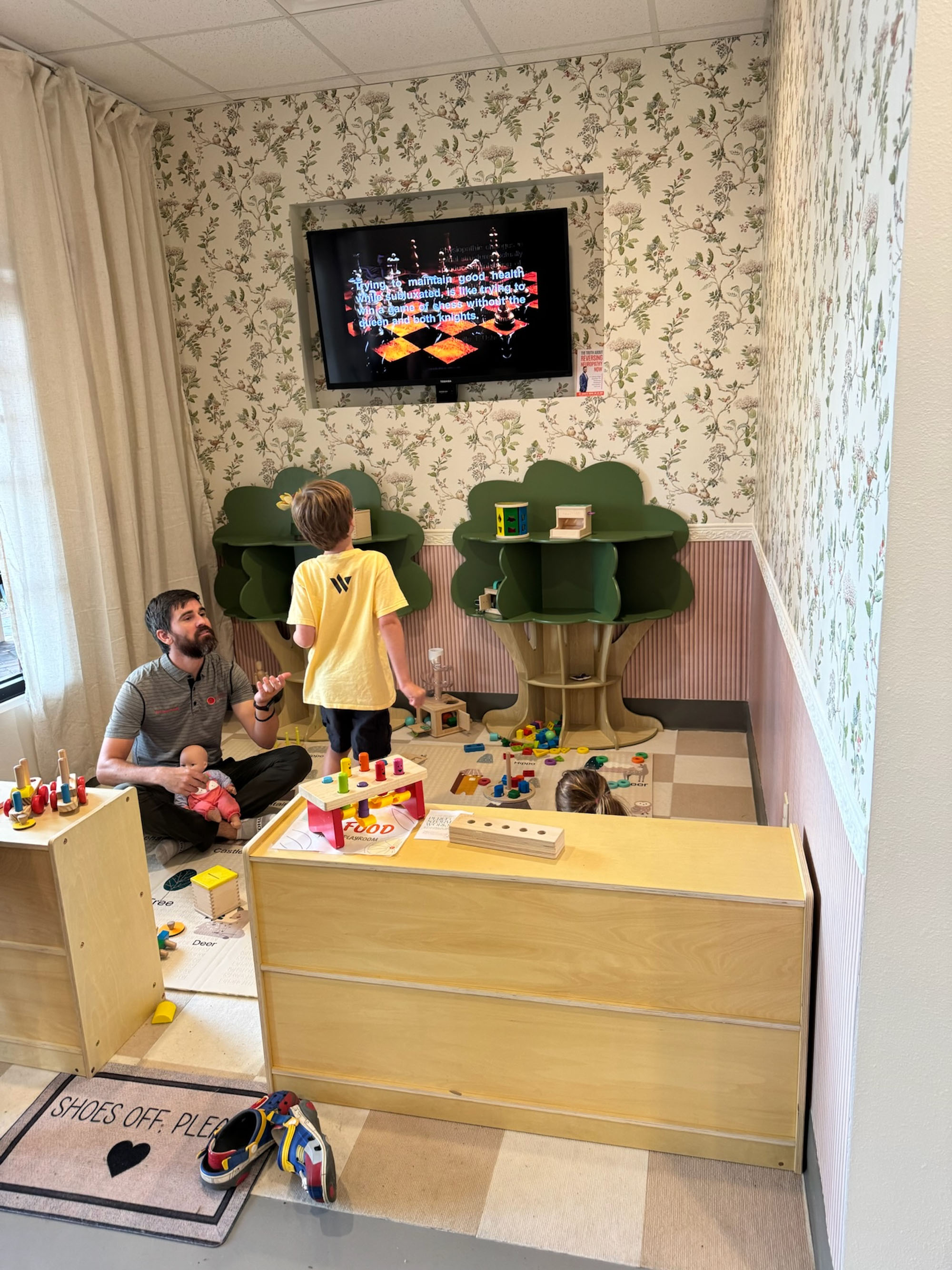
Play-based, never pushy.
Keep Exploring
More on infant chiropractic
Let's look at what's
going on, together.
A 15-minute evaluation with one of our pediatric chiropractors. No pressure, no obligation — just a real look at what your baby is showing us.