

Gentle Techniques
Safe, Soft, and Built for Newborns
If you've pictured a chiropractor "cracking" your baby's back, please — take a breath. That is not what happens at Little Roots. Here's what actually does.
What "Gentle" Actually Means
The Ripe-Tomato Test
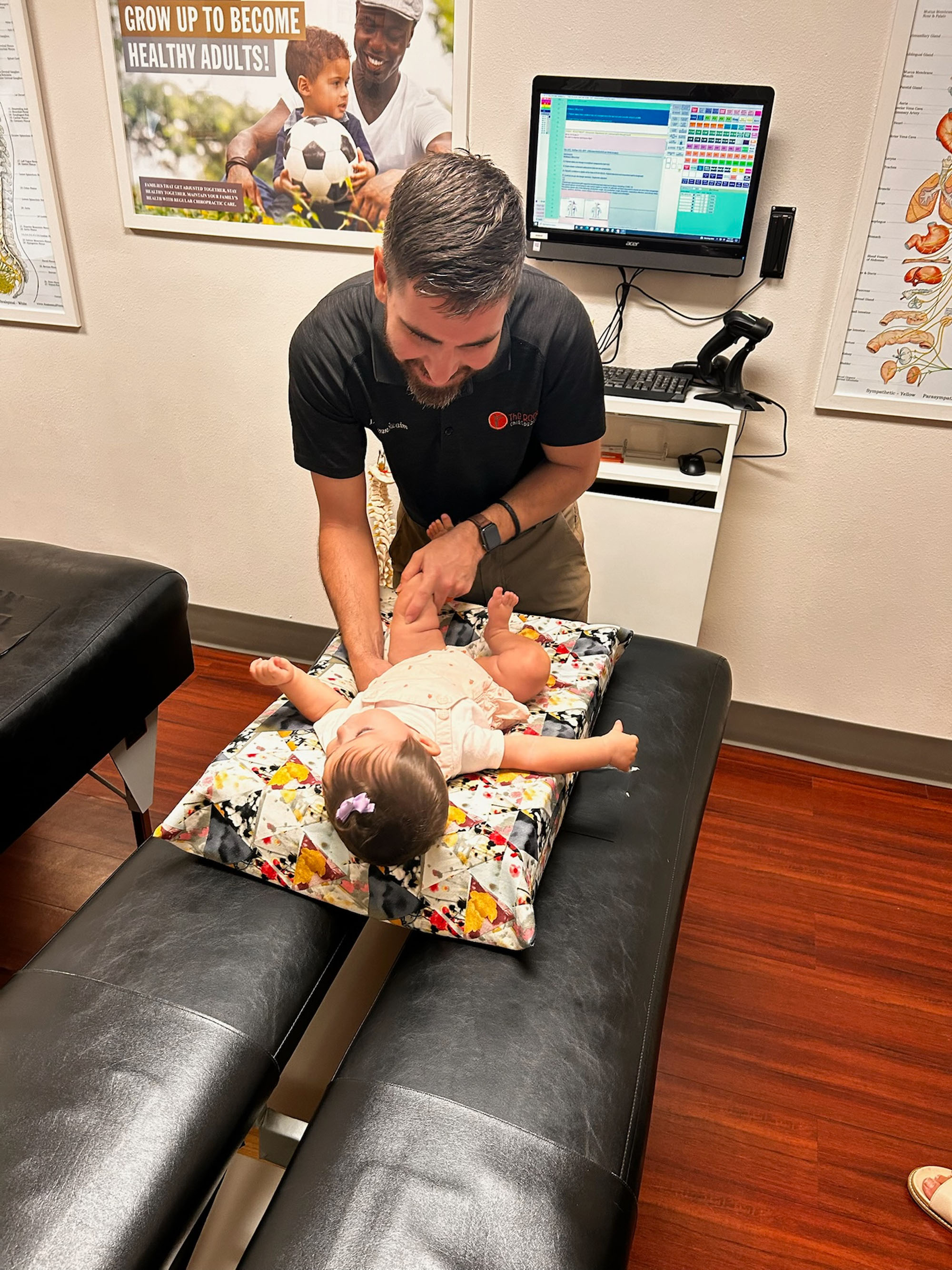
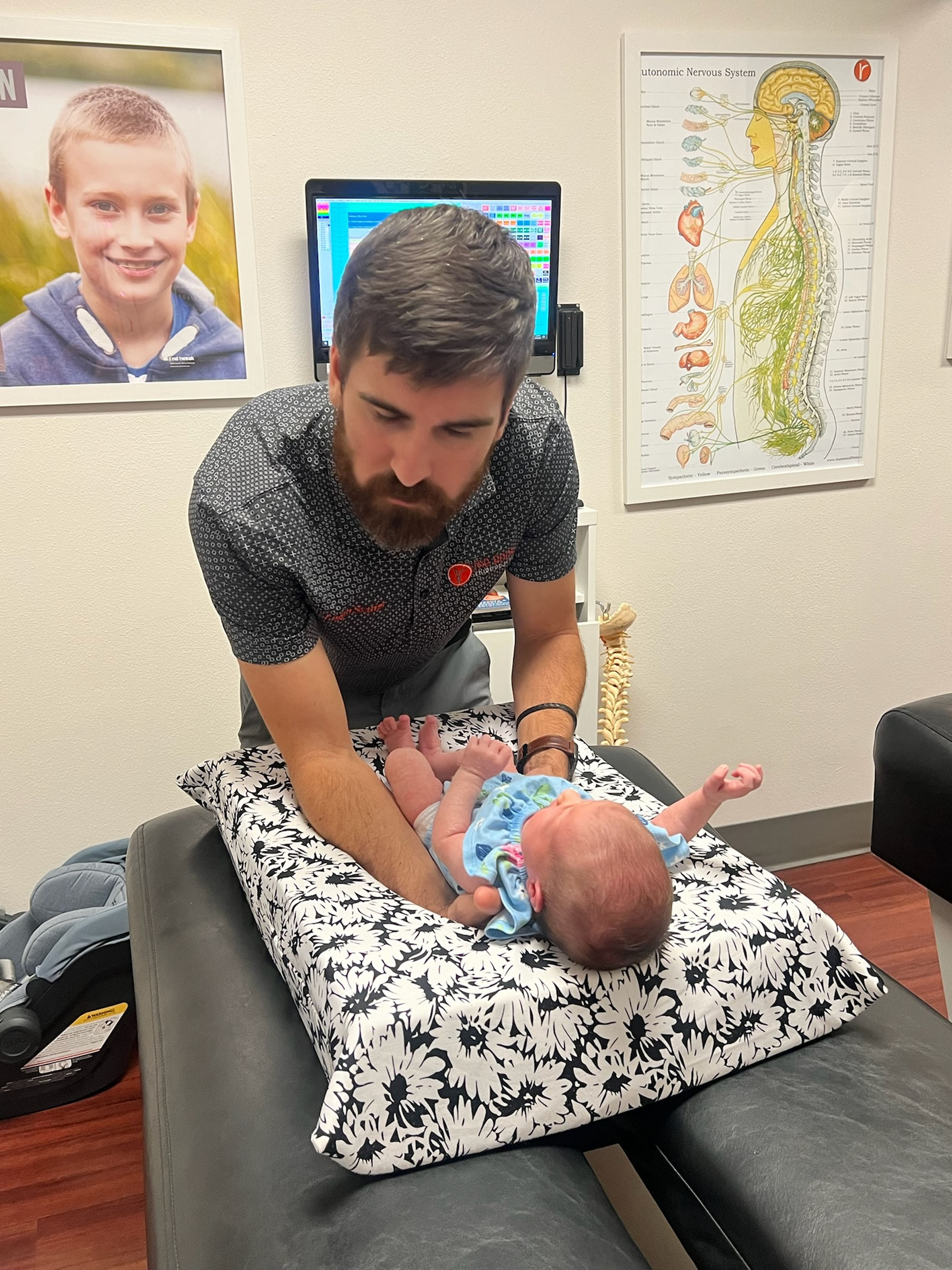
The pressure we use on a newborn is roughly the same pressure you'd use to test the ripeness of a tomato. That's not a marketing line — it's measured, it's intentional, and it's the standard of care for pediatric chiropractic.
There is no twisting. There is no "popping" or cracking. We never force a movement. A newborn adjustment is a precise, whisper-light tap into the exact spot that needs it — nothing more.
If at any point your baby is fussy, we stop. If your baby is asleep, we often continue without waking them. The pace is set by your little one, not by a schedule.
Our Primary Technique
Why Torque Release Technique Works for Tiny Patients
Torque Release Technique (TRT) uses a small, spring-loaded handheld instrument called the Integrator. It delivers a tiny, precisely calibrated impulse to a single vertebra at the exact angle the body needs — no manual thrust, no body twisting, no leverage.
For a newborn, that level of precision is everything. Instead of moving a whole region of the spine by hand, we address one tiny segment with a force that's a fraction of what you'd feel from a gentle fingertip tap.
Our doctors are ICPA Webster Certified and have performed thousands of these adjustments on infants. For our youngest patients, they'll often skip the instrument entirely and use a single fingertip — the approach is always dialed to the baby in front of them. It's the same gentle philosophy that carries through our ongoing pediatric wellness care as your child grows.
When Can We Start?
Hours After Birth Is Fine
Many of our families bring their baby in within the first week or two of life. Some come in within days of discharge from the hospital — especially after a long labor, a C-section, or a delivery that involved vacuum or forceps assistance. Parents who cared for their spine through prenatal chiropractic often want that same gentle start for their newborn.
There is no "too early" for a gentle newborn check. In fact, the earlier we meet your baby, the lighter the work tends to be, because we're addressing patterns before they settle in.
If your baby is older and you're reading this wondering if you've missed the window — you haven't. Infants respond beautifully at every age. The ripe-tomato pressure applies whether they're two days old or ten months old.
Our Assessment
What We Look For
A newborn assessment is mostly watching, listening, and touching. The three areas we focus on:
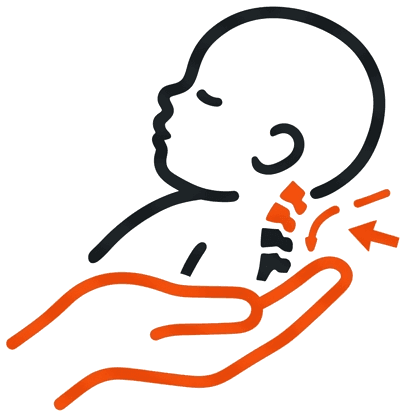
Upper Cervical Spine
The top two vertebrae (C1 and C2) absorb a surprising amount of birth stress. We gently check mobility, muscle tension, and head-turn symmetry — issues here are often behind torticollis, feeding asymmetries, and fussiness.
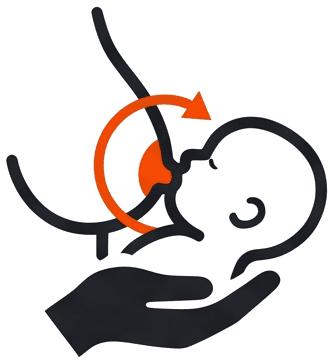
Jaw & Oral Motor Function
Latching and nursing depend on a jaw that can open evenly and a tongue that can move freely. We check TMJ symmetry, suck patterns, and any asymmetries that might be pulling your baby off of a deep latch.
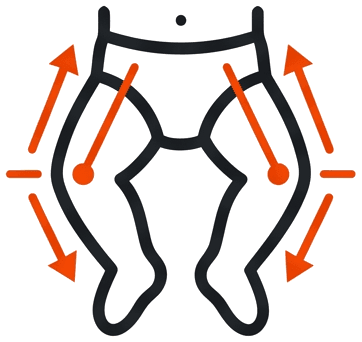
Pelvis & Sacrum
The pelvis carries a lot of load during birth. A restricted sacrum can show up as digestive struggles, colic-like patterns, or a baby who arches and fusses when laid flat.
See It Explained
The gentle approach in action
Dr. Grayson Fox — Why Pediatric Chiropractic”

Up Next
Curious What We Actually Help With?
Colic, reflux, latching, sleep, torticollis, flat-head patterns — these are the issues new parents bring us most often, and here's what we can (and can't) do about each one.
The gentlest discipline
Soft hands. Slow pace. Zero drama.
Gentle from day one.

Connection before care.
Nervous-system first. Always.

When mom is supported, the whole family thrives.

Most newborns sleep right through it.
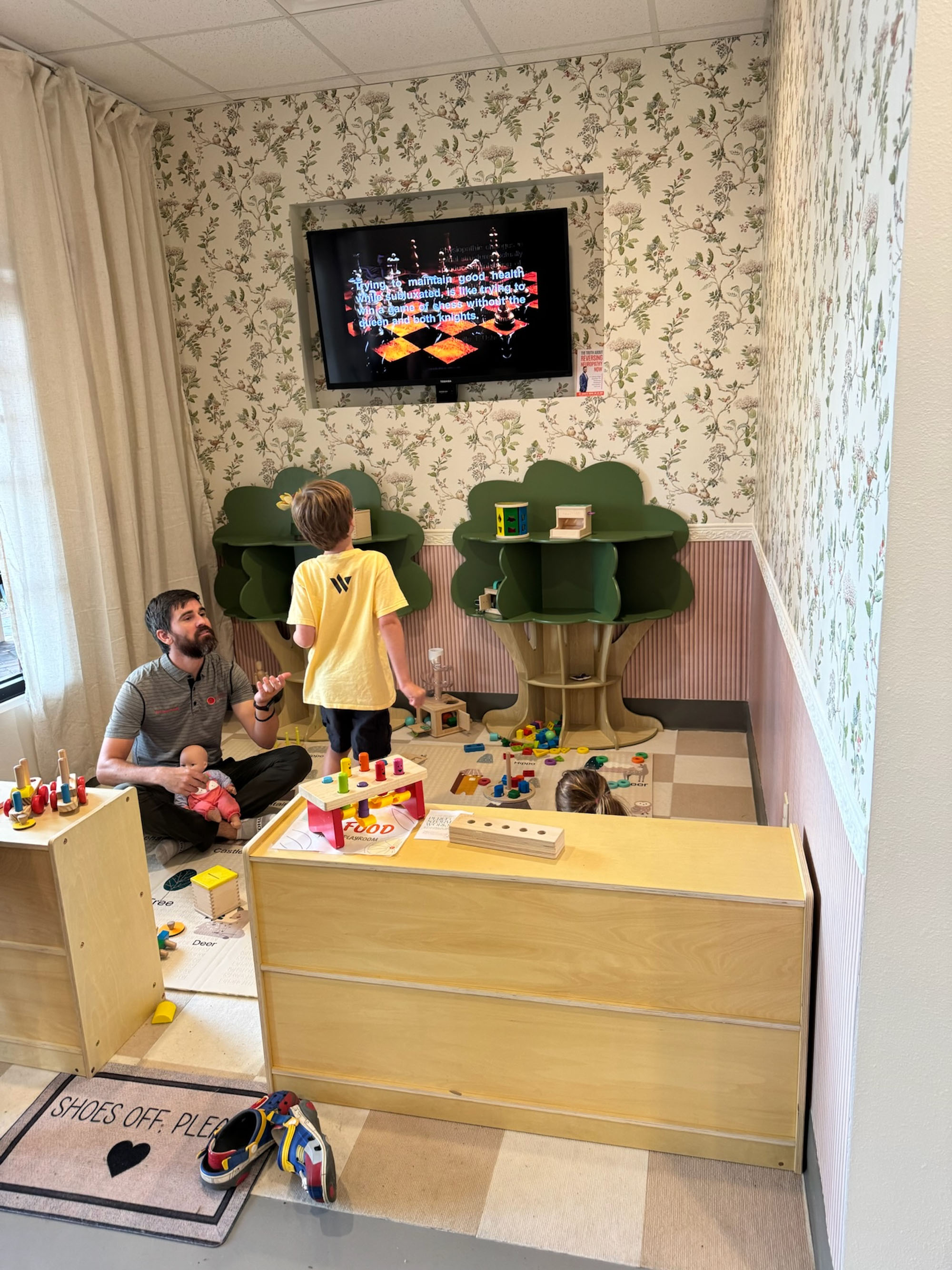
Play-based, never pushy.
Keep Exploring
Common issues we help with
Still Have Questions?
Book a complimentary consultation and our doctors will walk you through everything in person — no pressure, no obligation.