

Condition
Reflux
Beyond just spit-up
Spit-up is normal. Arching through feeds, crying after eating, sleeping fitfully, and never seeming satisfied — that's reflux, and it's almost always a nervous-system regulation story before it's a digestion story.
By Dr. Logan Swaim · Last updated July 17, 2026
Get help with Reflux
Three quick questions — we'll call you within 24 business hours.
Understanding Reflux
What it is & why it shows up
When parents tell us their baby has reflux, they usually mean more than the occasional spit-up. They mean a baby who finishes a feed in tears, arches their back like they're trying to escape, and never quite settles. They mean middle-of-the-night wakings that feel like every meal hurts.
The standard answer is medication (and sometimes that's the right answer — work with your pediatrician). But what we see is that reflux often has a structural piece nobody's looked at. The vagus nerve — which controls digestion — runs through the upper neck and jaw. When those areas hold tension from birth, the digestive system can't sequence properly. Add a tongue or lip tie and the baby swallows air with every feed, which makes the spit-up worse.
Gentle care that addresses the upper neck, jaw, palate, and cranial bones often shifts the picture quickly. Care works alongside (never instead of) your pediatrician and any lactation consultant or feeding specialist your baby is seeing.
What parents notice
Signs that bring families in
- Frequent spit-up after most feeds
- Arching, twisting, or pulling away during feeding
- Crying or fussiness within 30 minutes of eating
- Sleep that breaks up after feeds — short naps, frequent night wakings
- Wet-sounding burps or chronic hiccups
- Milky breath, hoarse cry, or chronic congestion
- Slow weight gain despite frequent feeds
How we help
Our approach to reflux
- Birth + feeding history — every reflux baby has a story worth listening to
- Gentle assessment of upper neck, jaw, and cranial mobility
- Intraoral palate work if a tongue/lip tie is part of the picture
- Featherlight adjustments where tension is interfering with the vagus nerve
- Coordination with your pediatrician, IBCLC, or feeding therapist
From the Clinic
Hear it from our doctors
Dr. Grayson Fox — Why Pediatric Chiropractic”
Inside Little Roots
What gentle care looks like.
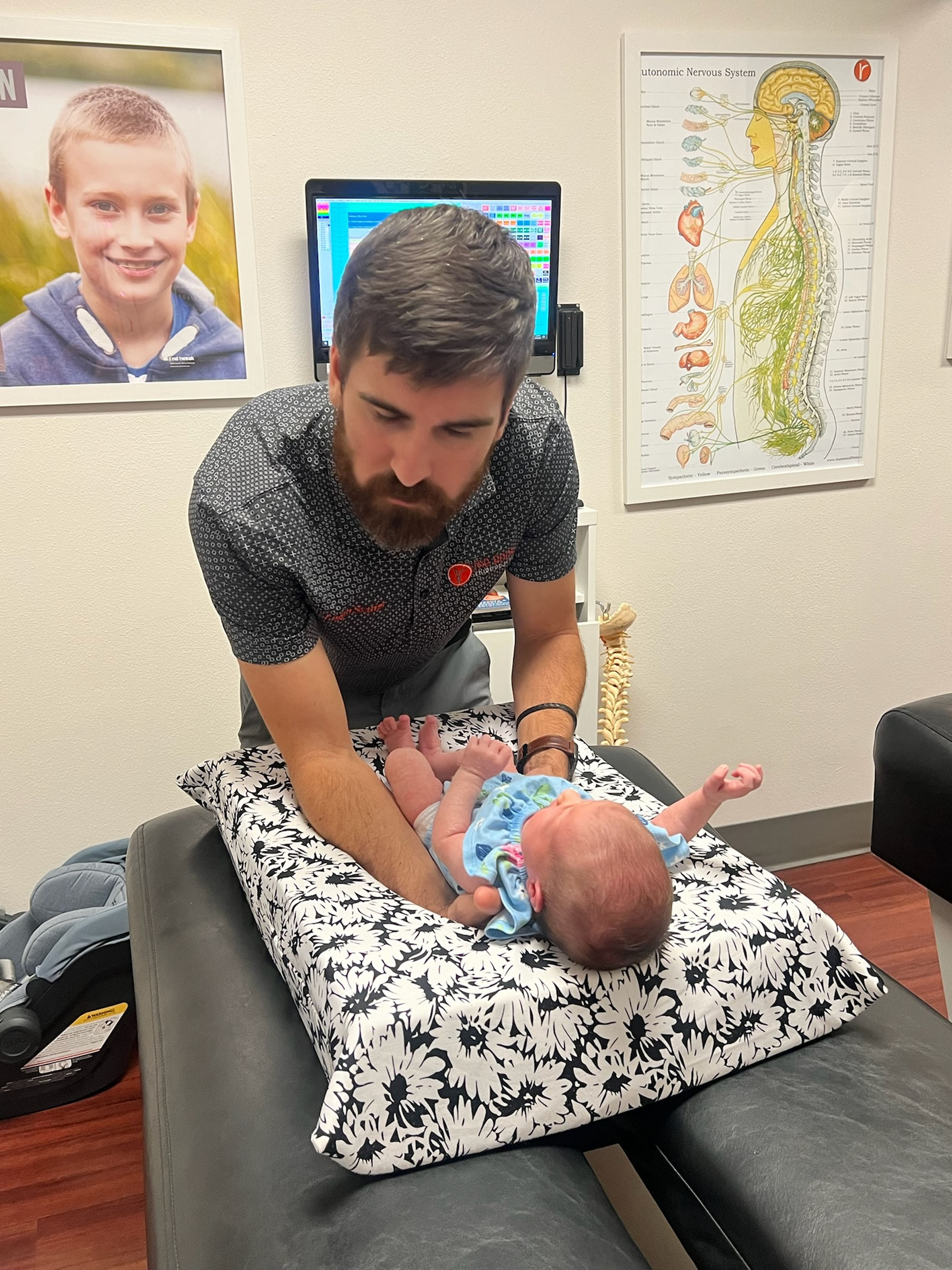
Nervous-system first. Always.

When mom is supported, the whole family thrives.
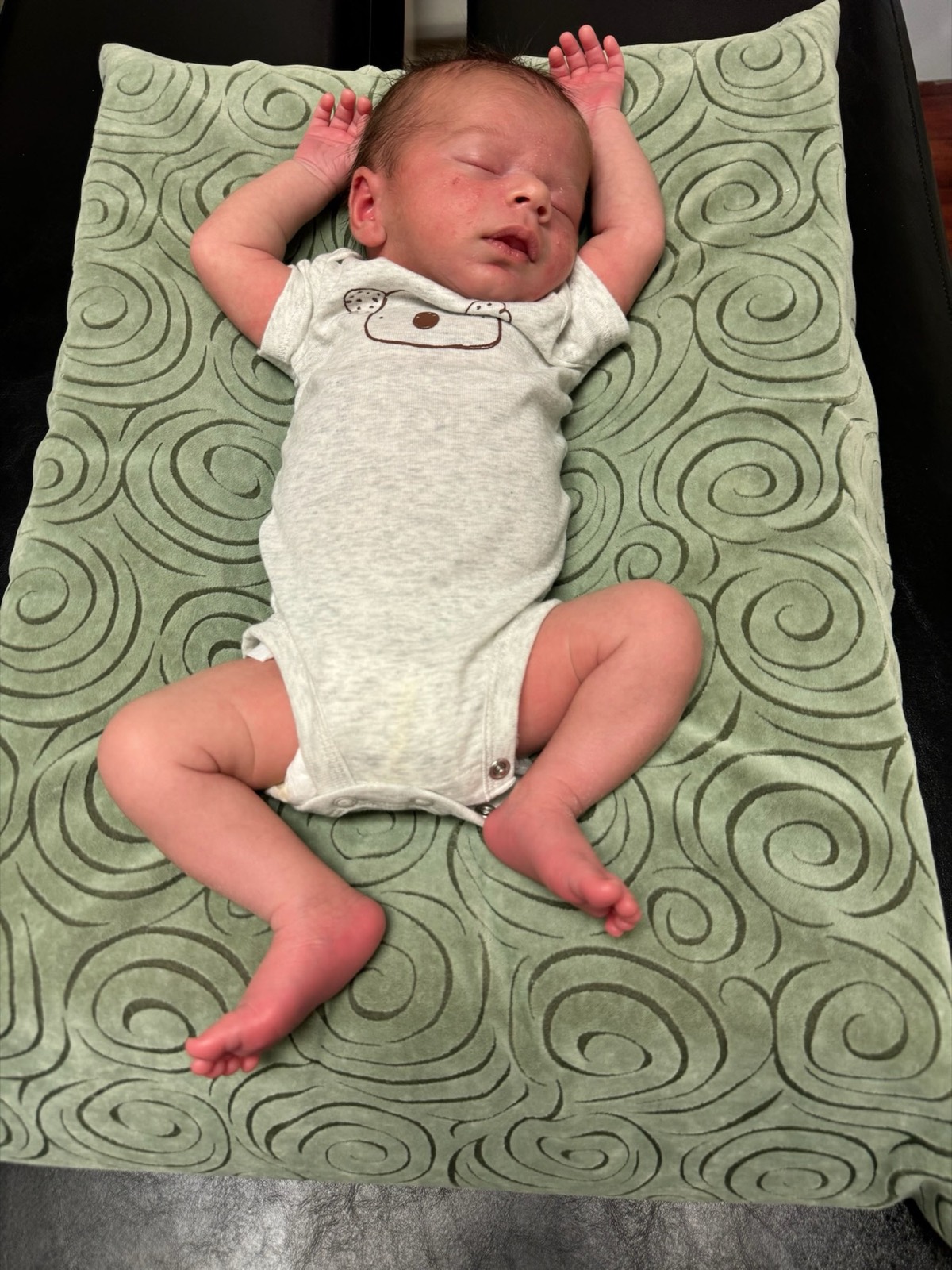
Most newborns sleep right through it.
Keep Exploring
Meet our team
Services that support this
Care we offer for reflux


Common questions
Frequently asked questions

Our Doctors
A pediatric-trained team behind every visit
Little Roots is led by co-directors Dr. Logan Swaim, MS, DC and Dr. Laura Swaim, DC — both Webster Certified, Dr. Laura through the ICPA — alongside Dr. Grayson Fox, DC, who is PX-Certified with advanced training in chiropractic neurology and a dedicated pediatric focus. Carly Lovato, our office and lead case manager, and Yohanna Miller, our patient care coordinator, complete the team your family sees at every visit.
Meet the whole team →Want a personalized look at
your child's nervous system?
Start with a complimentary consultation. We listen first, evaluate gently, and recommend only if there's something we can help with.