

Symptom · Infants & Babies
Motor Delays
When milestones aren't landing on schedule
Rolling, sitting, tummy time, reaching — when these windows come and go without the expected movement, there's often a structural piece in the picture alongside the developmental one.
By Dr. Logan Swaim · Last updated May 22, 2026
Get help with Motor Delays
Three quick questions — we'll call you within 24 business hours.
Understanding Motor Delays
What it is & why it shows up
Developmental milestones are ranges, not deadlines. But when a baby consistently struggles with tummy time, can't bring their hands to midline, rolls only one direction, or isn't sitting by the expected window, it's worth asking why — not just waiting.
What we look for structurally is whether restriction in the neck, upper spine, or sacrum is making certain movements uncomfortable or inaccessible. A baby who hates tummy time isn't being difficult; they may have tension in the neck or chest that makes the position genuinely painful. A baby who only rolls left may have a holding pattern on the right side that nobody's addressed.
Gentle chiropractic care that releases those restrictions often unlocks movement quickly. Care works alongside any occupational or physical therapy your baby is already receiving — we're the structural layer, not a replacement for their developmental team.
Important
When to seek medical care first
If your baby has lost developmental skills they previously had, has muscle tone that seems very high or very low, or has any neurological concerns, discuss with your pediatrician or a pediatric neurologist before starting chiropractic care.
From the Clinic
Hear it from our doctors
Dr. Grayson Fox — Why Pediatric Chiropractic”
Inside Little Roots
What gentle care looks like.
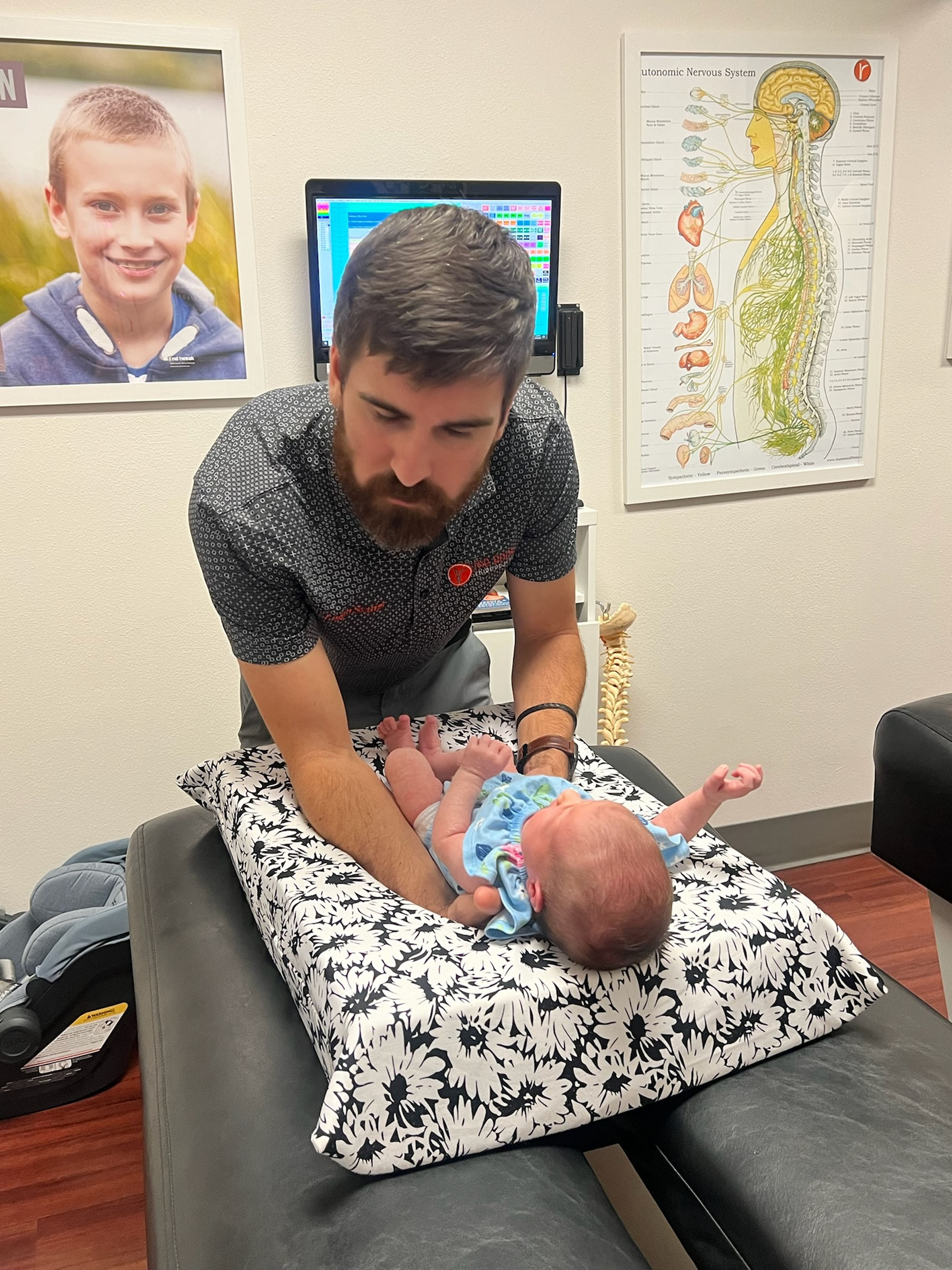
Nervous-system first. Always.
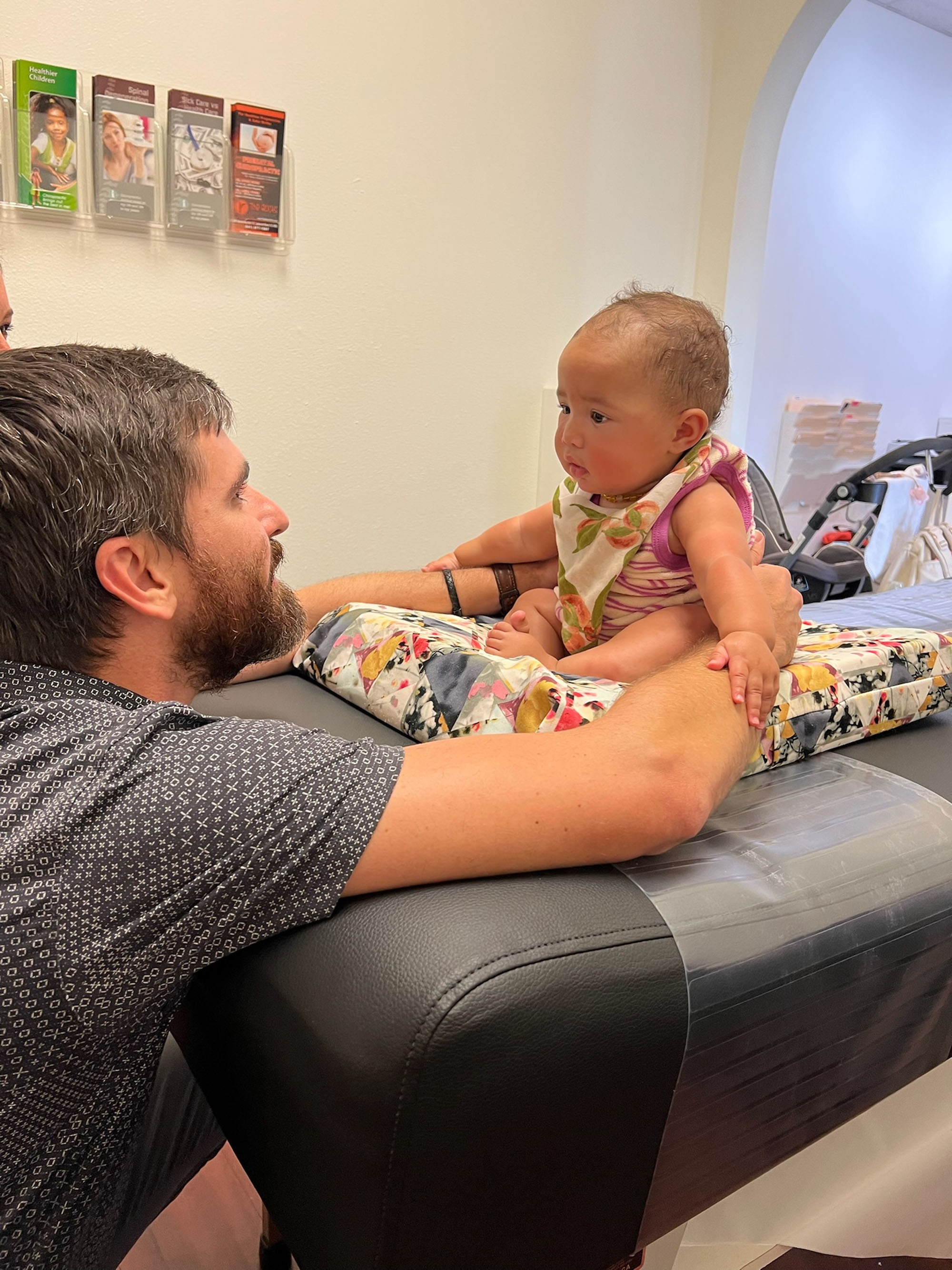
Connection before care.
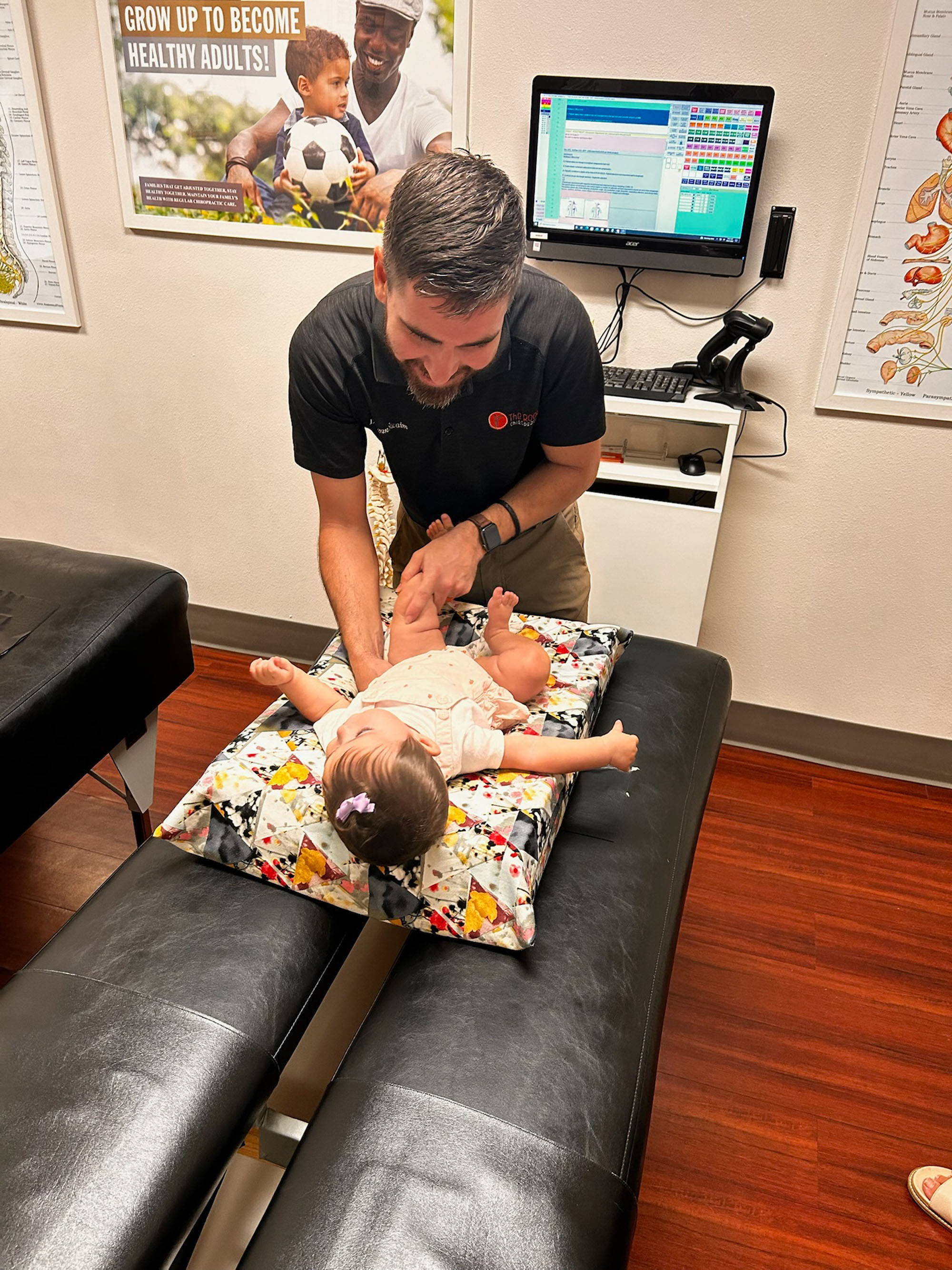
Feather-light from the first visit.
Keep Exploring
Meet our team
Care we offer
Services that support motor delays
Infant & Newborn Care
Specialized chiropractic care for newborns and infants, using pressure as light as testing the ripeness of a tomato.
Learn more →
Developmental Support
Specialized neurodevelopmental chiropractic for children navigating autism, ADHD, sensory processing, and other complex developmental needs.
Learn more →
Read more
Articles for parents
Is Chiropractic Safe for Babies? What the Research Actually Shows
Parents ask us every week: is chiropractic safe for my baby? Here is what the published safety data says, what a newborn adjustment actually looks like, and how to find a qualified pediatric chiropractor in Lakewood Ranch.
Baby Won't Sleep? The Nervous System Connection Most Parents Never Hear About
When your baby won't sleep no matter what you try, the problem may not be environmental. Learn how a dysregulated nervous system keeps infants stuck in alert mode — and what gentle pediatric chiropractic care can do to help.
Common questions
Frequently asked questions
Our Doctors
A pediatric-trained team behind every visit
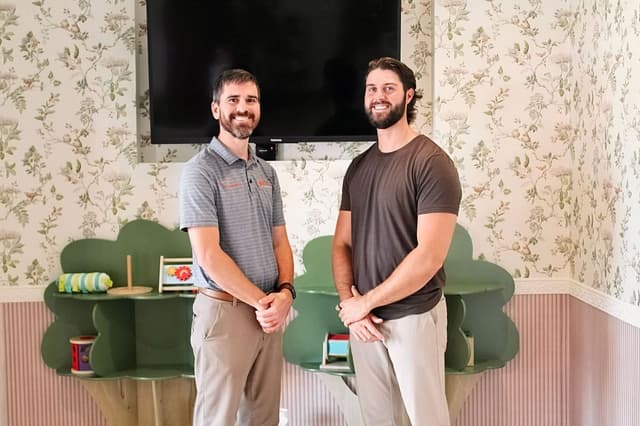
Little Roots is led by co-directors Dr. Logan Swaim, MS, DC and Dr. Laura Swaim, DC — both Webster Certified, Dr. Laura through the ICPA — alongside Dr. Grayson Fox, DC, who is PX-Certified with advanced training in chiropractic neurology and a dedicated pediatric focus. Carly Lovato, our office and lead case manager, and Yohanna Miller, our patient care coordinator, complete the team your family sees at every visit.
Meet the whole team →Want a gentle look at
what's going on?
Start with a complimentary consultation. We listen first, evaluate gently, and recommend only if there's something we can help with.