

What Age Can Kids See a Chiropractor?
Dr. Grayson Fox, DC
From newborns to teenagers, pediatric chiropractic care looks different at every age. Here's what parents should know about when — and how — it can help.
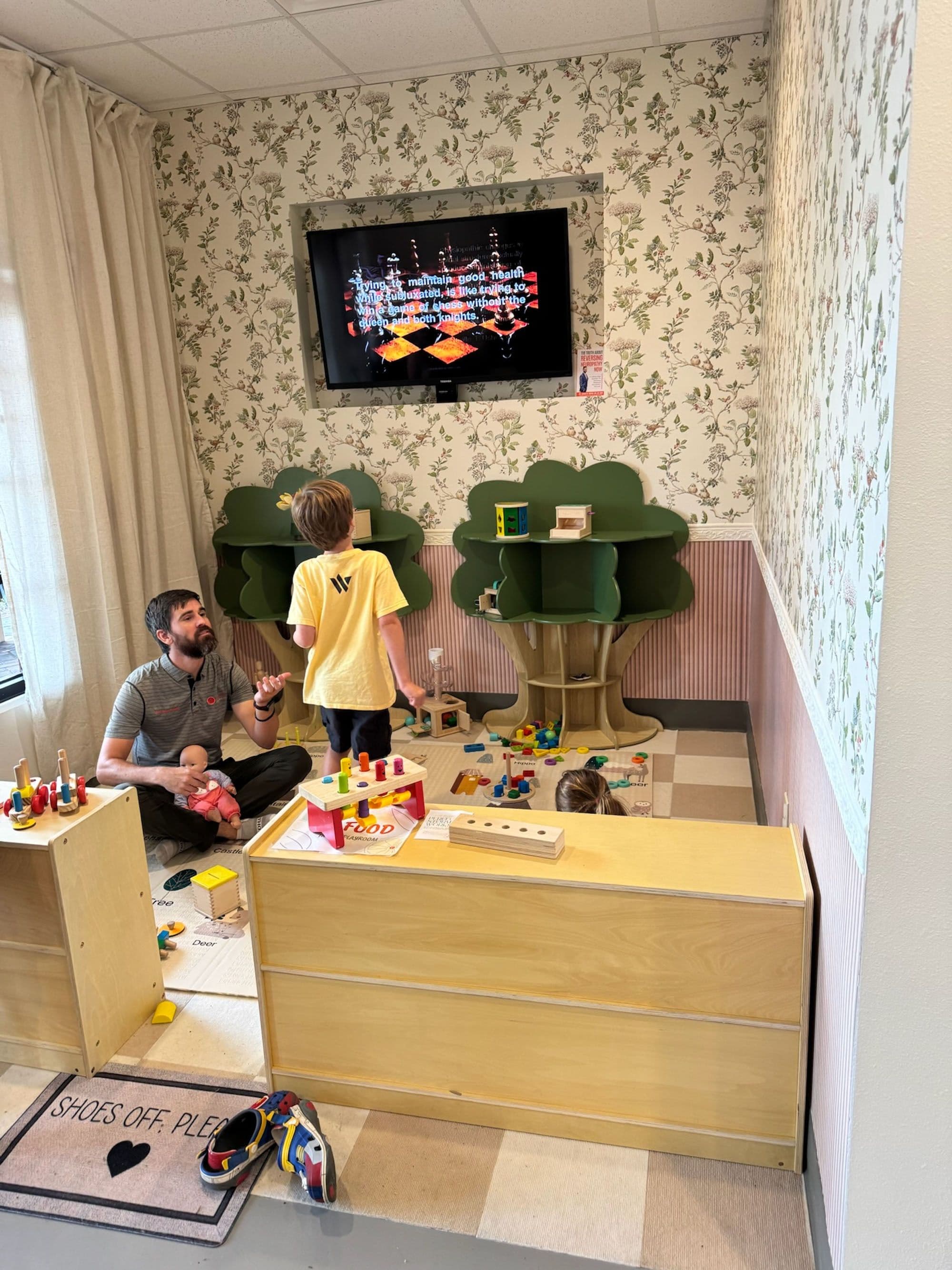
"What age can my child see a chiropractor?" is one of the most common questions parents ask us, and it's a good one — the honest answer is that there's no single right age. Gentle, pediatric-specific chiropractic care is something families use at every stage, from the first days after birth through the teenage years, and what a visit actually looks like changes a lot depending on your child's age and development. Here's how care differs from infancy through the teen years, so you know what to expect at each stage.
Is There a Minimum Age for Chiropractic Care?
No — pediatric chiropractic care is built to be appropriate from the earliest days of life, using techniques that look nothing like adult adjustments. The amount of pressure used on a newborn is gentle, about the pressure you'd use to check the ripeness of a tomato, and it's applied by doctors specifically trained in infant chiropractic care. Some parents bring in newborns within the first weeks for feeding or colic-related concerns; others wait until a specific concern comes up later. Both are reasonable starting points, and our doctors always begin with a conversation about your child's history before recommending anything. There's no test your child has to pass or symptom they have to have first — plenty of families use pediatric chiropractic care simply as part of general wellness support, the same way they'd think about regular pediatrician checkups.
Infancy (0–12 Months)
The most common reasons parents bring in infants at this stage include a difficult birth process, trouble with latch or feeding, colic and fussiness, and general nervous-system support as a newborn's body adjusts to life outside the womb. Every visit at this age uses the gentlest end of our technique spectrum, and our doctors assess your baby's whole nervous system, not just one symptom in isolation.
Toddlers and Young Children (1–5 Years)
This is the age of falls, tumbles, and the everyday bumps that come with learning to walk, run, and climb. Parents at this stage often come in for general pediatric wellness support, posture and developmental milestones, or ongoing care after a hard fall. Technique at this age still uses very light, specific pressure — nothing like what an adult adjustment looks like — and visits tend to be short, playful, and low-stress for a wiggly toddler.
School-Age Kids (6–12 Years)
As kids get older, new stressors show up: heavier backpacks, organized sports, longer stretches of sitting at a desk, and more screen time. Parents in this age group often ask about posture, focus and attention, or recovery after a sports bump or fall. Some families also come in with questions about how a nervous-system-focused approach fits alongside a child's broader care team — our ADHD and nervous system page walks through that lens in more detail.
Teenagers
Teenagers deal with a different mix: growth spurts, sports intensity picking up, more hours hunched over a phone or laptop, and the posture habits that come with all of it. Care at this age starts to look more like adult care in terms of technique, but the conversation still centers on what's actually going on for that individual teen — there's no default protocol based on age alone.
A Few Misconceptions Parents Have
A couple of assumptions come up often enough that they're worth addressing directly. First, pediatric chiropractic adjustments do not look or sound like the "cracking" adult adjustments some parents picture — the technique used on infants and young children is dramatically gentler, using light, specific pressure rather than any forceful movement. Second, chiropractic care isn't only for kids with an obvious problem. Many families use it as part of general wellness support alongside their pediatrician, the same way they'd think about nutrition or sleep — not as a replacement for well-child visits or other care your child is already receiving.
What Pediatric Care Actually Looks Like
Across every age group, the through-line is that technique is matched to the child in front of us, not applied from a generic playbook. Dr. Fox is PX-Certified with advanced training in chiropractic neurology, and our doctors are trained specifically in pediatric-appropriate, low-force technique. Each visit starts with understanding your child's history and what you're noticing at home, followed by an age-appropriate assessment and a conversation about what our doctors are finding — never a one-size-fits-all plan handed out regardless of what's actually going on.
How Often Will My Child Need to Be Seen?
There's no standard schedule that applies to every child, and we're intentionally cautious about promising a specific number of visits or a fixed timeline. How often your child is seen depends on what our doctors find during their assessment, what you're noticing at home, and how your child is doing as care continues. A newborn being supported through the early weeks of life often looks different from a school-age child coming in for occasional wellness support — each plan is built around that individual child rather than a one-size-fits-all interval.
What to Expect at Your Child's First Visit
Your child's first visit starts with a conversation about their history, birth story if relevant, and whatever brought you in — followed by a gentle, age-appropriate assessment. From there, our doctors talk through what they're finding and what a personalized plan could look like. Is Chiropractic Safe for Babies? and What a Pediatric Chiropractor Does both walk through more detail if you want to read further before booking.
Frequently Asked Questions
What age can kids start chiropractic care? There's no minimum age — pediatric-specific, gentle care is appropriate from the first days of life through the teenage years, using technique matched to each stage.
Is chiropractic safe for newborns? Pediatric chiropractic technique for newborns uses very light, specific pressure, applied by doctors trained specifically in infant care. Our doctors always start with a conversation about your baby's birth history and any concerns before recommending anything.
Can chiropractic care help with ADHD or sensory issues in older kids? Some families explore a nervous-system-focused approach alongside their child's broader care team for ADHD and sensory-related concerns. This is educational support, not a replacement for other care your child may be receiving, and outcomes vary by child.
Do older kids and teens see a chiropractor differently than younger kids? Yes — technique and focus shift with age. Teenagers are often dealing with growth spurts, sports demands, and posture habits, while infants and toddlers are assessed with much gentler, lower-force technique.
How do I know if my child actually needs to see a chiropractor? If you're noticing something — feeding struggles, posture concerns, recovery after a fall, or focus-related questions — that's worth bringing up at a conversation with our doctors, who can tell you what they're seeing after an actual assessment rather than guessing from a symptom list.
Wondering whether pediatric chiropractic care makes sense for your child, at whatever age they're at right now? Schedule a complimentary consultation at Little Roots Pediatric Chiropractic in Lakewood Ranch, and our doctors will walk you through what we're seeing and what a gentle, personalized plan could look like.
Little Roots Pediatric Chiropractic, 8209 Natures Way, Unit 117, Lakewood Ranch, FL 34202. (941) 932-4611.
Learn More
Conditions we help with
Colic
Colic isn't a personality trait — it's often a baby's nervous system stuck on high alert. Gentle chiropractic care helps the system downshift so feeding, sleeping, and being held start to feel okay again.
Learn moreADHD & Attention
ADHD isn't a behavior problem and chiropractic isn't a treatment for it. But care that helps the nervous system regulate gives kids with attention challenges more capacity to use the tools that work — and that's everything.
Learn moreRelated Services
Related Reading
Related articles
Is Chiropractic Safe for Babies? What the Research Actually Shows
Parents ask us every week: is chiropractic safe for my baby? Here is what the published safety data says, what a newborn adjustment actually looks like, and how to find a qualified pediatric chiropractor in Lakewood Ranch.
Read articleWhat a Pediatric Chiropractor Does: A Gentle Guide for Parents
Wondering what a pediatric chiropractor actually does for kids and babies? Here's a gentle, plain-English look at the care, the first visit, and the concerns families bring in.
Read articleKeep Reading
More for growing families
Toddler Snoring: When It's Normal and When to Look Closer
Hearing your toddler snore can be sweet or worrying. Here is what is often normal, which signs are worth mentioning to your pediatrician, and gentle ways to support better sleep.
Breastfeeding Back Pain: Posture Tips for Nursing Moms
Hours of feeding can leave your neck, shoulders and back aching. Here is why breastfeeding back pain happens and the gentle posture changes that may help.
Baby Spit-Up vs. Vomit: How to Tell the Difference
Your baby just brought up a feed, and you're wondering if it's normal spit-up or something more. Here's how to tell the difference and when to call your pediatrician.
Questions about your child?
Schedule a consultation and let's talk through your family's needs together.
Book a Consultation(941) 932-4611