

Symptom · Infants & Babies
Frequent Crying
When nothing you do seems to help
Frequent, inconsolable crying in a baby isn't a personality trait — it's a communication. Almost always, it's a nervous system that doesn't know how to downshift. Gentle care gives it a way out.
By Dr. Logan Swaim · Last updated May 22, 2026
Get help with Frequent Crying
Three quick questions — we'll call you within 24 business hours.
Understanding Frequent Crying
What it is & why it shows up
New parents often describe it the same way: 'We've tried everything.' Feeding, rocking, swaddling, the white noise machine, the car seat, the walk around the block — and then the baby cries anyway. Especially in the evenings. Especially for what feels like hours.
What we see in the office is a nervous system running hot. Birth — even a 'good' birth — can compress, stretch, or torque the structures in a baby's neck, jaw, cranial bones, and upper spine. When those areas hold tension, the vagus nerve (the main calming nerve) can't do its job. The result is a baby who's in a constant low-grade alarm state and can't settle.
Featherlight cranial and cervical work helps that tension release so the system can finally downshift. Most parents notice longer stretches of calm, easier evenings, and a qualitative change in how their baby holds themselves within the first few visits. Care complements — never replaces — your pediatrician's evaluation for any underlying cause.
Important
When to seek medical care first
Always rule out medical causes (ear infection, hernia, fracture, meningitis) with your pediatrician before attributing frequent crying to a nervous-system pattern. If your baby has a fever, is vomiting, or has a bulging fontanelle, call your doctor or go to the ER.
From the Clinic
Hear it from our doctors
Dr. Grayson Fox — Why Pediatric Chiropractic”
Inside Little Roots
What gentle care looks like.
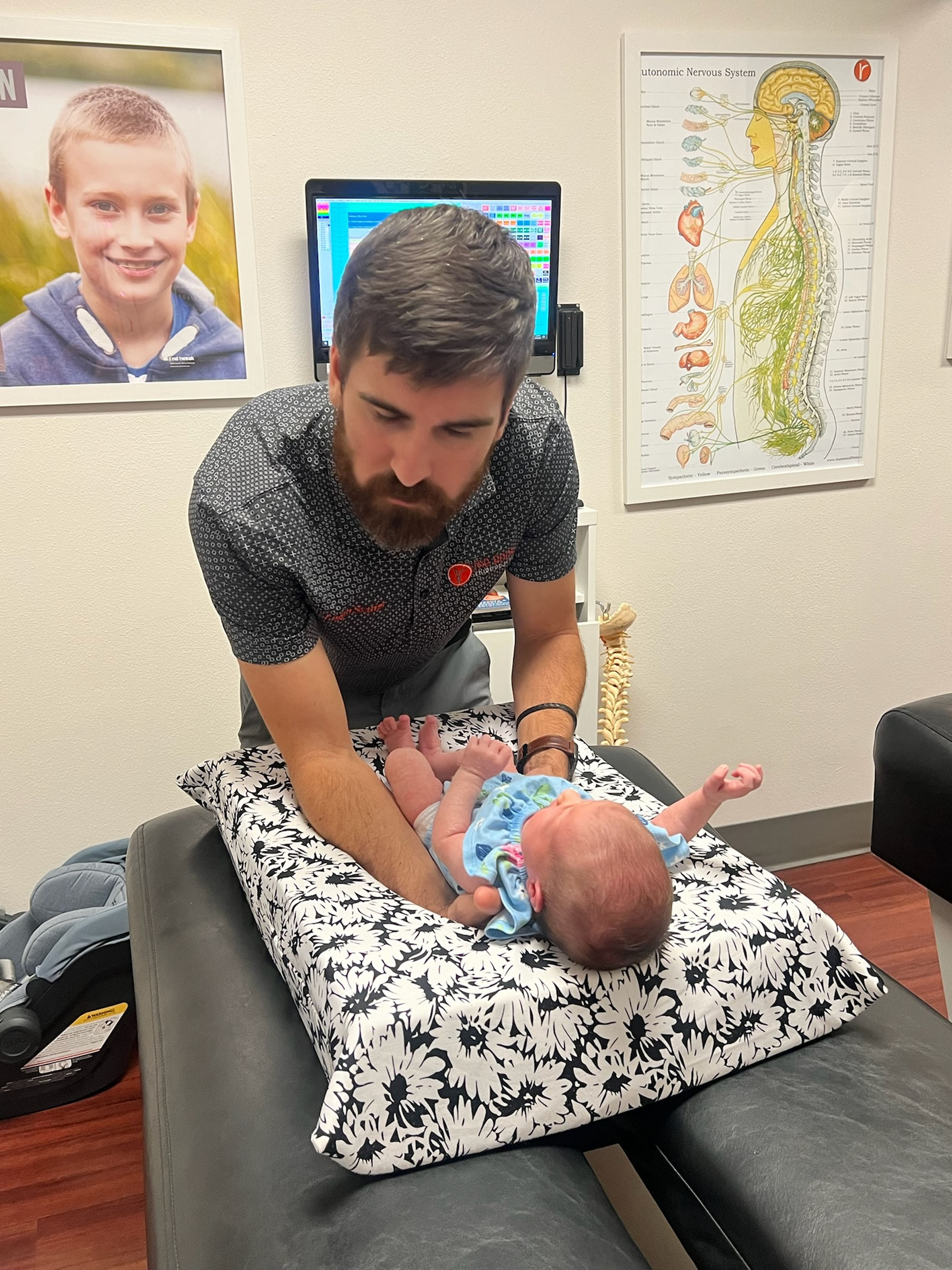
Nervous-system first. Always.
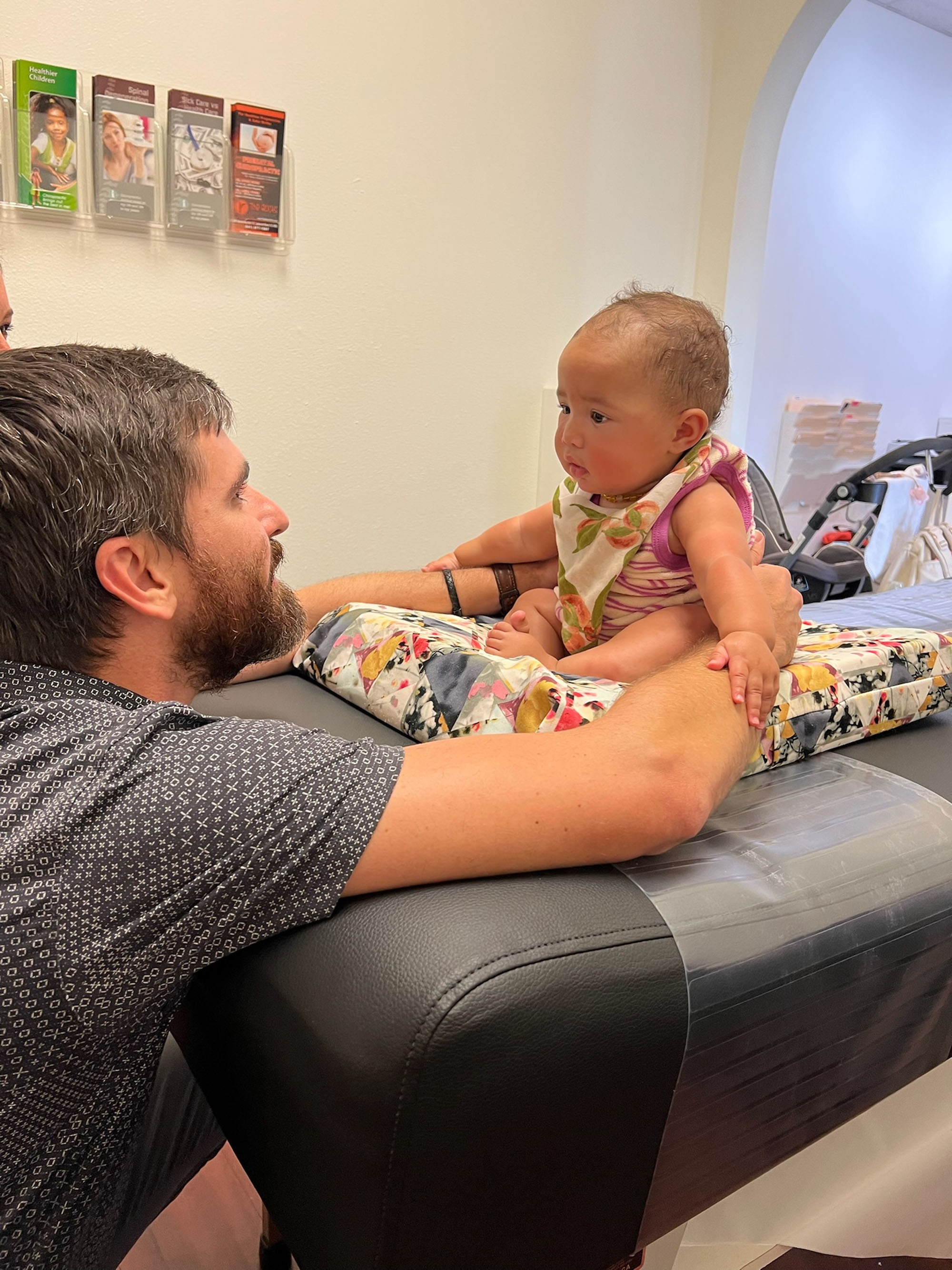
Connection before care.
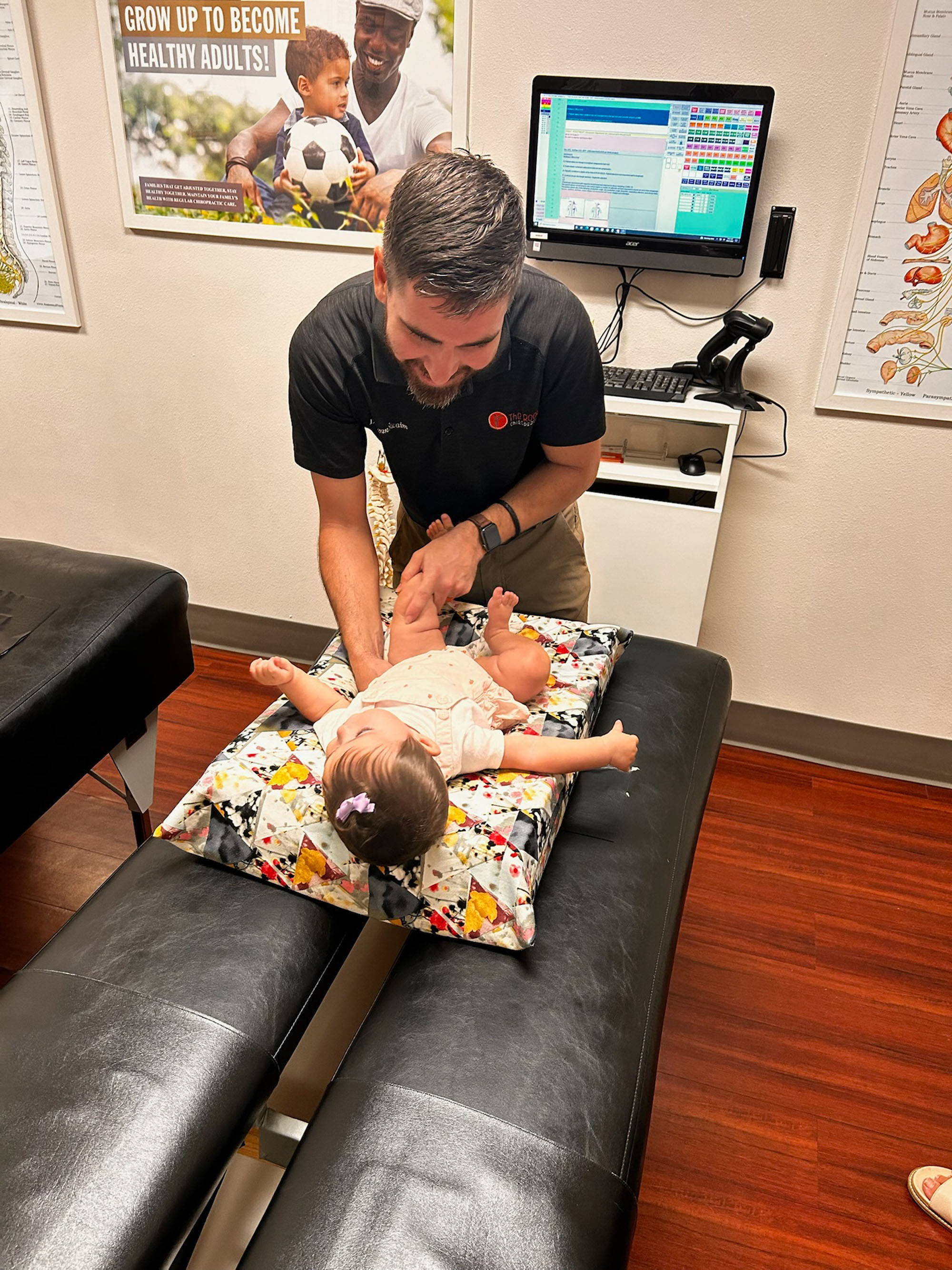
Feather-light from the first visit.
Keep Exploring
Meet our team
Care we offer
Services that support frequent crying



Read more
Articles for parents
Colic and the Nervous System: Why Your Baby Can't Stop Crying
Colic is often a nervous system problem, not a stomach problem. Learn why babies get colic, what's really happening, and how gentle pediatric chiropractic care helps.
Is Chiropractic Safe for Babies? What the Research Actually Shows
Parents ask us every week: is chiropractic safe for my baby? Here is what the published safety data says, what a newborn adjustment actually looks like, and how to find a qualified pediatric chiropractor in Lakewood Ranch.
Common questions
Frequently asked questions

Our Doctors
A pediatric-trained team behind every visit
Little Roots is led by co-directors Dr. Logan Swaim, MS, DC and Dr. Laura Swaim, DC — both Webster Certified, Dr. Laura through the ICPA — alongside Dr. Grayson Fox, DC, who is PX-Certified with advanced training in chiropractic neurology and a dedicated pediatric focus. Carly Lovato, our office and lead case manager, and Yohanna Miller, our patient care coordinator, complete the team your family sees at every visit.
Meet the whole team →Want a gentle look at
what's going on?
Start with a complimentary consultation. We listen first, evaluate gently, and recommend only if there's something we can help with.