

Sensory Processing Disorder in Kids: How Nervous-System-Focused Chiropractic Care May Help
Dr. Logan Swaim, MS, DC
If your child melts down at loud sounds, scratchy tags, or busy rooms, you are not imagining it. Here is what sensory processing disorder is and how gentle care may help.
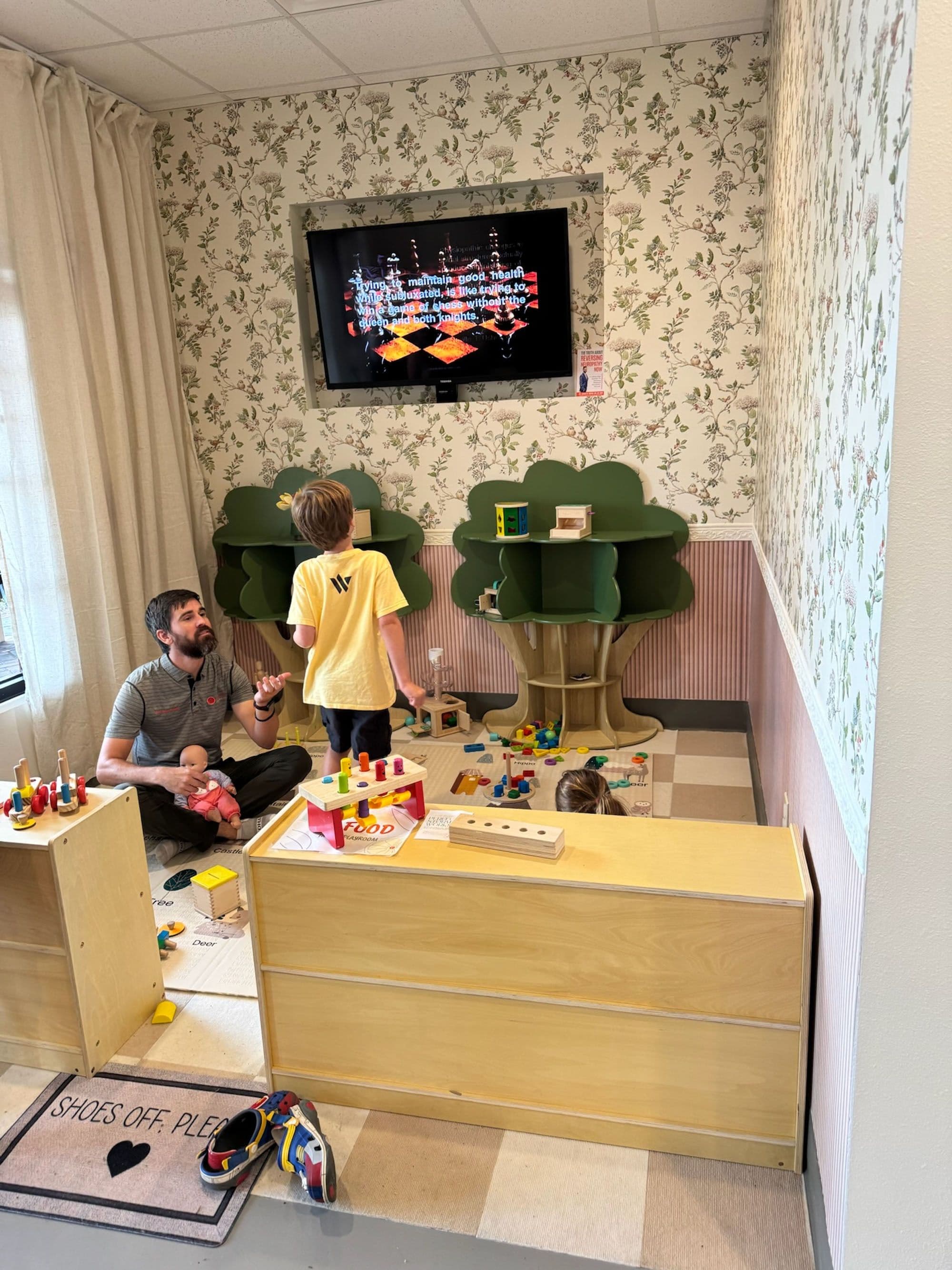
You watch your child cover their ears at a birthday party, refuse a shirt because the seam feels "wrong," or fall apart in a crowded grocery store, and your heart aches because you can see how hard the world feels for them. Sensory processing disorder is the term used when a child's nervous system has trouble taking in, sorting, and responding to everyday sensory information — sounds, textures, movement, lights, smells — in a way that feels manageable. It is not bad behavior, and it is not something you caused. At Little Roots Pediatric Chiropractic in Lakewood Ranch, FL, we offer gentle, nervous-system-focused care that may help support kids navigating sensory processing challenges, and we want you to leave here feeling understood, not overwhelmed.
What sensory processing is, and why it can feel so big
Every second of the day, your child's body is gathering information — the hum of the refrigerator, the tag on their collar, the wobble of a swing, the brightness of a room. The nervous system's job is to filter all of that, decide what matters, and help the body respond calmly. For some children, that filtering and organizing happens smoothly. For others, the signals come in too loud, too faint, or too jumbled, and the body reacts the only way it knows how — with a meltdown, a shutdown, or a need to move constantly.
Think of it like a radio that struggles to land on a clear station. The music is there, but the static keeps breaking through. When the nervous system is working in a more regulated, settled state, those signals tend to come through with less static — and that is the gentle goal of the care we offer.
What it can feel like for your child
Sensory differences show up in countless ways, and no two children look exactly alike. You may notice some of these at home or out in the world:
- Big reactions to sounds — covering ears, panicking at the vacuum, hand dryers, or fireworks
- Texture struggles — refusing certain clothes, foods, or getting upset over messy hands
- Seeking constant movement — spinning, crashing, climbing, never seeming to slow down
- Avoiding movement — fearful of swings, slides, or having their feet leave the ground
- Meltdowns in busy places — stores, parties, or crowded classrooms feel like too much
- Trouble settling — hard time winding down for sleep or shifting between activities
If you are nodding along, take a breath. Recognizing the pattern is the first kind thing you can do for your child — it lets you respond with compassion instead of confusion.
What can contribute to sensory challenges
Sensory differences rarely come from one single source. Often it is a blend of factors, and understanding them helps you let go of the guilt many parents carry.
How the nervous system develops
A baby's nervous system is built layer by layer through movement, touch, and experience — tummy time, rolling, crawling, being held. When some of those building blocks come less easily, the system can have a harder time organizing sensory input later on. This is part of why developmental milestones and sensory comfort are so closely linked.
Birth and early experiences
Pregnancy, birth, and the early months ask a lot of a tiny nervous system. A demanding delivery or early tension patterns can leave a baby's body working a little harder to stay regulated.
Overlap with other neurodevelopmental differences
Sensory challenges frequently travel alongside other ways a child's brain is beautifully wired — including children on the autism spectrum and kids who experience increased activity and restlessness. The sensory piece and the developmental piece are deeply connected, which is exactly why a nervous-system lens can be so useful.
When to seek prompt medical care
We want to be clear and honest with you: the gentle care we offer is meant to complement, never replace, the guidance of your pediatrician or specialists. Please reach out to your medical provider promptly if your child shows a sudden loss of skills they previously had, has significant difficulty with feeding or growth, experiences seizures, or if you ever feel something is urgently wrong. A coordinated team — your doctor, any therapists, and us — is how your child is best supported. We are one warm, steady piece of a bigger circle of care.
Why sensory struggles can come and go
Many parents tell us the hardest part is the unpredictability — a good week, then a hard one, often with no obvious reason. That up-and-down pattern usually traces back to how regulated the nervous system is at any given moment. Stress, illness, poor sleep, big schedule changes, or sensory overload can all tip a child's system into a more reactive state, and the same sensitivities that felt manageable on Monday feel enormous by Friday.
This is also why we never promise a quick solution or a tidy timeline. Every child is different, and we take a personalized approach — watching how your individual child responds and adjusting as we go. The aim is not perfection. It is helping your child's body spend more time in a calm, settled, better-regulated place so the world feels a little less loud.
How we may help at Little Roots
Our care centers on one simple idea: when the nervous system is calmer and communicating more clearly, a child often has more room to take in their world without being overwhelmed. Here is what that looks like for the families we serve.
A gentle look at the nervous system
We usually begin with a neurological evaluation — a comfortable, non-invasive way to get a picture of how your child's nervous system is functioning and where it may be working under tension. It helps us tailor care to your specific child rather than guessing.
Gentle, low-force pediatric adjusting
The adjustments we use for children are soft and specific — nothing like the forceful image many parents picture. Using light, low-force pediatric techniques, our doctors aim to ease tension patterns so the nervous system can do its filtering and organizing job with less interference. Many of these same principles guide our broader pediatric wellness care and our developmental support for growing kids.
Care that fits your whole family
Sensory challenges touch everyone in the home. We coach you on simple, supportive things you can do day to day, and we keep an eye on related pieces like motor coordination and movement and your child's ability to manage big emotions. If your child also experiences attention or focus differences, you may find our overview of nervous-system care and ADHD helpful too.
Sensory Challenges and Focus: Where They Overlap
Many parents come to us describing sensory sensitivities and attention or focus differences in the very same breath — and that overlap isn't a coincidence. A nervous system working hard to filter noisy sensory input has less capacity left over for sustained attention. If your child seems easily distracted, restless, or unable to sit still in the same season that sounds and textures feel overwhelming, the two patterns are often connected rather than separate problems to solve one at a time — which is part of why sensory processing and ADHD so often get asked about together.
We're careful here: we don't diagnose ADHD, and gentle chiropractic care isn't a substitute for a full developmental or behavioral evaluation when one is warranted. What we do offer is the same nervous-system-focused lens applied to both pieces — supporting regulation may help create more room for your child to filter sensory input and sustain attention, without singling out either as the "real" issue. If focus and attention are a bigger piece of your child's picture than sensory input, our overview of nervous-system care and ADHD goes deeper on that angle specifically, including how inattention and impulsivity show up day to day.
Where to start in Lakewood Ranch
If you have been quietly worrying, carrying questions, or just feeling tired of guessing — you are exactly the parent we built this practice for. There is no pressure and no judgment here. We will listen to your child's whole story, look at how their nervous system is working, and talk honestly about whether our care is a good fit for your family.
Little Roots Pediatric Chiropractic has cared for thousands of families and holds a 4.8-star rating from 625+ Google reviews, and we would be honored to meet yours. When you are ready, book an appointment at our Lakewood Ranch office, or reach out with any questions first — whatever feels easier for you, mama. You can also call us at (941) 932-4611.
Frequently Asked Questions
Can chiropractic care resolve things for my child's sensory processing disorder?
No — and any provider who promises to make it disappear should give you pause. We do not claim to resolve or eliminate sensory processing disorder. What we offer is gentle, nervous-system-focused care that may help support your child's ability to feel more regulated and comfortable, working alongside your pediatrician and any therapists involved.
Is chiropractic care safe for a young child or even a baby?
The care we use for children is gentle and low-force, adapted specifically for small, developing bodies. It looks nothing like the forceful adjustments associated with adult care. We always begin with a careful evaluation and tailor everything to your individual child's needs and comfort.
How long before we might notice a difference?
Every child is different, so we never quote a set number of visits or a fixed timeline. Some families notice changes in calm or sleep sooner, others more gradually. We take a personalized approach, watch how your child responds, and adjust our care along the way.
Do you work with kids who are also seeing other specialists?
Yes, and we encourage it. Our care is meant to complement — never replace — your pediatrician, occupational therapists, or other providers. We see ourselves as one supportive part of your child's broader team, and we are happy to coordinate care.
What happens at the first visit?
The first visit is unhurried and centered on your child. We listen to your concerns, gather your child's history, and perform a gentle neurological evaluation to understand how their nervous system is working. From there, our team talks with you about whether our care is a good fit and what a personalized plan could look like. You can book an appointment whenever you feel ready.
Can sensory issues look like ADHD, or the other way around?
Yes, and it trips up a lot of parents (and sometimes providers too). Sensory-seeking behavior — constant movement, touching everything, needing more physical input — can look a lot like hyperactivity, while sensory overload can look like inattention or shutting down. A careful history helps sort out what's driving what, which is part of why we ask detailed questions at the first visit rather than assuming.
My child has both sensory sensitivities and trouble focusing. Do you address them separately?
No — we look at your child's nervous system as one connected system, not a checklist of separate diagnoses. The same gentle, nervous-system-focused care applies whether the day-to-day struggle shows up as sensory overwhelm, focus, or both together.
Learn More
Conditions we help with
Sensory Processing
Sensory processing isn't a personality quirk — it's the nervous system trying to filter a world that feels overwhelming. Care that calms the system gives your child more room to be themselves.
Learn moreAutism Spectrum Support
Chiropractic care doesn't treat autism — it supports the nervous system that your child lives in. A system with less tension and more capacity can show up more fully in the therapies, school, and daily life you've already built around them.
Learn moreDevelopmental Delays
Motor milestones, speech development, cognitive processing — all of it runs through a nervous system. When that system holds structural tension, it can limit what's available to your child. Gentle care creates more capacity, and more capacity compounds.
Learn moreADHD & Attention
ADHD isn't a behavior problem and chiropractic isn't a treatment for it. But care that helps the nervous system regulate gives kids with attention challenges more capacity to use the tools that work — and that's everything.
Learn moreRelated Services
Related Reading
Related articles
Keep Reading
More for growing families
Sleep Regressions Beyond 4 Months: What's Normal at Each Age
If sleep falls apart again after the 4-month regression finally settled, you're not imagining it. Here's what's typically happening at 8, 12, 18, and 24 months, and gentle ways to help.
Nursing Strikes: Why Babies Suddenly Refuse the Breast
One day nursing is going fine, the next your baby won't latch at all. Here's what a nursing strike actually is, common triggers, and how to get through it.
Baby's Crooked Smile or Asymmetrical Face: What It Can Mean
A crooked smile or uneven face in a newborn is common and usually has a simple explanation. Here's what typically causes it, and when to loop in your pediatrician.
Questions about your child?
Schedule a consultation and let's talk through your family's needs together.
Book a Consultation(941) 932-4611