

ADHD and Chiropractic Care: How Nervous System Support Helps Kids Focus
Dr. Grayson Fox, DC
Why more Lakewood Ranch families are adding nervous system support to their child's ADHD plan — what a neurological evaluation reveals and how it fits alongside OT, speech, and your pediatrician.
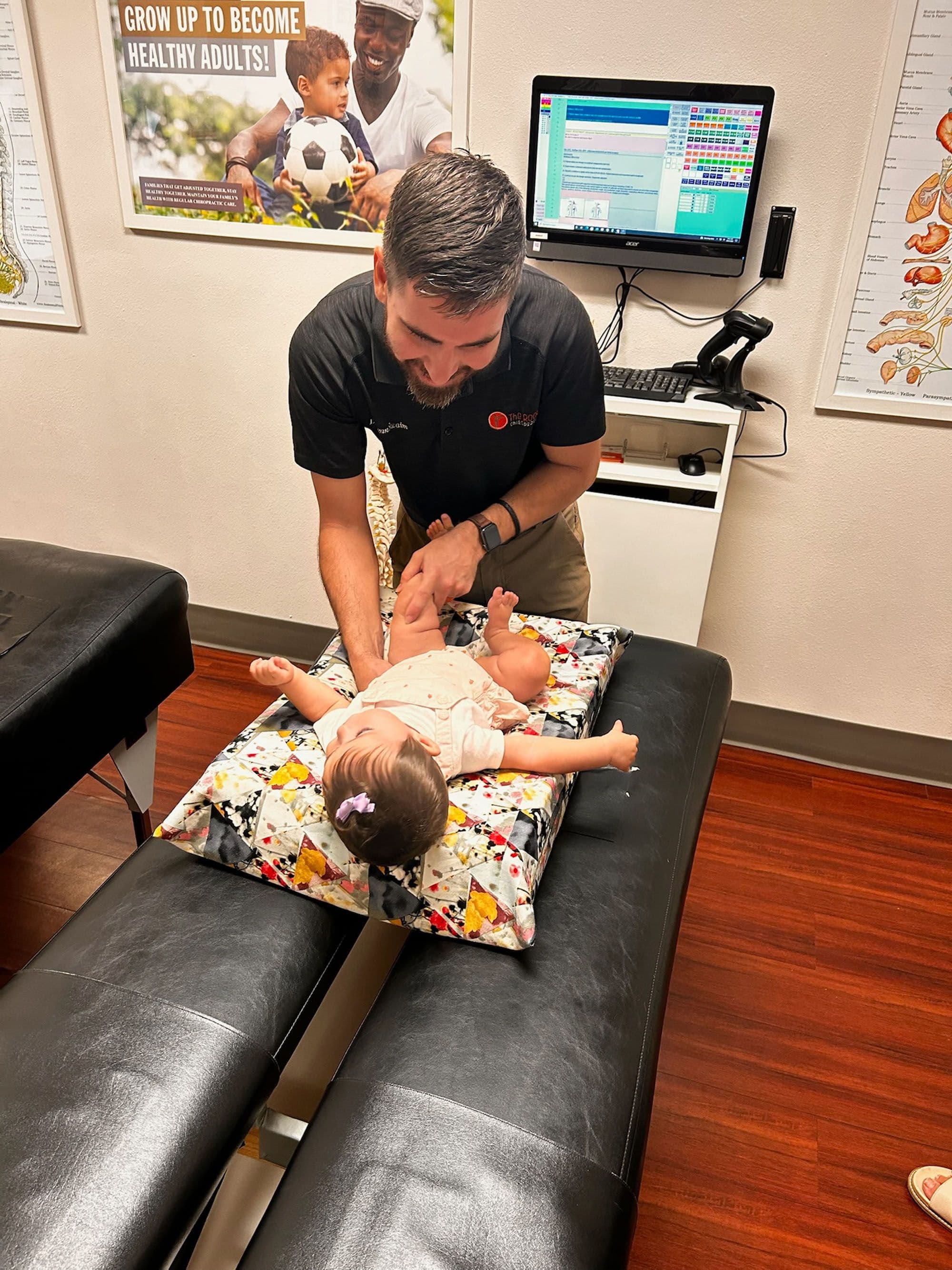
If your child has been diagnosed with ADHD, you have probably already built a team — a pediatrician, maybe an occupational therapist, possibly a behavioral specialist. That team matters. What many parents in Lakewood Ranch are discovering is that there is one more piece worth exploring: ADHD and chiropractic care focused on the nervous system itself.
This is not about replacing anything your child is already doing. Gentle, neurologically-focused chiropractic care is a piece of a larger plan, not the whole plan. At Little Roots Pediatric Chiropractic, we work alongside your existing care team to support how your child's nervous system handles the demands of a regular day — the classroom, the transitions, the sensory input, the bedtime routine.
Our team has worked with families across Lakewood Ranch navigating ADHD, sensory processing challenges, and autism spectrum needs. Here is what we see in the office — and what most parents have never heard.
What Does the Nervous System Have to Do With ADHD?
ADHD is typically described in behavioral terms: difficulty focusing, impulsivity, hyperactivity, trouble with transitions. Those descriptions are accurate, but they only describe the surface. Underneath, there is a nervous system that is struggling to regulate itself.
Every child's autonomic nervous system has two main modes:
- Sympathetic — the "go" side. Alertness, readiness, fight-or-flight.
- Parasympathetic — the "slow down" side. Rest, digest, focus, regulate.
Healthy nervous system function means your child can shift between these modes smoothly. Ramp up for recess. Settle down for reading. Transition from a noisy cafeteria to a quiet classroom without melting down.
Children with ADHD often show a pattern: the sympathetic side is running too hot, too often. The parasympathetic "brake" is not engaging the way it should. Their nervous system is stuck in a revved-up state that makes sustained attention, emotional regulation, and sleep genuinely harder — not because the child is not trying, but because their system is not giving them the neurological foundation to do what adults are asking of them.
What Does a Neurological Evaluation Show Us?
At Little Roots, every child starts with a comprehensive neurological evaluation. This is not a behavioral questionnaire. It is an objective look at how the nervous system is actually functioning — where it is balanced, where it is stuck, and what patterns are driving the behaviors parents see at home.
The evaluation measures autonomic nervous system activity and shows us whether the sympathetic (fight-or-flight) side is dominating. For many children with ADHD, the results confirm what parents already sense: this child's system is running on high alert and cannot downshift on its own.
That information changes the conversation. Instead of only managing behavior from the outside, we can support the nervous system from the inside. The evaluation also gives us a baseline so families can see changes over time — not just "he seems calmer," but objective data showing the nervous system is actually shifting.
For a child showing ADHD-type patterns, the evaluation typically looks at muscle activity along the spine, temperature symmetry on each side of the spine — a marker of autonomic nervous system balance — and how smoothly heart rate shifts between active and calm states. A child whose sympathetic "go" side is dominant will often show patterns consistent with that on these measures. None of this diagnoses ADHD, and it is not meant to. It simply gives our team objective information about where your child's nervous system is working the hardest, which shapes the gentle care we recommend as part of our nervous-system approach to pediatric care. For a closer look at how each part of the evaluation works, see our guide to the neurological evaluation.
How Does Pediatric Chiropractic Support a Child With ADHD?
The adjustments used at Little Roots look nothing like what most adults picture when they hear "chiropractic." There is no twisting, no cracking, no forceful manipulation. We use Torque Release Technique — a gentle, instrument-based method that applies a precise, low-force input to specific areas of the spine where the nervous system is under stress.
The upper cervical spine (the top of the neck, where the brainstem meets the spinal cord) is a critical area for nervous system regulation. Birth stress, falls, and the physical demands of early childhood can create subtle misalignments in this region that keep the nervous system locked in a sympathetic-dominant pattern. Gentle corrections to these areas help the nervous system shift toward better balance between the "go" and "slow down" sides.
We are not "curing" ADHD. We are not replacing medication, therapy, or your pediatrician. What we are doing is supporting the nervous system so your child has a better neurological foundation for all the other things they are working on. When the nervous system can regulate more effectively, parents often notice downstream changes: better focus, easier transitions, fewer meltdowns, improved sleep.
Why Do So Many ADHD Kids Also Struggle With Sensory Processing?
If your child has ADHD and also seems overwhelmed by loud noises, bothered by clothing tags, or unable to sit still in a chair — you are not imagining it. ADHD and sensory processing challenges frequently overlap, and the reason circles back to the nervous system.
A nervous system stuck in sympathetic overdrive does not just affect attention. It affects how the brain processes sensory input. Sounds feel louder. Textures feel more intense. Transitions feel more jarring. The child is not being dramatic — their system is genuinely amplifying the input because it is already in a heightened state.
This is why our developmental support approach addresses the nervous system as a whole rather than chasing individual symptoms. When the underlying regulation improves, multiple areas tend to shift together — focus, sensory tolerance, emotional regulation, and sleep often improve as a group, not one at a time.
Where Does Chiropractic Fit With OT, Speech, and ABA?
One of the most common questions we hear from parents: "We are already doing OT and speech therapy — how does chiropractic fit in?"
Think of it this way. Occupational therapy teaches your child skills and strategies for navigating the world. Speech therapy develops communication. ABA works on behavior patterns. All of those approaches are working from the outside in — building skills the child can use.
Nervous system care works from the inside out. It helps create the neurological conditions that allow those skills to stick. A child whose nervous system is calmer and more regulated will often get more out of their OT sessions, retain more from speech therapy, and respond better to behavioral strategies.
We are not competing with your child's other providers. We are supporting the foundation they are building on. Many families tell us their therapists notice the difference — that the child shows up to sessions more regulated, more available, more able to engage.
What About Children on the Autism Spectrum?
Families of children with autism spectrum needs face a particularly complex path. Every child presents differently, and what helps one child may not help another.
What we consistently see is that many children on the spectrum have measurable nervous system dysregulation. Their systems are working overtime just to process a regular environment, which leaves very little bandwidth for social engagement, communication, or flexibility.
Gentle chiropractic care does not change a child's autism diagnosis. What it can do is help reduce the neurological noise — the constant sympathetic overdrive — so the child has more capacity for the rest of their day. For some families, that is the difference between a child who can participate in a family dinner and one who cannot.
Each child is different. We take a personalized approach based on what your child's nervous system is showing us. Some children respond quickly. Others need more time. We are honest about what we see and what we expect, and we never promise outcomes we cannot predict.
What Does a 'Chiropractor for ADHD' Visit Actually Involve?
It's a fair question, since chiropractic care for ADHD looks nothing like a typical pediatrician visit. There's no prescription pad and no behavioral chart. A visit usually starts with the neurological evaluation described above, followed by brief, gentle sessions using Torque Release Technique — most kids are in and out of the treatment room in just a few minutes. There's no forceful manipulation and no cracking, and most children tolerate it easily, including kids who are sensory-sensitive or have a hard time sitting still anywhere else.
School Days: Focus, Transitions, and the Nervous System
A lot of what parents describe as the hardest part of ADHD happens in structured environments — sitting through a lesson, switching from recess back to quiet work, following multi-step directions. Those moments ask a child's nervous system to shift states quickly, from alert and active to calm and focused, over and over throughout the day. When the sympathetic "go" side is dominant, as it often is with ADHD, those transitions are where kids tend to struggle most visibly. Supporting nervous system regulation doesn't change what a classroom asks of a child, but it may help their system respond to those demands with less friction.
What Parents Notice Day to Day
Long before a formal diagnosis, most parents notice small things that add up to a pattern. Mornings that feel like a negotiation before anyone has had coffee. Homework that takes far longer than it should, not because your child does not understand it, but because sitting still with it feels nearly impossible. Big feelings that show up over small things — a wrong-colored cup, a shoe that will not tie right — followed by a crash of exhaustion once the moment passes.
By evening, many parents describe a kind of second wind that makes bedtime its own small battle: a body that is tired but a nervous system that has not gotten the message yet. None of this means you are doing anything wrong, and it does not mean your child is choosing to make things harder. It is often a nervous system caught in a hyperactive, hard-to-settle state, working overtime to manage a day full of transitions and demands on focus that would be a lot to ask of any nervous system — let alone a developing one.
If any of this sounds like your household, you are not alone, and you are not imagining it. It is also part of why our team looks at overlapping developmental patterns as a whole rather than one symptom at a time.
How Do Parents Know If Nervous System Care Is Right for Their Child?
Not every child with ADHD needs chiropractic care. But if your child is showing a cluster of these patterns, the nervous system is worth evaluating:
- Difficulty focusing that persists even in low-stimulation environments
- Emotional dysregulation — big reactions to small triggers, difficulty calming down
- Sleep challenges — trouble falling asleep, restless sleep, waking tired
- Sensory overwhelm — covering ears, avoiding certain textures, needing constant movement
- Physical tension — jaw clenching, nail biting, grinding teeth at night
- Chronic "fight or flight" posture — shoulders up, shallow breathing, always on edge
These patterns point to a nervous system that is not getting the chance to rest and regulate. A neurological evaluation at Little Roots is gentle and non-invasive, and it doesn't commit you to anything — it's often simply the first time a parent sees objective data that matches what they've been observing at home.
What Families in Lakewood Ranch Are Saying
The families who come to Little Roots for ADHD and nervous system support are not looking for a miracle. They are looking for one more tool that actually helps. They have done the research, they have built a team, and they want to know if nervous system care belongs on that team.
With a 4.8-star rating from 625+ Google reviews, The Roots Health Centers and Little Roots Pediatric Chiropractic have earned the trust of families across Lakewood Ranch, Sarasota, and Bradenton. Our team's experience with neurodevelopmental conditions — ADHD, sensory processing, autism spectrum — is a major reason families seek out our clinic specifically.
If you are wondering whether your child's nervous system is part of the picture, a complimentary consultation is the easiest way to find out. No pressure, no commitment — just a conversation about your child and whether our approach makes sense for your family.
Call (941) 932-4611 to schedule, or book online.
Talking to Your Child's School About Nervous System Support
Many parents managing ADHD are also navigating conversations with their child's school about accommodations, whether that's a 504 plan, an IEP, or an informal check-in with a teacher. Nervous system care doesn't replace that process, but it can be a useful piece of the fuller picture you share with your child's school team. Some parents find it helpful to mention any care their child is receiving, including chiropractic support, alongside updates from their pediatrician or therapists, so everyone working with your child has the same context. We're happy to provide documentation of your child's evaluation and care for your own records, or to share with your child's school team if that's useful for your family.
Frequently Asked Questions About ADHD and Chiropractic Care
Does chiropractic care "cure" ADHD?
No. ADHD is a neurodevelopmental condition, not something that gets "cured" by any single intervention. What chiropractic care can do is support nervous system regulation — helping the body shift out of a chronic fight-or-flight state so your child has a better foundation for focus, emotional regulation, and sleep. We work alongside your child's pediatrician and therapists, not in place of them.
Is it safe for children?
Absolutely. The techniques we use at Little Roots are specifically designed for pediatric patients. Torque Release Technique uses a small, spring-loaded instrument that delivers a precise, low-force adjustment — no twisting, no cracking. It is gentle enough for newborns and appropriate for children of all ages. Read more: Is Chiropractic Safe for Babies?
Can my child continue medication while receiving chiropractic care?
Yes. We never ask families to change, reduce, or stop medication. That decision belongs to you and your prescribing physician. Many children in our practice are on medication and receiving chiropractic care simultaneously. The two approaches support different aspects of your child's health and work well together.
How many visits will my child need?
Each child is different. We take a personalized approach based on what your child's nervous system is showing us during the initial evaluation. We do not use cookie-cutter protocols or commit families to long care plans before we understand what your child actually needs.
Will my child's OT or speech therapist notice a difference?
Some parents report that their child's therapists comment on improved regulation or more consistent progress during this stretch of care. Every child and every therapy team is different, so we don't promise a specific outcome — we simply support the nervous system and let you and your child's other providers observe what changes.
What age can children start?
We see children from newborns through teenagers. There is no minimum age for a neurological evaluation. If your child is showing signs of nervous system dysregulation — whether they are 6 months old or 16 years old — an evaluation can help you understand what is happening and whether care is appropriate.
Is chiropractic care for ADHD covered by insurance?
Coverage varies by plan. We offer a complimentary benefits check at your first visit so you know what to expect before starting care.
Is there a chiropractor for ADHD near Lakewood Ranch?
Little Roots Pediatric Chiropractic is located at 8209 Natures Way, Unit 117, Lakewood Ranch, FL, and works with families from Lakewood Ranch, Sarasota, and Bradenton navigating ADHD and other nervous-system-related concerns.
Does the neurological evaluation diagnose ADHD?
No. The evaluation measures how your child's nervous system is functioning right now — things like muscle balance along the spine and how easily the autonomic nervous system shifts between "go" and "rest" states. It does not diagnose ADHD or any other condition. A diagnosis comes from a qualified medical or behavioral health provider. What the evaluation gives us is objective information about where your child's nervous system may be working harder than it should, which helps guide gentle, supportive care alongside your child's existing diagnosis and care team.
My child has not been formally diagnosed with ADHD yet. Can we still come in?
Yes. Many families come to us while they are still in the process of getting a diagnosis, or before they have decided whether to pursue one. A neurological evaluation does not require a diagnosis first — we are simply looking at how your child's nervous system is functioning today. If what we see suggests your family should also be talking with your pediatrician or a behavioral health specialist, we will tell you honestly.
Learn More
Conditions we help with
ADHD & Attention
ADHD isn't a behavior problem and chiropractic isn't a treatment for it. But care that helps the nervous system regulate gives kids with attention challenges more capacity to use the tools that work — and that's everything.
Learn moreSensory Processing
Sensory processing isn't a personality quirk — it's the nervous system trying to filter a world that feels overwhelming. Care that calms the system gives your child more room to be themselves.
Learn moreAutism Spectrum Support
Chiropractic care doesn't treat autism — it supports the nervous system that your child lives in. A system with less tension and more capacity can show up more fully in the therapies, school, and daily life you've already built around them.
Learn moreSleep Regulation
Short naps, frequent wakings, a baby or toddler who fights sleep no matter what you try — these are signals that the nervous system is stuck in 'on.' Gentle care helps it find the off switch.
Learn moreRelated Services
Related Reading
Related articles
Kids Backpack Weight: How Heavy Should Your Child's Backpack Be?
The AAP says a child's backpack should weigh no more than 10-15% of their body weight. Most school bags exceed that. Here is what overloaded backpacks do to a growing spine and what parents can do about it.
Read articleBaby Won't Sleep? The Nervous System Connection Most Parents Never Hear About
When your baby won't sleep no matter what you try, the problem may not be environmental. Learn how a dysregulated nervous system keeps infants stuck in alert mode — and what gentle pediatric chiropractic care can do to help.
Read articleSensory Processing Disorder in Kids: How Nervous-System-Focused Chiropractic Care May Help
If your child melts down at loud sounds, scratchy tags, or busy rooms, you are not imagining it. Here is what sensory processing disorder is and how gentle care may help.
Read articleKeep Reading
More for growing families
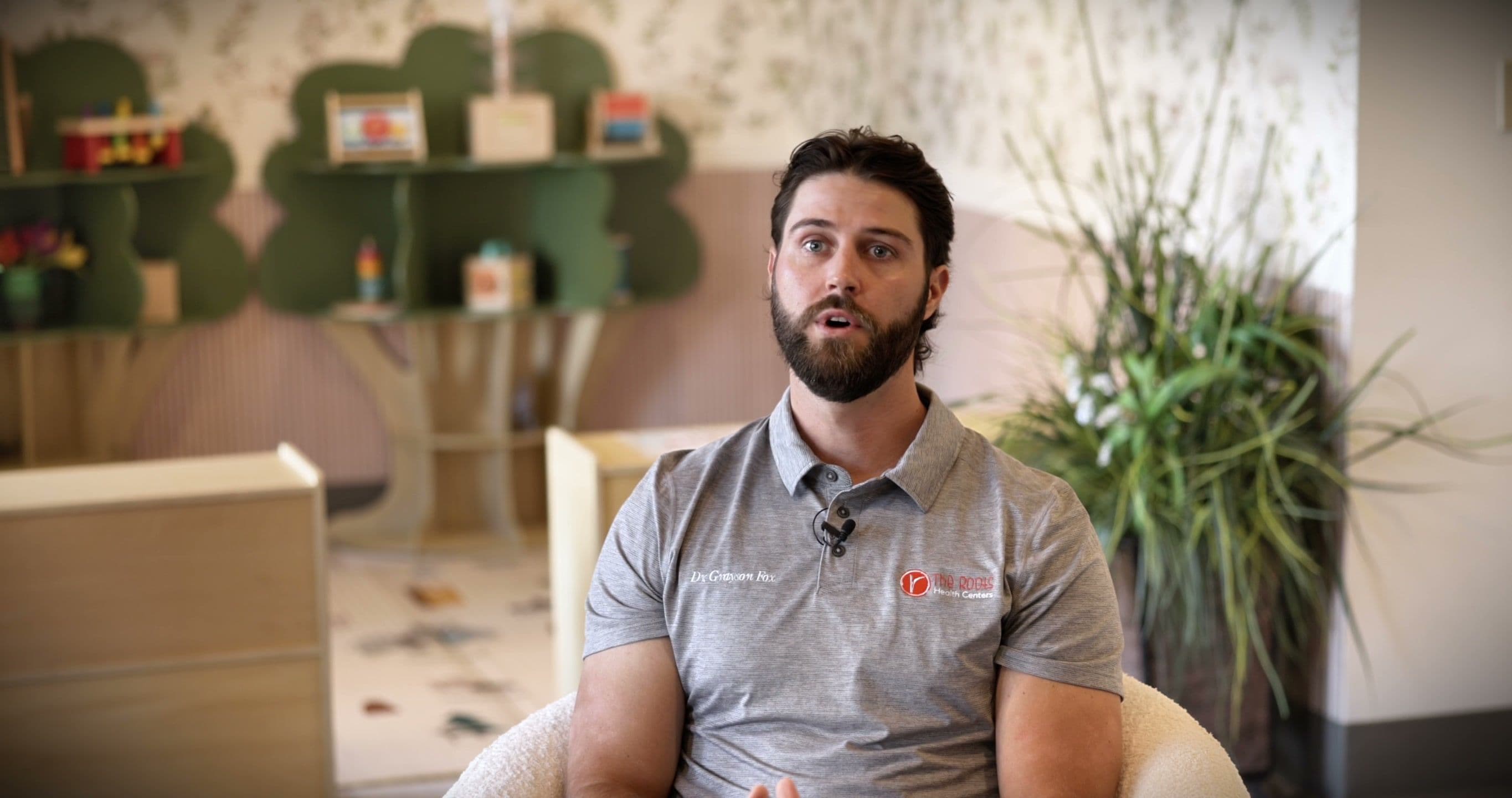
Toddler Snoring: When It's Normal and When to Look Closer
Hearing your toddler snore can be sweet or worrying. Here is what is often normal, which signs are worth mentioning to your pediatrician, and gentle ways to support better sleep.
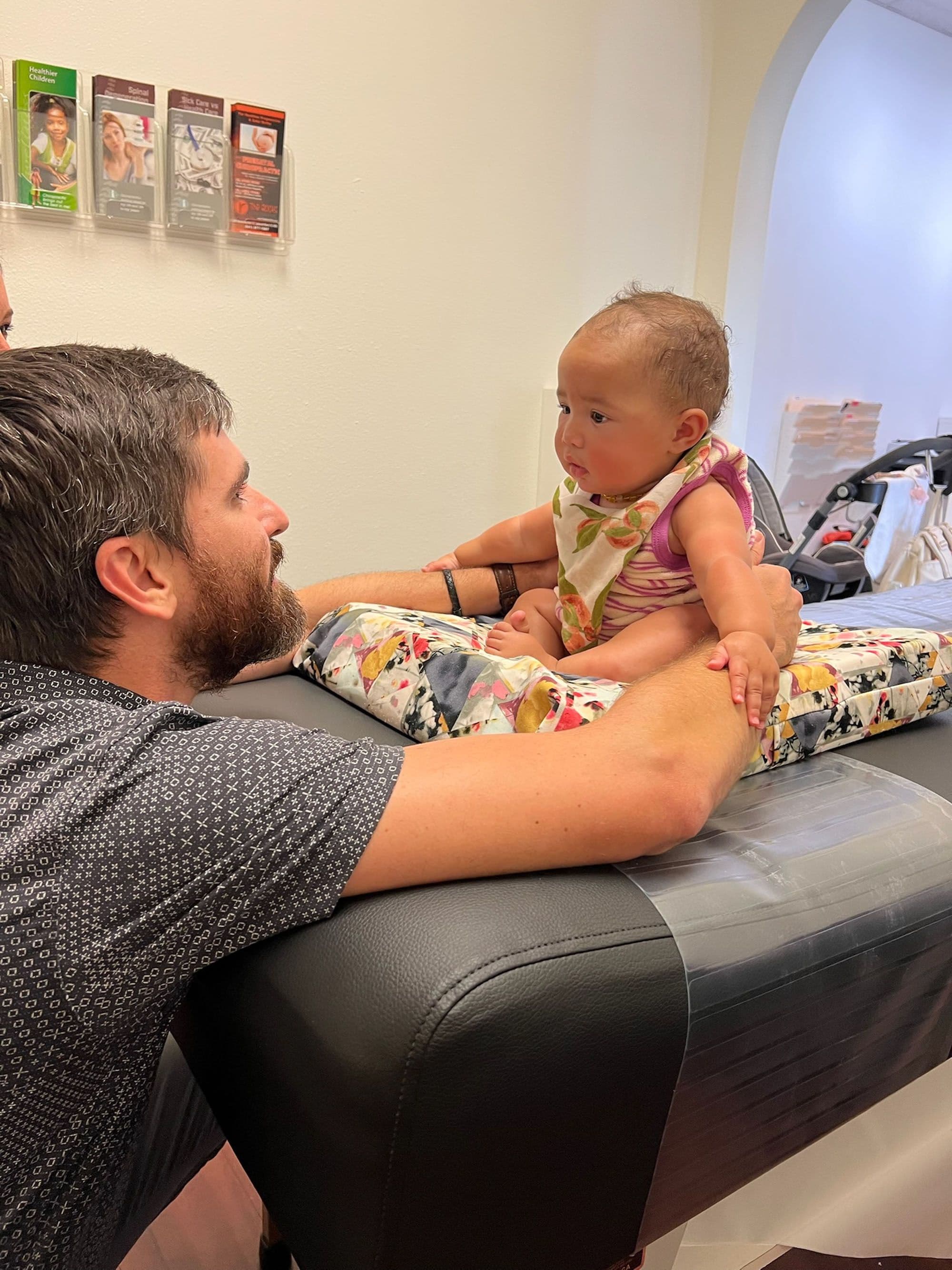
Breastfeeding Back Pain: Posture Tips for Nursing Moms
Hours of feeding can leave your neck, shoulders and back aching. Here is why breastfeeding back pain happens and the gentle posture changes that may help.
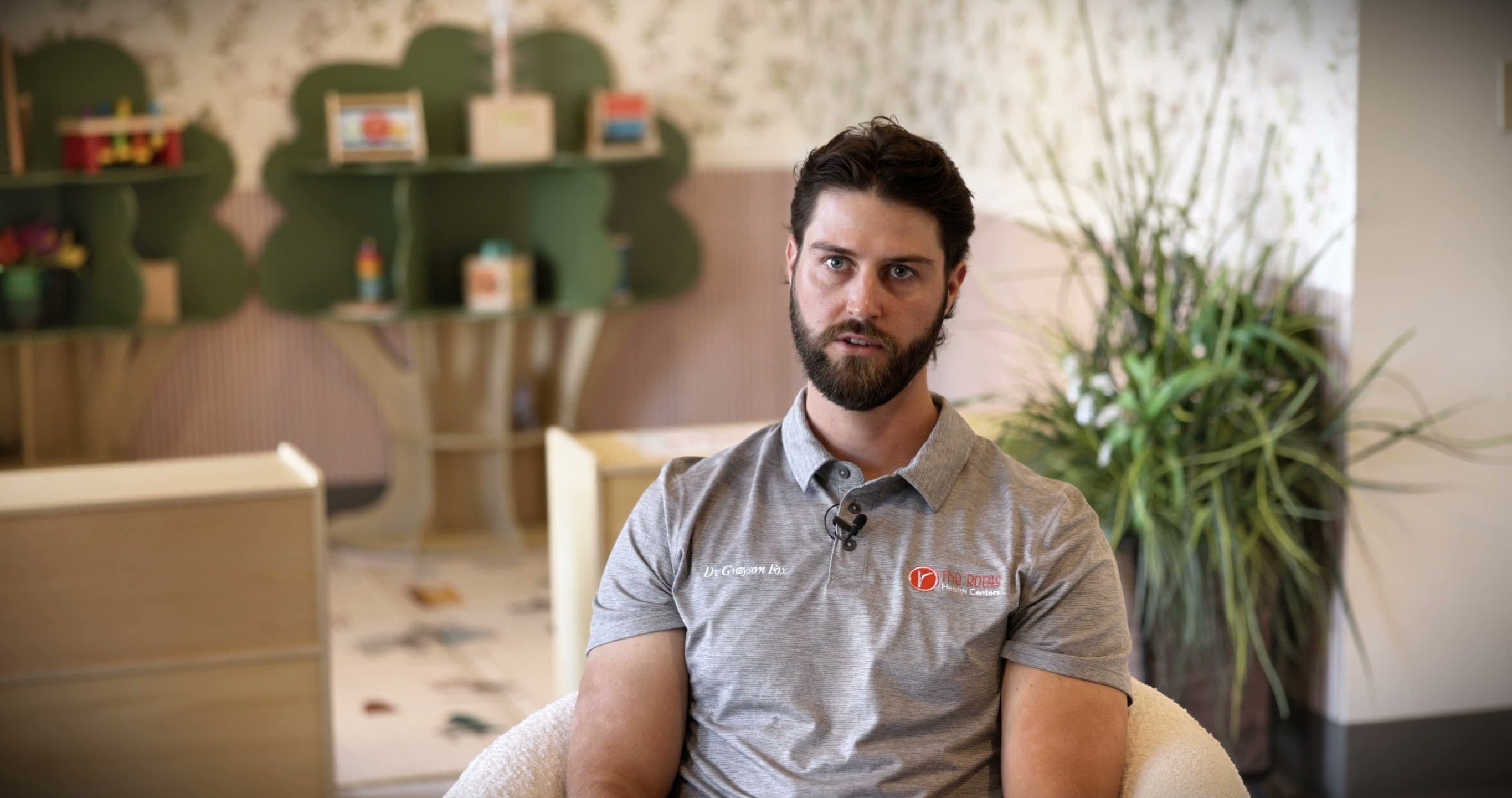
Baby Spit-Up vs. Vomit: How to Tell the Difference
Your baby just brought up a feed, and you're wondering if it's normal spit-up or something more. Here's how to tell the difference and when to call your pediatrician.
Questions about your child?
Schedule a consultation and let's talk through your family's needs together.
Book a Consultation(941) 932-4611