

Baby Won't Sleep in the Crib: Gentle Troubleshooting for Tired Parents
Dr. Grayson Fox, DC
Your baby sleeps great in your arms and wakes the moment they touch the crib. Here's why that happens, safe-sleep basics, and gentle ideas to try.
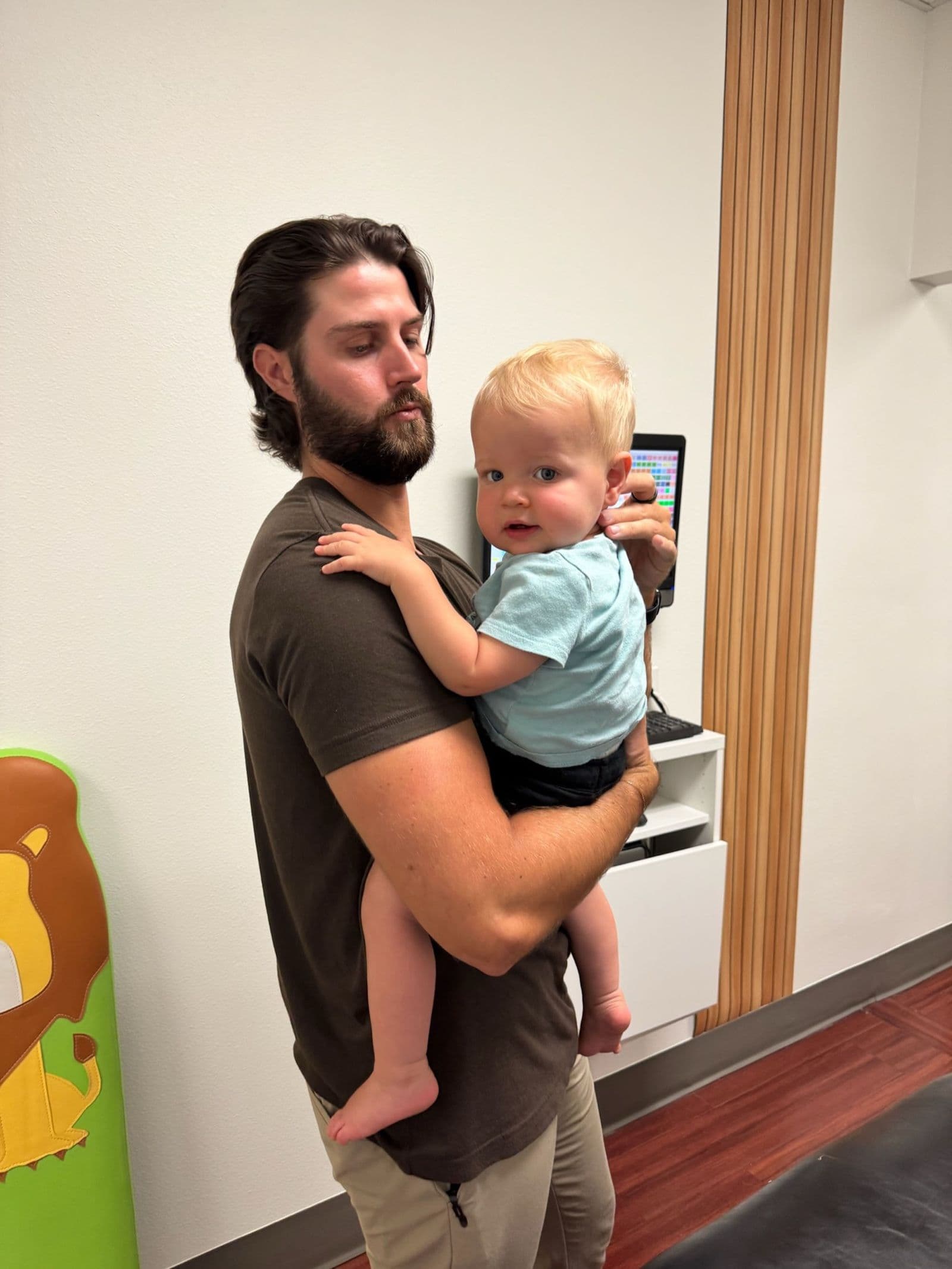
Your baby falls asleep happily in your arms, you tiptoe to the crib, and the moment their back touches the mattress, their eyes pop open. If your baby won't sleep in the crib, you're in very good company. The short answer: newborns and young babies are wired to feel safest close to a caregiver, and the crib is a big change in temperature, motion, sound, and touch. Often a few small, gentle adjustments make the transition easier. Below, we'll cover why crib sleep can be hard, safe-sleep basics that always come first, gentle ideas to try, and when it's worth asking for extra support. This is educational, not a replacement for your pediatrician's advice.
Why Babies Protest the Crib
For months in the womb, your baby was held, warm, rocked by your movement, and surrounded by the steady sound of your heartbeat. A flat, still, quiet crib is a very different world. A few reasons babies often protest it:
- They want closeness. Being held regulates breathing, warmth, and heart rate. Babies find this deeply calming.
- The startle reflex. Young babies have a natural startle (Moro) reflex that can make their arms fly out when they're laid down, jolting them awake. Our post on the Moro reflex in babies explains it.
- A temperature shift. Moving from a warm lap to a cooler mattress can wake a light sleeper.
- Tummy discomfort. Gas, reflux, or constipation can feel worse lying flat. See our posts on newborn gas relief and silent reflux in babies.
- Tired but overstimulated. A baby who's past their sleepy window may fight sleep hard.
- Habit. If your baby has learned to fall asleep only in motion or in your arms, a still crib may feel unfamiliar. Our post on contact naps looks at this pattern.
Safe Sleep Comes First
Before trying any idea below, check that the sleep space is safe. The American Academy of Pediatrics recommends the following for babies sleeping alone:
- Place your baby on their back for every sleep.
- Use a firm, flat sleep surface with a fitted sheet, such as a crib or bassinet that meets current safety standards.
- Keep the sleep space bare: no pillows, blankets, bumpers, or soft toys.
- Share your room, but not your bed or sofa, with your baby.
- Don't let your baby sleep in swings, car seats, or inclined products unsupervised.
If you're ever unsure whether something is safe, ask your pediatrician. Safety is always more important than speed.
Gentle Ideas to Try
Every baby is different, so treat these as options, not a recipe.
Warm the mattress
A cool sheet can be a shock. Warm the crib sheet briefly with your hands before laying your baby down, and remove the warm object before they go in. Never leave a heating pad or hot water bottle in the crib.
Lay them down slowly
Keep your baby close to your body as you lower them, and let the mattress meet their back last. Hold a hand on their chest for a moment, then slide away slowly.
Try a swaddle, if age-appropriate
For very young babies who haven't started rolling, a snug swaddle can calm the startle reflex. Stop swaddling when your baby shows signs of rolling, and ask your pediatrician about safe technique.
Use a consistent wind-down
A short routine, such as a feed, a diaper change, dim lights, a quiet song, and a cuddle, signals that sleep is coming. Babies take comfort in predictability.
Add steady sound
A low, steady white noise can remind babies of the womb. Keep the volume modest and the device across the room.
Watch the sleepy window
Fussing, yawning, and glazed eyes are cues that your baby is ready. Putting them down at the first sleepy signs may be easier than waiting until they're overtired.
Practice during the day
Sometimes crib sleep goes better when you start with a daytime nap, when everyone is less tired and you have patience in reserve.
Consider the room
A dark, comfortably cool room helps. Our guide to baby sleep and the nervous system explains why a calm environment matters.
The Nervous System Connection
A baby's nervous system is still learning how to settle itself. Moving from alert to drowsy to asleep is a skill that develops with time, and little ones rely on a caregiver's calm body to help them regulate. When the nervous system is on high alert, because of discomfort, overtiredness, or too much stimulation, falling asleep and staying asleep get harder.
This is part of why many families see sleep issues show up alongside fussiness, gas, or feeding struggles. Sleep is rarely a single-cause problem. At Little Roots, our team looks at the whole picture, including birth history, feeding, comfort, and how your baby moves, so we can understand what your baby's body may be telling you. Our gentle pediatric care is designed around babies, using very light touch.
When to Ask for Extra Support
Trouble with crib sleep is common and usually not a sign that something is wrong. Still, it's worth reaching out to your pediatrician if:
- Your baby seems to be in pain, cries inconsolably, or arches often
- Feeding, weight gain, or breathing concerns come with the sleep trouble
- Your baby has a strong preference for turning their head one way
- You're exhausted and feel you can't cope
If your pediatrician has ruled out urgent concerns and your baby still seems uncomfortable lying flat, you may also want a gentle check of how your baby is moving. Learn more about how we care for little ones on our infant chiropractic page, and see our guide to when babies start sleeping through the night for realistic expectations.
Frequently Asked Questions
Why does my baby wake up as soon as I put them in the crib?
Often it's the change from a warm, held position to a flat, cooler, still surface. The startle reflex and a strong preference for closeness can add to it.
Is it normal for a newborn to sleep only on a parent?
Yes, it's very common. Newborns are wired to seek closeness. Contact sleep is fine while you're awake and alert; for safe unsupervised sleep, the flat crib or bassinet is the recommended place.
How can I get my baby to sleep in the crib safely?
Start with a safe, bare, flat sleep space, always on the back. Then try small steps like a consistent wind-down routine, a warmed sheet, and slow lay-downs.
Can gas or reflux make crib sleep harder?
It can. Lying flat may feel more uncomfortable for a baby with tummy troubles. Mention it to your pediatrician if you see frequent spit-up, arching, or fussiness.
Come Say Hello
If sleep struggles have you wondering whether something more is going on, our team would be glad to meet you and your baby. Book an appointment at Little Roots in Lakewood Ranch, and we'll listen to your story, look at how your baby moves, and talk through gentle options.
Learn More
Conditions we help with
Sleep Issues (Toddlers & Kids)
Bedtime battles, frequent night wakings, and 2 a.m. visits to your room aren't just phases — they're signals that a toddler or child's nervous system isn't downshifting the way it should. Gentle care helps it find the transition the body needs to rest.
Learn moreColic
Colic isn't a personality trait — it's often a baby's nervous system stuck on high alert. Gentle chiropractic care helps the system downshift so feeding, sleeping, and being held start to feel okay again.
Learn moreRelated Services
Related Reading
Related articles
Baby Only Sleeps on You? Understanding Contact Naps
If your baby only sleeps on you, you're not doing anything wrong. Here's why contact naps happen, what your baby's nervous system is telling you, and gentle ideas to try.
Read articleBaby Won't Sleep? The Nervous System Connection Most Parents Never Hear About
When your baby won't sleep no matter what you try, the problem may not be environmental. Learn how a dysregulated nervous system keeps infants stuck in alert mode — and what gentle pediatric chiropractic care can do to help.
Read articleWhen Do Babies Start Sleeping Through the Night? A Developmental Guide
Every parent asks this at 2 a.m. Here's the general developmental range for when babies start sleeping longer stretches, and what can affect it.
Read articleKeep Reading
More for growing families
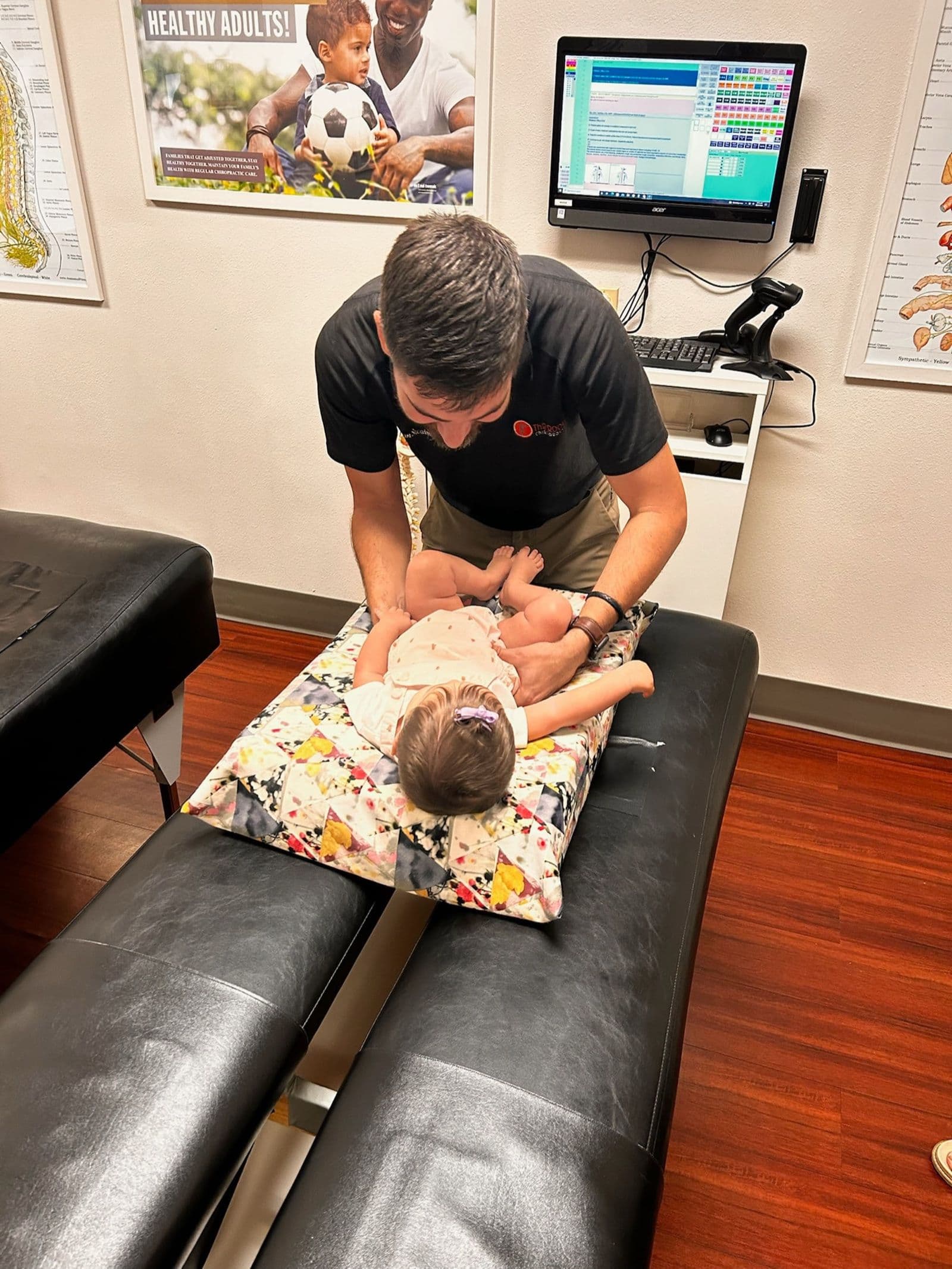
Baby Prefers One Side: Head Turning Preference and When to Look Closer
If your baby always turns their head the same way, you're not imagining it. Here's what a one-sided preference can mean, gentle ways to encourage both sides, and when to ask for help.
Preschooler Meltdowns After Daycare or School: Why Pickup Gets Hard
If your preschooler holds it together all day and falls apart at pickup, you're not alone. Here's why after-school meltdowns happen and gentle ways to help.
Toddler Nap Transition: Dropping From Two Naps to One
Naps getting shorter, bedtime getting harder? Here are the signs of a toddler nap transition from two naps to one, plus gentle ways to ease the change.
Questions about your child?
Schedule a consultation and let's talk through your family's needs together.
Book a Consultation(941) 932-4611