

Newborn Gas Relief: Gentle, Drug-Free Ways to Help Your Baby
Dr. Grayson Fox, DC
Squirming, grunting, knees pulled up — gas is one of the most common reasons newborns get fussy. Here's what helps, gently and without medication.
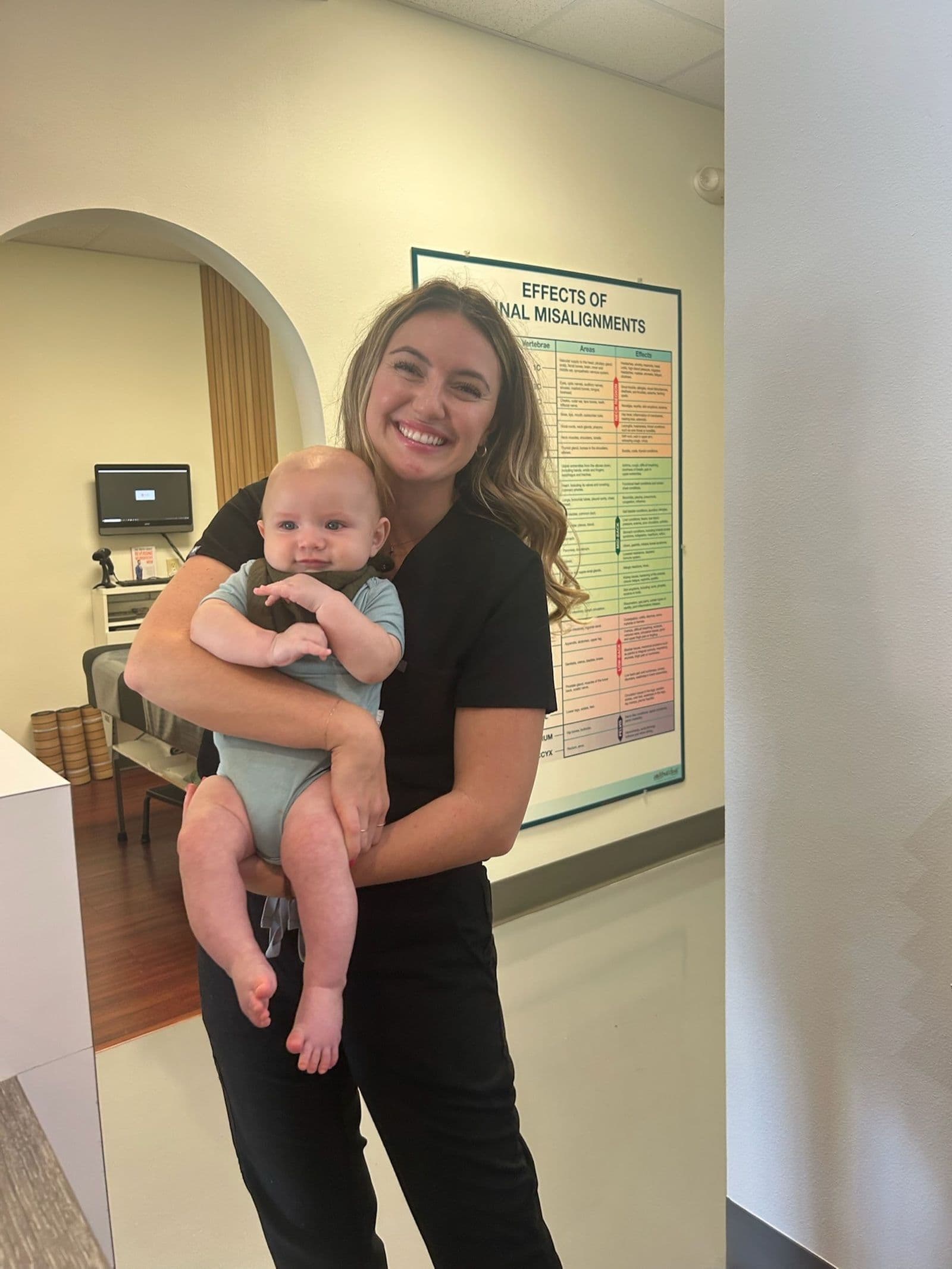
Your baby is squirming, pulling their knees up, grunting, and turning red in the face — and you're pretty sure it's gas, but you're exhausted and want to know what actually helps. Gas is one of the most common reasons newborns are fussy, and the good news is there are several gentle, drug-free ways to help your baby find relief. Here's what's actually happening in your baby's gut, what helps in the moment, and when gas might be pointing to something more.
Why Newborns Get So Gassy
Newborns swallow air more easily than adults do — during feeding, during crying, and simply because their digestive system is still maturing. A few common contributors:
- An immature digestive system. Your baby's gut is still learning to coordinate the muscle contractions that move food (and air) through smoothly.
- Swallowed air during feeding. A shallow latch, a fast letdown, or air bubbles in a bottle nipple can all mean your baby is gulping air along with milk. If latch seems to be part of the picture, we've written more about tongue-tie, latch, and feeding struggles.
- Swallowed air during crying. Every episode of crying means more air is being swallowed, which can compound the discomfort.
- Foremilk/hindmilk imbalance, for breastfeeding moms, when a baby gets more of the lighter, lactose-heavy foremilk and less of the richer hindmilk.
None of this means you're doing something wrong. Gas is simply part of a newborn digestive system that's still figuring itself out.
Gas, Reflux, or Colic? Telling Them Apart
Gas, reflux, and colic often get lumped together because they can look similar from the outside, but they're not the same thing. Gas usually shows up as squirming, drawing the knees up, grunting, and passing gas that brings visible relief. Reflux tends to involve more spit-up, arching during or after feeds, and discomfort tied closely to feeding times. Colic is a broader pattern of prolonged, intense crying that doesn't resolve with the usual soothing techniques, and it's often more about nervous-system regulation than digestion alone — we go deeper on that distinction in Colic and the Nervous System.
It's common for a baby to show a mix of these, which is exactly why a gentle, whole-picture look at your baby matters more than treating each symptom in isolation.
Gentle Ways to Help Relieve Gas at Home
A few simple, drug-free techniques many parents find helpful:
- Burp thoroughly, and in more than one position. Try over-the-shoulder, sitting supported on your lap, and lying face-down across your forearm — some babies release trapped air more easily in one position than another.
- Bicycle their legs. Gently cycling your baby's legs while they're on their back can help move trapped gas along.
- Tummy massage. Light, clockwise circles on your baby's belly (clockwise follows the direction of the intestines) can help ease trapped air.
- Short bursts of tummy time. Supervised tummy time, even in small stretches, applies gentle pressure to the belly that some babies find relieving. We cover more on building up tummy time in Tummy Time: Why It Matters.
- Paced feeding. Feeding more slowly, with breaks, gives your baby's swallowing and breathing a chance to stay coordinated, which means less swallowed air.
- Check the latch and bottle flow. A shallow latch or a nipple with too fast a flow can both mean more gulped air.
These techniques won't eliminate gas entirely — it's a normal part of newborn life — but they often take the edge off.
When Gas Points to the Nervous System
For some babies, gas is just gas, and it resolves as their digestive system matures over the coming weeks. For others, ongoing gas and discomfort are part of a bigger pattern tied to how the nervous system is regulating digestion, especially if it shows up alongside disrupted sleep, a strong feeding-position preference, or crying that's hard to soothe. Our team looks at this connection through a gentle, nervous-system-focused lens at Little Roots, and we go into more depth on that connection in Colic and the Nervous System: Why Your Baby Can't Stop Crying.
When to Call Your Pediatrician
Most newborn gas is completely normal, but check in with your pediatrician if you notice:
- Forceful or projectile vomiting
- Blood in your baby's stool
- Fewer wet diapers than expected
- A fever
- Your baby seems unusually lethargic or isn't feeding well
- Gas and discomfort that seem to be getting worse rather than better over time
Our team never replaces your pediatrician relationship; we work alongside it. Regular well-child visits stay important no matter what else you're trying.
Gripe Water, Gas Drops, and Probiotics: What the Evidence Actually Shows
It's natural to want something you can just give your baby, and the shelves are full of options that promise relief. Here's an honest look at three of the most common ones:
- Gripe water. Formulas vary, but most modern versions are a mix of water and ingredients like fennel, ginger, or chamomile. Evidence for gripe water is limited and mixed, and effects tend to be mild if present at all. It's generally considered low-risk in small amounts, but it's worth checking the ingredient list with your pediatrician first, since older or imported formulas have sometimes contained alcohol or sodium bicarbonate that aren't appropriate for newborns.
- Gas drops (simethicone). Simethicone works by helping small gas bubbles combine into larger ones that are easier to pass. It isn't absorbed into the bloodstream, and many pediatricians consider it low-risk, but research on how well it actually reduces crying is mixed.
- Probiotics. Some research suggests certain probiotic strains may help with gas and fussiness in some babies, particularly in breastfed infants, though results vary study to study and strain to strain.
None of these are a guaranteed fix, and none should replace the basics — burping, positioning, and paced feeding. If you're considering any of them, it's worth a quick conversation with your pediatrician first, especially for a baby under a few months old.
Frequently Asked Questions
Is gas normal in newborns? Yes, very. Newborn digestive systems are still maturing, and swallowing some air during feeding and crying is unavoidable. Most gas resolves as your baby's gut matures over the first few months.
How can I relieve my newborn's gas quickly? Burping in a few different positions, gently bicycling their legs, and light clockwise tummy massage are the techniques most parents find helpful in the moment.
How do I know if my baby's fussiness is gas or something else? Gas usually comes with squirming, grunting, and drawing the knees up, often relieved once gas passes. If crying is prolonged and doesn't ease with the usual techniques, or if there's frequent spit-up and arching, it may be reflux or a broader colic pattern worth a closer look.
Can a chiropractor help with a gassy baby? Our team takes a gentle, nervous-system-focused approach that looks at how well your baby's body is regulating digestion overall, not just the gas symptom in isolation. Each baby is different, so we start with a full evaluation before making any recommendations.
When should I worry about my baby's gas? Check in with your pediatrician if you notice forceful vomiting, blood in the stool, fewer wet diapers, fever, or if your baby seems unusually lethargic or isn't feeding well.
Is gripe water safe for newborns? Many modern gripe water formulas are generally considered low-risk in small amounts, but evidence for how well they work is limited, and ingredients vary by brand. Check with your pediatrician before trying it, especially with a baby under a few months old.
Does what I eat affect my breastfed baby's gas? For some babies, yes — certain foods in a breastfeeding parent's diet can contribute to gas in some infants, though this varies quite a bit from baby to baby. If you suspect a pattern, tracking what you eat alongside your baby's fussiness can help you and your pediatrician spot a connection.
If your baby's gas and fussiness aren't easing up, the Little Roots team would love to meet your family. Book an appointment at our Lakewood Ranch clinic, or call us at (941) 932-4611 — we'll start with a full picture of what's going on before recommending anything.
Little Roots Pediatric Chiropractic, 8209 Natures Way, Unit 117, Lakewood Ranch, FL 34202.
Learn More
Conditions we help with
Reflux
Spit-up is normal. Arching through feeds, crying after eating, sleeping fitfully, and never seeming satisfied — that's reflux, and it's almost always a nervous-system regulation story before it's a digestion story.
Learn moreColic
Colic isn't a personality trait — it's often a baby's nervous system stuck on high alert. Gentle chiropractic care helps the system downshift so feeding, sleeping, and being held start to feel okay again.
Learn moreRelated Services
Related Reading
Related articles
Colic and the Nervous System: Why Your Baby Can't Stop Crying
Colic is often a nervous system problem, not a stomach problem. Learn why babies get colic, what's really happening, and how gentle pediatric chiropractic care helps.
Read articleTongue-Tie, Latch, and Feeding Struggles: What Parents Should Know
A gentle, supportive guide to tongue tie, latch trouble, and feeding struggles - the signs in baby and mom, and why a team approach matters.
Read articleKeep Reading
More for growing families
Container Baby Syndrome: Why Too Much Time in Seats and Carriers Matters
Car seats and bouncers have their place, but too much time in "containers" can affect how babies move and develop. Here's what to watch for.

What to Expect at Your Baby's First Pediatric Chiropractic Visit
A step-by-step walkthrough of what actually happens at your baby's first pediatric chiropractic visit — the conversation, the gentle evaluation, and what care looks like for an infant.
Seasonal Allergies in Kids: A Gentle, Nervous-System-Supportive Approach
Seasonal allergies in kids often show up as a runny nose, congestion, or a child who just seems "off" for weeks. Here's what's happening and gentle, drug-free ways to offer support.
Questions about your child?
Schedule a consultation and let's talk through your family's needs together.
Book a Consultation(941) 932-4611