

Tongue-Tie, Latch, and Feeding Struggles: What Parents Should Know
Dr. Logan Swaim, MS, DC
A gentle, supportive guide to tongue tie, latch trouble, and feeding struggles - the signs in baby and mom, and why a team approach matters.

If you searched tongue tie at 3 a.m. with a sore latch and a hungry, fussy baby, take a breath - you are in the right place, and you are not failing. A tongue tie is when the small band of tissue under the tongue (the lingual frenulum) is short or tight enough to limit how freely the tongue moves. That restricted movement can make it hard for a baby to latch deeply, stay on, and feed comfortably, which often means pain for mom and slow or frustrating feeds for baby. The good news: feeding struggles are common, they are not your fault, and a calm, team-based approach can help you find answers.
Feeding is supposed to feel like bonding, not like bracing for pain. When it hurts every single time, your body is telling you something real. Let's walk through what tongue-tie and lip-tie are, the signs to watch for in your baby and in yourself, and where gentle care fits alongside the rest of your support team.
What is a tongue-tie (and a lip-tie)?
Every baby is born with a frenulum - a thin piece of tissue that connects the tongue to the floor of the mouth. A tongue-tie (the medical word is ankyloglossia) happens when that tissue is unusually short, tight, or attached too far forward, so the tongue cannot lift, extend, or cup the way it needs to during feeding.
A lip-tie is the same idea higher up: the band of tissue connecting the upper lip to the gums is tight, so the top lip cannot flange out and seal well. The two often travel together, and both can affect how a baby latches and feeds.
A tongue needs a surprising amount of freedom to feed well. It has to:
- Lift toward the roof of the mouth
- Extend past the lower gum
- Cup and wrap around the breast or bottle nipple
- Move in a smooth, wave-like motion to draw milk
When a tie limits any of that, the latch can become shallow, slip-y, or painful - no matter how hard you and your baby are working at it.
How tongue-tie affects latch and feeding
A deep, comfortable latch depends on the tongue doing most of the work. When the tongue is tethered, babies often compensate in ways that make feeding harder for everyone.
Instead of cupping the breast, a tied tongue may flatten or pull back. Babies may clamp with their gums or lips to hold on, slide off repeatedly, or get tired before they are full. Some take in extra air, which can lead to gassiness and fussiness after feeds.
This is also where the ripple effects show up. A baby who cannot latch deeply may not transfer milk efficiently, which can affect weight gain and, over time, mom's milk supply. Many families who land on a tongue-tie answer have already been through reflux, fussiness, or constant feeding sessions that never seem to satisfy. If that is your story, you are far from alone - and it is worth getting curious about why feeding feels so hard, not just pushing through it.
Signs of tongue-tie in your baby
No single sign confirms a tie, but a cluster of them is worth a closer look. Common signs of tongue-tie in babies include:
- A shallow or slipping latch that is hard to keep
- Clicking or smacking sounds while feeding (a sign of a broken seal)
- Feeding that takes a very long time, or feels almost constant
- Falling asleep quickly at the breast or bottle, then waking hungry again
- Poor or slow weight gain
- Gassiness, frequent spit-up, or reflux-like symptoms
- A tongue that looks heart-shaped or notched when baby cries
- Difficulty sticking the tongue out past the lower gum or lifting it up
- Lots of crying and fussiness, especially around feeds
Some of these overlap with colic and other normal newborn behaviors, which is exactly why a thoughtful evaluation matters more than a checklist alone.
Signs to watch for in mom
Feeding is a two-person team, and a baby's tie often shows up first in mom's body. Your discomfort is real data - please don't dismiss it. Signs worth paying attention to include:
- Pain during or after nursing that does not ease up
- Cracked, creased, blistered, or misshapen nipples
- A nipple that looks pinched or lipstick-shaped when baby unlatches
- Plugged ducts or repeated mastitis
- Low or dropping milk supply despite frequent feeding
- Feeling "touched out," exhausted, or dreading the next feed
If any of this sounds familiar, it is not a sign you are doing something wrong. It is a sign your baby may be working harder than they should to feed - and that is something a knowledgeable team can help you sort out.
Why a team approach matters
No single provider owns the whole tongue-tie picture, and the families who do best usually have a small team in their corner. Here is who typically plays a role:
- An IBCLC or lactation consultant to assess the latch, watch a full feed, and give you hands-on positioning and feeding support. This is often the first and most important call.
- A pediatrician, pediatric dentist, or ENT for diagnosis and, if a release is recommended, the actual procedure. A tongue-tie release (sometimes called a frenectomy or frenotomy) is a medical procedure performed only by a qualified provider - never by a chiropractor.
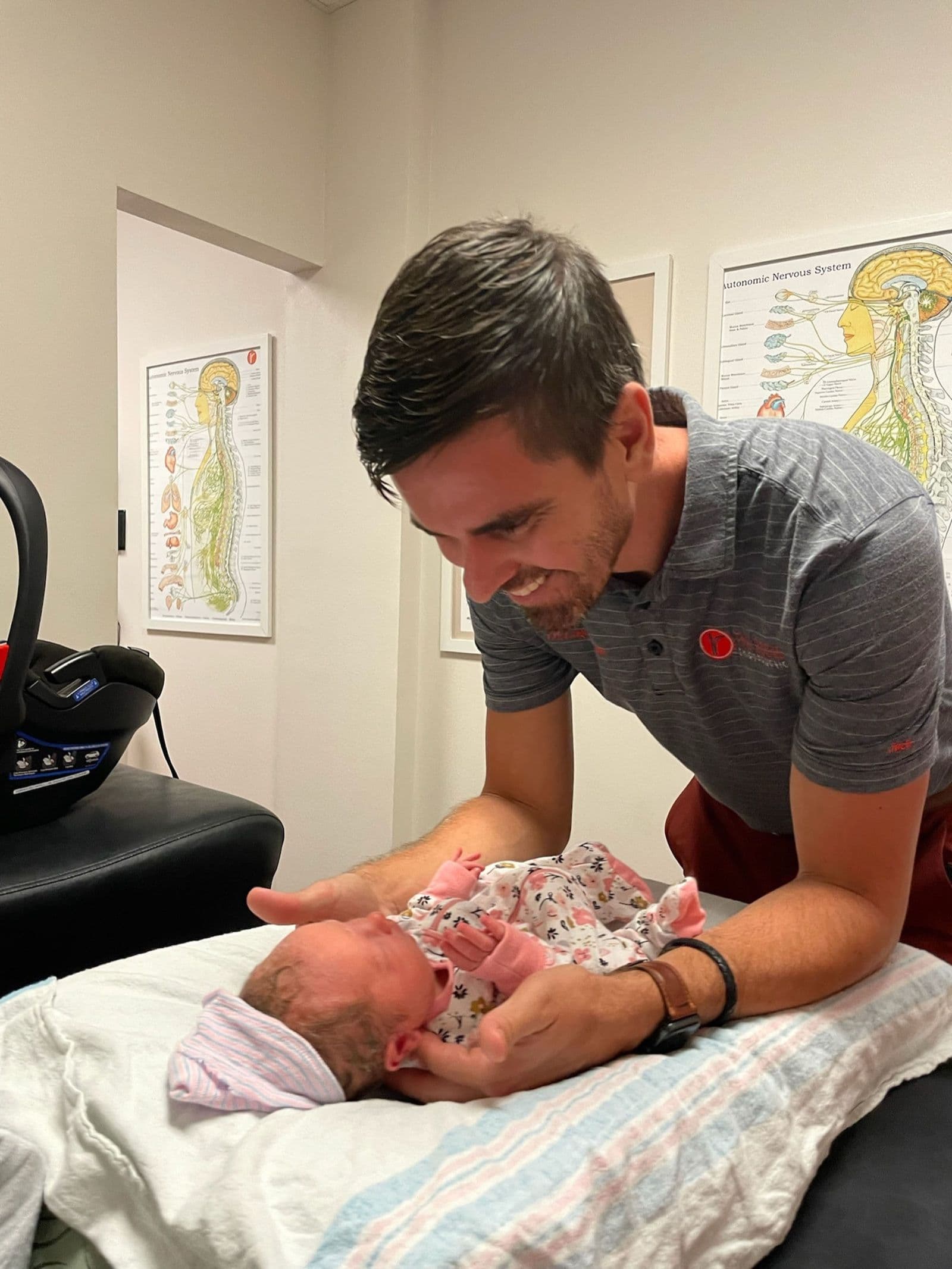
- Gentle bodywork, including pediatric chiropractic, to support the jaw, neck, and oral muscle tension that often comes along with a tie - before and after any release.
Think of it like a relay, not a solo race. Each provider hands off to the next, and the goal is always the same: a baby who can feed comfortably and a parent who feels supported. At Little Roots Pediatric Chiropractic in Lakewood Ranch, we are glad to be one part of that team and to help you connect the dots.
Where gentle chiropractic care fits in
Long before a baby is born, the tongue, jaw, neck, and base of the skull are all working together. A tight frenulum rarely lives in isolation - babies who have been compensating to feed often hold tension in the jaw, the muscles around the neck, and the upper spine. That tension can make latching even harder, and it can stick around after a release if nothing helps the body let it go.
This is where gentle, complementary care comes in. Chiropractic is not a tongue-tie release and not a cure - it is light, baby-sized bodywork meant to support easier movement and a more relaxed nervous system.
Our tongue-tie chiropractic care focuses on supporting:
- Softer, more balanced tension in the jaw and neck
- More comfortable range of motion for the head and tongue
- A calmer, more settled baby who can do the work of feeding
- The body's adjustment before and after a release, when one is part of the plan
Dr. Logan Swaim has advanced training in infant oral and cranial function, including tongue and lip tie and infant jaw tension, and our team uses feather-light techniques designed specifically for tiny bodies. Nothing forceful, nothing that looks like an adult adjustment - just gentle support that works alongside your lactation and medical providers. You can learn more about infant chiropractic care and our wider pediatric wellness approach, or explore the conditions and symptoms we commonly see in the office.
Before and after a release: how bodywork can help
If your team recommends a release, gentle bodywork can play a supportive role on both sides of it. Before a release, easing jaw and neck tension may help your baby move and latch a little more freely. After a release, babies have to learn to use their newly freed tongue, and tension patterns built up over weeks of compensating don't always melt away on their own.
Many providers also recommend gentle stretches and feeding follow-up after a release to support healing - your dentist, ENT, or lactation consultant will guide that part. Gentle chiropractic care can complement those efforts by supporting relaxed movement, so your baby's body is ready to put that new tongue mobility to use. Every baby is different, so we take a personalized approach based on what your child's body is showing us.
Latch Struggles Beyond Tongue-Tie
Not every hard latch is a tongue-tie. If a lactation consultant has checked baby's mouth and things look structurally fine, or a tie has already been ruled out, feeding can still be difficult for a handful of other common, very fixable reasons:
- Positioning and attachment — a latch can be shallow simply because of how baby's body is held and angled at the breast or bottle, independent of anything going on with the tongue
- Flat or inverted nipples — can make it harder for baby to draw a deep latch in the first weeks, before positioning adjustments and practice help
- Oversupply or a forceful letdown — a fast, strong flow can cause baby to gulp, gasp, pull off, or clamp down defensively
- Low supply — a baby working hard for less milk than expected can look a lot like a latch problem
- Prematurity or low muscle tone — some babies simply tire more quickly and need extra support to sustain a deep latch
- Nipple confusion from early bottle or pacifier use — different sucking mechanics between breast and bottle can take time to sort out
None of these mean you're doing something wrong, and most respond well to hands-on support from an IBCLC alongside the same kind of gentle, calming bodywork we talked about above. If gassiness or fussiness is part of the picture too, our newborn gas relief guide and colic and the nervous system articles cover the digestive side of a tough feeding stretch.
You are doing better than you think
If you have made it this far, you are already advocating fiercely for your baby - reading at odd hours, asking hard questions, refusing to just "wait it out" while feeding hurts. That instinct matters. Feeding struggles can feel isolating, but they are common, they are workable, and you do not have to figure them out alone.
Whether your next step is a lactation visit, a conversation with your pediatrician, or gentle bodywork to ease the tension that comes with a tie, the goal is the same: comfortable feeds and a thriving, settled baby. We would be honored to be part of your team.
Frequently Asked Questions
What is a tongue-tie in a baby?
A tongue-tie is when the band of tissue under the tongue (the frenulum) is short or tight enough to limit how the tongue moves. In a baby, that restricted movement can make it hard to latch deeply and feed comfortably. A qualified provider, such as a pediatrician, pediatric dentist, or ENT, makes the actual diagnosis.
What are the most common signs of tongue-tie?
Common signs include a shallow or slipping latch, clicking sounds during feeds, very long or constant feeding, slow weight gain, gassiness or reflux-like symptoms, and a heart-shaped tongue tip when baby cries. In mom, ongoing nipple pain and misshapen nipples are common clues. A cluster of signs is more telling than any single one.
Can tongue-tie affect breastfeeding?
Yes. A tongue-tie can make breastfeeding painful for mom and inefficient for baby, since the tongue can't cup and draw milk the way it needs to. That can lead to a shallow latch, slow weight gain, and supply concerns. A lactation consultant (IBCLC) is often the best first call to assess the latch.
What is the difference between a tongue-tie and a lip-tie?
A tongue-tie involves tight tissue under the tongue, while a lip-tie involves tight tissue connecting the upper lip to the gums. A lip-tie can keep the top lip from flanging out to seal well during feeding. The two often occur together and can both affect latch.
Does my baby need a tongue-tie release?
Not every tongue-tie needs a release, and that decision belongs to a qualified medical provider, such as a pediatrician, pediatric dentist, or ENT, usually alongside a lactation consultant. Many families start with feeding support and gentle bodywork first. The right path depends on your baby's specific situation.
How can chiropractic care help with tongue-tie?
Gentle pediatric chiropractic does not release a tie or cure anything. It is light, baby-sized bodywork that supports the jaw, neck, and oral muscle tension that often comes with a tie, before and after any release. It works best as one part of a team that includes lactation and medical providers.
What if my baby's latch is still painful but there's no tongue-tie?
Painful latch isn't always about tongue-tie — positioning, flat or inverted nipples, oversupply, or a baby who tires quickly can all play a role. An IBCLC can watch a full feed and help pinpoint what's actually happening, and gentle bodywork can support a baby who's been working hard to compensate.
Can gentle chiropractic care help with a shallow latch that isn't caused by tongue-tie?
It can be a helpful complement. Babies who've been straining to latch, regardless of the cause, often carry tension in the jaw and neck. Gentle, baby-sized bodywork supports relaxed movement so baby can put good positioning and technique to full use — but it works best alongside, not instead of, hands-on lactation support.
When should I get help with feeding struggles?
Reach out as soon as feeding hurts, your baby isn't gaining well, or feeds feel constant and frustrating - you don't have to wait for things to get worse. Early support from a lactation consultant and your pediatrician can make a real difference. To explore gentle, complementary care in Lakewood Ranch, call Little Roots at (941) 932-4611.
Feeding struggles are exhausting, and you deserve a team that listens. If you'd like gentle, baby-centered support alongside your lactation and medical providers, we're here for you. Book an appointment with our team at Little Roots Pediatric Chiropractic, or call us anytime at (941) 932-4611. Let's help feeding feel like bonding again.
Learn More
Conditions we help with
Reflux
Spit-up is normal. Arching through feeds, crying after eating, sleeping fitfully, and never seeming satisfied — that's reflux, and it's almost always a nervous-system regulation story before it's a digestion story.
Learn moreColic
Colic isn't a personality trait — it's often a baby's nervous system stuck on high alert. Gentle chiropractic care helps the system downshift so feeding, sleeping, and being held start to feel okay again.
Learn moreRelated Services
Related Reading
Related articles
Newborn Gas Relief: Gentle, Drug-Free Ways to Help Your Baby
Squirming, grunting, knees pulled up — gas is one of the most common reasons newborns get fussy. Here's what helps, gently and without medication.
Read articleColic and the Nervous System: Why Your Baby Can't Stop Crying
Colic is often a nervous system problem, not a stomach problem. Learn why babies get colic, what's really happening, and how gentle pediatric chiropractic care helps.
Read articleKeep Reading
More for growing families
Baby Grunting in Sleep: What's Normal and When to Look Closer
Those snorts, squeaks, and grunts from the bassinet can sound alarming at 2 a.m. Here is why newborns do it, what is usually normal, and which signs deserve a closer look.

Toddler Snoring: When It's Normal and When to Look Closer
Hearing your toddler snore can be sweet or worrying. Here is what is often normal, which signs are worth mentioning to your pediatrician, and gentle ways to support better sleep.
Breastfeeding Back Pain: Posture Tips for Nursing Moms
Hours of feeding can leave your neck, shoulders and back aching. Here is why breastfeeding back pain happens and the gentle posture changes that may help.
Questions about your child?
Schedule a consultation and let's talk through your family's needs together.
Book a Consultation(941) 932-4611