

Newborn Sleep Position: Back to Sleep, Side Sleeping, and Flat Spots
Dr. Grayson Fox, DC
The safest newborn sleep position is flat on the back for every nap and every night. Here is why side sleeping is not advised, and gentle ways to help prevent flat spots.
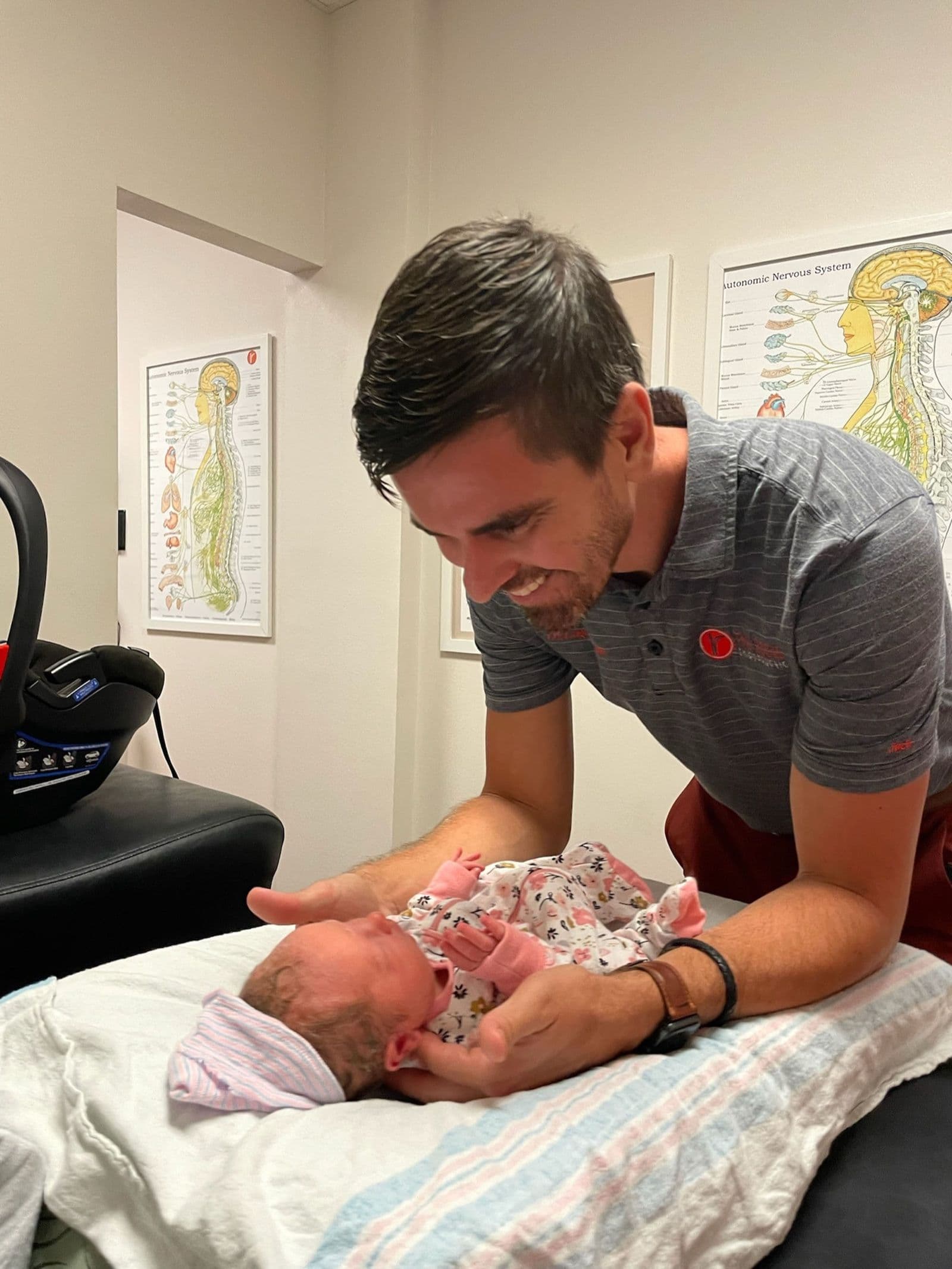
It is 2 a.m., your newborn finally fell asleep, and you are standing over the bassinet wondering: is this the right way to lay them down? Should they be on their back or their side? What if they spit up? You are not alone. Newborn sleep position is one of the most searched questions new parents have, and the answer is reassuringly simple. The safest newborn sleep position is flat on the back, on a firm, flat surface, for every nap and every night. That guidance comes from the American Academy of Pediatrics (AAP), and it is the one our team supports for every family we see. Below, we explain why back sleeping matters, why side sleeping is not recommended, what to do about spit-up and flat spots, and how to support your baby's comfort during the day. As always, your pediatrician is your go-to for your own baby's sleep questions.
The Safest Newborn Sleep Position: On the Back, Every Sleep
Since the "Back to Sleep" campaign began in the 1990s, rates of sudden infant death syndrome (SIDS) in the United States have dropped dramatically. Placing babies on their backs to sleep is one of the most important steps parents can take to lower that risk.
The AAP's safe sleep basics include:
- Back for every sleep. Naps count too, including naps at grandma's house or at daycare.
- A firm, flat surface. A crib, bassinet, or portable play yard that meets current safety standards, with a fitted sheet and nothing else.
- A bare sleep space. No pillows, blankets, bumpers, stuffed animals, or sleep positioners.
- Room-sharing without bed-sharing. Keep your baby's crib or bassinet in your room, close to your bed, but not in your bed.
- No inclined sleep. Car seats, swings, bouncers, loungers, and inclined sleepers are not safe for sleep. If your baby falls asleep in one, move them to a flat, firm surface when you can.
- Comfortable, not hot. Dress your baby in light layers or a wearable blanket, and keep the room comfortable. In a warm Florida home, that usually means fewer layers than you might expect.
Why a firm, flat surface matters
Newborns have heavy heads, weak neck muscles, and small airways. On a soft or inclined surface, a baby's head can roll forward, chin to chest, or their face can sink into soft bedding. A firm, flat surface keeps the airway open and gives your baby a stable place to rest.
Can a Newborn Sleep on Their Side?
No. Side sleeping is not considered safe for newborns. A baby placed on their side can easily roll onto their tummy, and young babies may not have the strength or coordination to turn back. That is why the AAP recommends back sleeping only, rather than side sleeping as a compromise.
You may have seen wedges or positioners sold to hold a baby on their side. The AAP and the U.S. Food and Drug Administration advise against using them. They can shift during sleep and create a suffocation risk.
What about tummy sleeping?
Tummy sleeping is not recommended for newborns either. The exception comes later. Once your baby can roll from back to tummy and tummy to back on their own, you can still lay them down on their back and let them find their own position. Until then, back is best. If your baby is swaddled, stop swaddling once they show signs of trying to roll.
"But What If My Baby Spits Up?"
This is one of the most common worries we hear. It makes sense: if your baby spits up a lot, lying flat on their back can feel risky. The reassuring news is that healthy babies have a strong gag reflex that protects their airway, and research has not shown an increase in choking with back sleeping.
The AAP also advises against raising the head of the crib or using an inclined sleeper for reflux, because the baby can slide into a position that makes breathing harder. If spit-up seems frequent, forceful, or painful, or your baby is not gaining weight, talk with your pediatrician. Our post on infant reflux and spit-up also explains what is typical and what is worth a closer look.
Back Sleeping and Flat Spots: What Parents Can Do
Back sleeping is safest, but spending so much time on the back can lead to flat spots on the back or side of a baby's head. This is called positional plagiocephaly. A baby's skull is soft and grows quickly in the early months, so steady pressure in one spot can shape it.
The answer is not to change your baby's sleep position. It is to give your baby lots of time off the back of their head while they are awake. A few gentle ideas:
- Tummy time while awake. Short, frequent sessions on a parent's chest or a firm blanket on the floor, always supervised. Our tummy time guide has ideas for babies who protest.
- Alternate head direction. Babies like to turn toward the door or toward you. Switch which end of the crib their head faces from night to night so they look in both directions.
- Limit container time. Car seats, swings, and bouncers all put pressure on the back of the head. Use them when you need them, then give your baby floor time.
- Hold and carry in different positions. Upright holding, babywearing, and switching which arm you feed with all take pressure off the head.
When a head preference is more than a habit
Some babies always turn their head to the same side, or seem uncomfortable turning one way. That can be a sign of tight neck muscles, sometimes called torticollis. It often shows up alongside a flat spot on one side. If you notice a strong side preference, mention it to your pediatrician. Our posts on plagiocephaly and head-turning preference go deeper.
When Your Baby Will Not Settle on Their Back
Some newborns fight back sleeping. They startle, squirm, or wake as soon as they are set down. That can be exhausting, and it is tempting to try a different position. Instead, a few things may help your baby settle while staying on their back:
- A snug swaddle for young babies who are not yet rolling
- A calm, dim room with white noise
- Laying your baby down drowsy, with a hand gently on their chest for a moment
- Warming the crib sheet with your hand before you lay them down
It also helps to remember that newborn sleep is light and short by design. Frequent waking is normal in the early weeks. If your baby seems uncomfortable on their back in a way that stands out, such as arching, crying when laid flat, or seeming stiff, it may be worth a closer look at what is going on. Our article on why babies will not sleep in the crib shares more ideas.
How Little Roots Supports Comfortable Babies and Restful Families
At Little Roots Pediatric Chiropractic in Lakewood Ranch, our team works alongside your pediatrician, never in place of them. Safe sleep guidance always comes from the AAP and your baby's doctor, and we reinforce it with every family.
Where our team may help is with the comfort side of the picture. Birth can be a big physical event for a baby, and tension in the neck or upper back can make it harder for some babies to turn their head freely or settle comfortably on their back. Our infant chiropractic care uses very gentle, fingertip-light pressure, and it starts with a careful look at how your baby moves, turns, and responds.
If your little one has trouble with sleep, a strong head preference, or seems uncomfortable lying flat, we would love to listen. Each child is different. We take a personalized approach based on what your child's nervous system is showing us.
Newborn Sleep Position: Frequently Asked Questions
Can a newborn sleep on their side?
No. The AAP recommends placing newborns on their backs for every sleep. Side sleeping is not advised because a baby can roll onto their tummy and may not be able to roll back. Wedges and positioners that hold a baby on their side are not recommended either.
Is it safe for my newborn to sleep on my chest?
Skin-to-skin time while you are awake and alert is wonderful for bonding. If you feel yourself getting sleepy, move your baby to their own flat, firm sleep space on their back. The AAP advises against falling asleep with a baby on your chest, on a couch, or in an armchair.
What if my baby rolls onto their tummy during sleep?
Once your baby can roll both ways on their own, you can still lay them down on their back and let them stay in the position they choose. Keep the sleep space bare and stop swaddling once they start trying to roll.
How do I prevent a flat head if my baby sleeps on their back?
Keep your baby on their back for sleep, and give them plenty of supervised tummy time while awake. Alternate which way their head faces in the crib, limit time in car seats and swings, and hold your baby in different positions throughout the day.
Should I raise the crib mattress if my baby has reflux?
No. The AAP advises against raising the head of the crib or using inclined sleepers, even for reflux. If spit-up seems excessive or your baby seems uncomfortable, talk with your pediatrician.
You Do Not Have to Figure Out Newborn Sleep Alone
The early weeks are full of questions, and every one of them is a good one. If your baby seems uncomfortable on their back, favors one side, or has trouble settling, our team at Little Roots in Lakewood Ranch, serving families from Bradenton to Sarasota, is here to listen to what you are noticing. Book an appointment to talk it through with us.
Learn More
Conditions we help with
Torticollis & Head Shape
Head tilt, flat spots, asymmetric jaw — these are often the same story told from different angles. Gentle in-arms work helps the system release the holding pattern that's keeping your baby stuck on one side.
Learn moreSleep Issues (Toddlers & Kids)
Bedtime battles, frequent night wakings, and 2 a.m. visits to your room aren't just phases — they're signals that a toddler or child's nervous system isn't downshifting the way it should. Gentle care helps it find the transition the body needs to rest.
Learn moreRelated Services
Related Reading
Related articles
Tummy Time: Why It Matters, Why Babies Resist It, and How to Make It Work
Tummy time resistance is one of the most common new-parent concerns we hear at Little Roots. Here's when to start, how much to aim for, and when struggles are worth a closer look at your baby's nervous system.
Read articlePlagiocephaly: What to Do About a Baby's Flat Head
A flat spot on your baby's head is common and usually manageable at home. Here's what causes it, what actually helps, and when to loop in a specialist.
Read articleBaby Won't Sleep in the Crib: Gentle Troubleshooting for Tired Parents
Your baby sleeps great in your arms and wakes the moment they touch the crib. Here's why that happens, safe-sleep basics, and gentle ideas to try.
Read articleKeep Reading
More for growing families
Baby Shaking Head Side to Side: What It Means and When to Call
Head shaking is a common, usually normal part of baby development. Learn why babies shake their heads, the signs that mean it is time to call your pediatrician, and how our team can help.
Pregnancy Shortness of Breath: Why It Happens and When to Call Your OB
Feeling winded while pregnant is common, but it can be unsettling. Learn why it happens, gentle ideas to try, and the warning signs that mean calling your OB or midwife right away.
Pregnancy Bloating and Gas: Why It Happens and Gentle Ways to Cope
Pregnancy bloating and gas are common and uncomfortable. Learn why they happen, how to tell bloating from baby growth, gentle ideas to try, and when to call your OB or midwife.
Questions about your child?
Schedule a consultation and let's talk through your family's needs together.
Book a Consultation(941) 932-4611