

Tummy Time: Why It Matters, Why Babies Resist It, and How to Make It Work
Dr. Logan Swaim, MS, DC
Tummy time resistance is one of the most common new-parent concerns we hear at Little Roots. Here's when to start, how much to aim for, and when struggles are worth a closer look at your baby's nervous system.
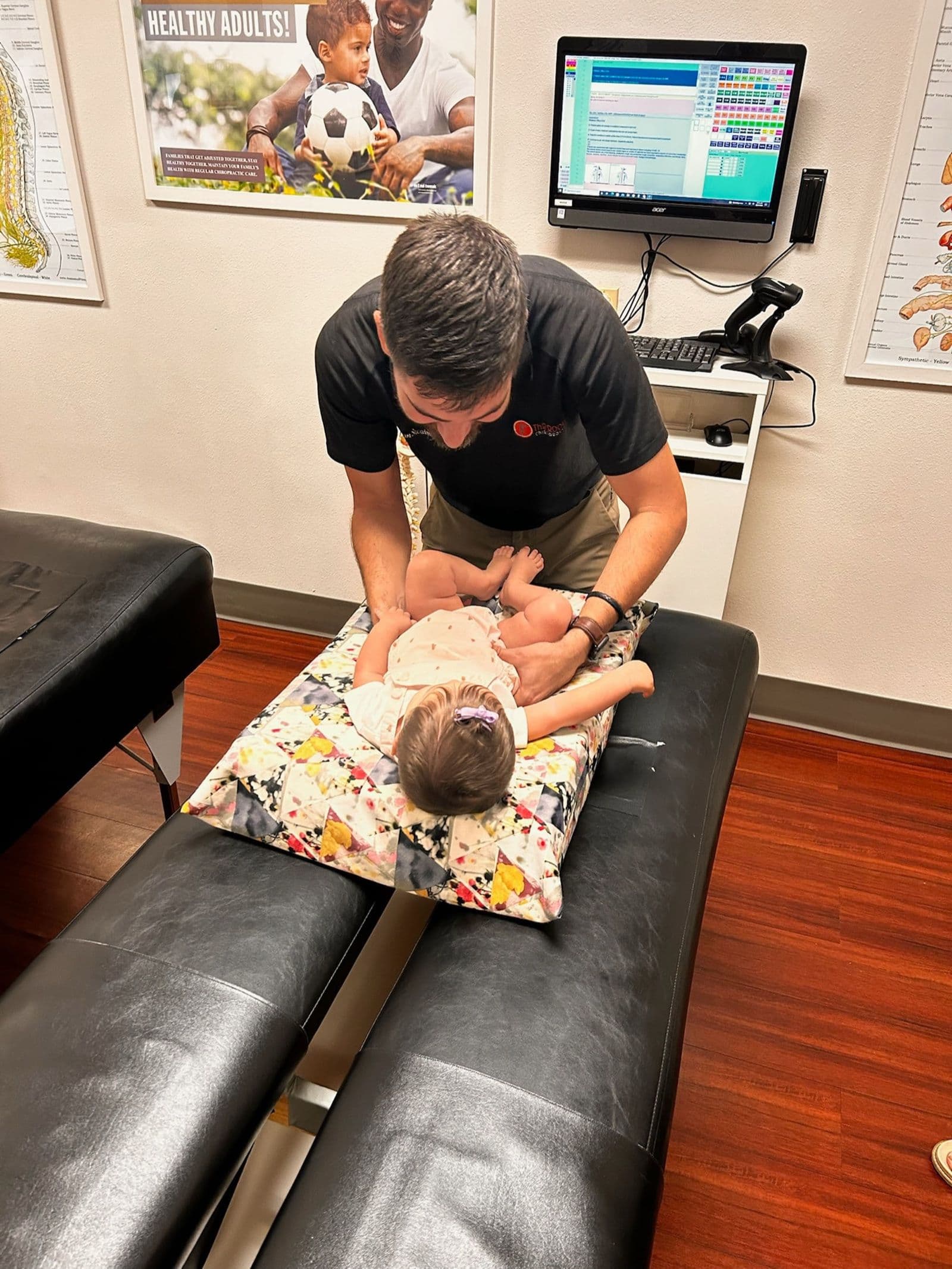
If tummy time is a battle in your house, you're in excellent company. Most babies resist it at first — and most parents feel unsure about when to start, how long to do it, and what to do when their baby cries through every session. This guide walks through why tummy time matters so much in the early months, practical ways to make it more manageable for your baby, and what it can sometimes signal when a baby really struggles beyond just not liking the position.
Why Tummy Time Matters
Tummy time — placing your baby on their belly while awake and supervised — is one of the most important things you can do for early development. Here's why:
It builds the strength babies need for every motor milestone. Rolling, sitting, crawling, and eventually walking all require the neck, shoulder, and core strength that tummy time develops. Babies who skip tummy time often lag in these milestones because the foundational muscle work wasn't done.
It prevents flat head shape. Since the "Back to Sleep" campaign reduced SIDS rates dramatically, babies sleep on their backs — which is the right call. But that means more hours with the back of the skull against a surface. Tummy time counterbalances this pressure and helps prevent positional plagiocephaly (flat head). (See our guide on flat head shape and torticollis.)
It develops vision, sensory awareness, and spatial understanding. On their tummies, babies experience gravity and their environment in an entirely different orientation. That positional variety is important for sensory and neurological development.
It gives the nervous system new and challenging input. The work of lifting the head against gravity activates muscle groups and neural pathways that back-lying simply doesn't engage. Our team at Little Roots thinks of tummy time as the body's first real workout for the developing nervous system.
When Should Babies Start Tummy Time?
Tummy time can begin from day one — and the earlier you start, the easier it becomes.
- Newborns (0–4 weeks): Start with very short sessions, 1–2 minutes at a time, a few times per day. Chest-to-chest tummy time — where you recline at a 45-degree angle with your baby face-down on your chest — is often the easiest starting point because your warmth and heartbeat are calming.
- 1–3 months: Work toward a total of 20–30 minutes per day in multiple short sessions. Head control is still developing — that's normal.
- 3–6 months: Gradually increase duration as your baby strengthens. By 4 months, most babies can hold their head up steadily and begin to push up on their forearms.
- 6+ months: By this stage, many babies are doing extended tummy time independently as they prepare to crawl.
Consistency matters more than duration. A few minutes several times a day builds tolerance and strength far faster than one long reluctant session.
Tummy Time and Motor Milestones
The strength your baby builds during tummy time is the same strength behind nearly every early motor milestone. Lifting the head leads to pushing up on the forearms, which leads to reaching for toys while propped up, which leads to rolling, and eventually to the core and shoulder stability needed for sitting and crawling. Babies who get consistent tummy time tend to build toward these milestones more smoothly, simply because the groundwork has already been laid.
That said, every baby develops on their own timeline, and a slower start with tummy time doesn't mean a baby is behind — it usually just means there's more building to do before the next milestone clicks into place.
Why Babies Often Resist Tummy Time
It's completely normal for babies to dislike tummy time, especially early on. Here's why it's hard:
It's genuinely difficult. Being on the tummy requires engaging muscles that are still developing. Effort and crying are not signs something is wrong — they're signs the work is happening.
Timing matters. Tummy time works best when your baby is awake, alert, and fed but not immediately after a feed (which can cause discomfort and spit-up). An overtired or hungry baby will resist more.
Starting late makes it harder. Babies introduced to tummy time after 4–6 weeks of age often protest more than babies who started early. The earlier the habit forms, the easier it gets.
Muscle tension or tightness. Some babies have tension in their neck or upper back from their position in the womb, the birth process, or spending extended time looking in one direction. When muscles on one side are tighter, tummy time becomes genuinely uncomfortable and not just difficult. This is one of the things our team at Little Roots looks for when a baby is unusually resistant — beyond the normal protest curve.
How to Make Tummy Time Easier
A few approaches that help most babies tolerate — and eventually enjoy — tummy time:
Start on your chest. Lie back at a 45-degree angle and lay your baby face-down on your chest. Your warmth, smell, and heartbeat make the position feel safer, and this counts as full tummy time.
Use a rolled towel or small pillow under the chest. A small support under your baby's chest reduces how much they have to work to lift their head at first, making the position more sustainable while they build strength.
Get down at eye level. Babies are much more motivated to lift their head when there's something interesting to look at. Your face, a small mirror, or a high-contrast card placed at eye level helps considerably.
Keep sessions short and consistent. Multiple short sessions throughout the day build tolerance quickly. Don't wait for a long window — two minutes several times a day works better than ten minutes once.
Normalize the protest. A certain amount of crying during tummy time is normal and not harmful when your baby is safe and supervised. The goal isn't to eliminate all discomfort — it's to build strength gradually so the position becomes easier.
Tummy Time Gear: What Actually Helps
You don't need special equipment for tummy time to work, but a few simple props can make sessions easier:
A small rolled towel or thin pillow under the chest reduces how much your baby has to work to lift their head at first, which can make longer sessions more tolerable while strength builds.
A play mat with light texture or a small mirror gives your baby something interesting to look at, which naturally motivates head-lifting more than a plain floor does.
A soft, supportive nursing-style pillow works well for very young babies as a gentle surface for short sessions.
What to skip: positioning pillows or inclined products marketed for sleep should never be used during sleep, and aren't necessary for tummy time either — a flat, firm, supervised surface is all tummy time actually requires.
When Tummy Time Struggles Are Worth Looking Into
Most resistance to tummy time is normal and resolves with consistency. But some patterns are worth mentioning to your care team:
Strong preference for turning the head to one side. If your baby consistently looks one direction during tummy time and strongly resists the other, this can be a sign of muscle tightness on one side — sometimes called torticollis. It responds well to gentle care and home repositioning strategies, and the earlier it's identified, the easier it is to address.
Very little head-lifting progress by 3 months. Some head lag is normal early on, but no progress by 3 months is worth discussing with your pediatrician.
Persistent arching during tummy time. Babies who consistently arch backward hard during tummy time rather than pushing up forward may be experiencing discomfort from reflux, muscle tension, or nervous system dysregulation. (See our guide on baby arching back.)
Our infant chiropractic team at Little Roots frequently works with families on tummy time tolerance as part of addressing muscle tension or nervous system patterns that make the position uncomfortable. If you're seeing a persistent pattern, a complimentary consultation is always a good place to start.
Frequently Asked Questions
When do babies start tummy time? Tummy time can begin from day one. Starting early — even with just a minute or two on your chest — makes the position much more familiar and tolerable than waiting several weeks to begin.
Why does my baby hate tummy time? Most babies resist tummy time because it's genuinely hard work for developing muscles. Starting early, keeping sessions short and frequent, using props, and getting down at eye level all help. If your baby is unusually resistant even to very short sessions, muscle tightness may be a factor worth exploring.
How long should tummy time sessions be? In the newborn stage, 1–2 minutes several times per day is plenty. Work toward accumulating 30 minutes per day by 3 months, broken into however many sessions work for your baby.
Can I do tummy time right after feeding? Better to wait at least 30 minutes after a feed. Tummy time too soon after eating can cause discomfort and increase spit-up, particularly in reflux-prone babies.
What if my baby falls asleep during tummy time? Always move your baby to their back to sleep. Tummy time counts only when they're awake and supervised. Never leave a sleeping baby on their tummy.
Does tummy time help my baby crawl sooner? Consistent tummy time builds the core, shoulder, and neck strength crawling requires, but every baby moves toward crawling on their own timeline. Think of tummy time as building the foundation rather than a guarantee of an earlier crawl.
My baby was born early — does tummy time start differently? For babies born early, many pediatricians recommend basing tummy time readiness on adjusted age (counting from the original due date) rather than birth date. It's worth asking your pediatrician when to begin, since preemies sometimes need a gentler, more gradual start.
Learn More
Conditions we help with
Torticollis & Head Shape
Head tilt, flat spots, asymmetric jaw — these are often the same story told from different angles. Gentle in-arms work helps the system release the holding pattern that's keeping your baby stuck on one side.
Learn moreDevelopmental Delays
Motor milestones, speech development, cognitive processing — all of it runs through a nervous system. When that system holds structural tension, it can limit what's available to your child. Gentle care creates more capacity, and more capacity compounds.
Learn moreReflux
Spit-up is normal. Arching through feeds, crying after eating, sleeping fitfully, and never seeming satisfied — that's reflux, and it's almost always a nervous-system regulation story before it's a digestion story.
Learn moreRelated Services
Related Reading
Related articles
Baby Milestones: Crawling, Sitting, and Walking — What to Expect
Sitting, crawling, and walking all happen on a wide, normal range. Here's what baby milestones typically look like and when a closer look is worth it.
Read articleIs Chiropractic Safe for Babies? What the Research Actually Shows
Parents ask us every week: is chiropractic safe for my baby? Here is what the published safety data says, what a newborn adjustment actually looks like, and how to find a qualified pediatric chiropractor in Lakewood Ranch.
Read articleColic and the Nervous System: Why Your Baby Can't Stop Crying
Colic is often a nervous system problem, not a stomach problem. Learn why babies get colic, what's really happening, and how gentle pediatric chiropractic care helps.
Read articleQuestions about your child?
Schedule a consultation and let's talk through your family's needs together.
Book a Consultation(941) 932-4611