

The Moro (Startle) Reflex in Babies: What's Normal and What to Watch For
Dr. Grayson Fox, DC
That sudden fling-the-arms-out startle has a name — the Moro reflex. Here's what's normal, why it happens, and when it's worth a closer look.
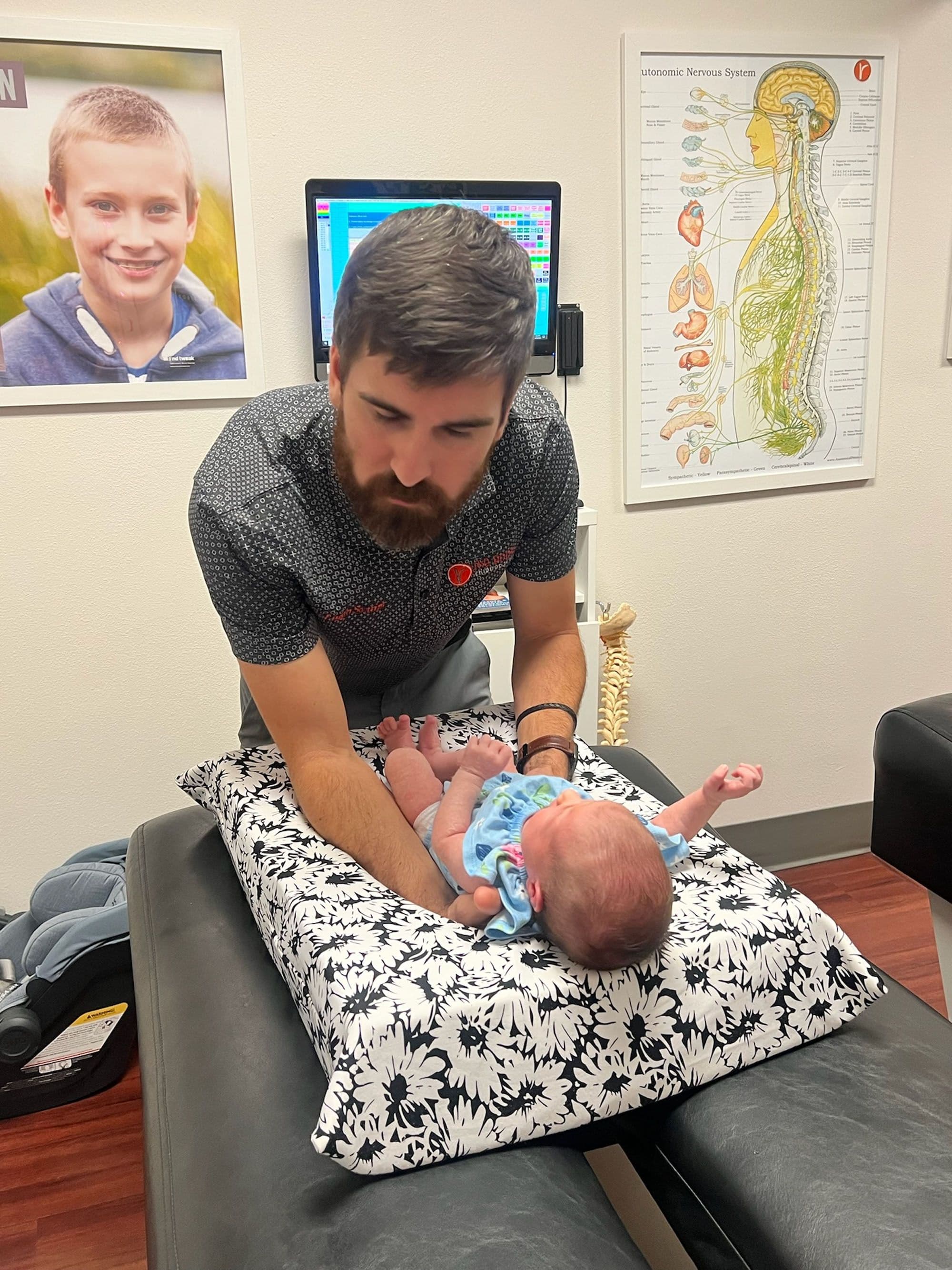
If your baby suddenly flings both arms out, arches, and then pulls them back in — often right when you're setting them down, or after a loud noise — you've seen the Moro reflex in action, even if you didn't know its name. Parents searching for the startle reflex in babies are usually looking for one of two things: reassurance that what they're seeing is normal, or a sense of when it should start fading. The Moro reflex is one of several primitive reflexes babies are born with, and it's actually a good sign that your baby's nervous system is doing exactly what it's supposed to do at this stage. Here's what the reflex is, why it happens, what's typical to see, and when it's worth bringing up with your care team.
What the Moro Reflex Actually Is
The Moro reflex — sometimes called the startle reflex — is an automatic, full-body response newborns show to a sudden change: a loud sound, a bright light, a sudden movement, or the sensation of falling backward slightly, like when you lower your baby into a crib. In a typical response, your baby's arms fling outward, their back may arch slightly, and then their arms curl back in toward their body, often followed by crying. It can look startling to watch the first few times, but it's one of the most well-documented reflexes in newborn development, and pediatricians check for it as part of a standard newborn exam because its presence tells them something meaningful about how your baby's nervous system is wired at birth.
Why Babies Have This Reflex At All
Primitive reflexes like the Moro reflex are thought to be part of how a newborn's nervous system is organized before higher-level brain function takes over more of the work. In the earliest weeks, your baby's nervous system runs largely on these built-in, automatic responses rather than intentional movement. The Moro reflex specifically is believed to be a protective, startle-and-recover pattern — and its presence at birth, followed by its gradual fading over the coming months, is part of the typical sequence providers look for as a nervous system matures and more voluntary movement patterns take over.
The Moro Reflex Is One of Several Newborn Reflexes
The Moro reflex gets a lot of attention because it's dramatic to watch, but it's just one of several primitive reflexes babies are born with. The rooting reflex helps a newborn turn toward a touch near their mouth and find a feeding position. The palmar grasp reflex is why a newborn's fingers curl tightly around yours the moment you touch their palm. The stepping reflex makes a newborn's legs move in a walking-like pattern when their feet touch a firm surface. Like the Moro reflex, each of these tends to follow its own general timeline of showing up at birth and fading as your baby's nervous system matures.
What's Normal to See
A typical Moro reflex looks symmetrical — both arms move the same way, at the same time. It's usually triggered by a sudden noise, a change in light, being moved quickly, or the sensation of your baby's head tipping backward even slightly. Some babies startle easily and often; others seem to barely react. Both can fall within a normal range — babies vary quite a bit in how sensitive their startle response is, and that variation on its own isn't something to worry about. Swaddling, holding your baby close during transitions, and supporting their head and neck when you set them down can all reduce how often the reflex gets triggered, which is part of why swaddled babies often startle less.
When the Moro Reflex Should Fade
For most babies, the Moro reflex is present from birth and gradually fades somewhere in the general range of three to six months, as more voluntary, intentional movement patterns take over. This isn't a fixed deadline — every baby's nervous system develops on its own timeline — but a reflex that's still very pronounced well beyond that general window, or one that never seems to fade at all, is something worth mentioning at a well-child visit.
Signs Worth Mentioning to Your Pediatrician
Most of what parents notice with the Moro reflex is completely typical. A few patterns are worth bringing up with your pediatrician rather than just monitoring on your own: a reflex that's clearly one-sided (one arm responds and the other doesn't), a reflex that seems absent altogether, or one that's still strong and frequent well past the general window when it usually starts fading. None of these automatically mean something is wrong — there are a lot of reasons a reflex can look asymmetrical, including simple positioning — but they're worth a second set of eyes.
How Our Team Looks at Newborn Reflexes
We don't diagnose reflex disorders, and a pediatric chiropractic visit isn't a substitute for your pediatrician's exams. What our team can offer is a gentle look at how your baby's nervous system is communicating and regulating overall — one piece of the fuller picture alongside your pediatrician. During a visit, our doctors check how well your baby's nervous system is functioning, ask about the patterns you're noticing at home, and talk with you honestly about what we're seeing. Each baby is different, so we take a personalized approach based on what your baby's nervous system is showing us. This is the same nervous-system-first lens we bring to torticollis and head-shape concerns and to babies who struggle to settle and sleep.
Frequently Asked Questions
What is the Moro reflex? The Moro reflex, or startle reflex, is an automatic, full-body response newborns show to a sudden noise, movement, or the sensation of falling backward slightly — arms fling out, then curl back in, often with crying.
Is it normal for my baby to startle a lot? Yes. Babies vary quite a bit in how easily they startle. Some react to almost every sound or movement; others rarely react at all. Both patterns can be typical.
When does the Moro reflex go away? Most babies see this reflex fade somewhere between roughly three and six months, as more intentional, voluntary movement patterns take over. Every baby's timeline is a little different.
Does swaddling help with the startle reflex? Many parents find that swaddling, and supporting a baby's head and neck during transitions like being set down, reduces how often the reflex gets triggered and helps babies settle more easily.
Should I be concerned if the reflex looks uneven? A reflex that's clearly one-sided, absent, or still very pronounced well past the general fading window is worth mentioning to your pediatrician. It doesn't automatically mean something is wrong, but it's worth a closer look.
If you're noticing patterns like these in your baby and want a gentle, whole-picture look at how their nervous system is functioning, we'd love to meet your family. Book an appointment for a complimentary consultation with our team at Little Roots Pediatric Chiropractic.
Little Roots Pediatric Chiropractic, 8209 Natures Way, Unit 117, Lakewood Ranch, FL 34202.
Learn More
Conditions we help with
Torticollis & Head Shape
Head tilt, flat spots, asymmetric jaw — these are often the same story told from different angles. Gentle in-arms work helps the system release the holding pattern that's keeping your baby stuck on one side.
Learn moreSleep Regulation
Short naps, frequent wakings, a baby or toddler who fights sleep no matter what you try — these are signals that the nervous system is stuck in 'on.' Gentle care helps it find the off switch.
Learn moreKeep Reading
More for growing families

Baby Won't Take a Bottle? Gentle Troubleshooting for Parents
A baby who refuses the bottle can leave any parent frazzled. Here are the common reasons, gentle things to try, and the signs that mean it's time to call your pediatrician.

Baby Constipation: What's Normal and Gentle Ways to Help
Straining, fussing, and hard little poops can worry any parent. Here's what's normal for babies, gentle ways to help, and when it's time to call your pediatrician.
Baby Fell Off the Bed? What to Do First and What to Watch For
Your baby just rolled off the bed and your heart is pounding. Here's what to do first, the warning signs that mean emergency care, and what to watch for afterward.
Questions about your child?
Schedule a consultation and let's talk through your family's needs together.
Book a Consultation(941) 932-4611