

In-Toeing and Bow Legs in Toddlers: What Parents Should Know
Dr. Grayson Fox, DC
Noticed your toddler's feet turning in or their legs curving outward? Most of the time it's a normal developmental stage. Here's what's typical, what's worth a closer look, and how to tell the difference.
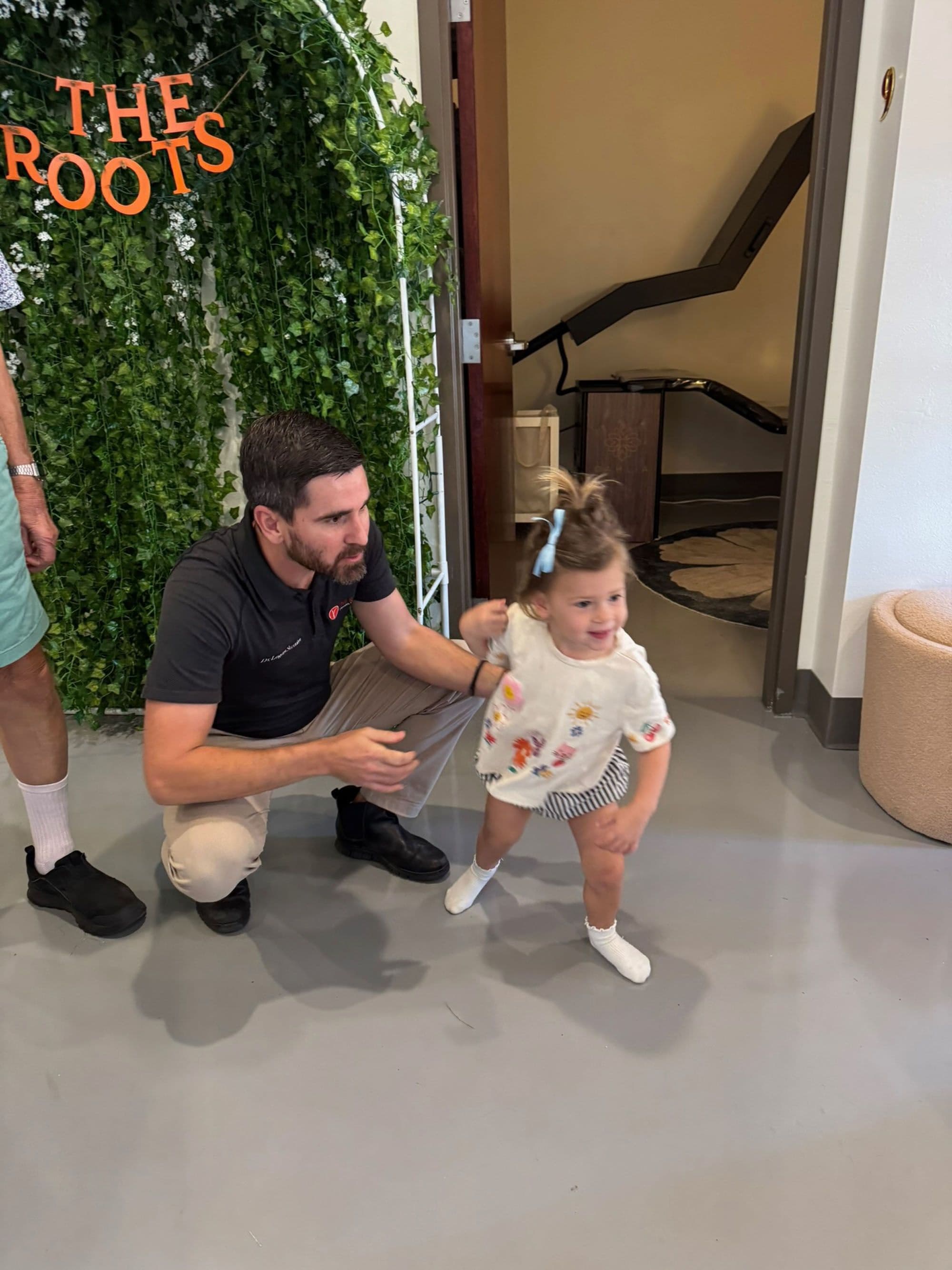
You watch your toddler run across the yard and something catches your eye — their feet turn inward with every step, or their legs curve outward so there's a visible gap between their knees. And once you've noticed it, you can't stop noticing it. Here's the reassuring part: in-toeing and bow legs in toddlers are, in the large majority of cases, a normal stage of how little legs develop. But "usually normal" isn't the same as "never worth a look," so let's walk through what's typical, what's worth watching, and how to tell them apart.
What in-toeing and bow legs actually are
In-toeing — often called being "pigeon-toed" — is when your child's feet point inward rather than straight ahead while walking or running. It usually becomes noticeable once a child is walking confidently and moving fast, because that's when the pattern shows up most.
Bow legs — the medical term is genu varum — is when the legs curve outward, so that when the ankles are together, the knees stay apart. Nearly every baby is born bow-legged. It's simply the shape of a body that spent months curled up in a small space.
They're separate things with separate causes, and a child can have one, both, or neither. What they share is that both are usually developmental — stages a body passes through rather than problems it has.
Why little legs change shape as they grow
This is the part that makes everything else make sense.
A baby's legs spend months folded in a very small space. They arrive in the world with that shape built in — curved outward, with hips and lower legs rotated inward. Then, over the years that follow, weight-bearing does its work. Standing, cruising, walking, and running all send force through the growing bones, and bone responds to that force by remodeling its shape.
So the typical arc looks like this: babies and young toddlers tend to look bow-legged, that gradually straightens out, and then many children swing the other way and go through a knock-kneed phase before settling into their adult alignment somewhere in the early school years. Legs don't grow straight in a straight line — they oscillate on their way there.
Understanding that arc is what turns "something looks wrong with my child's legs" into "my child is at a particular point in a normal process."
The three places in-toeing comes from
In-toeing isn't one thing. It comes from one of three levels of the leg, and knowing which one your child has explains a lot about what you're seeing.
From the foot. The front half of the foot curves inward while the back half is straight. This is the version most often noticed in babies, sometimes right from the newborn period, because you can see the shape of the foot itself rather than just the walking pattern.
From the shin. The shin bone has an inward twist along its length, so the knee points forward but the foot points in. This is the most common source in toddlers, and it's typically the one parents notice when a child starts moving quickly.
From the hip. The thigh bone carries more inward rotation than usual, so the whole leg turns in from the top. This one tends to show up a bit later, in preschool and early school years, and it's the version most associated with children who are comfortable sitting in a W position — which we've written about separately in W-sitting in kids.
All three are usually part of normal development and tend to resolve as growth continues. The reason it's worth knowing which is which is that it changes what's worth keeping an eye on.
What's typical, and what's worth a closer look
The patterns that are generally reassuring have a few things in common. They're symmetrical — both legs look similar. They're painless — your child isn't complaining and isn't avoiding activity. They're gradually improving, or at least not getting more pronounced over months. And your child is otherwise meeting their milestones and moving well.
The things worth having looked at are essentially the opposite:
- One side only. Asymmetry — one foot turning in noticeably more than the other, or one leg bowing while the other doesn't — is the single most useful thing for a parent to notice.
- Getting worse instead of better as your child grows.
- Pain, limping, or a child who stops wanting to walk or run.
- Bowing that's severe or that comes with a noticeably short stature.
- Frequent tripping well beyond the ordinary clumsiness of a new walker.
- Motor milestones that seem delayed alongside it — which is worth a broader conversation about motor development.
None of these mean something is seriously wrong. They mean the situation deserves eyes on it rather than another six months of watching and wondering.
The whole-body picture
Here's where our perspective adds something to the standard "they'll grow out of it."
How a child's legs and feet position themselves doesn't happen in isolation. It happens on top of how their pelvis sits, how their hips move, and how their nervous system is coordinating both sides of the body. When a child moves, the whole chain participates — which means a restriction or asymmetry higher up can show up as something you notice down at the feet.
That's why we look at the whole picture rather than just the part you pointed at. If one hip has less rotation available than the other, a child will find a way to walk anyway — and that workaround is often what a parent sees. It's also why we pay attention when in-toeing shows up alongside other patterns, like a strong preference for turning one direction, or a history of head tilt and flat spots in infancy.
What we assess: how the hips and pelvis move and whether they move evenly, how weight is distributed when standing and walking, whether there's asymmetry in tone from one side to the other, and how coordinated the overall movement pattern is. What we're looking for isn't a leg to straighten — growth handles that. It's whether anything in the system is making it harder for your child to move well and evenly while that growth is happening.
Each child is different. Our team takes a personalized approach based on what your child's nervous system and movement patterns are showing us.
What parents can do at home
Let them move. Barefoot time on varied surfaces — grass, sand, carpet, a firm floor — gives growing feet real information to work with. Florida makes this easy for most of the year.
Don't buy corrective shoes on your own. Special shoes, braces, and inserts have a real place, but only when a proper assessment says so. Stiff, supportive shoes that a child doesn't need can work against the foot strength that develops through natural movement.
Offer other ways to sit. If your child defaults to W-sitting, gently offering criss-cross, side-sitting, or long-sitting gives their hips a different position without turning it into a battle. Redirect rather than correct.
Take a video. This is the most practical tip here. Once or twice a year, film your child walking and running toward and away from the camera. Comparing videos over time is far more reliable than trying to remember what it looked like last spring — and it's genuinely useful to bring to any appointment.
Skip the internet stretches. Well-meant leg-straightening exercises found online don't change bone shape, and can turn a non-issue into a source of stress for everyone.
Trust what you're noticing. Parents catch asymmetry earlier than anyone, because you see your child move every single day. If something feels off to you, that observation is worth taking seriously — which is also true for other gait patterns like toe walking.
Where this fits with your pediatrician
We want to be clear about this: your pediatrician is the right first call for anything involving pain, limping, marked asymmetry, or severe bowing. They can evaluate for the small number of underlying causes that need medical attention, and refer on when that's warranted. Nothing in a nervous-system-focused assessment replaces that.
What we offer sits alongside it. A pediatric assessment at Little Roots looks at how your child is moving — hip and pelvic mobility, symmetry, coordination, and overall developmental patterns — which is a different question from whether the leg shape itself is within the normal range. Both perspectives are useful, and they aren't in conflict.
Frequently Asked Questions
Is it normal for a toddler to be pigeon-toed? In most cases, yes. In-toeing is a common developmental pattern that comes from the natural inward rotation babies are born with, and it typically resolves as a child grows. Symmetrical, painless in-toeing in a child who's moving well is usually nothing to worry about.
Are bow legs normal in babies and toddlers? Nearly all babies are born bow-legged, simply from the position they were in before birth. Legs typically straighten with weight-bearing, and many children then pass through a knock-kneed phase before settling into their adult alignment.
When should I worry about my child's legs? The things worth having checked are asymmetry between the two sides, a pattern that's worsening rather than improving, any pain or limping, severe bowing, frequent tripping beyond normal new-walker clumsiness, or delayed motor milestones alongside it.
Do special shoes or braces help in-toeing? Generally not, and they aren't appropriate for typical developmental in-toeing. There are specific situations where bracing has a role, but that's determined by a proper assessment — not something to try on your own.
Does W-sitting cause in-toeing? The relationship runs more the other way: children who have more inward rotation at the hip often find W-sitting comfortable, because it's an easy position for their anatomy. Gently offering other sitting options is reasonable; treating it as a habit to stamp out usually isn't necessary.
Can chiropractic care help with in-toeing or bow legs? A nervous-system-focused assessment doesn't change bone shape — growth does that. What we look at is whether hip and pelvic mobility, symmetry, and coordination are supporting your child's movement while that growth happens. If our team doesn't think we're the right fit for what you're seeing, we'll tell you that plainly.
You know your child's walk better than anyone. If something about it has been sitting in the back of your mind, you don't have to wait and wonder for another season. Book an appointment at Little Roots Pediatric Chiropractic in Lakewood Ranch — our team will take a full look at how your little one is moving and give you honest information about what we find.
Little Roots Pediatric Chiropractic, 8209 Natures Way, Unit 117, Lakewood Ranch, FL 34202. (941) 932-4611.
Learn More
Conditions we help with
Developmental Delays
Motor milestones, speech development, cognitive processing — all of it runs through a nervous system. When that system holds structural tension, it can limit what's available to your child. Gentle care creates more capacity, and more capacity compounds.
Learn moreTorticollis & Head Shape
Head tilt, flat spots, asymmetric jaw — these are often the same story told from different angles. Gentle in-arms work helps the system release the holding pattern that's keeping your baby stuck on one side.
Learn moreRelated Services
Related Reading
Related articles
Toe Walking in Toddlers: When to Look Closer
Read articleW-Sitting in Kids: Should You Worry?
Read articleBaby Milestones: Crawling, Sitting, and Walking — What to Expect
Sitting, crawling, and walking all happen on a wide, normal range. Here's what baby milestones typically look like and when a closer look is worth it.
Read articleKeep Reading
More for growing families
Baby Only Sleeps on You? Understanding Contact Naps
If your baby only sleeps on you, you're not doing anything wrong. Here's why contact naps happen, what your baby's nervous system is telling you, and gentle ideas to try.
Baby Won't Take a Bottle? Gentle Troubleshooting for Parents
A baby who refuses the bottle can leave any parent frazzled. Here are the common reasons, gentle things to try, and the signs that mean it's time to call your pediatrician.
Baby Constipation: What's Normal and Gentle Ways to Help
Straining, fussing, and hard little poops can worry any parent. Here's what's normal for babies, gentle ways to help, and when it's time to call your pediatrician.
Questions about your child?
Schedule a consultation and let's talk through your family's needs together.
Book a Consultation(941) 932-4611