

Toe Walking in Toddlers: When to Look Closer
Dr. Logan Swaim, MS, DC
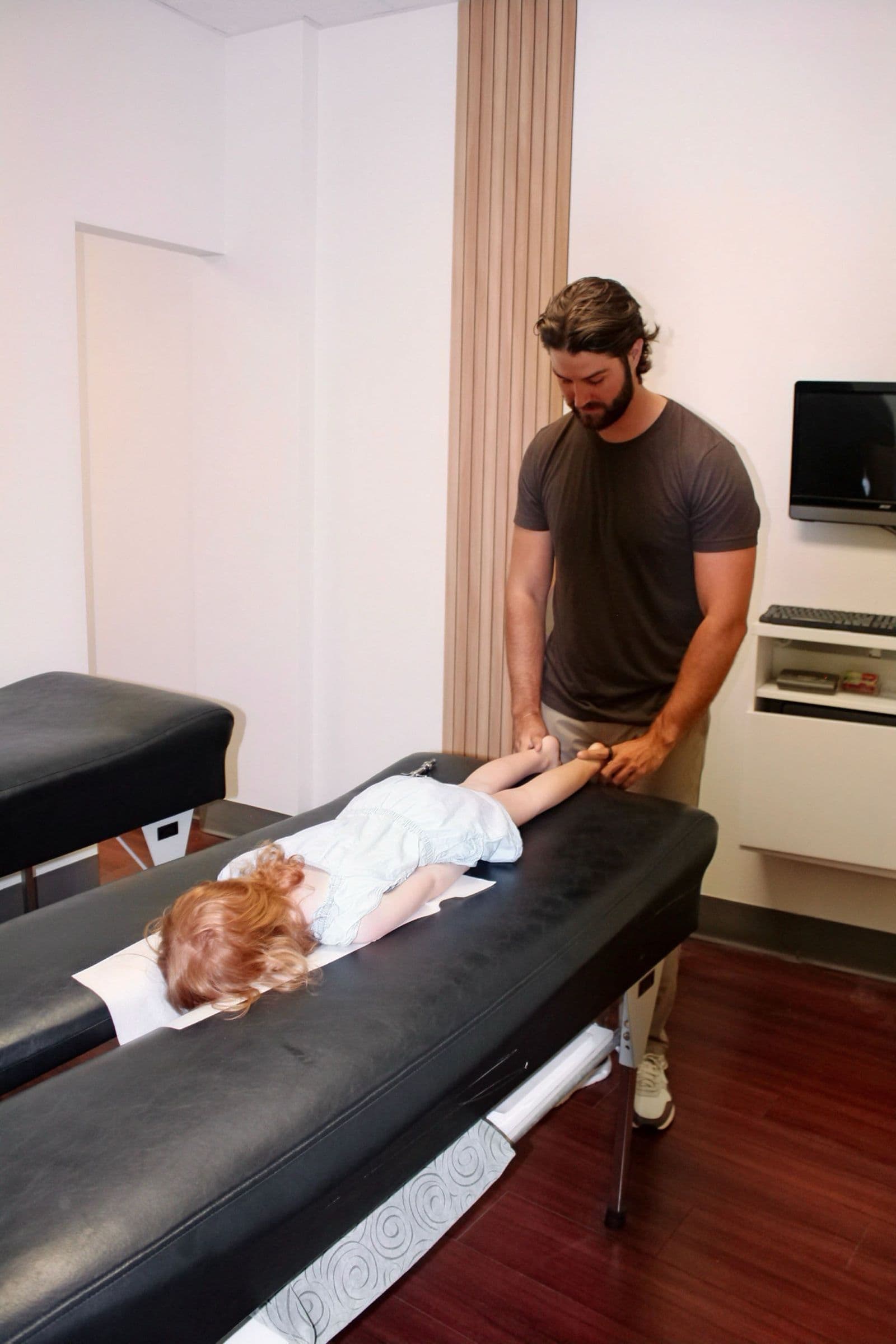
If your toddler walks on their tiptoes some — or even most — of the time, you're not alone, and in most cases it's not something to worry about. Toe walking is common in toddlers learning to walk, and the majority of kids grow out of it on their own. But there are a few patterns that are worth a closer look, and understanding the difference can save you a lot of unnecessary worry — or help you catch something worth addressing early. Here's what toe walking is, why it happens, and when it's worth mentioning to your care team.
What Is Toe Walking?
Toe walking simply means walking on the balls of the feet and toes, without the heel making regular contact with the ground. It's extremely common in children just learning to walk — many toddlers experiment with toe walking as one of several walking patterns while they're building balance, strength, and coordination between about 12 and 24 months.
For most kids, toe walking is inconsistent: they'll walk normally with a heel strike most of the time, and toe walk occasionally, especially when excited, moving quickly, or exploring a new sensation like grass or sand.
Is Toe Walking Normal?
Yes, for most toddlers. Occasional or intermittent toe walking, especially in children under 2, is considered a normal part of learning to walk. Most children naturally transition to a consistent heel-to-toe walking pattern on their own as their balance and leg strength develop, generally by the time they're comfortably running and navigating stairs.
What's called "idiopathic toe walking" — toe walking with no identifiable cause, in an otherwise typically developing child — is actually the most common category. Many of these children simply grow out of it as their gait matures.
What Causes Toe Walking?
A few different things can contribute to toe walking:
Habit and sensory preference. Some children simply find toe walking more comfortable or enjoy the sensory feedback it provides, without any underlying muscle or nervous-system difference.
Tight calf muscles or Achilles tendon. Some toddlers have shorter or tighter calf muscles that make a full heel-to-toe pattern less comfortable, which can reinforce the toe-walking habit.
Family history. Toe walking sometimes runs in families, suggesting a genetic or structural component in some cases.
Nervous system development. For a smaller number of children, toe walking is one of several patterns that can accompany differences in how the nervous system is developing and regulating movement. This is why persistent toe walking — especially alongside other patterns — is worth mentioning to your pediatrician or care team rather than dismissing outright.
When Toe Walking Is Worth a Closer Look
Most toe walking resolves on its own, but a few patterns are worth flagging to your child's care team:
- Toe walking that's still your child's primary or only walking pattern well past the toddler years
- Toe walking on one side only, rather than both feet
- Visible tightness when you gently try to bring your child's foot to a flat, flexed position
- Toe walking alongside delays in other motor milestones, like running, jumping, or climbing stairs
- Toe walking alongside other developmental or sensory patterns your family has noticed
None of these signs on their own point to one specific cause. They're simply patterns worth a more complete evaluation, so you have clear information instead of a guess.
A Nervous-System Perspective
At Little Roots, when a family comes in with a child who toe walks consistently, our team looks at how the whole nervous system and musculoskeletal system are working together — not just the feet in isolation. Calf and Achilles tightness, hip and pelvis alignment, and how a child's nervous system is coordinating balance and movement can all play a role in a toe-walking pattern.
Each child is different. Our team takes a personalized approach based on what your child's nervous system and movement patterns are showing us — there's no single explanation or approach that applies to every toe-walking toddler.
What Can Help at Home
A few gentle approaches parents can try:
Barefoot time on varied surfaces. Time spent barefoot on grass, sand, or textured surfaces gives your child's feet more sensory feedback and often naturally encourages a fuller foot-to-ground connection than always wearing shoes.
Playful heel-focused games. Games that involve stomping, marching, or walking like specific animals (a "duck walk" with flat feet, for instance) can playfully encourage a different movement pattern without pressure or correction.
Gentle calf stretches. For toddlers open to it, simple calf stretches during bath time or before bed — done playfully, never forced — can help with tightness over time.
Supportive footwear. Flexible, well-fitted shoes that allow natural foot movement, rather than stiff-soled shoes, tend to support a more typical gait pattern.
If toe walking is persistent or you're noticing other patterns alongside it, a full neurological evaluation can help you understand what's happening and what, if anything, is worth addressing.
Frequently Asked Questions
Is toe walking normal in toddlers?
Yes, for most toddlers, especially under age 2. Occasional or intermittent toe walking is a common part of learning to walk, and most children transition to a typical heel-to-toe gait on their own.
What causes toe walking?
Most commonly, it's simply a habit or sensory preference with no underlying cause. Less commonly, tight calf muscles, family history, or nervous-system development patterns can contribute. Persistent toe walking is worth mentioning to your care team so the specific pattern in your child can be understood.
How do I stop my toddler from toe walking?
Barefoot time on varied surfaces, playful heel-focused games, gentle stretching, and supportive flexible footwear are gentle starting points. If toe walking is persistent well past the toddler years or paired with other developmental patterns, a fuller evaluation gives you clearer direction than guessing.
Is toe walking always related to autism?
No. The large majority of children who toe walk have no connection to autism at all — idiopathic toe walking with no other cause is the most common pattern. Toe walking is simply one of many patterns a thorough developmental evaluation may consider alongside everything else observed, not a standalone signal on its own.
When should I bring up toe walking with my child's care team?
If toe walking is still your child's primary pattern well past the toddler years, occurs on one side only, is accompanied by visible calf tightness, or comes alongside delays in other motor milestones, it's worth a conversation — not because something is necessarily wrong, but because a closer look gives you real information.
Most toddlers who walk on their toes are simply exploring one of many ways to move, and grow out of it without any intervention at all. But if you're noticing a persistent pattern, or just want peace of mind, a closer look is always reasonable.
Book a complimentary consultation at Little Roots Pediatric Chiropractic in Lakewood Ranch. Our team will take a full look at your child's movement, posture, and nervous system, and give you honest, personalized guidance.
Little Roots Pediatric Chiropractic, 8209 Natures Way, Unit 117, Lakewood Ranch, FL 34202. (941) 932-4611.
Learn More
Conditions we help with
Developmental Delays
Motor milestones, speech development, cognitive processing — all of it runs through a nervous system. When that system holds structural tension, it can limit what's available to your child. Gentle care creates more capacity, and more capacity compounds.
Learn moreSensory Processing
Sensory processing isn't a personality quirk — it's the nervous system trying to filter a world that feels overwhelming. Care that calms the system gives your child more room to be themselves.
Learn moreRelated Services
Keep Reading
More for growing families
Baby Only Sleeps on You? Understanding Contact Naps
If your baby only sleeps on you, you're not doing anything wrong. Here's why contact naps happen, what your baby's nervous system is telling you, and gentle ideas to try.
Baby Won't Take a Bottle? Gentle Troubleshooting for Parents
A baby who refuses the bottle can leave any parent frazzled. Here are the common reasons, gentle things to try, and the signs that mean it's time to call your pediatrician.
Baby Constipation: What's Normal and Gentle Ways to Help
Straining, fussing, and hard little poops can worry any parent. Here's what's normal for babies, gentle ways to help, and when it's time to call your pediatrician.
Questions about your child?
Schedule a consultation and let's talk through your family's needs together.
Book a Consultation(941) 932-4611