

Sensory Processing in Kids: A Gentle, Drug-Free Lens for Parents
Dr. Grayson Fox, DC
Meltdowns over tags, loud rooms, or nonstop movement-seeking? A gentle, drug-free look at sensory processing in kids and how our team approaches it.
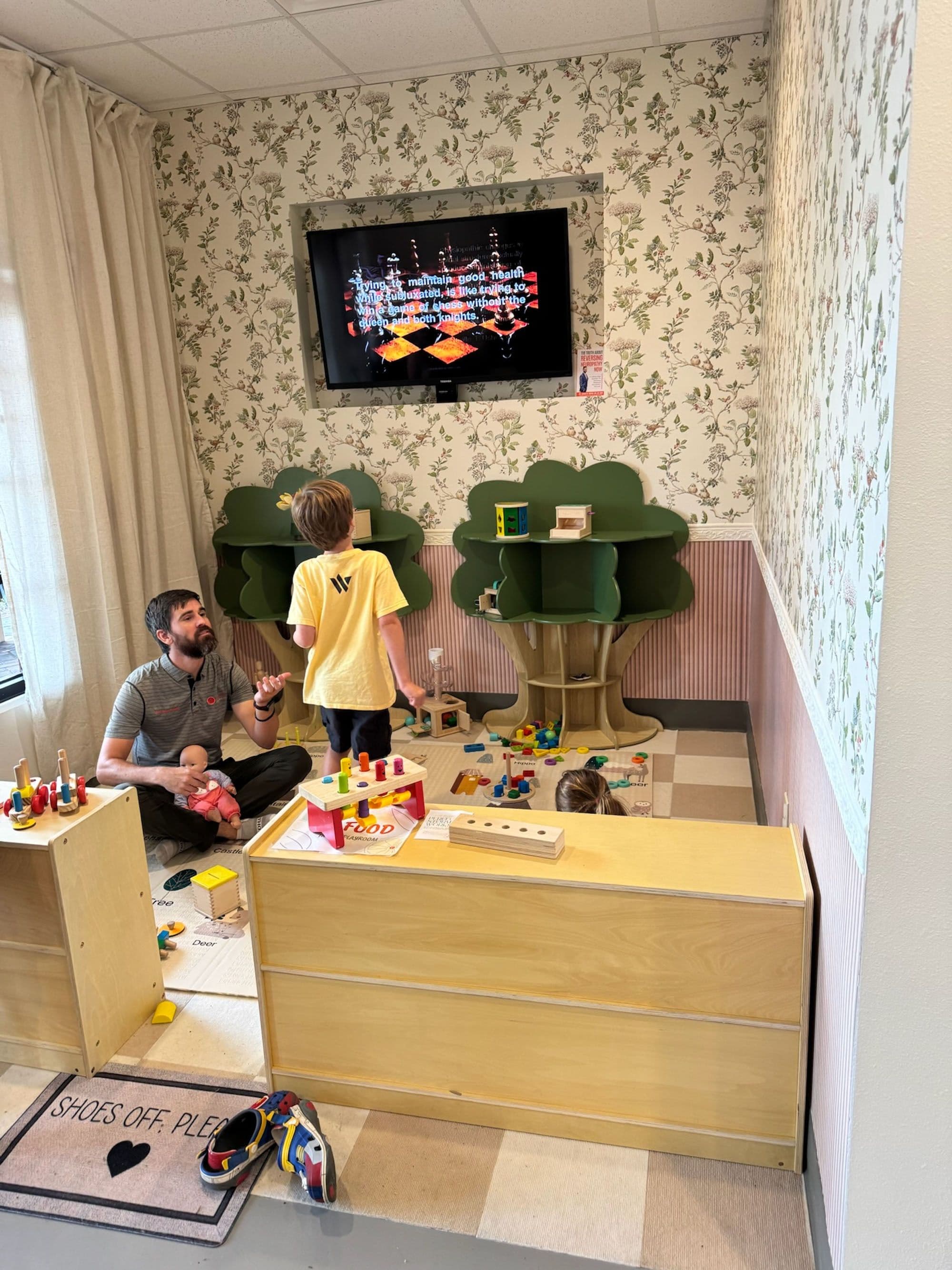
If your child melts down over a shirt tag, covers their ears at loud birthday parties, or can't stop spinning and crashing into the couch cushions, you've probably wondered whether what you're seeing is just personality — or something more. Parents often start searching for answers about sensory issues in children right around the time these patterns start interrupting daily life: school mornings, restaurants, family gatherings. Sensory processing is the way your child's nervous system takes in information like touch, sound, movement, light, and texture and organizes it into something they can respond to. When that process runs a little differently than expected, it can show up as big reactions to things that don't seem to bother other kids. Here's a gentle, drug-free look at what sensory processing actually means, what parents commonly notice, and how to think about it without panic.
What Sensory Processing Actually Means
Every day, your child's brain and nervous system take in a constant stream of sensory input — the feel of clothing against skin, the hum of fluorescent lights, the smell of a cafeteria, the sensation of feet leaving the ground on a swing. For most kids, this information gets sorted, filtered, and responded to without much thought. For other kids, that sorting process works differently: input that should register as background noise comes through as urgent and overwhelming, or input that should feel like plenty doesn't register as enough. That's the core of what people mean when they talk about sensory processing, and it's why two children can sit in the exact same noisy classroom and have two completely different experiences of it.
Signs Parents Notice
Sensory differences look different from child to child, but a few patterns come up again and again in conversations with parents:
- Meltdowns over clothing tags, seams, or certain fabric textures
- Covering ears or becoming distressed in loud, busy environments like parties or gyms
- Seeking out movement constantly — spinning, crashing into furniture, jumping off things
- Avoiding certain food textures, or eating a narrow list of "safe" foods
- Becoming overwhelmed, shutting down, or struggling with transitions in busy places like stores or school hallways
- Craving deep pressure — tight hugs, weighted blankets, being squeezed
Some kids lean toward being more sensitive to input, and pull away from it. Others lean toward seeking more of it out. Many kids do a mix of both, depending on the type of input and the day.
Sensory Seeking vs. Sensory Avoiding
It helps to think of sensory responses on a spectrum rather than a single label. A child who's more sensitive to input — sometimes called sensory avoiding — tends to notice things at a lower threshold than other kids. A scratchy tag, a loud room, or a strong smell can feel like too much before anyone else in the room has even registered it. A child who's more sensory seeking tends to need more input before their nervous system feels satisfied, which is why they might crash into furniture, jump off the couch on repeat, or narrate everything happening around them at a volume that surprises other parents. Neither pattern is "worse" than the other, and plenty of kids show both patterns depending on the type of input and the setting. Recognizing which direction your child tends to lean can help you understand their reactions instead of just managing them in the moment.
Why Some Kids Are More Sensitive or More Seeking
There isn't one single reason why sensory processing varies from child to child, and that's worth sitting with as a parent — this isn't something you caused, and it isn't a reflection of your parenting. Every child's nervous system develops on its own timeline and organizes sensory input in its own way. Some kids are wired to notice and react to more input; others need more input before their nervous system registers that something is happening at all. Variation like this is common, and noticing it in your child doesn't mean something is wrong. It means you're a parent who pays attention.
This Is More Common Than You Think
If you've been quietly wondering whether your child is the only one who reacts this strongly to a scratchy sweater or a crowded soccer game, they're not, and neither are you for noticing it. Sensory differences show up across a huge range of kids, from toddlers to teenagers, and for many families it's simply part of getting to know how their particular child's nervous system works. That said, if your child's reactions are consistently interrupting daily routines — school, meals, sleep, family outings — it's reasonable to want a fuller picture of what's going on, which is where getting some outside eyes on your child's nervous system can help.
How the Nervous System Coordinates Sensory Input
Your child's nervous system is the communication network behind every sensory experience. It takes information from the eyes, ears, skin, muscles, and inner ear, and turns it into a coordinated response. When that communication is running smoothly, a busy room registers as busy but manageable. When there's more static in that communication, the same busy room can register as overwhelming, and a child's nervous system may respond with a meltdown, a shutdown, or constant movement-seeking behavior as a way of trying to self-regulate. This is part of why our team's approach starts with a full look at how your child's nervous system is functioning, not just the behaviors on the surface — the reactions parents see are often downstream of how well that communication network is coordinating everything coming in. We go deeper on this same nervous-system framework in Chiropractic and ADHD: A Nervous-System Lens.
How Our Team Looks at Sensory Processing
We don't diagnose sensory processing disorder. What our team can offer is a gentle, drug-free look at how your child's nervous system is functioning — one piece of the fuller picture, alongside your pediatrician, occupational therapist, or any other providers already supporting your child. During a visit, our doctors look at how well your child's nervous system is communicating and regulating, ask about the patterns you've been noticing at home and school, and talk with you honestly about what we're seeing. We're also glad to be one voice among several — plenty of families we see are already working with an occupational therapist, a pediatrician, or a school support team, and a nervous-system-focused evaluation can simply add another piece to that picture. Each child is different. We take a personalized approach based on what your child's nervous system is showing us, rather than a one-size-fits-all plan. You can learn more on our sensory processing page, or explore our broader approach to pediatric wellness.
Frequently Asked Questions
What causes sensory processing differences in children? There isn't one single cause, and researchers are still learning about how sensory processing develops. What we do know is that it's common, it varies widely from child to child, and it isn't something a parent caused.
Is sensory processing disorder the same as autism? No. Sensory differences can show up in kids with autism, ADHD, or no other diagnosis at all — sensory processing is its own piece of how a nervous system works, separate from any specific diagnosis.
When should I have my child evaluated for sensory processing concerns? If sensory reactions are consistently interrupting daily life — school, sleep, meals, or family outings — it's reasonable to bring your observations to your pediatrician or another provider for a fuller look.
Can chiropractic care help with sensory processing? Our team doesn't diagnose sensory processing disorder. What we offer is a gentle, drug-free look at how your child's nervous system is functioning, which may be one part of understanding the fuller picture alongside your other providers.
Will sensory sensitivities go away as my child gets older? Every child's nervous system develops on its own timeline, so there's no single answer here. Some kids' reactions shift a lot as they grow; others continue to need extra support in certain environments. Each child is different, which is why we take a personalized approach rather than predicting a specific outcome.
If you're noticing sensory patterns like these in your child and want a gentle, whole-picture look at what their nervous system is showing, we'd love to meet your family. Book an appointment for a complimentary consultation with our team at Little Roots Pediatric Chiropractic — no pressure, just a conversation about what you're seeing and what we're seeing too.
Little Roots Pediatric Chiropractic, 8209 Natures Way, Unit 117, Lakewood Ranch, FL 34202.
Learn More
Conditions we help with
Sensory Processing
Sensory processing isn't a personality quirk — it's the nervous system trying to filter a world that feels overwhelming. Care that calms the system gives your child more room to be themselves.
Learn moreADHD & Attention
ADHD isn't a behavior problem and chiropractic isn't a treatment for it. But care that helps the nervous system regulate gives kids with attention challenges more capacity to use the tools that work — and that's everything.
Learn moreKeep Reading
More for growing families
Baby Won't Take a Bottle? Gentle Troubleshooting for Parents
A baby who refuses the bottle can leave any parent frazzled. Here are the common reasons, gentle things to try, and the signs that mean it's time to call your pediatrician.
Baby Constipation: What's Normal and Gentle Ways to Help
Straining, fussing, and hard little poops can worry any parent. Here's what's normal for babies, gentle ways to help, and when it's time to call your pediatrician.
Baby Fell Off the Bed? What to Do First and What to Watch For
Your baby just rolled off the bed and your heart is pounding. Here's what to do first, the warning signs that mean emergency care, and what to watch for afterward.
Questions about your child?
Schedule a consultation and let's talk through your family's needs together.
Book a Consultation(941) 932-4611