

Birth-Related Stress on a Baby's Neck: What Parents Ask
Dr. Grayson Fox, DC
Long labor, assisted delivery, or a tight fit late in pregnancy can leave parents wondering about their baby's neck. Here are the signs to notice and when to call your pediatrician.
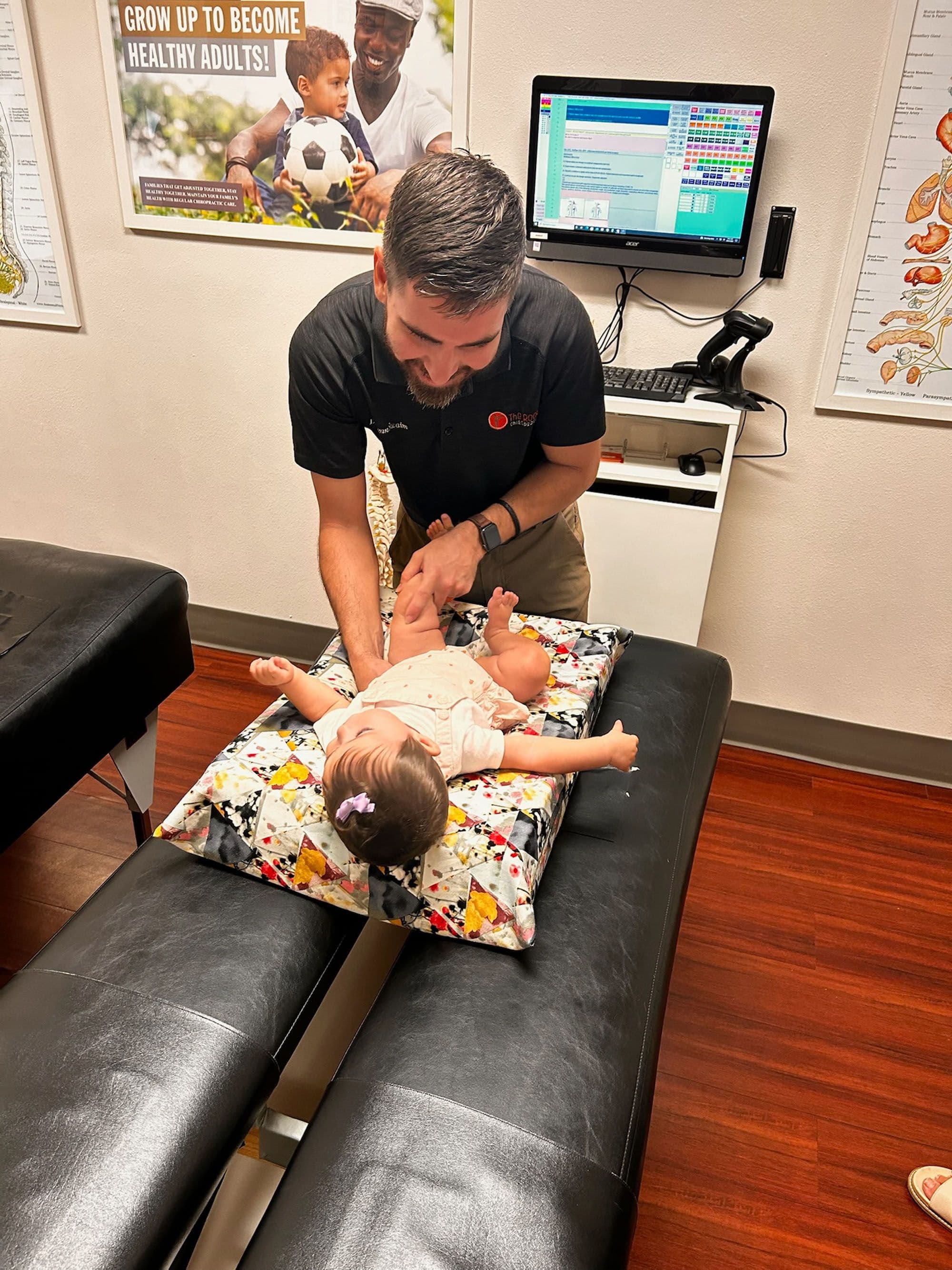
After a long labor, an assisted delivery, a C-section, or a baby who was tucked in tightly at the end of pregnancy, many parents quietly wonder whether the birth was hard on their baby's neck. It's a common question, and a fair one. The short answer: birth is physically demanding for every baby, and most babies come through it just fine. Some show signs afterward, such as a strong preference for turning one way, a head that seems to tilt, or discomfort during tummy time or feeding, that are worth mentioning to your pediatrician. Below, we'll explain what happens to a baby's neck during birth, the signs parents notice, what's typically normal, when to call your pediatrician right away, and how gentle pediatric chiropractic care may fit in. This is educational and not a replacement for your pediatrician's advice.
What Happens to a Baby's Neck During Birth
A baby's journey into the world asks a lot of a small body. The head and neck bend, turn, and tuck as they move through the pelvis, and they do it while the muscles are still very new. For most babies this is a smooth process that the body is designed for.
Some circumstances may put added stress on the neck and upper spine, and parents often ask about them:
- A long or very fast labor. Either extreme can change how much force the head and neck experience.
- Assisted delivery. The use of vacuum or forceps involves pulling or traction on the head.
- A baby who was breech or in an unusual position. Tight quarters late in pregnancy can leave a baby curled to one side. Our overview of breech positioning explains related patterns.
- A C-section. Even a planned surgical birth involves lifting and guiding the baby, and an urgent one may follow a long labor.
- Limited room in the womb. Twins, a small space, or a low-lying head can leave a baby favoring one side before birth.
None of these means your baby has a problem. They're simply situations where parents are more likely to look closely, and where it's reasonable to ask questions.
Signs Parents Often Notice
Babies communicate through movement, so the body's habits can tell you a lot. These are patterns parents commonly describe:
- Your baby almost always turns their head to the same side, in the crib, the car seat, and while feeding
- Their head tilts, or one ear seems closer to the shoulder
- One side of the head looks flatter, which we discuss in our post on plagiocephaly and a flat head
- Tummy time brings on fussing or head-lifting seems harder toward one direction
- Feeding is more comfortable on one side, or your baby pulls away or arches during feeds
- Fussiness, gas, or settling difficulty that seems to go along with certain positions, which can overlap with colic
- A strong reluctance to be laid flat or placed in certain holds
One sign on its own rarely tells you much. It's the pattern, and whether it's changing as your baby grows, that is worth paying attention to.
What's Typically Normal
Newborns have very little control over their heads. Their necks are flexible, and it's normal for them to be a bit lopsided, to prefer one side occasionally, or to look slightly asymmetrical in the first days after birth. Their bodies are also still unfolding from the tight curl they held in the womb. Many of these early quirks ease as babies gain strength and begin moving more.
What tends to stand out is a pattern that persists, one that affects feeding or comfort, or one that worries you. Trust that instinct. Parents know their babies best. If you're not sure, ask your pediatrician and describe exactly what you see, ideally with a short phone video.
When to Call Your Pediatrician Right Away
Contact your pediatrician promptly, or seek emergency care if needed, if your baby:
- Has a fever, especially as a young infant
- Seems unusually sleepy, floppy, or hard to wake for feeds
- Isn't moving one arm or leg as much as the other
- Cries inconsistently or seems to be in pain when you touch the neck or move the head
- Has a bulging or sunken soft spot
- Has noticeably fewer wet diapers than usual or isn't feeding well
- Struggles to breathe or turns blue around the lips
- Has a lump in the neck or a head shape that changes quickly
These are not things to wait out. A medical check always comes first, and it helps rule out causes that have nothing to do with muscle or joint tension.
How Gentle Pediatric Chiropractic Care Fits In
At Little Roots Pediatric Chiropractic in Lakewood Ranch, our team often hears these questions from new parents. We start by listening to your story, including your birth experience and what you've noticed since. Then we look at how your baby moves, turns, and settles, and how the head, neck, and spine are working together. Our infant chiropractic care uses very gentle, age-appropriate techniques with a light touch suited to a tiny body. It looks nothing like adult care.
We work alongside your pediatrician, not in place of them. If something looks like it needs medical attention, we'll tell you and help you connect with the right provider. Our goal is to help you understand what your baby's body is showing you and whether gentle chiropractic care may be a good fit as part of your team. We make no promises about outcomes, and each child is different. We take a personalized approach based on what your baby's nervous system is showing us. If you'd like to know what a first appointment is like, our guide to your baby's first chiropractic visit walks through it step by step.
Gentle Things Parents Can Do at Home
These are everyday ideas, not a care plan, and you should always check with your pediatrician about what's right for your baby:
- Offer supervised tummy time while your baby is awake. Short, comfortable sessions on your chest or a firm surface give the neck and upper back a chance to work. Our post on tummy time shares ideas for making it easier.
- Change how you hold and lay your baby. Alternate which arm you cradle with, and vary which end of the crib you place your baby's feet toward so they turn to look in both directions.
- Alternate sides for feeding. Switching arms, or switching breast and bottle sides, encourages movement in both directions.
- Limit long stretches in seats and carriers. Our post on container baby syndrome explains why too much time in one position matters.
- Always follow safe-sleep guidance. Babies should sleep on their backs on a firm, flat surface. Never use pillows or positioners to change head position during sleep.
- Notice and write down what you see. A brief note or a short video helps your providers see patterns.
Frequently Asked Questions
Can birth affect a baby's neck?
Birth places real physical demands on a baby's head and neck. Most babies handle it well, but circumstances such as a long labor, assisted delivery, or an unusual position may leave some babies with tension or a strong preference for one side. Your pediatrician can check for medical causes.
How do I know if my newborn has neck tension?
Patterns parents commonly notice include always turning the head to one side, a tilt, a flatter spot on one side of the head, and discomfort in tummy time or feeding. One sign alone rarely tells the whole story, so describe what you see to your pediatrician.
Is it safe to take a newborn to a pediatric chiropractor?
Pediatric chiropractors use very gentle, age-appropriate techniques designed for small bodies. It's wise to see your pediatrician first, and to choose a provider who works alongside your medical team and explains what they are doing.
Does a C-section mean my baby's neck was not stressed?
Not necessarily. A planned C-section avoids the pelvis but still involves lifting and guiding the baby, and a baby's position in the womb can matter as well. Every birth story is different.
Want a Second Set of Eyes?
If you've been wondering about your baby's neck since birth, you don't have to figure it out alone. Book an appointment at Little Roots Pediatric Chiropractic in Lakewood Ranch, and our team will listen to your story, take a careful and gentle look at how your baby moves, and talk through next steps alongside your pediatrician.
Learn More
Conditions we help with
Torticollis & Head Shape
Head tilt, flat spots, asymmetric jaw — these are often the same story told from different angles. Gentle in-arms work helps the system release the holding pattern that's keeping your baby stuck on one side.
Learn moreColic
Colic isn't a personality trait — it's often a baby's nervous system stuck on high alert. Gentle chiropractic care helps the system downshift so feeding, sleeping, and being held start to feel okay again.
Learn moreRelated Services
Related Reading
Related articles
Torticollis in Babies: A Gentle Parent's Guide to Head Tilt and Flat Head
A warm, reassuring guide for parents who notice a head tilt, a favored side, or a flat spot, and want to understand torticollis in babies and gentle next steps.
Read articlePlagiocephaly: What to Do About a Baby's Flat Head
A flat spot on your baby's head is common and usually manageable at home. Here's what causes it, what actually helps, and when to loop in a specialist.
Read articleWhat to Expect at Your Baby's First Pediatric Chiropractic Visit
A step-by-step walkthrough of what actually happens at your baby's first pediatric chiropractic visit — the conversation, the gentle evaluation, and what care looks like for an infant.
Read articleKeep Reading
More for growing families

Baby Only Sleeps on You? Understanding Contact Naps
If your baby only sleeps on you, you're not doing anything wrong. Here's why contact naps happen, what your baby's nervous system is telling you, and gentle ideas to try.

Baby Won't Take a Bottle? Gentle Troubleshooting for Parents
A baby who refuses the bottle can leave any parent frazzled. Here are the common reasons, gentle things to try, and the signs that mean it's time to call your pediatrician.
Baby Constipation: What's Normal and Gentle Ways to Help
Straining, fussing, and hard little poops can worry any parent. Here's what's normal for babies, gentle ways to help, and when it's time to call your pediatrician.
Questions about your child?
Schedule a consultation and let's talk through your family's needs together.
Book a Consultation(941) 932-4611