

What to Expect at Your Baby's First Pediatric Chiropractic Visit
Dr. Grayson Fox, DC
A step-by-step walkthrough of what actually happens at your baby's first pediatric chiropractic visit — the conversation, the gentle evaluation, and what care looks like for an infant.

If you've booked your baby's first chiropractor visit and you're already searching for what to expect at a pediatric chiropractor before you walk in, that instinct makes complete sense. Handing your baby to someone new, even for a few gentle minutes, can bring up nerves no one warns you about. Here's the short answer up front: a first visit at Little Roots Pediatric Chiropractic is a slow, conversation-first appointment built around a gentle look at your baby's nervous system, not a rushed procedure — and nothing happens without you understanding it first.
What to Expect at Your Baby's First Visit, Step by Step
Every family's story is a little different, but the shape of the appointment stays the same. In order, a first visit generally moves through:
- A relaxed conversation about your baby's history and what brought you in
- A gentle, hands-on look at how your baby is moving and holding tension
- A neurological evaluation, a soft, non-invasive check of how your baby's nervous system is functioning
- Time to ask every question you have before anything is recommended
Nothing on this list involves cracking, twisting, or the kind of adjustment you might picture from your own chiropractor visits. We'll walk through each part below so there are no surprises when you arrive.
Before You Arrive: What to Bring and How to Prepare
You don't need to prepare much, and that's intentional — we'd rather you save your energy for your baby. A few things make the visit smoother:
- Pack whatever you'd normally bring for an outing with your baby
- Bring any notes from your pediatrician if your baby has an existing diagnosis or concern
- Come at whatever time fits your baby's usual feeding and nap rhythm — a calm baby matters more than a punctual one
- Plan to hold your baby through most of the visit if that's where they settle best; there's no requirement to put them down anywhere they're uncomfortable
You'll also fill out a short new-patient history form, either ahead of time or when you arrive, so you're not asked to recall everything from memory in the moment.
Step One: Check-In and the Conversation
When you arrive, our front desk team gets you checked in and settled somewhere comfortable — there's no rush into an exam room. From there, the visit really begins with a conversation, not a procedure. Our team sits down with you to hear your baby's full story: how the pregnancy and delivery went, any feeding or sleep struggles, and whatever specifically brought you in, whether that's colic, a head tilt, trouble settling, or simply wanting a proactive check as your baby grows.
This is your chance to say everything you've been holding onto, including the small observations you might worry sound silly. They don't. Parents notice things a twenty-minute appointment can't, and we take those observations seriously as real information, not small talk.
Step Two: The Gentle Neurological Evaluation
Once we understand your baby's history, our team does a hands-on, head-to-toe look at how your baby is moving. We're checking for areas of tension or restricted movement, often around the neck, hips, or spine, that a baby is simply too young to describe in words.
Alongside this, we perform a neurological evaluation — a gentle, non-invasive way of checking how your baby's nervous system is functioning. It involves light touch and simple movement checks, nothing that resembles a needle, a scan, or anything uncomfortable. Most babies stay calm through it, especially when held in your arms, and many barely notice it's happening at all.
This evaluation is what actually shapes any recommendation that follows. We don't move to care based on a hunch — we base it on what we find here and on what you've told us.
Step Three: What the Adjustment Actually Looks Like for a Baby
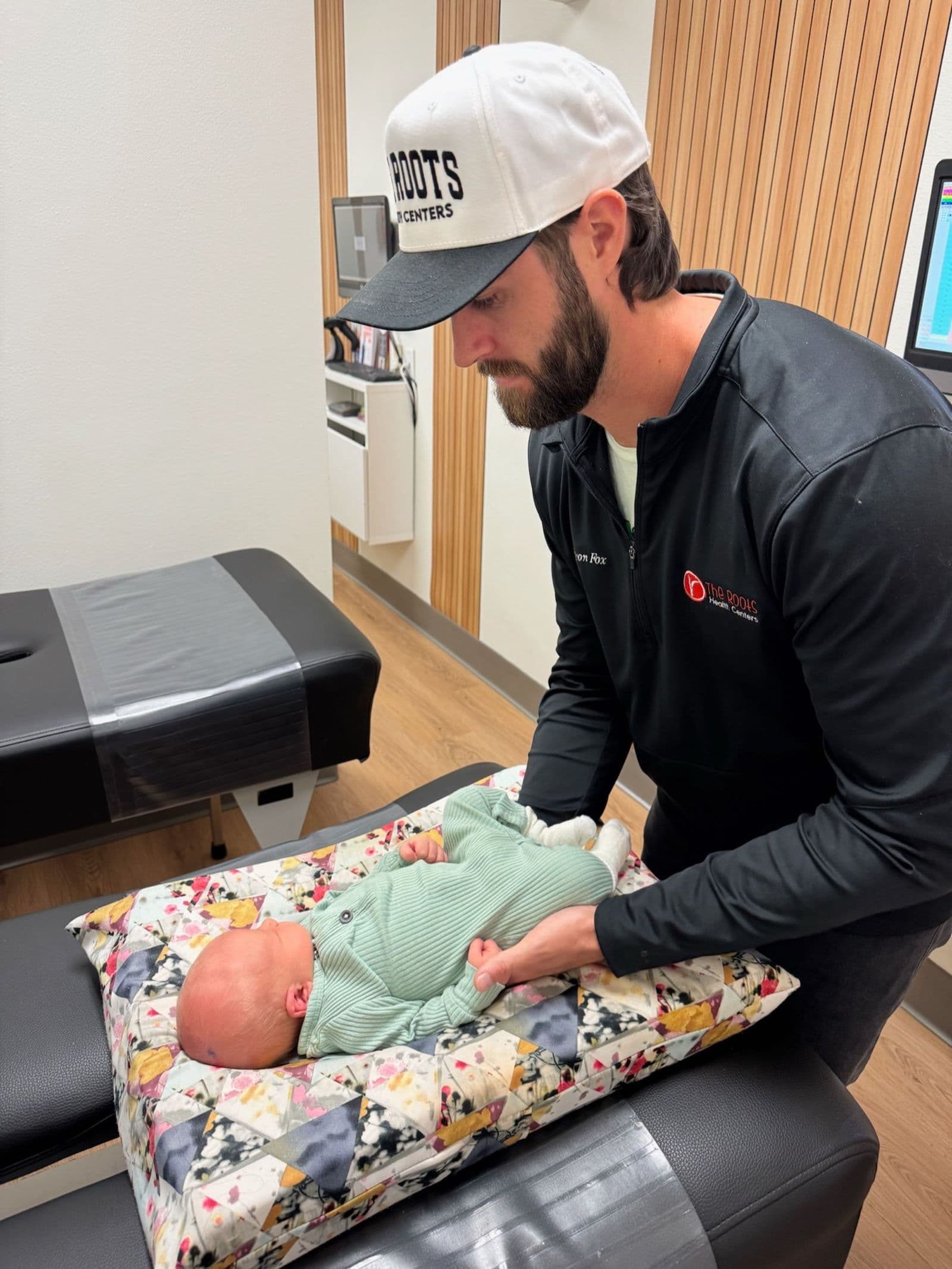
If our team finds something that may benefit from gentle care, here is exactly what that looks like, because this is usually the part parents worry about most. There is no cracking, twisting, or popping. For an infant, what we call an adjustment is often light fingertip pressure, about as much pressure as you'd use to check if an avocado is ripe, held on a specific spot for a few seconds.
Most babies stay in your arms or on your lap the entire time. Some fuss briefly at being touched by someone new, the same way they might during a diaper change, and settle right back down. Others relax completely, and it's common for a baby to yawn, sigh, or fall asleep partway through. If your baby needs a pause to nurse, be soothed, or simply take a break, we stop and wait, every time, no exceptions.
How Long Does the First Visit Take?
Plan for more time than a typical pediatrician visit, mostly because so much of it is conversation. First visits move at your baby's pace rather than a fixed clock, so exact timing varies from family to family. What we can tell you is that nothing is compressed to fit a schedule — if your baby needs a longer settling-in period, or you have more questions, we make room for it rather than rushing to the next step.
What Happens After the Visit
Before you leave, our team walks you through what we noticed and answers any remaining questions, in plain language, not clinical shorthand. If gentle care seems like a good fit for your baby, we'll talk through what a personalized approach could look like. Each baby is different, so there's no standard script or set number of visits we hand out — whatever we recommend is based on what your baby's nervous system actually showed us, not a template.
You're never asked to decide on the spot. If you want to go home, talk it over with your partner or your pediatrician, and come back with questions, that's completely welcome. This is your baby, and it's your call.
If You're Still Weighing Whether This Is Right for Your Baby
It's normal to want more information before booking anything. Our infant chiropractic page goes deeper on the techniques our team uses specifically with newborns and young babies. If safety is the piece keeping you up at night, our guide on whether chiropractic care is safe for babies walks through that question directly. And if you're not sure your baby is even the right age to start, our guide on what age kids can see a chiropractor covers that too.
Frequently Asked Questions
Will my baby cry during the first visit?
Some babies fuss briefly, especially around a new person and a new environment, the same way they might during any unfamiliar interaction. Many babies stay calm or fall asleep, particularly when held in a parent's arms throughout. There's no expectation that your baby stay perfectly still or quiet.
Do I need a referral from my pediatrician?
No referral is needed to book a first visit. We welcome any notes or context from your pediatrician if your baby has an existing diagnosis, and we're always glad to coordinate with your baby's existing care team.
What should I bring to the first visit?
Just what you'd normally pack for an outing with your baby, along with any pediatrician notes if relevant. We'll handle the paperwork with you when you arrive, or you can complete it ahead of time.
Is the neurological evaluation the same as an X-ray?
No. The neurological evaluation is a gentle, hands-on, non-invasive check of how your baby's nervous system is functioning. Any necessary X-rays are only ever considered separately and only when clinically indicated.
What if our team doesn't recommend care after the evaluation?
We'll tell you honestly. If gentle care doesn't seem like the right fit, or if something is outside what we can help with, we'll say so and point you toward the right next step, including looping in your pediatrician if needed.
How do I book my baby's first visit?
You can book an appointment online whenever you're ready. Our team will reach out to confirm details and answer any last questions before your visit.
Coming in for your baby's first visit doesn't have to feel like a leap. It's a conversation, a gentle look, and a chance to ask every question on your mind, with our team at 8209 Natures Way, Unit 117, in Lakewood Ranch. When you're ready, book an appointment and we'll take it from there, at your baby's pace.
Learn More
Conditions we help with
Related Services
Related Reading
Related articles
Is Chiropractic Safe for Babies? What the Research Actually Shows
Parents ask us every week: is chiropractic safe for my baby? Here is what the published safety data says, what a newborn adjustment actually looks like, and how to find a qualified pediatric chiropractor in Lakewood Ranch.
Read articleWhat Age Can Kids See a Chiropractor?
From newborns to teenagers, pediatric chiropractic care looks different at every age. Here's what parents should know about when — and how — it can help.
Read articleKeep Reading
More for growing families
Seasonal Allergies in Kids: A Gentle, Nervous-System-Supportive Approach
Seasonal allergies in kids often show up as a runny nose, congestion, or a child who just seems "off" for weeks. Here's what's happening and gentle, drug-free ways to offer support.
Silent Reflux in Babies: The Reflux You Can't See
Not all reflux comes with spit-up. Silent reflux can cause real discomfort with none of the obvious signs — here's what parents should know.
Autism and the Nervous System: A Gentle, Supportive Lens for Parents
Chiropractic care isn't a treatment for autism — but some families find a gentle, nervous-system-focused visit is a useful part of their child's broader support team.
Questions about your child?
Schedule a consultation and let's talk through your family's needs together.
Book a Consultation(941) 932-4611