

Postpartum Hip Pain: Why Your Hips Ache After Baby and What May Help
Dr. Grayson Fox, DC
Hip pain after having a baby is common as your pelvis, joints, and core adjust. Here is why it happens, gentle ways to ease it, and the signs that mean you should call your provider.
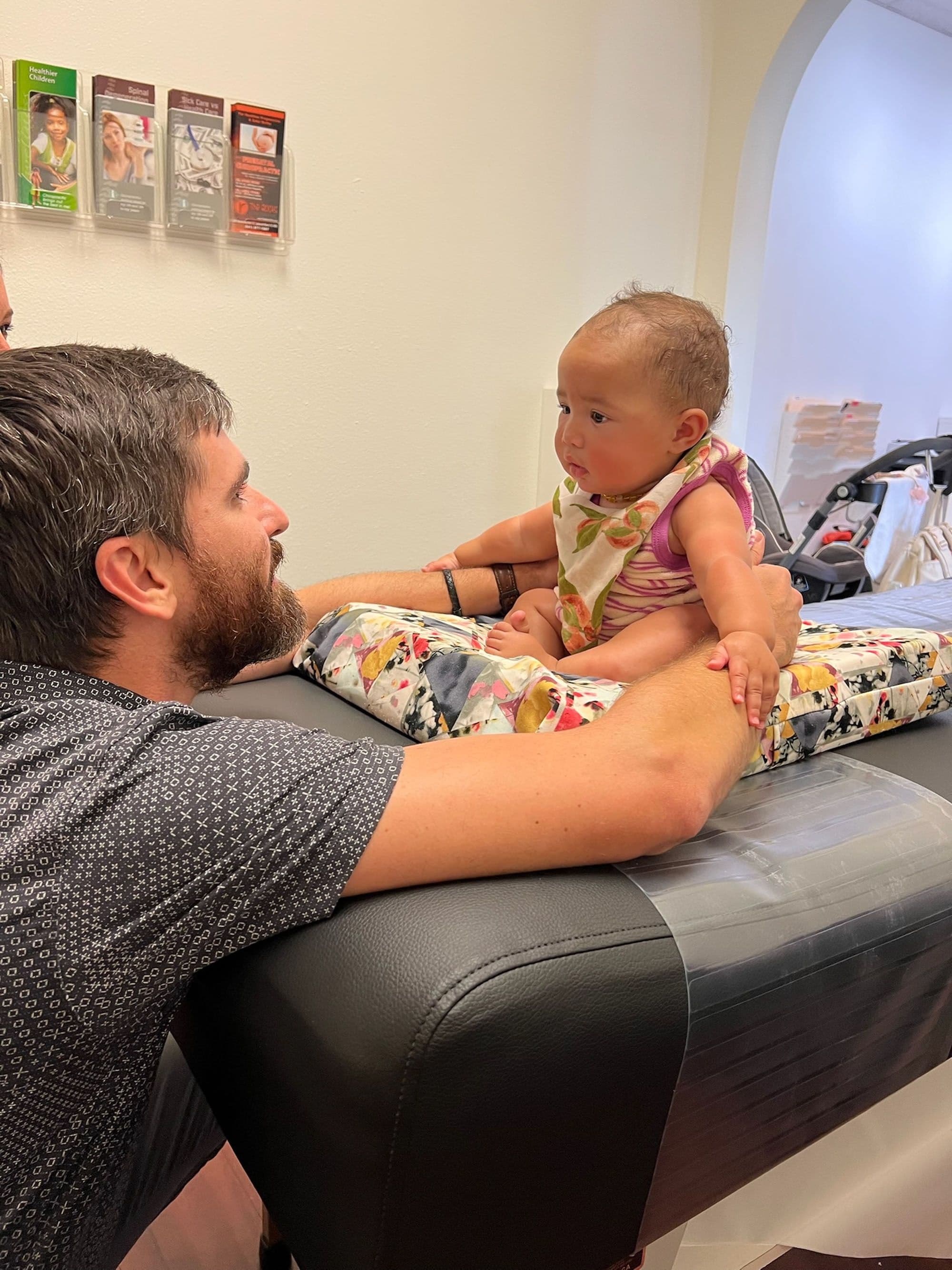
You expected to be tired after having your baby. You may not have expected your hips to ache every time you get up from the couch, climb the stairs, or roll over at night. Postpartum hip pain is very common, mama, and there are good reasons for it. Your pelvis spent months loosening and shifting to make room for your baby, then went through labor or surgery, and now it is adjusting again while you lift, carry, and feed a little one around the clock. Most of the time, postpartum hip pain comes from joints, ligaments, and muscles finding their footing again. Below, we walk through the most common causes, gentle ways to ease the ache, and the signs that mean you should call your OB or midwife. This is educational information, not a diagnosis.
First, When to Call Your Provider Right Away
Call 911 if you have sudden chest pain or shortness of breath, or if you are coughing up blood. These can be signs of a blood clot in the lungs, which is more common in the weeks after birth.
Call your OB, midwife, or doctor the same day if:
- One leg is swollen, warm, red, or tender, especially in the calf or thigh
- You have fever, chills, or pain, redness, or drainage at a C-section incision
- You cannot put weight on one leg, or you feel a grinding or clicking at the front of your pelvis with severe pain when walking
- Hip or groin pain is severe, getting worse, or wakes you at night no matter how you lie
- You have new numbness or weakness in your legs, or trouble controlling your bladder or bowels
Your provider knows your birth story and can rule out less common causes, like a separation at the front of the pelvis or rare bone changes that can follow pregnancy. You never have to wait for your next postpartum checkup to ask.
Why Your Hips Can Hurt After Having a Baby
Loose ligaments that have not tightened back up
During pregnancy, your body makes hormones like relaxin that soften the ligaments around your pelvis. That flexibility helps your baby through the birth canal, but it does not switch off the moment your baby arrives. Those hormones can linger for a while, especially if you are breastfeeding. Looser ligaments mean the joints of your pelvis have less passive support, so the muscles around your hips have to work harder.
Your pelvis after labor and delivery
Pushing, the position you labored in, and the way your baby moved through the pelvis can all strain the joints in the back of the pelvis (the sacroiliac joints) and the joint at the front (the pubic symphysis). If you had pelvic or pubic bone pain while pregnant, you may notice it lingers after birth. Our page on pelvic pain during pregnancy explains how these joints work.
A core and pelvic floor that are still rebuilding
Your abdominal muscles stretched to make room for your baby, and your pelvic floor carried extra weight for months. While they rebuild strength, the muscles around your hips and low back pick up the slack. That extra load can show up as aching in the hip, buttock, or the side of the pelvis.
Carrying, feeding, and one-sided habits
New-parent life is full of positions that load one hip more than the other. Perching your baby on the same hip, nursing or bottle-feeding while curled into the same corner of the couch, bending over a low crib or changing table, and lifting a heavy car seat with one arm all add up. The muscles on the outside of your hip and buttock can become tight and sore, and the bony point on the side of your hip can get tender.
Nerve irritation
Sometimes postpartum hip pain is really nerve pain. An irritated nerve in the low back or buttock can send sharp, shooting, or tingly pain into the hip and down the leg. If that sounds familiar, our page on sciatica during pregnancy explains the pattern, which can carry into the postpartum season too.
Hip pain at night
Side sleeping puts pressure on the outer hip, and a soft mattress can let your pelvis sink and twist. Many moms find their hips are sorest in the middle of the night, right when they are getting up to feed the baby.
Where Does It Hurt? Clues From Your Pain
- Outer hip, sore to lie on: often tight, overworked muscles and tendons on the side of the hip.
- Back of the pelvis, one side, near the dimple: often the sacroiliac joint. It may flare when you climb stairs, get out of the car, or roll over in bed. Our article on postpartum back pain covers this area too.
- Front of the pelvis or groin: may involve the pubic symphysis or hip flexors. Severe pain here, especially with trouble walking, is a reason to call your provider.
- Deep in the buttock and down the leg: often nerve irritation.
- Low, at the very base of the spine: this may be your tailbone, which we cover in tailbone pain after pregnancy.
Gentle Ways to Ease Postpartum Hip Pain at Home
Check with your OB or midwife before starting any new exercise after birth, especially after a C-section. Once you have the okay, these small changes may help:
- Keep your knees together when you move. Roll to your side with your knees together before sitting up in bed, and swing both legs out of the car at once. This keeps the pelvis moving as one unit.
- Switch sides. Alternate the hip you carry your baby on, and change up which side of the couch you feed on.
- Bring baby to you. Use pillows so you are not hunching down to feed, and raise the changing surface so you are not bending low over and over.
- Sleep with support. On your side, place a pillow between your knees and ankles to keep your hips level. A pillow under your belly or behind your back can help too.
- Lift close to your body. Hold the car seat close and in front of you when you can, rather than out to one side.
- Gentle movement. Short walks, slow glute squeezes, and easy pelvic tilts may help as your provider clears you. Comfort is your guide.
- Warmth. A warm shower or heating pad on sore muscles can feel soothing.
If pain is getting worse, makes it hard to walk, or does not ease with these changes, it is worth getting checked.
Do Not Forget Your Own Nervous System
Sleep loss, feeding around the clock, and the emotional weight of the newborn season keep many moms in a stressed, on-alert state. A body stuck in that state tends to hold more muscle tension and feel pain more strongly. Asking for help, resting when you can, and taking a few slow breaths during feeds are not luxuries. They are part of feeling better. Our page on mom stress shares more about this side of recovery.
How Our Team Supports Moms After Birth
At Little Roots Pediatric Chiropractic in Lakewood Ranch, our team cares for moms through pregnancy and well beyond it. A postpartum visit starts with listening: your birth story, where you hurt, what makes it better or worse, and how you are sleeping and feeding. We then look at how your pelvis, hips, and low back are moving and how your nervous system is responding.
If we find joints that are not moving well or areas under extra strain, gentle chiropractic care may help support better movement and balance through your pelvis. Adjustments are low-force and adapted for the postpartum body, and we always respect your comfort and your provider's guidance. You can learn more about how we care for moms on our prenatal care page. Your baby is welcome to come along. Every mom and every recovery is different, so we take a personalized approach based on what your body needs.
Frequently Asked Questions About Postpartum Hip Pain
Is hip pain after giving birth normal?
It is very common. Your pelvis, ligaments, and core go through big changes during pregnancy and birth, and the new demands of caring for a baby add strain. Common does not mean you have to just live with it, though, and severe pain or trouble walking should always be checked by your provider.
How do you relieve postpartum hip pain?
Gentle changes may help: keeping your knees together when you get in and out of bed or the car, switching the hip you carry your baby on, using pillows for feeding and sleeping, and adding gentle movement once your provider clears you. If those are not enough, a hands-on evaluation can help find what is driving it.
How long does postpartum hip pain last?
It varies from mom to mom. It depends on your pregnancy, your birth, how you are feeding and carrying your baby, and how your body adapts. If your pain is not easing, is getting worse, or is getting in the way of caring for your baby, do not wait it out. Reach out to your provider or our team.
When should I see a doctor for postpartum hip pain?
Call your provider the same day for a swollen, warm, or red leg, fever, problems with a C-section incision, severe groin or pelvic pain, or trouble bearing weight. Call 911 for chest pain or sudden shortness of breath.
Can breastfeeding make hip pain worse?
Breastfeeding itself does not damage your hips, but the hormones that keep ligaments looser can linger while you nurse, and long feeds in a curled or twisted position can strain your hips and low back. Good pillow support and switching positions may help.
You Deserve to Feel Good in Your Body Again
You are taking care of everyone else right now. Let someone take care of you too. If hip pain is making it hard to sleep, carry your baby, or enjoy this season, our team would love to help. Book an appointment at Little Roots Pediatric Chiropractic in Lakewood Ranch. We care for moms from Lakewood Ranch, Bradenton, Sarasota, and the surrounding area.
Learn More
Conditions we help with
Related Services
Related Reading
Related articles
Postpartum Back Pain: Why It Happens and Gentle Ways to Cope
Back pain after baby is incredibly common. Here is why it happens, what small daily habits may help, and which signs mean it is time to call your OB or midwife.
Read articleTailbone Pain After Pregnancy: Why It Happens and What May Help
Sitting, nursing, or standing up hurts your tailbone since the baby arrived? Here's what may be behind postpartum tailbone pain, gentle ways to cope, and when to call your provider.
Read articlePregnancy Hip Pain at Night: Why Rolling Over Hurts
Waking up with hip pain every time you roll over? Here's why it happens in pregnancy, gentle sleep tweaks that may help, and when to check in with your provider.
Read articleKeep Reading
More for growing families
Lower Back Pain in the Third Trimester: Why It Happens and What May Help
In the final stretch of pregnancy, your lower back carries more than ever. Here is why third-trimester back pain happens, gentle ways to ease it, and how to tell it apart from labor.
Neck Pain During Pregnancy: Why It Happens and Gentle Ways to Ease It
Neck pain during pregnancy usually comes from shifting posture, tough sleep, and tired muscles. Here is why it happens, gentle ways to ease it, and the signs that mean call your provider.
Side Pain During Pregnancy: What's Normal on the Right or Left Side
Most side pain during pregnancy comes from a growing belly stretching ligaments and muscles. Here is what right- or left-side pain can mean, gentle ways to ease it, and the signs that mean call your provider.
Questions about your child?
Schedule a consultation and let's talk through your family's needs together.
Book a Consultation(941) 932-4611