

Postpartum Back Pain: Why It Happens and Gentle Ways to Cope
Dr. Grayson Fox, DC
Back pain after baby is incredibly common. Here is why it happens, what small daily habits may help, and which signs mean it is time to call your OB or midwife.
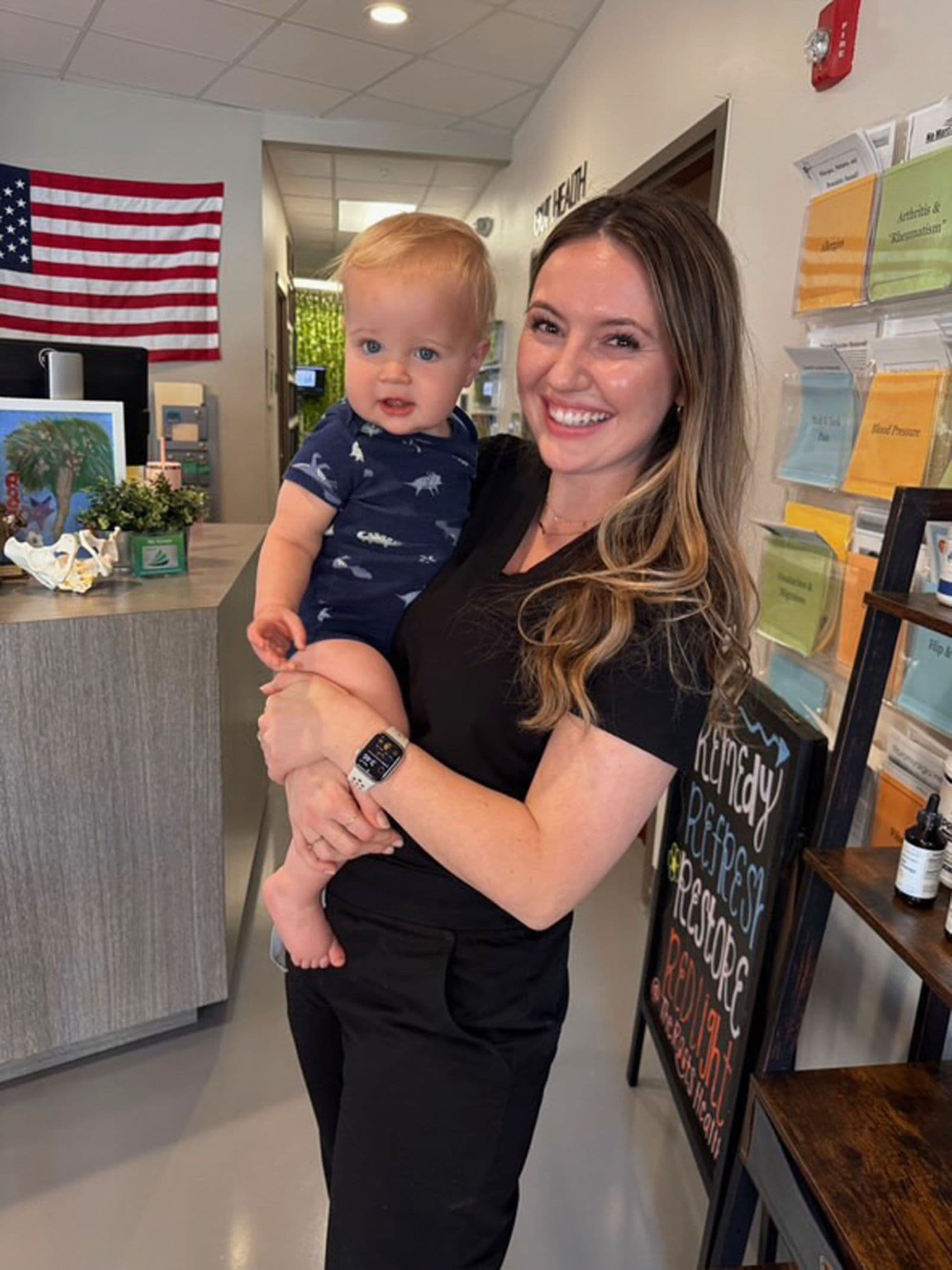
You expected sleepless nights. You may not have expected your back to ache every time you lift the car seat, feed the baby, or bend over the crib. Postpartum back pain is very common, and the short answer is that your body just went through months of change and is now doing physically demanding work all day. Below, we'll explain why back pain shows up after birth, the everyday habits that can add to it, gentle ideas to bring up with your care provider, the signs that call for a prompt call to your OB or midwife, and how our team supports new moms. This is educational and not a replacement for advice from your OB or midwife.
Why Back Pain Is So Common After Baby
Pregnancy changes the body in ways that do not reverse the moment your baby arrives. For months, your posture shifted forward, your abdominal muscles stretched, and hormones softened the ligaments that hold your pelvis and spine steady. Those changes take time to settle, and your body is asked to carry on with new demands while it does.
Loosened ligaments and a changing pelvis
Hormones that prepared your body for birth can keep joints more mobile for a while. A more mobile pelvis and low back may feel achy or unstable, particularly after long stretches of standing or carrying.
Stretched core muscles
Your deep abdominal muscles help support your spine. After pregnancy, they may need time to regain their tone, and the back muscles can end up working harder in the meantime. Our posts on diastasis recti and your core after birth and the postpartum pelvic floor go deeper on this connection.
Recovery from labor or a C-section
Whether you delivered vaginally or by cesarean, your body is recovering. Positions during labor, pushing, and any surgical recovery can leave the low back and hips sore. See our guide to C-section recovery for gentle ideas to discuss with your provider.
Carrying, lifting, and feeding
A newborn does not weigh much, but you lift and carry them dozens of times a day, often while twisted, bent, or hunched. Add car seats, diaper bags, and nursing or bottle-feeding positions, and the back takes a lot of small hits. Our post on back pain and posture while nursing shares setup ideas.
Sleep loss and stress
Broken sleep and constant vigilance keep muscles tense and make pain feel louder. This is not "in your head," it is how the nervous system responds when it never gets a full chance to rest.
Where It Hurts Can Offer Clues
These are patterns, not diagnoses:
- Low back, across the belt line: often linked to core changes, lifting, and long periods of sitting or feeding.
- One side of the low back or buttock: can involve the sacroiliac joints at the back of the pelvis.
- Pain at the tailbone: common after delivery. Our post on tailbone pain after pregnancy explains it.
- Between the shoulder blades or in the neck: often related to feeding, carrying, and leaning over the baby.
- Pain that travels down a leg: may involve an irritated nerve. Our page on sciatica during pregnancy describes a related pattern that can linger after birth.
Call Your OB or Midwife Promptly If You Notice
Most postpartum back pain is mechanical, but a few signs should be checked right away. Contact your OB, midwife, or emergency services if you have:
- Back pain with fever, chills, or burning with urination.
- Heavy bleeding, foul-smelling discharge, or severe belly pain.
- Leg pain, swelling, or warmth on one side, or chest pain and shortness of breath. These can signal a blood clot and are emergencies.
- Numbness in the groin or inner thighs, weakness in the legs, or trouble controlling your bladder or bowels.
- Severe headache with back or neck pain after an epidural or spinal.
- Pain that is severe, sudden, or getting steadily worse.
It is always okay to call. Providers would rather hear from you early.
Gentle Everyday Ideas to Bring Up With Your Provider
Every mom and every recovery is different, so please check with your OB or midwife before starting anything new, especially in the early weeks. These are general ideas, not a plan.
- Bring the baby to you. Lift with your knees bent and the baby close to your body rather than reaching or twisting.
- Set up feeding stations. A pillow under the baby, support behind your back, and feet resting on a stool can keep you from hunching.
- Change positions often. Long stretches in any one posture tend to stiffen the back.
- Use a supportive carrier. A well-fitted carrier that keeps the baby high and close can be easier on your back than carrying on one hip.
- Walk when your provider says it is okay. Gentle walking supports circulation and mood.
- Rest when you can. It sounds impossible, but even short breaks help muscles let go.
- Ask about core and pelvic floor support. A provider can guide you on when and how to begin gentle strengthening.
- Accept help. Letting someone else take the heavy lifting for a while is a legitimate recovery strategy.
How Our Team Supports New Moms
At Little Roots Pediatric Chiropractic in Lakewood Ranch, we care for families from pregnancy through the early years, so supporting mom is a natural part of what we do. Our team starts by listening to your story: how your delivery went, what your days look like now, and where it hurts. We take a gentle, personalized look at how your spine, pelvis, and nervous system are adapting, and we adjust our approach to where you are in your recovery.
If you worked with us during pregnancy, you may already know our approach to prenatal chiropractic care. If your back pain started during pregnancy, our overview of pain during pregnancy may help you connect the dots. And if anything you describe points to a problem that belongs with your OB, midwife, or another provider, we will say so and help you get there. We do not promise specific outcomes, because every body recovers differently.
Frequently Asked Questions
Is back pain after giving birth normal?
Yes, it is very common. Loosened ligaments, stretched core muscles, recovery from delivery, and the physical demands of caring for a newborn all play a role. Pain that is severe, sudden, or comes with fever, heavy bleeding, or leg swelling should be checked right away.
Why does my back hurt after a C-section?
Surgery affects the abdominal wall that helps support your spine, and positioning during the procedure and recovery can leave your back sore. If the pain is new, severe, or paired with fever or numbness, call your provider.
How do I relieve postpartum back pain?
Many moms find that better lifting and feeding positions, regular position changes, gentle walking when approved, and extra support help. Ask your OB or midwife what fits your recovery, and consider a gentle exam if the pain lingers.
Can back pain after pregnancy be related to an epidural?
Some moms notice soreness at the injection site for a short time. Severe or worsening back pain, fever, headache, or numbness after an epidural should be reported to your provider promptly.
Can a chiropractor help with postpartum back pain?
Many moms seek gentle chiropractic care after birth to support their spine and pelvis as they recover. Please clear it with your OB or midwife first, and let us know about your delivery so we can tailor your care.
You Deserve Support Too
Caring for a new baby is a full-time job, and your own body deserves care along the way. If your back pain is making motherhood harder, book an appointment with our team at Little Roots in Lakewood Ranch and let us listen to what your body has been through.
Learn More
Conditions we help with
Related Services
Related Reading
Related articles
Breastfeeding Back Pain: Posture Tips for Nursing Moms
Hours of feeding can leave your neck, shoulders and back aching. Here is why breastfeeding back pain happens and the gentle posture changes that may help.
Read articleTailbone Pain After Pregnancy: Why It Happens and What May Help
Sitting, nursing, or standing up hurts your tailbone since the baby arrived? Here's what may be behind postpartum tailbone pain, gentle ways to cope, and when to call your provider.
Read articleC-Section Recovery: Gentle Care for Your Body After Birth
C-section recovery is different from a vaginal birth. Here's what healing generally looks like, and how gentle, nervous-system-focused care can help.
Read articleKeep Reading
More for growing families
Questions about your child?
Schedule a consultation and let's talk through your family's needs together.
Book a Consultation(941) 932-4611