

Babywearing and Carrying Posture for New Parents
Dr. Logan Swaim, MS, DC
Babywearing can be wonderful for bonding and calming a fussy baby, but hip positioning and your own posture matter more than most parents realize. Here's a gentle, practical guide.
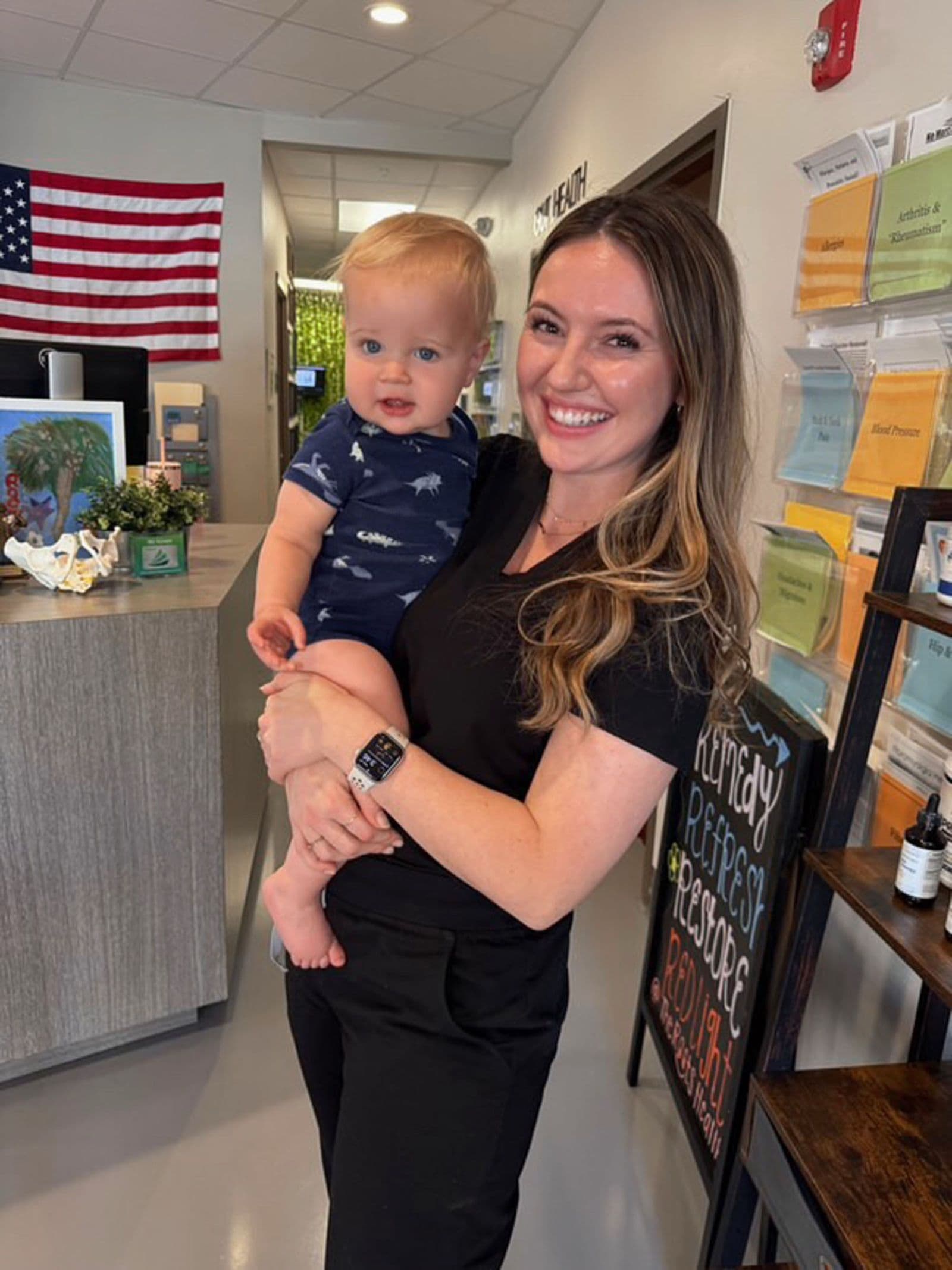
Babywearing has become one of the most popular ways for new parents to keep their baby close while getting through the day — and for good reason. It can calm a fussy baby, support bonding, and free up your hands for everything else parenthood demands. But a few real questions come up again and again: Is the carrier positioning your baby's hips correctly? Does babywearing count as tummy time? And what is it doing to your own back and shoulders? Here's a gentle, practical guide to babywearing that actually holds up — for your baby's development and your own body.
Why Babywearing Can Be So Helpful
Being carried close to a parent's body offers a baby something a crib or stroller simply can't: warmth, motion, a familiar heartbeat, and constant gentle sensory input. Many parents find that babywearing helps settle a fussy baby faster than almost anything else, and it makes sense — that closeness mimics the containment babies felt in the womb.
Babywearing also frees up your hands for older siblings, meals, or simply getting through errands, which matters far more than it might sound. And because your baby is upright and close to you, it offers a different kind of sensory experience than lying flat, a bit like how tummy time gives your baby a new way to experience gravity and their surroundings.
Our team at Little Roots sees real value in babywearing when it's done with a few key things in mind — starting with your baby's hips.
Hip-Healthy Babywearing: What Position Actually Matters
One of the most common questions we hear is whether babywearing can cause hip dysplasia. The honest answer is that positioning is what matters, not babywearing itself.
A baby's hips are healthiest in what's often called the "M-position" — knees spread apart and slightly higher than the bottom, with thighs supported along their length, forming a natural M or froggy shape. This position keeps the hip joint properly seated in its socket as it continues developing.
What's worth avoiding is a carrier or sling that leaves a baby's legs dangling straight down with no thigh support, especially for extended stretches. That position doesn't seat the hip the same way and, over a lot of cumulative time, is the pattern experts caution against.
When shopping for or adjusting a carrier, look for:
- Fabric that extends from knee to knee, supporting the full thigh
- Knees positioned higher than the bottom, not hanging straight
- A snug, upright fit against your body, without slumping
If your baby already has known hip looseness or you've noticed asymmetry, our guide on clicky hips in babies is a good next read, and it's worth mentioning to your pediatrician or our team at your next visit.
Does Babywearing Count as Tummy Time?
Short answer: not quite, though it's a reasonable question given how often it comes up. Tummy time works because your baby is prone, actively pushing up against gravity to build neck, shoulder, and core strength. In most babywearing positions, your baby's head is upright and supported against your chest, which is calming and valuable in its own way, but it isn't asking those same muscles to work the way tummy time does.
Think of babywearing and tummy time as two different tools doing two different jobs — one for connection and containment, the other for building the physical strength your baby needs for rolling, sitting, and crawling. Most babies benefit from both, on their own terms.
Protecting Your Own Posture While Babywearing
Babywearing is wonderful for your baby, but it's real physical work for you, especially in the early postpartum months when your own core and pelvic floor are still recovering. A few things help:
- Keep your baby close and centered. The further your baby's weight sits from your body, the harder your low back and shoulders have to work to compensate.
- Check your carrier's fit regularly. A properly tightened, well-positioned carrier distributes weight across your hips and core rather than dragging on your shoulders and neck.
- Switch sides and positions. If your carrier allows it, alternating carries once your baby is old enough spreads the load rather than repeating the same strain pattern all day.
- Notice new or worsening pain. Low back ache, shoulder tightness, or numbness down an arm are worth mentioning at your own care visit, not something to just push through.
If you're navigating postpartum recovery on top of new-parent carrying demands, our guide to postpartum recovery covers what's normal and what your body actually needs right now.
When to Have Your Baby's Hips or Posture Checked
Most babies do beautifully with babywearing when the basics above are in place. It's worth a closer look if you notice your baby strongly favors one hip or leg position, has shown signs consistent with torticollis, or if you've already been told about hip looseness or asymmetry. Our team at Little Roots looks at hip and spine positioning as part of a broader picture of your baby's developmental milestones, alongside things like tummy time tolerance and how they move overall. A complimentary consultation is a gentle, no-pressure way to have those questions answered.
Frequently Asked Questions
Does babywearing count as tummy time?
Not quite. Tummy time requires your baby to be prone and actively pushing up against gravity, which builds neck, shoulder, and core strength in a way upright babywearing doesn't. Both have real value, just for different reasons.
Can babywearing cause hip dysplasia?
Proper babywearing that supports the knee-to-knee "M-position" is considered hip-healthy. The concern is with positions that let a baby's legs dangle straight down without thigh support for long stretches. Choosing a well-designed carrier and checking the fit makes a real difference.
What age can you start babywearing?
Many carriers are designed for use from birth with the right insert or setting, though every carrier is different. Check your specific carrier's guidelines and make sure your baby's airway stays clear and their chin isn't pressed to their chest.
How long is it safe to babywear at a time?
There's no single rule — it depends on your baby, the carrier, and how both of you are doing. Many parents find shorter, more frequent sessions comfortable, while others babywear for longer stretches. Pay attention to your baby's cues and your own body's signals.
Is babywearing better than a stroller?
Neither is "better" across the board — they serve different purposes. Babywearing offers closeness and hands-free mobility; a stroller offers a different kind of independence for both of you. Most families use both, depending on the moment.
Wondering how your baby's own spine is handling all this growth? That's exactly what our gentle pediatric chiropractor in Lakewood Ranch visits look at — and what ongoing pediatric wellness care supports.
Babywearing can be a wonderful part of your early parenting toolkit when hip positioning and your own posture are part of the picture. If you have questions about your baby's hip development, tummy time, or overall movement, our team at Little Roots Pediatric Chiropractic is happy to help. Schedule a complimentary consultation or call us at (941) 932-4611.
Little Roots Pediatric Chiropractic, 8209 Natures Way, Unit 117, Lakewood Ranch, FL 34202.
Learn More
Conditions we help with
Torticollis & Head Shape
Head tilt, flat spots, asymmetric jaw — these are often the same story told from different angles. Gentle in-arms work helps the system release the holding pattern that's keeping your baby stuck on one side.
Learn moreDevelopmental Delays
Motor milestones, speech development, cognitive processing — all of it runs through a nervous system. When that system holds structural tension, it can limit what's available to your child. Gentle care creates more capacity, and more capacity compounds.
Learn moreRelated Services
Related Reading
Related articles
Tummy Time: Why It Matters, Why Babies Resist It, and How to Make It Work
Tummy time resistance is one of the most common new-parent concerns we hear at Little Roots. Here's when to start, how much to aim for, and when struggles are worth a closer look at your baby's nervous system.
Read articleClicky Hips in Babies: What Parents Should Know
Hearing clicks or pops from your baby’s hips is common and usually nothing to worry about. But because hip clicks can occasionally signal a developmental difference, it’s worth knowing what to watch for.
Read articlePostpartum Back Pain: A Gentle Guide to Caring for Your Body After Birth
If your lower back aches every time you lift your baby, you're not imagining it. Here's why postpartum back pain happens and how gentle care may help.
Read articleKeep Reading
More for growing families
Container Baby Syndrome: Why Too Much Time in Seats and Carriers Matters
Car seats and bouncers have their place, but too much time in "containers" can affect how babies move and develop. Here's what to watch for.

What to Expect at Your Baby's First Pediatric Chiropractic Visit
A step-by-step walkthrough of what actually happens at your baby's first pediatric chiropractic visit — the conversation, the gentle evaluation, and what care looks like for an infant.
Seasonal Allergies in Kids: A Gentle, Nervous-System-Supportive Approach
Seasonal allergies in kids often show up as a runny nose, congestion, or a child who just seems "off" for weeks. Here's what's happening and gentle, drug-free ways to offer support.
Questions about your child?
Schedule a consultation and let's talk through your family's needs together.
Book a Consultation(941) 932-4611