

Clicky Hips in Babies: What Parents Should Know
Dr. Logan Swaim, MS, DC
Hearing clicks or pops from your baby’s hips is common and usually nothing to worry about. But because hip clicks can occasionally signal a developmental difference, it’s worth knowing what to watch for.
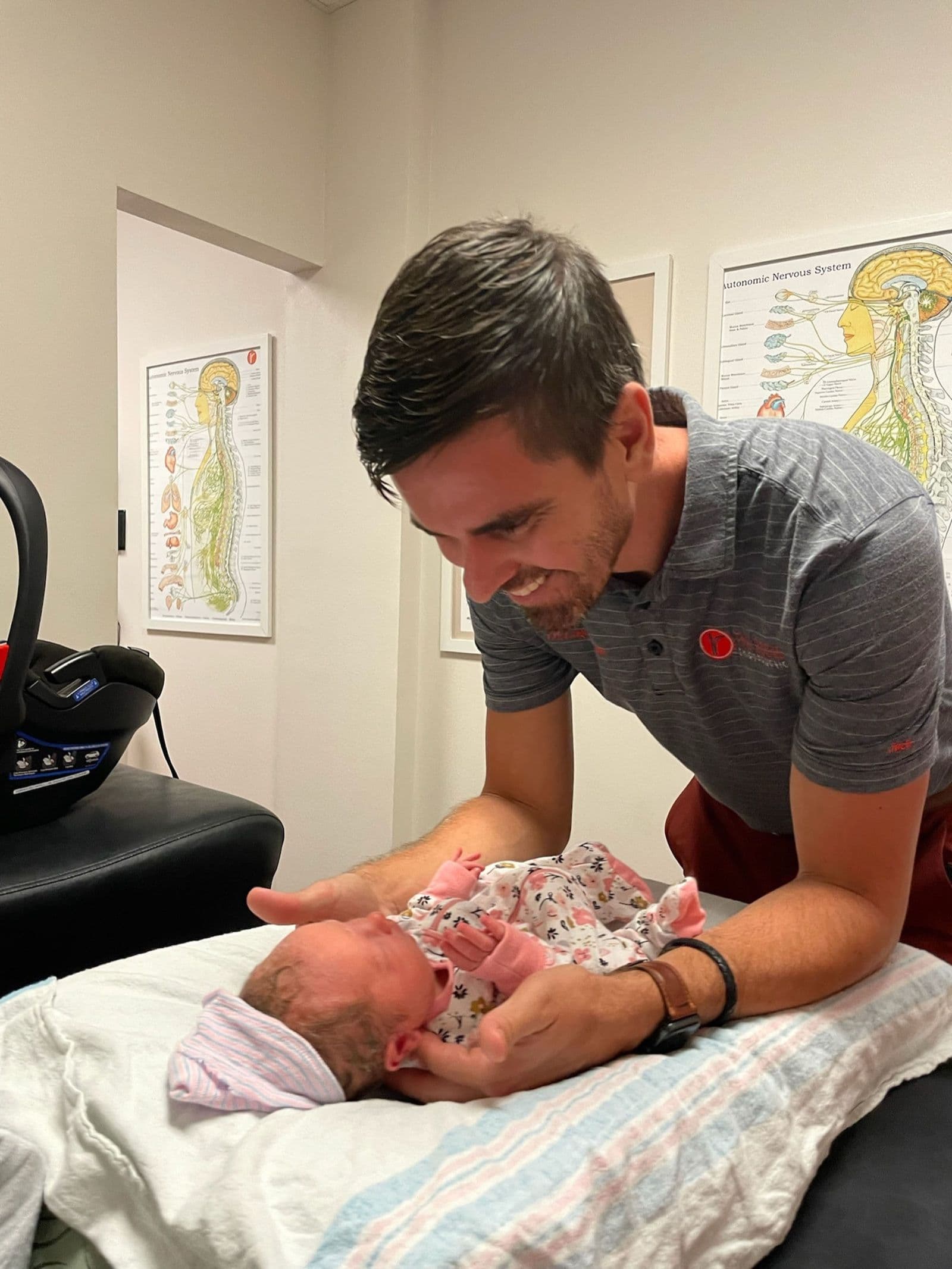
If you’ve noticed a soft click or pop from your baby’s hips during diaper changes, bath time, or when you move their legs, you’re in very good company. Most parents notice this at some point and immediately wonder whether it means something. Here’s the honest answer: most of the time, those clicks are completely harmless — the sound of developing ligaments and tendons moving over bony surfaces as a baby grows. But occasionally, a click in a newborn’s hip does signal something worth looking into. Knowing the difference matters.
What makes a baby’s hips click?
Babies’ joints are surrounded by loose ligaments and tendons — that looseness is a feature of newborn anatomy, not a flaw. It’s part of what allows them to be born. As those tendons and ligaments move over bony surfaces during leg movement, they sometimes make audible sounds: clicks, soft pops, or snapping sensations.
These sounds are most often noticed:
- During diaper changes when you lift and move the legs
- When bringing the knees toward the chest
- During bath time and dressing
In the majority of cases — particularly when the click doesn’t cause visible discomfort and the hips move freely in both directions — these sounds are benign. They’re a normal feature of a developing infant body with naturally lax joints.
When a click is worth a closer look: developmental dysplasia of the hip
Developmental dysplasia of the hip (DDH) is a condition where the ball of the hip joint doesn’t fit properly in the socket during development. It ranges from very mild (a hip that’s slightly loose) to more significant (a hip that sits partially or fully outside the socket). DDH affects roughly 1–3 out of every 1,000 babies to varying degrees, with girls and first-born children statistically at higher risk.
DDH doesn’t always produce a painful click — and not all hip clicks in babies are DDH. What a pediatrician or specialist looks for is whether the hip joint can be gently maneuvered out of position (a finding distinct from a harmless ligament snap). Signs that may point toward DDH:
- One hip appears to sit differently or higher than the other
- Leg folds (the creases in your baby’s thighs and buttocks) are noticeably asymmetrical
- One leg appears shorter than the other
- Limited range of motion in one hip compared to the other
- The hips don’t seem to open outward as easily on one side when your baby lies on their back
How DDH is screened
In the United States, DDH screening is part of the routine newborn examination. Pediatricians check hip stability at the newborn visit and at subsequent well-child checkups. When there’s uncertainty, ultrasound of the hips is ordered — ultrasound is preferred over X-ray in infants younger than 4–6 months because the hip bones are still mostly cartilage and don’t image well on X-ray.
When DDH is identified early — ideally in the first few months of life — it’s typically managed with a Pavlik harness, a soft brace that holds the hips in a position that encourages the socket to develop around the ball of the joint. The earlier it’s caught, the better the outcomes tend to be.
Other reasons hips click in babies
Outside of DDH, hip sounds in babies can come from:
- Normal ligament laxity — particularly in the first weeks after birth, when joints are still influenced by maternal hormones that made the pelvis flexible for delivery
- Tension through the hip and pelvis region from the baby’s position in the womb or from the birth process
- Compensatory patterns from torticollis — tension on one side of the neck or body that affects how the pelvis and hips sit
This last connection is something our team at Little Roots watches for when parents notice asymmetric hip sounds or movement alongside a neck preference or visible tension on one side of the body. Each child is different, and we take a personalized approach based on what your baby’s nervous system and musculoskeletal system are showing us.
What to do if you’re noticing clicky hips
If your baby’s hips click: bring it up at your next pediatric visit. That’s the right first step. Your pediatrician will check hip stability as part of the routine examination — if there’s any concern, they’ll refer for ultrasound.
Mention it sooner rather than later if you’re also noticing:
- Asymmetrical leg creases or hip positioning
- A visible difference in leg length
- Your baby seems uncomfortable when you open the hips during diaper changes
- Limited hip opening on one side compared to the other
Our team at Little Roots often sees parents of infants who want a second set of eyes on how their baby is moving and where any tension might be sitting in the pelvis and hips. A complimentary consultation is always a good starting place if you’re wondering whether there’s anything worth looking into more closely.
How tummy time and hip development connect
Tummy time does more than build neck and shoulder strength — it also helps babies develop symmetrical movement patterns through the hips and pelvis. Babies who spend most of their time in one position, or who have a strong side preference the way babies with torticollis sometimes do, can develop uneven tension through the hips over time. This is part of why our team looks at the whole picture — head, neck, and hips together — rather than one joint in isolation.
What a Little Roots visit involves if you have questions
If you're noticing hip sounds alongside other things — a neck preference, uneven movement, or anything that just feels off to you as a parent — a complimentary consultation is a low-pressure way to get a second set of eyes on it. Our team evaluates how your baby is moving overall, including through the hips and pelvis, as part of routine infant chiropractic care. This is never a substitute for your pediatrician's DDH screening — it's meant to complement it.
Hip-healthy positioning: swaddling, carrying, and car seats
How a baby's hips are positioned during everyday routines matters for healthy hip development — a few simple habits support it:
- Hip-healthy swaddling. A swaddle that holds the legs straight and pressed together can restrict natural hip movement. Hip-healthy swaddling leaves room for the knees to bend up and the hips to move outward — similar to a natural frog-leg position — while still keeping the arms secure.
- Babywearing. Carriers that support the knees higher than the bottom (an "M" shaped seated position) tend to be more supportive of natural hip positioning than carriers that let the legs dangle straight down. Our guide to babywearing and carrying posture walks through what to look for.
- Car seats. A properly fitted infant car seat should let the hips sit in a naturally bent position without the legs being forced straight. See our guide on car seat safety and your baby's spine for more.
None of this is about "fixing" anything — most babies' hips develop typically regardless. It's simply about giving naturally developing hips room to move the way they're designed to.
Frequently Asked Questions
Is it normal for a baby's hips to click?
Soft clicks are very common in newborns and young infants and are usually harmless. However, because clicking can occasionally signal developmental dysplasia of the hip (DDH), it's worth mentioning to your pediatrician at your routine visit so they can assess hip stability.
What is DDH in babies?
Developmental dysplasia of the hip (DDH) is a condition where the hip joint doesn't form or sit in position properly during development. It ranges from mild laxity to a dislocated hip. Early identification is important — when caught in the first months of life, it typically responds well to a soft positioning brace.
Does DDH cause pain in babies?
Not usually, which is one reason screening matters. Babies with DDH often appear comfortable and aren't necessarily crying when their hips are moved. Parents may notice leg asymmetry or that one hip doesn't open as easily as the other.
Can a chiropractor check for clicky hips in babies?
Chiropractors aren't the primary provider for DDH diagnosis, which requires specific orthopedic maneuvers and ultrasound when indicated — that screening belongs with your pediatrician. Our team at Little Roots does evaluate how babies are moving, where there's asymmetry or tension in the pelvis and hips, and what may be contributing to restricted movement in one direction, which can complement what your pediatrician is already doing.
When do babies typically outgrow clicky hips?
As ligaments tighten and a baby's movement patterns mature over the first several months, harmless clicking often becomes less noticeable on its own. Every baby develops at their own pace, so this isn't something we'd put a specific timeframe on — it's one more reason routine well-checks matter.
Does swaddling affect hip development?
A very tight swaddle that presses the legs straight together can restrict a baby's natural hip movement. Hip-healthy swaddling leaves room for the knees to bend and the hips to open outward while still keeping the arms secure — most baby swaddle products and pediatric guidance now reflect this.
Can babywearing support healthy hip development?
Carriers that position a baby with knees higher than the bottom (sometimes called the "M" position) tend to support a more natural hip position than carriers where the legs hang straight down. See our babywearing and carrying posture guide for more.
Learn More
Conditions we help with
Torticollis & Head Shape
Head tilt, flat spots, asymmetric jaw — these are often the same story told from different angles. Gentle in-arms work helps the system release the holding pattern that's keeping your baby stuck on one side.
Learn moreDevelopmental Delays
Motor milestones, speech development, cognitive processing — all of it runs through a nervous system. When that system holds structural tension, it can limit what's available to your child. Gentle care creates more capacity, and more capacity compounds.
Learn moreRelated Services
Related Reading
Related articles
Tummy Time: Why It Matters, Why Babies Resist It, and How to Make It Work
Tummy time resistance is one of the most common new-parent concerns we hear at Little Roots. Here's when to start, how much to aim for, and when struggles are worth a closer look at your baby's nervous system.
Read articleWhy Does My Baby Arch Their Back? What Parents Should Know
Babies arch their backs for all kinds of reasons — some completely normal, some worth looking into. Here's a parent's guide to what's behind it and when to seek a closer look.
Read articleKeep Reading
More for growing families
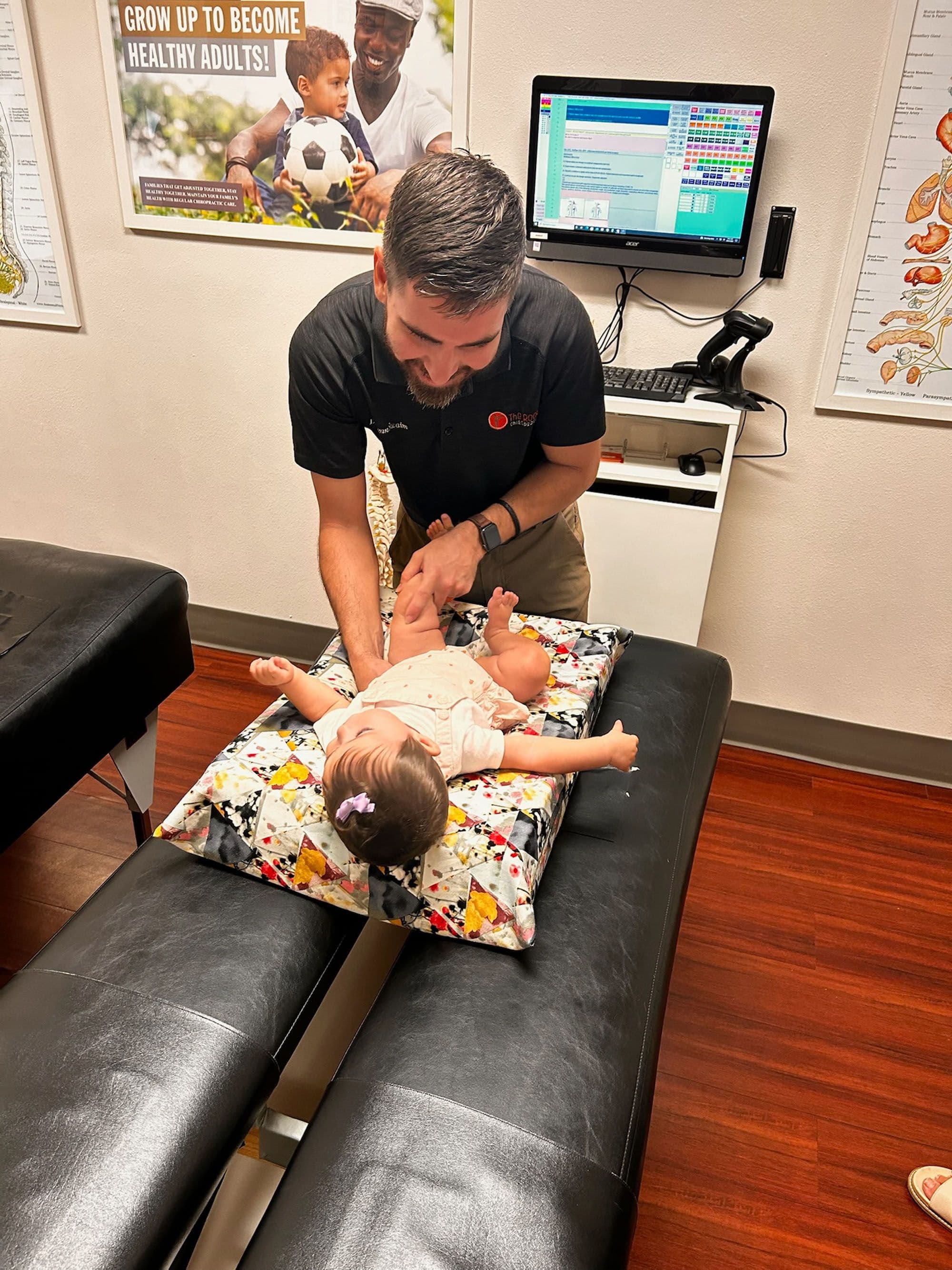
Birth-Related Stress on a Baby's Neck: What Parents Ask
Long labor, assisted delivery, or a tight fit late in pregnancy can leave parents wondering about their baby's neck. Here are the signs to notice and when to call your pediatrician.
Baby Only Sleeps on You? Understanding Contact Naps
If your baby only sleeps on you, you're not doing anything wrong. Here's why contact naps happen, what your baby's nervous system is telling you, and gentle ideas to try.
Baby Won't Take a Bottle? Gentle Troubleshooting for Parents
A baby who refuses the bottle can leave any parent frazzled. Here are the common reasons, gentle things to try, and the signs that mean it's time to call your pediatrician.
Questions about your child?
Schedule a consultation and let's talk through your family's needs together.
Book a Consultation(941) 932-4611