

Headaches in Children: What Parents Should Know
Dr. Laura Swaim, DC
Your child shouldn't be living with headaches — but before you can help, you need to understand what's behind them. Here's what parents often miss about headaches in kids.
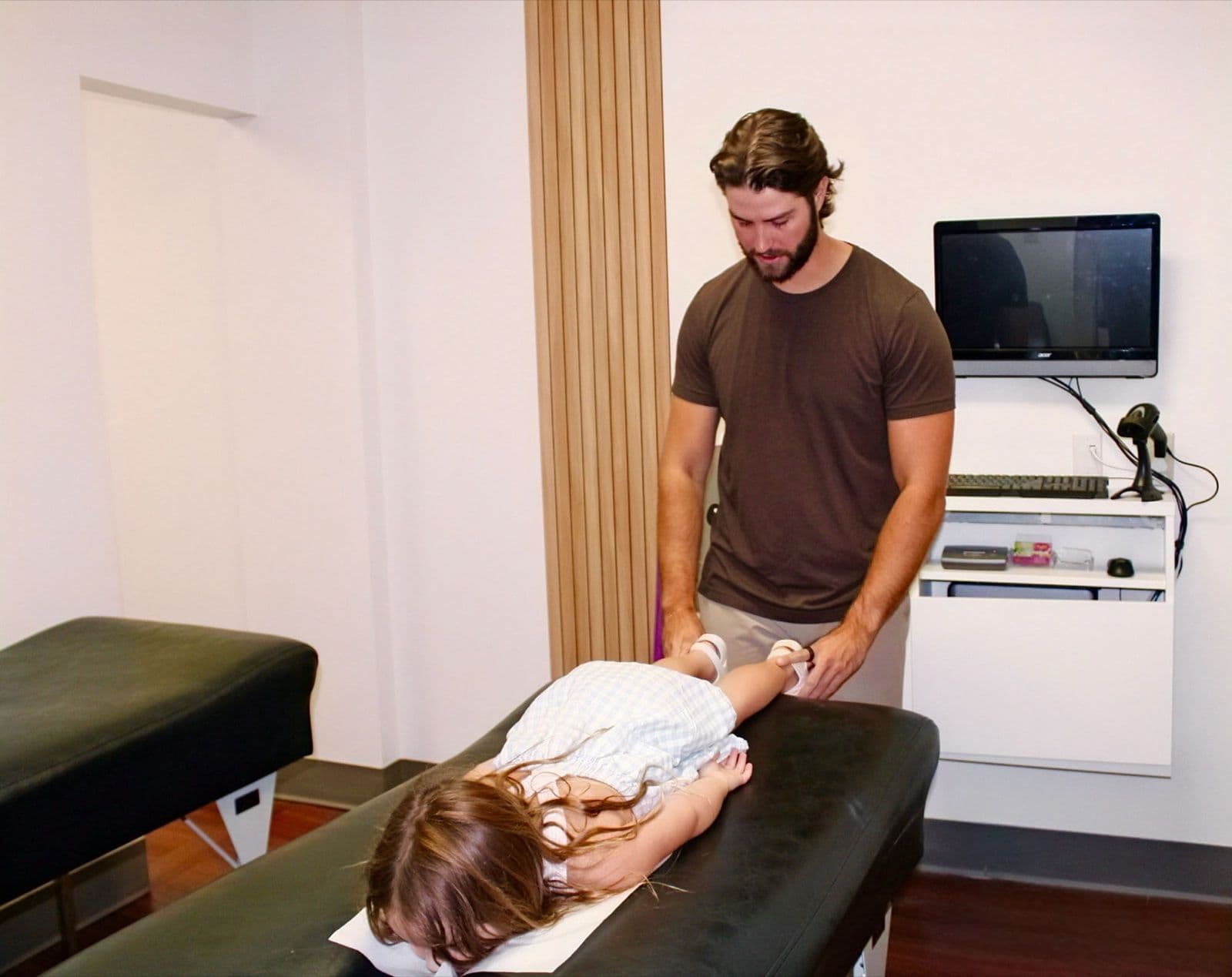
When your child mentions a headache, the natural first move is to reach for children's pain reliever and hope it passes quickly. And often it does. But if your child is getting headaches regularly — several times a week, or intense enough to interrupt their day — the symptom deserves more than just management. Here's what's actually behind headaches in children, when to look closer, and a nervous-system angle most parents haven't encountered yet.
Are headaches in kids common?
More common than most parents expect. Headaches are among the most frequently reported physical complaints in school-age children and adolescents. In younger children, they're harder to identify — a young child who can't articulate "my head hurts" may instead be unusually irritable, prefer darkness and quiet, or refuse to engage with their usual activities. The symptom is real; the description just comes later.
Most childhood headaches are not a sign of anything serious. But frequent or recurring headaches that interfere with your child's daily life deserve a closer look — not just ongoing pain management.
What causes headaches in children?
The most common types seen in children include:
Tension-type headaches. The most frequent type. A dull, pressing sensation — often described as tightness around the forehead, temples, or back of the head. In children, these are strongly linked to posture, stress, screen time, and inadequate or disrupted sleep.
Migraines in children. Yes, children get migraines — and pediatric migraines often present differently than adult ones. The headache phase may be shorter, but nausea, light sensitivity, and needing to lie down in a dark, quiet room are common. Some children don't describe a throbbing headache at all; they just feel very unwell and need stillness.
Cervicogenic headaches. These originate from the neck and upper spine — particularly the joints and muscles at the very top of the neck where it meets the base of the skull. With children spending increasing hours on tablets and phones with their heads tipped forward, cervicogenic headaches in kids are becoming more common.
Eye strain. Worth ruling out with a vision check, particularly in school-age children who do significant close-up reading or screen work.
The nervous-system connection parents often miss
Here's what gets less attention in the typical headache conversation. The upper cervical spine — the top two vertebrae in the neck — sits at the junction between the brainstem and the spinal cord. The brainstem regulates pain processing, blood vessel tone in the head, and the stress response. When there's tension, restriction, or altered movement in the upper neck — from a difficult birth, early falls, the postural demands of device use, or sports impacts — it can affect the function of this whole region.
This doesn't mean spinal tension is definitely behind your child's headaches. It's a question worth asking and a system worth evaluating.
Children who experience focus and attention challenges sometimes also have recurring headaches — not because these are the same condition, but because an autonomic nervous system running in an elevated state can express itself in multiple ways. Similarly, children with sleep difficulties or sensory sensitivities often report more frequent headaches. The nervous system is one connected system.
Posture, screens, and what your child carries to school
A child today may spend several hours per day with their head tipped forward toward a screen. Even a slight forward-head posture places significantly more load on the muscles and joints of the neck — and that sustained tension translates directly into the kind of upper-neck tightness that contributes to tension and cervicogenic headaches.
Heavy backpacks compound this. Research on backpack weight in school-age children consistently shows that loads exceeding 10–15% of a child's bodyweight create measurable postural changes. If your child has both a full school bag and hours of daily device use, their neck and upper spine are absorbing more than they should.
These are practical, addressable factors — and identifying them is part of what a thorough evaluation looks at.
When should parents be more concerned?
Most childhood headaches are not a sign of anything serious. But certain features should prompt a conversation with your pediatrician promptly:
- A sudden, severe headache your child describes as "the worst they've ever had"
- Headache paired with a stiff neck, fever, or rash
- Headache following a head injury
- Morning headaches that are worst right upon waking
- Headaches paired with vision changes, weakness, or difficulty with coordination
- A significant change in the frequency or character of your child's usual headaches
For most children with recurrent tension or migraine-type headaches, these features aren't present — but ruling out concerning causes with your pediatrician first is always the right step.
A gentle, nervous-system-focused approach at Little Roots
When a family comes to us with a child who has been experiencing frequent headaches, our team starts with a full neurological evaluation. We assess the upper cervical spine, the tension and movement patterns in the neck and shoulders, the nervous system's functional tone, and the postural contributors.
When we find tension or restriction that seems relevant, the gentle, low-force care we use for children is designed to support improved movement and reduced nervous-system stress in the upper cervical region. Some families notice meaningful changes in headache frequency over time; others don't, and we're honest about that.
Each child is different. Our team takes a personalized approach based on what your child's nervous system is showing us.
The evaluation itself is gentle and completely age-appropriate — no sudden movements, nothing uncomfortable. Just a careful look at the whole picture.
Frequently Asked Questions
Why does my child get headaches so often?
Frequent headaches in children often involve a combination of factors: posture and upper-neck tension, irregular sleep, stress or sensory overwhelm, hydration, and sometimes overuse of pain medication (which can contribute to rebound headaches over time). A thorough evaluation — including the nervous system — helps identify what's contributing in your child's specific case.
Can stress cause headaches in children?
Yes. The autonomic nervous system governs both the stress response and pain regulation in the head. When a child is in a persistently elevated stress state — from emotional stressors, sensory overwhelm, or overstimulation — headaches are a common result. Nervous-system support is one approach to this pattern.
Are headaches normal in children?
Occasional headaches are common and not unusual. Frequent or recurring headaches that interrupt your child's daily activities are worth looking into. "Common" doesn't mean inevitable, and it doesn't mean nothing can help.
What helps kids' headaches beyond pain relievers?
Consistent sleep, good hydration, reduced screen time, and addressing postural tension in the neck and upper spine are the foundations. A nervous-system evaluation can identify whether structural support may help reduce frequency over time.
At what age do children start getting headaches?
Headaches can appear at any age, including in toddlers and preschoolers. Young children often can't describe their pain clearly — parents may notice it as unusual irritability, a preference for dark and quiet, or low energy. The symptom is real; the words come with age.
If your child has been getting headaches regularly and you haven't found a clear answer, a nervous-system evaluation may give you a new piece of the picture. Book a new-patient appointment at Little Roots in Lakewood Ranch — our team will do a full evaluation and give you honest information about what we find and what may help.
Little Roots Pediatric Chiropractic, 8209 Natures Way, Unit 117, Lakewood Ranch, FL 34202. (941) 932-4611.
Learn More
Conditions we help with
Headaches & Migraines
Neurologically-focused care targeting the spinal misalignments that trigger tension headaches and debilitating migraines.
Learn moreSensory Processing
Sensory processing isn't a personality quirk — it's the nervous system trying to filter a world that feels overwhelming. Care that calms the system gives your child more room to be themselves.
Learn moreADHD & Attention
ADHD isn't a behavior problem and chiropractic isn't a treatment for it. But care that helps the nervous system regulate gives kids with attention challenges more capacity to use the tools that work — and that's everything.
Learn moreRelated Services
Related Reading
Related articles
ADHD and Chiropractic Care: How Nervous System Support Helps Kids Focus
Why more Lakewood Ranch families are adding nervous system support to their child's ADHD plan — what a neurological evaluation reveals and how it fits alongside OT, speech, and your pediatrician.
Read articleBaby Won't Sleep? The Nervous System Connection Most Parents Never Hear About
When your baby won't sleep no matter what you try, the problem may not be environmental. Learn how a dysregulated nervous system keeps infants stuck in alert mode — and what gentle pediatric chiropractic care can do to help.
Read articleKids Backpack Weight: How Heavy Should Your Child's Backpack Be?
The AAP says a child's backpack should weigh no more than 10-15% of their body weight. Most school bags exceed that. Here is what overloaded backpacks do to a growing spine and what parents can do about it.
Read articleKeep Reading
More for growing families
Baby Only Sleeps on You? Understanding Contact Naps
If your baby only sleeps on you, you're not doing anything wrong. Here's why contact naps happen, what your baby's nervous system is telling you, and gentle ideas to try.
Baby Won't Take a Bottle? Gentle Troubleshooting for Parents
A baby who refuses the bottle can leave any parent frazzled. Here are the common reasons, gentle things to try, and the signs that mean it's time to call your pediatrician.
Baby Constipation: What's Normal and Gentle Ways to Help
Straining, fussing, and hard little poops can worry any parent. Here's what's normal for babies, gentle ways to help, and when it's time to call your pediatrician.
Questions about your child?
Schedule a consultation and let's talk through your family's needs together.
Book a Consultation(941) 932-4611