

Postpartum Back Pain: A Gentle Guide to Caring for Your Body After Birth
Dr. Logan Swaim, MS, DC
If your lower back aches every time you lift your baby, you're not imagining it. Here's why postpartum back pain happens and how gentle care may help.
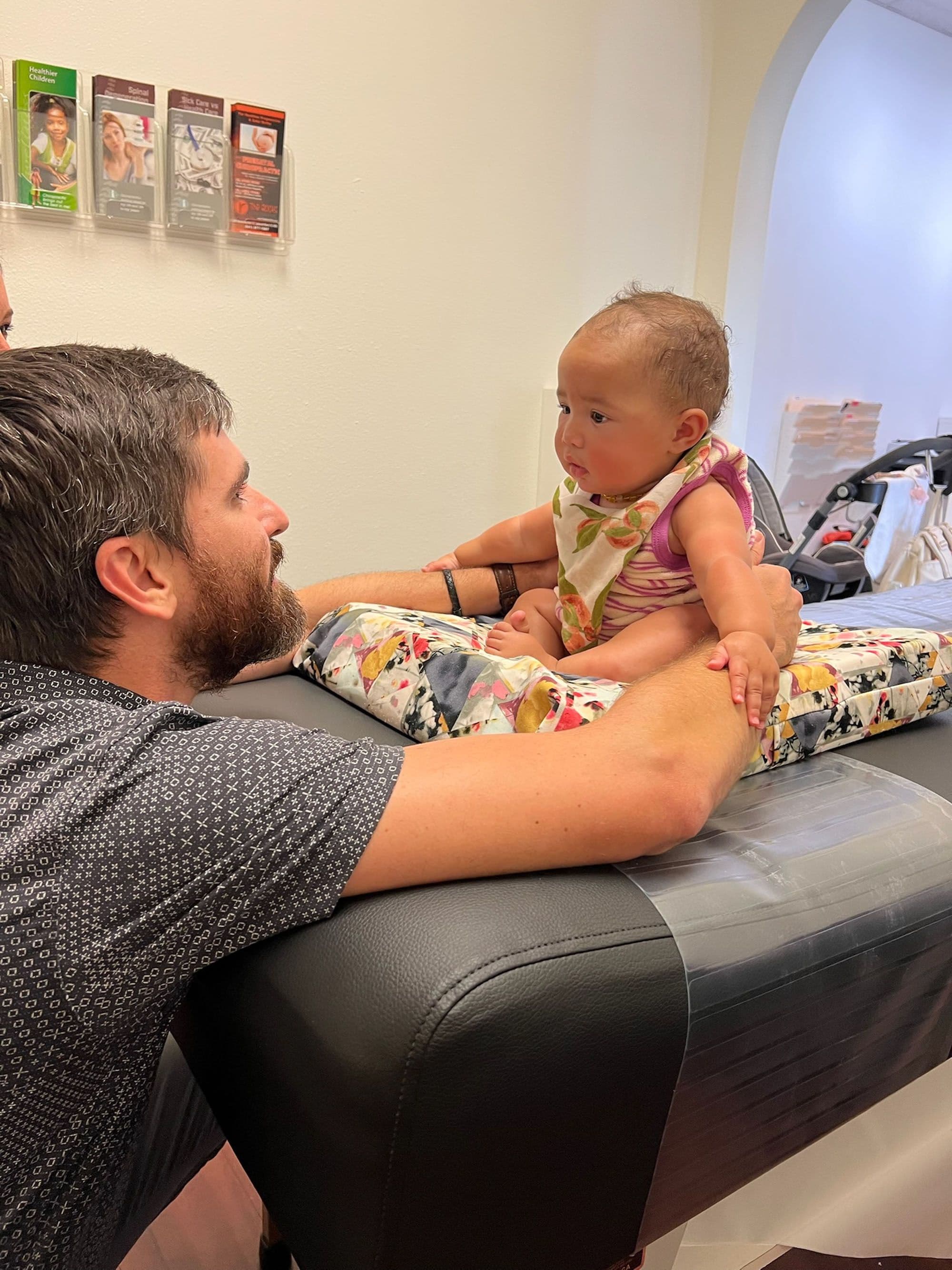
You finally have your baby in your arms, and somewhere between the late-night feedings and the constant lifting, your lower back started to ache, then never quite stopped. Postpartum back pain is the soreness, stiffness, or deep aching in your lower back, hips, or pelvis that lingers in the weeks and months after you give birth. It's incredibly common, it's real, and it does not mean something is wrong with you. At Little Roots Pediatric Chiropractic in Lakewood Ranch, FL, we help mamas care for their own bodies during the fourth trimester, not just their babies.
What postpartum back pain is and why it happens
Your body spent roughly nine months stretching, softening, and shifting to grow and birth a baby. That work doesn't reverse the moment you come home. The same hormones that loosened your ligaments for delivery are still circulating, your core muscles are still recovering, and your posture is adapting to a brand-new full-time job: holding, feeding, and carrying a little one who keeps getting heavier.
So when your back aches, it isn't a sign you're doing something wrong. It's a sign your body is in the middle of a big transition, and that transition deserves the same gentleness you're pouring into your baby.
What it can feel like
Postpartum back discomfort shows up differently for every mama. You might notice:
- A dull, constant ache low in your back that's worse after feeding sessions
- Sharp twinges when you bend to lift your baby or the car seat
- Tightness across your hips or the back of your pelvis
- Pain that flares when you stand from the couch or get out of bed
- Soreness between your shoulder blades from hunching during nursing
- A feeling that your core or pelvis is "loose" or unstable
If any of this sounds like your day, you are far from alone, and these feelings are worth paying attention to rather than pushing through.
Common contributors to a sore postpartum body
The physical demands of newborn care
Nursing in a curled-over position, rocking for hours, and lifting an infant dozens of times a day all load your back and shoulders in repetitive ways. Add a diaper bag on one shoulder and a car seat on the other arm, and the strain adds up quickly.
Lingering pregnancy changes
The postural shifts and ligament softening of pregnancy don't disappear overnight. Many mamas carry that same forward-leaning posture and pelvic looseness well into recovery, which can keep the lower back and pelvis working overtime.
A core and pelvic floor still healing
Your deep core muscles supported you through pregnancy and delivery, and they take time to find their strength again. When that support is still rebuilding, your back often picks up the slack.
Sleep loss and stress
Exhaustion and the emotional weight of new parenthood show up in the body too. Tension you carry as overwhelm and mom stress frequently settles into the neck, shoulders, and lower back.
When to seek prompt medical care
Gentle care is meant to support your recovery, not replace your medical team. Please reach out to your OB, midwife, or doctor promptly if your back pain comes with fever, severe or sudden pain, leg weakness or numbness, loss of bladder or bowel control, calf swelling or tenderness, or any symptom that feels alarming to you. Postpartum bodies can occasionally signal something that needs medical attention, and you deserve to have those concerns taken seriously. The care we offer works alongside your providers, never instead of them.
Why it can stick around
One of the hardest parts of postpartum back pain is that it doesn't always fade on its own, because the demands that contribute to it don't pause. Your baby keeps growing, the lifting continues, and there's rarely a stretch of real rest in those early months.
That's exactly why so many mamas tell themselves to "wait it out" and then find they're still aching half a year later. Your recovery is its own season of life, and it can use real support. Every body is different, and how it unfolds is different too, which is why we take a personalized approach rather than promising any set timeline.
How we support mamas during recovery
Our whole approach is built around being gentle and unhurried, because you've been through a lot and your body knows it.
A careful look at what's going on
We start by listening, then look at how your spine, pelvis, and posture are moving and where things feel restricted. A simple neurological evaluation helps us understand how your nervous system is handling all the new demands so our care fits you specifically.
Gentle, low-force adjusting
The care we provide for postpartum mamas is soft and specific, never forceful or dramatic. The goal is to support how your spine and pelvis move so your body has a better foundation as it recovers, which may help ease the everyday strain of carrying and feeding your little one.
Care rooted in pregnancy and postpartum bodies
Because we work with so many expecting and new mothers, supporting aches and changes through pregnancy and into recovery is part of our everyday rhythm. We meet you where your body is right now, fourth trimester and all.
Small things that may help at home
Alongside in-clinic care, a few gentle habits can take pressure off your back day to day:
- Bring your baby up to you for feeding with pillows rather than curling down to them
- Bend at your knees and hips, not your waist, when lifting the car seat
- Switch which arm and shoulder carries the diaper bag throughout the day
- Take short breaks to roll your shoulders back and lengthen your spine
- Accept help, and let yourself lie down and rest when you can
None of these are about doing more. They're about being a little kinder to the body that's working so hard for you and your baby.
Where to start in Lakewood Ranch
You spend your days making sure your baby is cared for. You deserve that same care. If your back has been aching and you're tired of pushing through it, we'd love to gently support your recovery right here in Lakewood Ranch. Families have trusted us since 2016, and our care has earned 4.8 stars from more than 625 Google reviews from parents across our community.
When you're ready, you can book an appointment and we'll start by listening to what your body's been telling you. There's no rush and no pressure, just a warm place to begin taking care of you, mama.
If You Had a C-Section: A Slightly Different Recovery
Postpartum back pain doesn't look identical for every mama, and a C-section adds its own layer to the picture. Healing from abdominal surgery changes how your core supports your spine in the weeks afterward, which often means your back and hips end up compensating even more than they would after a vaginal delivery. If a C-section was part of your birth, our guide on C-section recovery walks through what gentle care can look like while your incision and core are still healing.
Diastasis Recti and Your Back
Some mamas notice a gap or doming along the midline of their belly after birth, especially when sitting up from lying down. That's diastasis recti — a separation of the abdominal muscles that's very common during and after pregnancy. Because your core and lower back work as a team, an unaddressed separation can mean your back keeps picking up work your abdominal muscles usually handle. If that sounds familiar, Diastasis Recti: Healing Your Core After Birth is a good next read alongside this one.
Frequently Asked Questions
Is back pain after birth normal, or should I be worried?
Some soreness as your body recovers is very common, especially with all the lifting and feeding that newborn care involves. That said, you should never feel dismissed. If your pain is severe, sudden, or paired with symptoms like fever, numbness, or leg weakness, reach out to your doctor promptly. For everyday recovery aches, gentle care may help support how your body feels.
How soon after giving birth can I come in?
Every mama and every birth is different, so there's no single right moment. We take a personalized approach and meet you wherever your recovery is, whether that's a few weeks out or many months later. When you reach out to book an appointment or contact us, we can talk through what makes sense for you.
Is chiropractic care gentle enough for a postpartum body?
Yes. The care we provide for new mothers is low-force and specific, chosen with your recovering body in mind. Nothing about it is forceful or rushed, and we go at a pace that feels comfortable for you.
Will I have to come forever?
No. Care is built around your goals and how your body is responding. Because every person is different, we don't promise a set number of visits or a fixed timeline. We'll talk openly about what we're seeing and what feels right for you.
I struggled with pain during pregnancy too. Can you help with that history?
Absolutely. Supporting mamas through pregnancy-related aches and into the postpartum season is a big part of what we do. Your full story, including what you felt while expecting, helps us care for you better now.
What does a first visit look like?
It starts with a conversation, then a gentle look at how your spine and pelvis are moving and a simple neurological evaluation. From there, we'll share what we noticed and how we may be able to support your recovery, with no pressure to decide anything on the spot.
I had a C-section. Does that change anything about my care?
It can. We take your birth history into account, including whether you had a C-section, and adjust our approach around any incision healing or core recovery you're still working through. See our C-section recovery guide for more on what that looks like.
Could diastasis recti be part of why my back hurts?
It's possible. When the abdominal muscles are still separated, the lower back often ends up doing extra work to stabilize your midsection. If you've noticed doming or a gap along your belly, it's worth mentioning at your visit — read more in our diastasis recti guide.
Related Services
Related Reading
Related articles
C-Section Recovery: Gentle Care for Your Body After Birth
C-section recovery is different from a vaginal birth. Here's what healing generally looks like, and how gentle, nervous-system-focused care can help.
Read articleDiastasis Recti: Healing Your Core After Birth
If you've noticed a gap or doming along your midline after birth, you may be dealing with diastasis recti. Here's what it is, how to check for it, and how gentle care may support your recovery.
Read articleKeep Reading
More for growing families
Restless Legs During Pregnancy: Why It Happens and Gentle Ways to Find Relief
Restless, achy legs at night are one of the most common pregnancy complaints — here's why they happen and gentle, provider-approved ways to find relief.
Chiropractic Care During a Twin or Multiples Pregnancy
Carrying twins or multiples puts extra strain on your back, hips, and pelvis, often earlier than a single pregnancy typically does. Here's how gentle, Webster-certified prenatal care may help.
Carpal Tunnel During Pregnancy: Why It Happens and Gentle Ways to Find Relief
Numb, tingling hands aren't just in your head — carpal tunnel during pregnancy is common in the third trimester. Here's why it happens and how to find relief.
Questions about your child?
Schedule a consultation and let's talk through your family's needs together.
Book a Consultation(941) 932-4611