

Baby's Crooked Smile or Asymmetrical Face: What It Can Mean
Dr. Grayson Fox, DC
A crooked smile or uneven face in a newborn is common and usually has a simple explanation. Here's what typically causes it, and when to loop in your pediatrician.
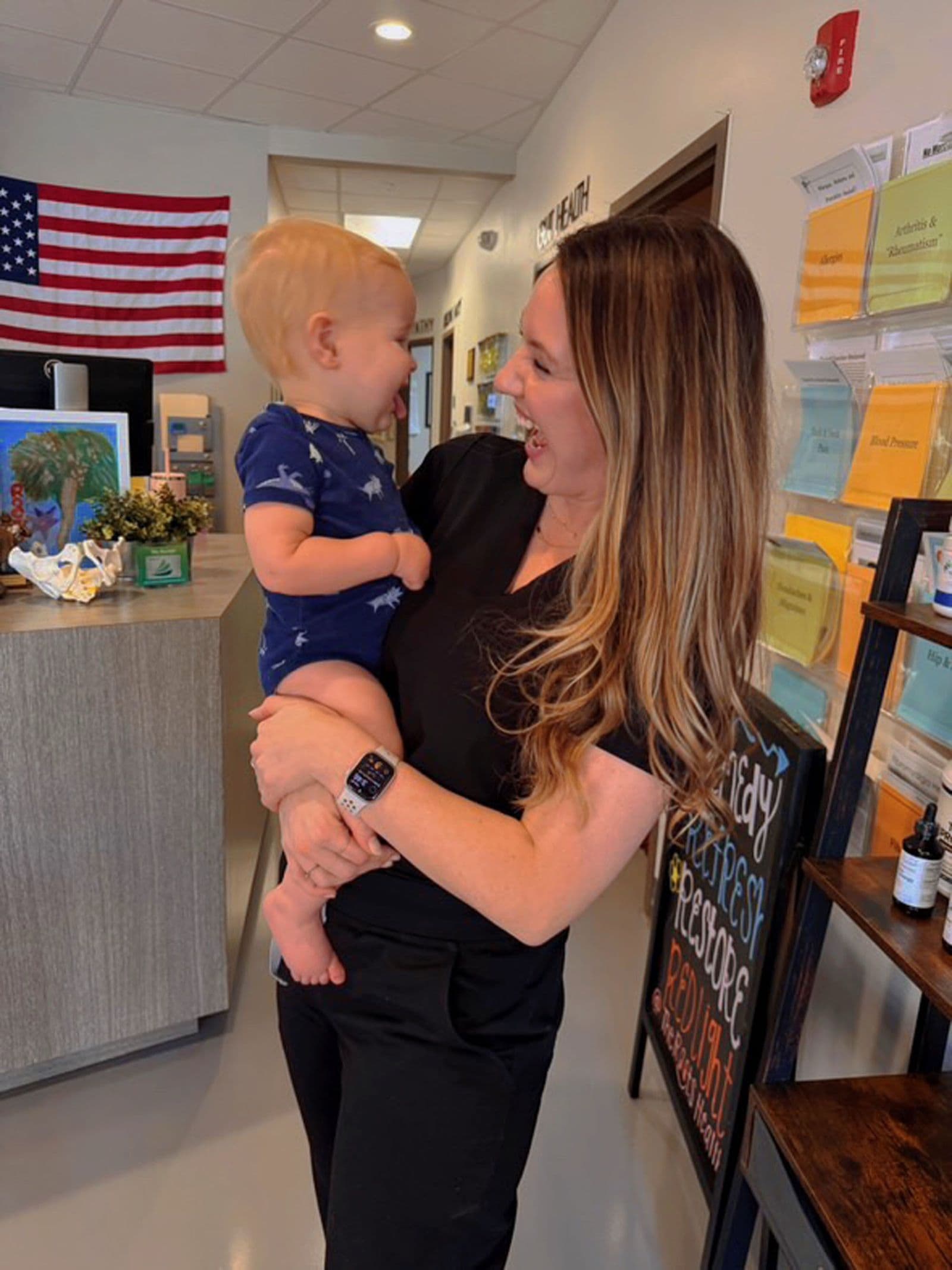
Noticing your baby's smile looks a little crooked, or that one side of their face seems to move differently than the other, can be unsettling — especially in the newborn photos where it suddenly seems obvious. Baby facial asymmetry is actually very common, and most of the time it has a simple, reassuring explanation. Here's what typically causes it, what's considered normal, and when it's worth a closer look.
Why Babies Are Born With Some Facial Asymmetry
Almost no face — adult or infant — is perfectly symmetrical, but newborns often show it more obviously than older babies and children. The tight quarters of the womb during the final weeks of pregnancy, especially if your baby was positioned with their head tucked to one side or pressed against your pelvis, can leave a temporary molding effect on the skull and face. A longer or more difficult delivery, especially one involving significant pressure on one side of the head, can add to this too.
Most of this newborn molding softens noticeably over the following weeks as the pressure from pregnancy and birth eases and your baby starts moving more freely — it's a normal, temporary part of how babies look right after arriving, not a sign that anything is wrong.
When a Crooked Smile Points to Torticollis
One of the more common, correctable contributors to facial asymmetry in babies is torticollis — tightness in the muscle running along one side of the neck that makes it more comfortable for your baby to hold their head turned or tilted one direction. Over time, that consistent one-sided positioning can affect not just head shape (as we cover in our guide to head shape and helmet therapy), but also the way the jaw and facial muscles develop and move, since a baby who favors one side tends to use the muscles on that side differently during feeding, crying, and smiling.
A crooked smile connected to torticollis often comes with other clues: a head tilt, a strong preference for turning one direction, or noticeable tightness when you try to gently turn your baby's head the other way.
Could It Be Facial Nerve Involvement?
Less commonly, an asymmetrical smile can be related to the facial nerve itself, sometimes from pressure during a difficult vaginal delivery (occasionally associated with forceps use) that temporarily affects nerve function on one side of the face. This typically shows up as one side of the face not moving as much as the other during crying, specifically — the mouth may not pull evenly, or one eye may not close as fully.
This is a medical finding that belongs with your pediatrician, not something to try to sort out at home. Most cases connected to birth-related pressure improve on their own over the following weeks, but your pediatrician is the right person to confirm what's going on and follow its progress.
Everyday Habits That Can Make Asymmetry More Noticeable
A few everyday patterns can make normal newborn asymmetry look more pronounced, or contribute to it sticking around longer than it otherwise would:
- Always feeding from the same side — alternating breast or bottle-holding sides gives your baby practice using both sides of the jaw and neck evenly
- A crib or bassinet positioned so your baby only sees the room from one direction — babies naturally turn toward light, sound, and faces, so if everything interesting is always on the same side, that's the direction they'll keep turning
- Extended car seat, swing, or bouncer time, which tends to encourage the same resting position repeatedly, especially if your baby already has a side they prefer
None of these habits cause facial asymmetry on their own, but they can reinforce a preference that started for another reason. This is part of why simple variety — switching sides for feeding, moving toys and mobiles around, and plenty of supervised tummy time — is often one of the first things recommended alongside anything else going on.
What's Normal vs. What's Worth Mentioning to Your Pediatrician
A little asymmetry that's mild, doesn't seem to bother your baby, and doesn't change much day to day is usually just normal variation. A few things are worth flagging at your next well-baby visit, or sooner if they concern you:
- Asymmetry that seems to be getting more noticeable rather than less over the first couple of months
- A strong, consistent head tilt or turning preference alongside the facial asymmetry
- One side of the face that doesn't move much at all during crying, specifically
- Any asymmetry that showed up suddenly rather than being present from birth
Facial asymmetry alone isn't a marker of developmental delay, and most babies with a bit of newborn asymmetry go on to develop completely typically. If you're also noticing other things that concern you about your baby's development, that's a separate conversation worth having with your pediatrician, and our guide on developmental delays covers what's typically watched for and when.
How a Pediatric Chiropractic Evaluation Fits In
At Little Roots, our team's evaluation looks at how your baby is moving overall — neck range of motion, muscle tension on each side, and how symmetrically your baby turns, tilts, and holds their head. When tightness on one side is part of what's contributing to a crooked smile or a head-turning preference, that's something gentle, baby-sized bodywork can help address, alongside anything your pediatrician has already recommended.
Every baby's pattern is a little different, so our team builds a plan around what your baby's own movement is actually showing us — never a standard protocol applied to every baby who comes in with a similar concern.
Frequently Asked Questions
Is it normal for a newborn's face to look uneven? Yes, mild facial asymmetry is very common in newborns and usually relates to positioning in the womb or during birth. Most of it softens over the first several weeks.
How do I know if it's torticollis? Torticollis usually comes with a noticeable head tilt or a strong preference for turning one direction, along with tightness when you try to gently turn your baby's head the other way. If you're noticing that pattern, it's worth having evaluated.
Could a crooked smile mean nerve damage? Occasionally, pressure during a difficult delivery can temporarily affect the facial nerve on one side, which shows up as uneven movement specifically during crying. This is a medical finding your pediatrician should assess and follow.
Will my baby's facial asymmetry go away on its own? Much of it does soften with time, especially mild asymmetry present from birth. More noticeable or worsening asymmetry is worth mentioning to your pediatrician rather than waiting to see.
Can chiropractic care help with a crooked smile? When neck or jaw tightness on one side is part of the picture, gentle pediatric chiropractic evaluation and care can be a helpful complement — always alongside, never instead of, your pediatrician's guidance.
If you've noticed your baby's smile looks a little crooked or you'd like a second set of eyes on how your baby is moving, schedule a visit with our team at Little Roots Pediatric Chiropractic in Lakewood Ranch.
Little Roots Pediatric Chiropractic, 8209 Natures Way, Unit 117, Lakewood Ranch, FL 34202. (941) 932-4611.
Learn More
Conditions we help with
Torticollis & Head Shape
Head tilt, flat spots, asymmetric jaw — these are often the same story told from different angles. Gentle in-arms work helps the system release the holding pattern that's keeping your baby stuck on one side.
Learn moreDevelopmental Delays
Motor milestones, speech development, cognitive processing — all of it runs through a nervous system. When that system holds structural tension, it can limit what's available to your child. Gentle care creates more capacity, and more capacity compounds.
Learn moreRelated Services
Related Reading
Related articles
Torticollis in Babies: A Gentle Parent's Guide to Head Tilt and Flat Head
A warm, reassuring guide for parents who notice a head tilt, a favored side, or a flat spot, and want to understand torticollis in babies and gentle next steps.
Read articleTummy Time: Why It Matters, Why Babies Resist It, and How to Make It Work
Tummy time resistance is one of the most common new-parent concerns we hear at Little Roots. Here's when to start, how much to aim for, and when struggles are worth a closer look at your baby's nervous system.
Read articleKeep Reading
More for growing families
Head Shape and Helmet Therapy: When It's Needed — and When It Isn't
A flat spot on your baby's head can be alarming to notice. Here's how head shape typically develops, when helmet therapy is genuinely needed, and what else may help first.
Container Baby Syndrome: Why Too Much Time in Seats and Carriers Matters
Car seats and bouncers have their place, but too much time in "containers" can affect how babies move and develop. Here's what to watch for.

What to Expect at Your Baby's First Pediatric Chiropractic Visit
A step-by-step walkthrough of what actually happens at your baby's first pediatric chiropractic visit — the conversation, the gentle evaluation, and what care looks like for an infant.
Questions about your child?
Schedule a consultation and let's talk through your family's needs together.
Book a Consultation(941) 932-4611