
Head Shape and Helmet Therapy: When It's Needed — and When It Isn't
Dr. Grayson Fox, DC
A flat spot on your baby's head can be alarming to notice. Here's how head shape typically develops, when helmet therapy is genuinely needed, and what else may help first.

Noticing a flat spot on your baby's head is one of those things that can send a parent straight to a search bar at 2 a.m. — and "baby helmet therapy" is usually one of the first things that comes up. Before you assume that's where you're headed, it helps to understand what's actually going on with your baby's head shape, what helmet therapy is really for, and what typically gets tried first.
Why Babies' Heads Change Shape So Easily
A newborn's skull is made up of several bony plates that haven't fused together yet, connected by soft, flexible sutures. That flexibility is exactly what allows a baby to pass through the birth canal — and it's also what makes an infant's head shape so responsive to pressure in the weeks and months afterward. Because babies spend so much time lying on their backs (which is correctly recommended for safe sleep), a flat spot can develop wherever the head rests most.
This kind of positional flattening — often called plagiocephaly when it's off to one side, or brachycephaly when it's flat across the whole back of the head — is common, and in many cases it improves with simple changes at home: varied positioning, supervised tummy time, and encouraging your baby to turn their head both directions.
What Is Helmet Therapy (Cranial Remolding)?
Helmet therapy, sometimes called cranial remolding or a cranial band, is a custom-fitted device prescribed by a pediatrician or craniofacial specialist. It doesn't reshape the skull by force — instead, it gently restricts growth in the areas that are already rounded while leaving room for the flatter areas to fill in naturally as the baby's head continues growing. It's a real, well-studied medical intervention for a specific situation, not a routine step every baby with a flat spot needs.
Not All Uneven Head Shapes Are the Same
Most flat spots are positional — caused by repeated pressure on one area, not by anything wrong with the skull itself. There's a separate, much rarer condition called craniosynostosis, where one or more of the sutures between the skull's bony plates fuses earlier than it should. This changes how the skull can grow and is a structural issue rather than a positional one — it's part of why your pediatrician checks head shape and suture lines at well-baby visits. If your pediatrician has concerns along these lines, they'll typically refer you to a craniofacial specialist for imaging, which is different from a routine helmet-therapy conversation about positional flattening. This isn't something to try to sort out from home — it's simply useful to know the two aren't the same thing, so a routine flat spot doesn't feel scarier than it needs to.
When Is Helmet Therapy Actually Recommended?
A pediatrician or specialist typically considers helmet therapy when:
- Repositioning and tummy time haven't meaningfully improved a moderate-to-severe flat spot after being tried consistently.
- The asymmetry is significant enough that it may affect how the ears, face, or forehead line up — not just mild, common flattening.
- There's still enough active skull growth remaining for the helmet to have room to work with, which is a big part of why providers tend to raise the topic earlier rather than later in a baby's first year.
If your pediatrician hasn't raised helmet therapy, that's often a good sign — it usually means what they're seeing falls into the range that tends to resolve with less intervention. If you're worried, the right first step is always a conversation with your pediatrician, who can measure the asymmetry and tell you where it falls.
What Usually Comes Before a Helmet Is Considered
Most babies with a flat spot never need a helmet at all. What tends to help first includes:
- Repositioning during awake time — offering the breast, a toy, or your face from the non-preferred side so your baby has a reason to turn their head both ways.
- Supervised tummy time, which takes pressure off the back of the head while also building the neck and shoulder strength a baby needs to hold their head up and turn it more freely.
- Alternating which end of the crib your baby's head is placed at, and varying how they're carried and held throughout the day.
- Addressing anything that's limiting how easily your baby can turn their head, which is where the next section comes in.
The Torticollis Connection
One of the most overlooked contributors to a persistent flat spot is torticollis — tightness in the muscle that runs along one side of the neck, which makes it more comfortable for a baby to keep turning their head the same direction. If a baby consistently favors one side because turning the other way is genuinely uncomfortable, that favored position keeps pressure on the same spot of the skull no matter how often you try to reposition them. In many of these cases, the flat spot isn't really a head-shape problem on its own — it's a downstream sign of something making one direction harder for your baby.
This is exactly the kind of pattern where a broader look at how your baby is moving, not just where they're lying, can make a difference.
What a Pediatric Chiropractic Evaluation Looks At
At Little Roots, care starts with a consultation and a full evaluation of how your baby moves — looking at neck range of motion, muscle tension, and how symmetrically your baby turns, tilts, and holds their head. If tightness on one side is making it harder for your baby to turn away from a favored position, that's something our team can address as part of a gentle, personalized plan, alongside the repositioning and tummy time strategies your pediatrician may already have recommended. Each baby is different, and our team builds a plan around what your baby's own patterns are actually showing.
This kind of care works alongside your pediatrician, not instead of them — if helmet therapy is genuinely appropriate for your baby, that's always a conversation to have with your pediatrician or a craniofacial specialist.
Frequently Asked Questions
At what age is it too late for helmet therapy? Providers generally look at helmet therapy earlier rather than later in a baby's first year, since it works by guiding ongoing skull growth. Your pediatrician can tell you where your baby's growth window and asymmetry fall — this isn't something to try to judge from a photo at home.
Will my baby's flat spot go away on its own? Many mild flat spots do improve with consistent repositioning, tummy time, and time, especially once a baby is spending less time lying flat and more time sitting and moving. More pronounced asymmetry is worth mentioning to your pediatrician rather than waiting to see.
Does tummy time really make a difference? Yes — tummy time takes direct pressure off the back and sides of the head and helps build the strength a baby needs to turn and lift their head more easily, which supports more natural repositioning throughout the day.
Can chiropractic care replace a helmet if one is recommended? No. If a pediatrician or craniofacial specialist has recommended helmet therapy, that's a medical device decision that stays with them. Chiropractic evaluation can be a helpful complement — particularly when neck tightness is part of the picture — but it isn't a substitute for that recommendation.
How do I know if it's torticollis or just a preference? A true preference usually shifts fairly easily when you encourage the other side. If your baby seems to resist, fuss, or struggle to turn one direction no matter how you encourage it, that's worth having evaluated rather than assumed.
If you've noticed a flat spot, a strong side preference, or you just want a second set of eyes on how your baby is moving, schedule a visit with our team at Little Roots Pediatric Chiropractic in Lakewood Ranch.
Little Roots Pediatric Chiropractic, 8209 Natures Way, Unit 117, Lakewood Ranch, FL 34202. (941) 932-4611.
Learn More
Conditions we help with
Related Services
Related Reading
Related articles
Plagiocephaly: What to Do About a Baby's Flat Head
A flat spot on your baby's head is common and usually manageable at home. Here's what causes it, what actually helps, and when to loop in a specialist.
Read articleTummy Time: Why It Matters, Why Babies Resist It, and How to Make It Work
Tummy time resistance is one of the most common new-parent concerns we hear at Little Roots. Here's when to start, how much to aim for, and when struggles are worth a closer look at your baby's nervous system.
Read articleKeep Reading
More for growing families
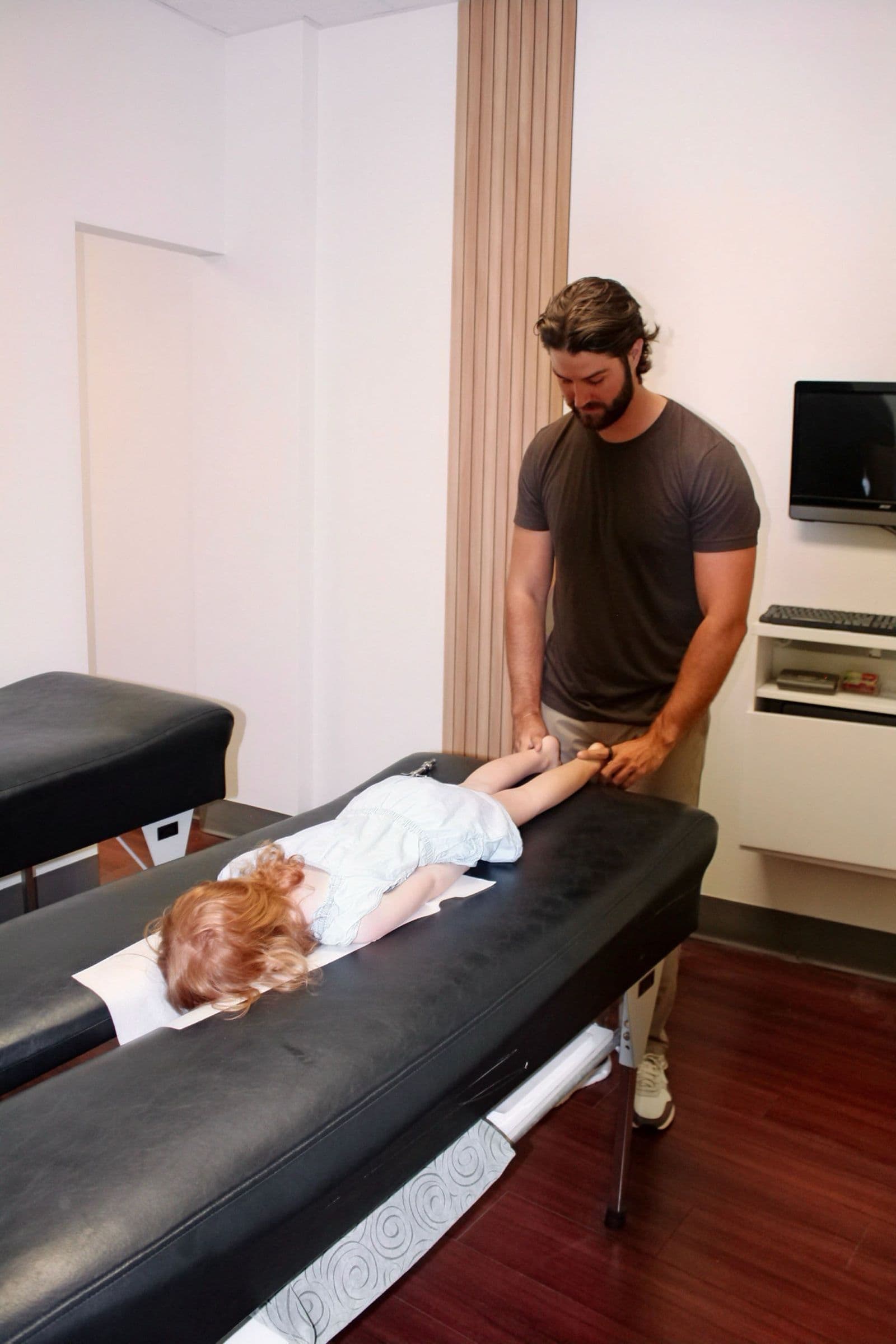
Container Baby Syndrome: Why Too Much Time in Seats and Carriers Matters
Car seats and bouncers have their place, but too much time in "containers" can affect how babies move and develop. Here's what to watch for.

What to Expect at Your Baby's First Pediatric Chiropractic Visit
A step-by-step walkthrough of what actually happens at your baby's first pediatric chiropractic visit — the conversation, the gentle evaluation, and what care looks like for an infant.
Seasonal Allergies in Kids: A Gentle, Nervous-System-Supportive Approach
Seasonal allergies in kids often show up as a runny nose, congestion, or a child who just seems "off" for weeks. Here's what's happening and gentle, drug-free ways to offer support.
Questions about your child?
Schedule a consultation and let's talk through your family's needs together.
Book a Consultation(941) 932-4611