

Baby Constipation: What's Normal and Gentle Ways to Help
Dr. Grayson Fox, DC
Straining, fussing, and hard little poops can worry any parent. Here's what's normal for babies, gentle ways to help, and when it's time to call your pediatrician.

If your baby is red-faced, grunting, and pulling their knees up, it's natural to wonder whether they're constipated. Here's the reassuring part: babies often strain and grunt while pooping, even when their stools are perfectly soft, because they're still learning to coordinate their belly muscles and pelvic floor. True baby constipation is less about how often your baby poops and more about what the poop looks like and how comfortable your baby is. Hard, dry, pellet-like stools that seem to hurt are the classic sign. Below, we'll walk through what's normal, what may point to constipation, gentle ways to support your baby's digestion, and the signs that mean it's time to call your pediatrician. This is educational, not a replacement for your pediatrician's advice.
What's Normal for a Baby's Poop
Baby bowel habits vary a lot. Some babies go after nearly every feeding, and others go less often and still have soft, easy stools. Breastfed babies in particular can have a wide range of patterns, and what's normal for your baby is often more useful to know than any chart.
A few things are usually normal:
- Grunting and straining with a soft stool at the end. Babies lie on their backs while pooping, without gravity to help, so it takes effort.
- Turning red or squirming briefly, followed by a soft, mustard-like or paste-like stool.
- Changes in stool color and texture as your baby's diet changes, such as when starting solids with your pediatrician's guidance.
The pattern to notice is a change from your baby's own normal, especially if it comes with discomfort.
Signs Your Baby May Be Constipated
Constipation is more likely when you notice a few of these together:
- Hard, dry, pellet-like or firm stools that look like small balls or logs
- Obvious pain or crying when passing stool
- A firm or bloated belly that seems uncomfortable
- Less interest in feeding than usual
- Stools that are noticeably less frequent than your baby's normal, paired with straining
- A tiny streak of bright red blood on the outside of a hard stool, which can come from small irritation at the bottom (mention this to your pediatrician)
Gas and constipation can look similar, and many babies have both at different times. If your baby seems more gassy or fussy than backed up, our guide to newborn gas relief may be helpful, and our overview of colic explains why some babies have long, hard-to-soothe crying spells.
Why Babies Get Constipated
There isn't always a single reason, and often a few small things add up.
A change in feeding
Moving from breast milk to formula, switching formulas, or starting solid foods can all change stool consistency. Formula-fed babies tend to have firmer stools than breastfed babies. If you're mixing formula, following the label's water-to-powder directions exactly matters, because too little water can make stools harder. Talk with your pediatrician before making changes to feeding.
Not enough fluid
Babies get their fluids from breast milk or formula. Illness, a hot Florida day, or a fussy stretch of feeding can leave a baby a little short. Ask your pediatrician before offering anything besides milk or formula.
A still-maturing gut and nervous system
Digestion depends on coordinated nerve signals between the brain, the gut, and the muscles that move food along. In the first months, this communication is still developing. It's one reason we take a nervous-system-first view of many infant tummy concerns.
Reflux and other feeding issues
Babies who struggle with feeding or who have reflux sometimes show changes in their bowel habits too. Our post on infant reflux and what's normal and our page on reflux can help you tell the difference between typical spit-up and something to mention to your provider.
Illness or medication
Some illnesses and medicines can slow the gut. If your baby has been sick or started something new, mention it to your pediatrician.
Gentle Ways to Support Your Baby's Digestion
These are simple, low-risk comforts many parents use. None replaces medical advice, and it's always fine to check with your pediatrician first.
- Bicycle legs. With your baby on their back, gently move their legs in a slow cycling motion. The movement can help gas and stool move along.
- A gentle tummy massage. Using light pressure and warm hands, make slow clockwise circles around the belly button. Skip it right after a feed, and stop if your baby seems bothered.
- A warm bath. Warm water can relax tense belly muscles and calm a fussy baby.
- Tummy time while awake and supervised. Time on the belly puts light, natural pressure on the abdomen and builds core strength. Our guide to tummy time covers how to make it comfortable, including for babies who protest.
- Hold your baby upright after feeds and while they settle, which many babies find soothing.
- Keep feeds calm. Slower, paced feeding and frequent burping may reduce swallowed air that adds to belly discomfort.
Avoid giving your baby laxatives, suppositories, herbal remedies, or home remedies unless your pediatrician tells you to. Babies are small, and what's harmless for an adult can be risky for an infant. Never give honey to an infant under 12 months.
Where Gentle Chiropractic Care May Fit In
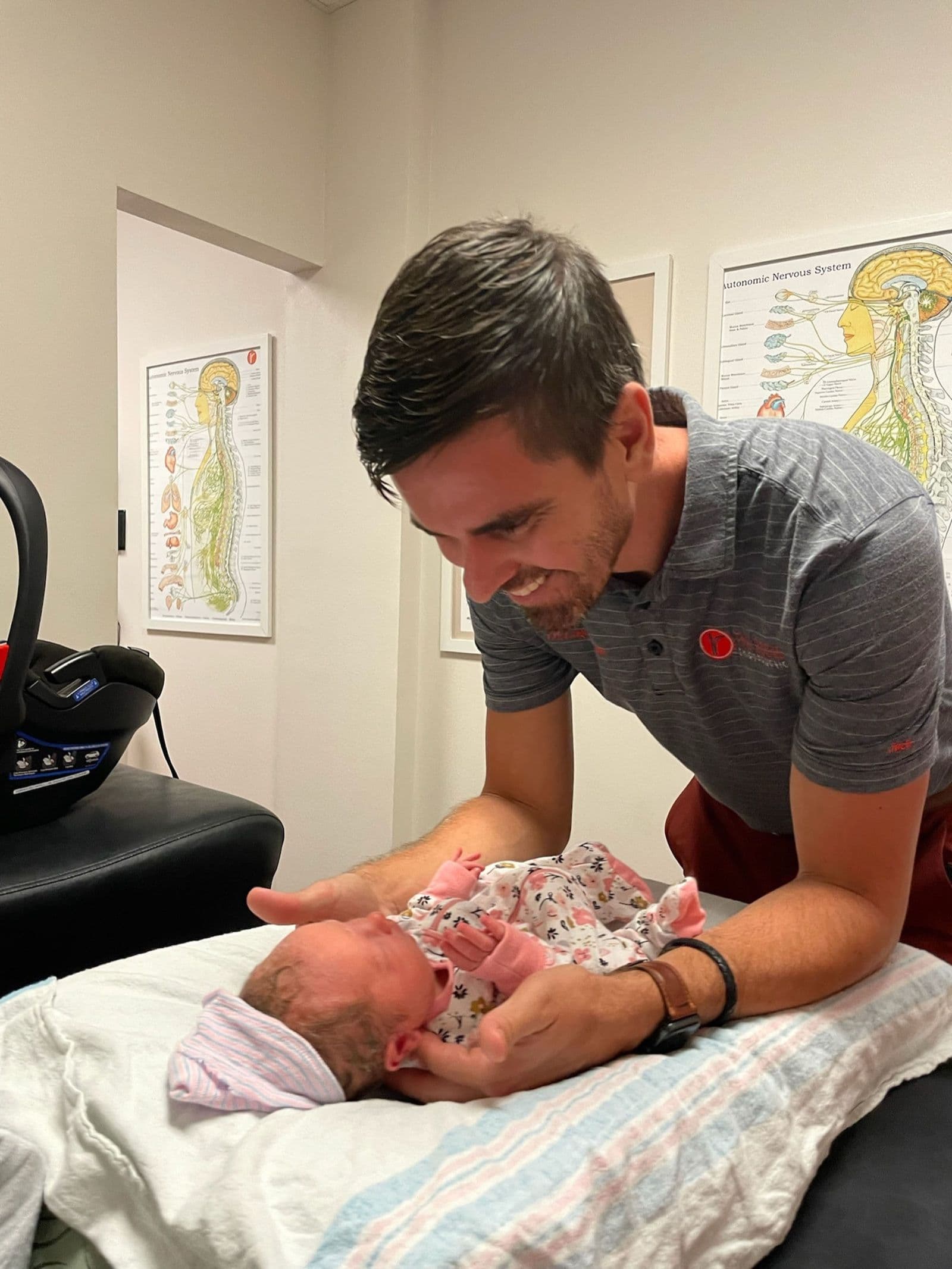
At Little Roots, our team works with babies using very light, age-appropriate touch. It's nothing like an adult adjustment. Our approach focuses on how well an infant's nervous system and body are moving together: how comfortably they turn their head, how they settle, and how their tummy and feeding patterns are going. Some parents come to us because their baby seems chronically uncomfortable, strains often, or is having a hard time feeding or settling.
We don't position chiropractic as a constipation remedy, and we never replace your pediatrician's care. Instead, a gentle evaluation may help identify areas of tension or restricted movement, and we're happy to work alongside your baby's medical provider. You can learn more on our infant chiropractic page.
When to Call Your Pediatrician
Contact your pediatrician promptly, or seek urgent care, if your baby has:
- A fever together with belly problems
- Vomiting, especially if it's green or forceful
- A swollen, hard belly or signs of severe pain
- Blood in the stool beyond a tiny streak, or stools that look black or like red currant jelly
- Refusing to feed or seeming unusually sleepy or limp
- A newborn who hasn't passed their first stools or is having ongoing trouble
- Constipation that keeps returning or doesn't improve with simple measures
Trust your instincts. If something feels wrong, it's always okay to call.
Frequently Asked Questions
How do I know if my baby is constipated?
Look at the stool and your baby's comfort rather than only how often they go. Hard, dry, pellet-like poops, obvious pain, and a firm belly are more telling than grunting alone.
Is it normal for babies to strain when pooping?
Yes. Many babies grunt, turn red, and squirm even when the stool is soft, because they're learning to coordinate the muscles involved.
What can I do at home to help a constipated baby?
Gentle bicycle legs, a soft tummy massage, a warm bath, and supervised tummy time are common comforts. Ask your pediatrician before changing feeds or offering anything other than breast milk or formula.
When should I worry about baby constipation?
Call your pediatrician if you see fever, vomiting, a swollen belly, blood in the stool, poor feeding, or if the problem keeps coming back.
Can toddlers get constipated too?
Yes, and the causes shift as diet and toilet habits change. See our guide to toddler constipation for that stage.
Questions About Your Baby's Comfort?
If your little one seems uncomfortable and you'd like a gentle second set of eyes, our team at Little Roots in Lakewood Ranch is here to listen. Book an appointment and we'll start with your baby's story.
Learn More
Conditions we help with
Reflux
Spit-up is normal. Arching through feeds, crying after eating, sleeping fitfully, and never seeming satisfied — that's reflux, and it's almost always a nervous-system regulation story before it's a digestion story.
Learn moreColic
Colic isn't a personality trait — it's often a baby's nervous system stuck on high alert. Gentle chiropractic care helps the system downshift so feeding, sleeping, and being held start to feel okay again.
Learn moreRelated Services
Related Reading
Related articles
Newborn Gas Relief: Gentle, Drug-Free Ways to Help Your Baby
Squirming, grunting, knees pulled up — gas is one of the most common reasons newborns get fussy. Here's what helps, gently and without medication.
Read articleInfant Reflux and Spit-Up: What's Normal, What's Not
Most infant reflux is normal. Here's how to tell a happy spitter from reflux that's distressing your baby, plus gentle tips and red flags.
Read articleTummy Time: Why It Matters, Why Babies Resist It, and How to Make It Work
Tummy time resistance is one of the most common new-parent concerns we hear at Little Roots. Here's when to start, how much to aim for, and when struggles are worth a closer look at your baby's nervous system.
Read articleKeep Reading
More for growing families
Baby Fell Off the Bed? What to Do First and What to Watch For
Your baby just rolled off the bed and your heart is pounding. Here's what to do first, the warning signs that mean emergency care, and what to watch for afterward.
Toddler Clumsiness and Coordination: When to Pay Attention
Trips, bumps, and wobbly balance are part of being a toddler. Here's what's typical, what's worth a closer look, and gentle ways to support coordination at home.
Toddler Picky Eating vs. Sensory Food Aversion: How to Tell Them Apart
Almost every toddler goes through a picky-eating phase — but sometimes there's more going on. Here's how to tell ordinary pickiness apart from a sensory food aversion.
Questions about your child?
Schedule a consultation and let's talk through your family's needs together.
Book a Consultation(941) 932-4611