

Toddler Constipation Relief: Gentle, Drug-Free Ways to Help Your Little One
Dr. Logan Swaim, MS, DC
If your toddler is straining, skipping days, or crying on the potty, you're not alone. Here's why it happens and gentle, drug-free ways to help your little one feel better.
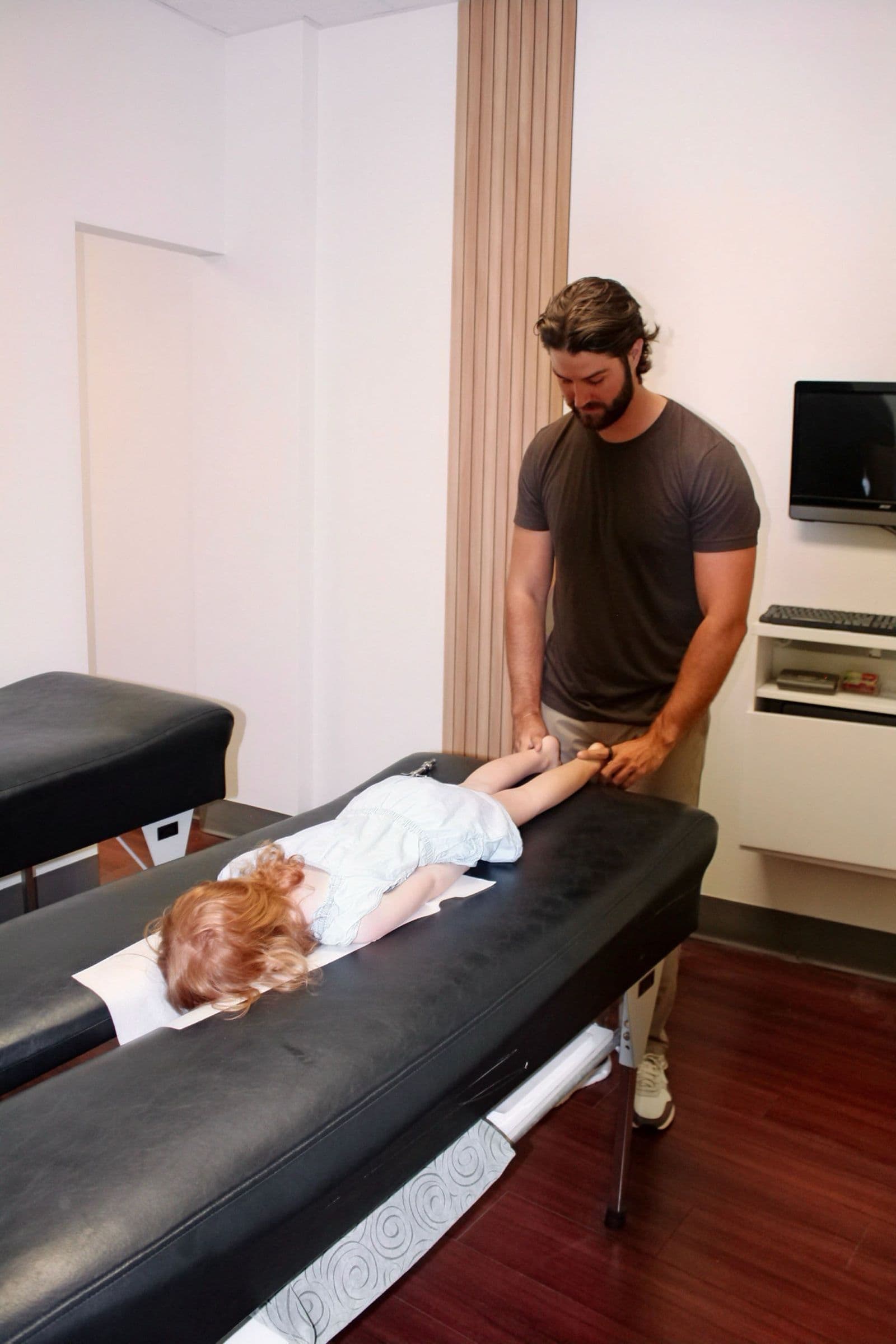
If your toddler is straining on the potty, skipping days between bowel movements, or crying because going hurts, you are already doing the hard part: paying attention. Toddler constipation is when stools become hard, dry, or infrequent and uncomfortable to pass, and it is one of the most common worries parents bring to us. It is rarely about something you did wrong, and most of the time it is your little one's body adjusting to new foods, new routines, and a fast-growing digestive system. At Little Roots Pediatric Chiropractic in Lakewood Ranch, FL, we help families understand what is going on and support gentle, drug-free ways to help your child feel more comfortable through pediatric wellness care.
What toddler constipation actually is
Doctors generally describe constipation as fewer than three bowel movements a week, or stools that are hard, large, and painful to pass, no matter how often they happen. Every child has their own normal, so what matters most is the change: your toddler used to go easily and now seems uncomfortable, withholds, or strains.
Here is the part that surprises a lot of parents. Once a single hard stool hurts, many toddlers start holding it in on purpose to avoid the pain. That holding lets the stool sit longer, dry out more, and grow harder, which makes the next trip hurt even more. It becomes a loop, and breaking that loop gently is the whole goal.
What it feels like for your toddler
Toddlers can't always tell you what's wrong, so the signs show up in their bodies and behavior. You might notice:
- Straining, grunting, or turning red during a bowel movement
- Hard, dry, or pebble-like stools (or very large ones that are tough to pass)
- Fewer than three poops a week, or a clear drop from their usual pattern
- Crying, arching, or running to hide when they feel the urge
- Crossing legs, standing on tiptoes, or clenching to hold it in
- A swollen or firm belly, more gas, or a smaller appetite
- Fussiness or trouble settling, especially around mealtimes or naps
If this list feels familiar, take a breath. These are signals, not emergencies, and there is a lot you can do at home before anything else.
Why toddlers get constipated
A few everyday things tend to overlap, and usually it is more than one at once.
Diet and fluids
The move from breastmilk or formula to solid food is a big shift for a tiny gut. Low fiber, lots of dairy or refined snacks, and not enough water can all firm up stools. Toddlers are also famously picky, which makes balanced fiber and fluids harder than it sounds.
Potty training and routine changes
Learning to use the potty, starting daycare, traveling, or any disruption to the daily rhythm can make a toddler hold it in. New environments and new expectations are a common trigger.
The holding habit
As we mentioned, one painful poop can teach a child to withhold. The withholding itself then becomes a leading cause, which is why comfort and consistency matter so much.
The gut and nervous-system connection
This is the piece that often gets overlooked, and it is the angle we care about most. Your child's gut and brain are in constant conversation through the nervous system, especially a long nerve pathway that helps regulate digestion and the rhythmic muscle movements that move stool along. People sometimes call the gut a "second brain" because it has its own dense web of nerves.
When a toddler's body is tense, overstimulated, or out of sync, that gut-brain communication can feel less settled, and digestion is one of the first places little ones show stress. This same nervous-system link is why we so often see digestive comfort discussed alongside other early-childhood concerns like reflux and colic. Supporting how the nervous system functions is a gentle, drug-free part of the bigger picture, working alongside good nutrition and your pediatrician's guidance, never in place of them.
When to seek prompt medical care
Gentle home support is wonderful, and it is not a substitute for medical care. Please call your pediatrician promptly, or seek urgent care, if your toddler has any of the following:
- Blood in the stool, or stools that are black or tarry
- Severe belly pain, a hard swollen belly, or vomiting (especially green vomit)
- No bowel movement for several days paired with distress or a refusal to eat or drink
- Constipation that started in the first weeks of life or has been ongoing and worsening
- Weight loss, fever, or signs of dehydration (few wet diapers, dry mouth, no tears)
The care we offer at Little Roots is meant to complement your child's medical team, not replace it. If anything here feels alarming, your pediatrician comes first, always.
Why it tends to come back
Many parents tell us the same story: things improve, then a stomach bug, a trip, or a stretch of picky eating brings the hard stools right back. That is normal. A toddler's gut is still maturing, their diet is still narrow, and their routine is always changing.
Because the holding habit can re-form quickly, the most lasting relief usually comes from steady, gentle habits rather than one quick, steady solution. Think of it as helping your child's body relearn that going to the bathroom is safe and easy, a little at a time. Every child is different, so we take a personalized approach rather than promising any set timeline.
Gentle, drug-free ways to help at home
None of these are promises, and they are simple, low-risk places to start while you watch how your toddler responds.
Food and fluids
- Offer more water throughout the day, and add naturally fiber-rich foods like pears, prunes, peaches, berries, peas, and whole grains.
- The classic "P" fruits (prunes, pears, plums, peaches) are a kind, easy first step.
- If dairy seems to firm things up, talk with your pediatrician about gently adjusting it.
Movement and routine
- Lots of crawling, climbing, and active play helps the gut keep things moving.
- Try a calm, unhurried potty sit after meals, when the body is naturally primed to go. Keep it pressure-free and praise the effort, not the result.
Calm and connection
- A warm bath, belly time, gentle tummy massage in a clockwise circle, and a relaxed bedtime all help a tense little body settle.
How our team helps
Our focus at Little Roots is supporting your child's nervous system so their whole body, including digestion, can do its job with less interference. We use gentle, low-force pediatric adjusting, the kind of light, careful pressure designed for small bodies, never the forceful movements people sometimes picture with adult chiropractic.
A gentle starting point
We begin with a thorough history and a neurological evaluation to understand how your child's nervous system is functioning and where it may feel out of sync. This helps our doctors tailor care to your individual toddler rather than applying a one-size-fits-all routine.
Care that fits your family
Through our infant and child chiropractic care, we offer gentle support that may help your child feel more settled and comfortable, and we work right alongside your pediatrician. We never promise outcomes, because every child is different, and we are honest about that from day one. Many families fold this into ongoing pediatric wellness care as part of supporting healthy development.
Where to start in Lakewood Ranch
If your toddler has been uncomfortable and you are tired of guessing, you don't have to figure it out alone. The doctors at Little Roots Pediatric Chiropractic, right here at 8209 Natures Way, Unit 117 in Lakewood Ranch, FL, will listen to your whole story, answer your questions, and walk you through gentle options that fit your child.
We are proud to care for thousands of families across our community, with a 4.8-star rating from more than 625 Google reviews. When you are ready, you can book an appointment or reach out through our contact page. And if your little one is also dealing with feeding or fussiness concerns, our pages on reflux, colic, and excessive crying are gentle places to keep reading.
Frequently Asked Questions
How do I know if my toddler is actually constipated?
Look for hard, dry, or pebble-like stools, straining or pain when going, fewer than three bowel movements a week, or a clear change from your child's usual pattern. Holding behaviors, like clenching or hiding, are another common clue. When in doubt, your pediatrician can help you sort it out.
Is toddler constipation dangerous?
Most of the time it is uncomfortable rather than dangerous, and gentle home steps help many toddlers. That said, blood in the stool, vomiting, a hard or swollen belly, severe pain, or signs of dehydration are reasons to call your pediatrician promptly.
Can chiropractic care help with my toddler's constipation?
We never promise outcomes, but supporting how the nervous system functions, through gentle, low-force pediatric adjusting, is one drug-free option many families explore alongside good nutrition and their pediatrician's guidance. Because the gut and nervous system are closely connected, our care is designed to support your child's overall comfort and function. Every child is different, so we take a personalized approach.
Is pediatric chiropractic safe for a small child?
The techniques we use for infants and toddlers are very gentle and low-force, nothing like the forceful movements people picture with adult care. Our doctors are trained specifically in caring for little bodies and begin every relationship with a thorough history and evaluation.
What can I try at home first?
Start simple: more water, more fiber-rich foods like pears and prunes, plenty of active play, a calm unhurried potty sit after meals, and a warm bath or gentle clockwise tummy massage to help a tense belly relax. Give changes a little time, and loop in your pediatrician if things don't ease.
How do I get started with Little Roots?
You can book an appointment online or call our Lakewood Ranch office at (941) 932-4611. We will listen, answer your questions, and walk your family through gentle, drug-free options together.
Learn More
Conditions we help with
Reflux
Spit-up is normal. Arching through feeds, crying after eating, sleeping fitfully, and never seeming satisfied — that's reflux, and it's almost always a nervous-system regulation story before it's a digestion story.
Learn moreColic
Colic isn't a personality trait — it's often a baby's nervous system stuck on high alert. Gentle chiropractic care helps the system downshift so feeding, sleeping, and being held start to feel okay again.
Learn moreRelated Services
Keep Reading
More for growing families
Nursing Strikes: Why Babies Suddenly Refuse the Breast
One day nursing is going fine, the next your baby won't latch at all. Here's what a nursing strike actually is, common triggers, and how to get through it.
Baby's Crooked Smile or Asymmetrical Face: What It Can Mean
A crooked smile or uneven face in a newborn is common and usually has a simple explanation. Here's what typically causes it, and when to loop in your pediatrician.
Head Shape and Helmet Therapy: When It's Needed — and When It Isn't
A flat spot on your baby's head can be alarming to notice. Here's how head shape typically develops, when helmet therapy is genuinely needed, and what else may help first.
Questions about your child?
Schedule a consultation and let's talk through your family's needs together.
Book a Consultation(941) 932-4611