

Toddler Clumsiness and Coordination: When to Pay Attention
Dr. Grayson Fox, DC
Trips, bumps, and wobbly balance are part of being a toddler. Here's what's typical, what's worth a closer look, and gentle ways to support coordination at home.
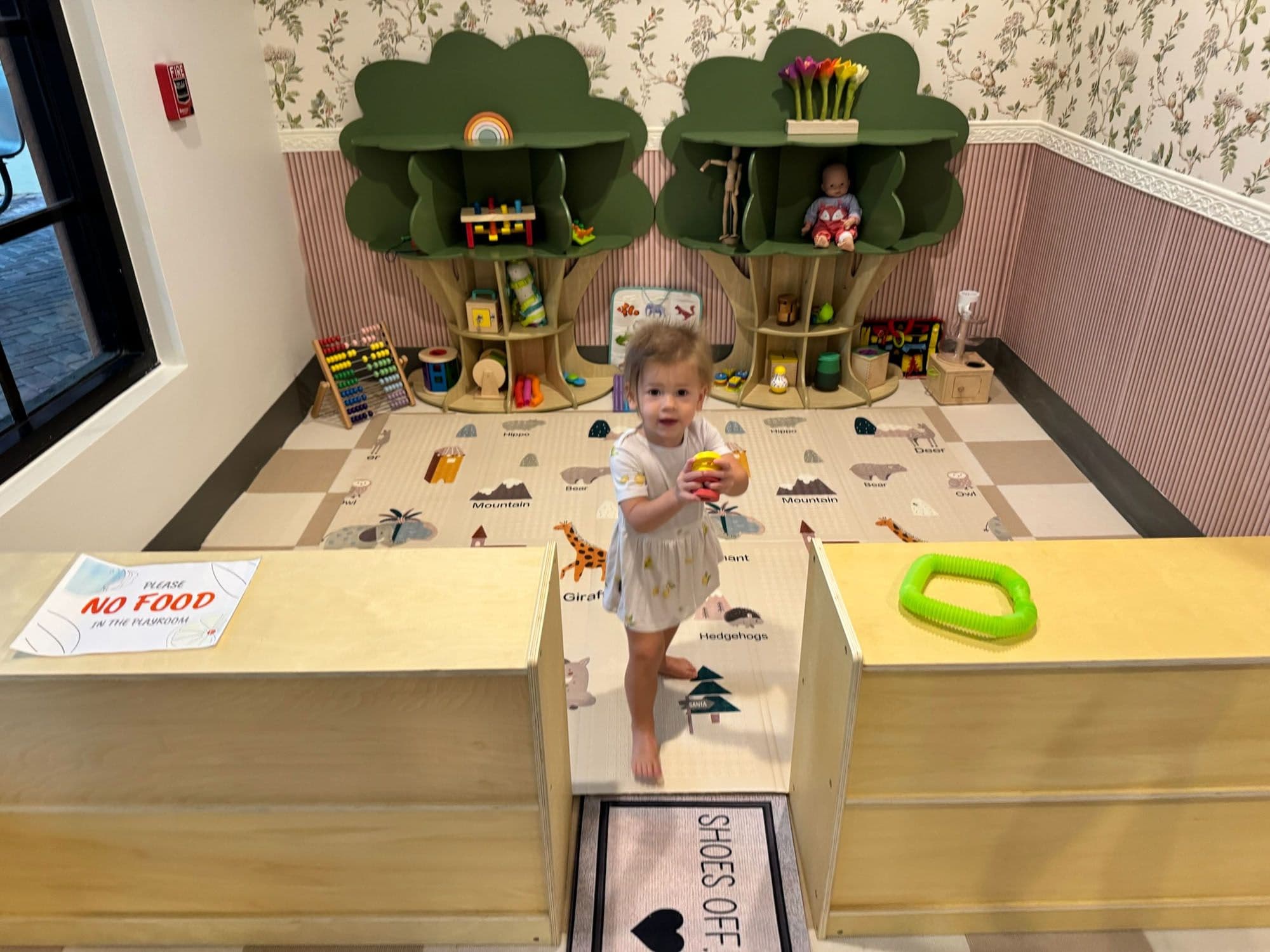
If your toddler seems to bounce off every doorframe, trip over flat ground, or land on their bottom mid-sentence, you're not imagining it — and you're also not alone in wondering whether it's just "being a toddler" or something worth a closer look. Most toddler clumsiness is a completely normal part of development: their balance system, muscle coordination, and brain-body connection are all still under construction. Here's what's typical at each stage, a few signs that are worth mentioning to your pediatrician, and gentle ways parents can support coordination at home.
Why Toddlers Are Naturally a Little Clumsy
Balance and coordination depend on several systems working together — the inner ear's vestibular system, the eyes, and proprioception (the sense of where your body is in space) — and in toddlers, all three are still developing and haven't fully learned to communicate with each other yet. On top of that, toddlers have proportionally larger heads relative to their bodies, which shifts their center of gravity and makes balance genuinely harder than it is for an older child or adult. Add a body that's growing and changing shape by the month, and a certain amount of tripping, bumping, and toppling over is simply part of the process, not a sign that anything is wrong.
What's Considered Normal Toddler Clumsiness
Around 12 to 18 months, a wide, wobbly stance and frequent falls while walking are expected. By age 2, most toddlers can run (even if it looks more like a controlled fall forward), climb, and kick a ball, though they'll still trip often. By age 3, coordination is noticeably smoother — pedaling a tricycle, jumping with both feet, and walking up stairs with alternating feet start to come together. By age 4, most kids can hop, catch a large ball, and navigate playground equipment with reasonable confidence, even if grace is still a work in progress. Every child's timeline varies, so these are general patterns rather than a strict checklist.
Signs That May Be Worth a Closer Look
A few patterns are worth mentioning to your pediatrician rather than waiting out: consistently favoring one side of the body, frequent falls well beyond what peers of the same age experience, persistent toe walking past the toddler years, noticeable in-toeing or bow legs that seem to be affecting balance, a loss of a motor skill your child previously had, or strong avoidance of certain movements or textures. None of these on their own are cause for alarm — kids develop at their own pace — but a pattern like this is worth a conversation rather than a wait-and-see approach.
The Nervous System's Role in Coordination
At Little Roots, we look at coordination through a nervous-system lens. Balance, motor planning, and body awareness are all coordinated by the nervous system, which is still maturing rapidly in the toddler years. When a child's nervous system is working efficiently, movement tends to feel more fluid and confident; when something is interfering with that communication, coordination and balance can be part of what's affected. This is part of why some families explore nervous-system-supportive pediatric chiropractic care alongside their pediatrician's guidance when coordination is a concern — not as a replacement for medical evaluation, but as one piece of a bigger picture that also includes sensory processing and overall developmental support.
What We Look At During a Visit
A visit at Little Roots starts with a consultation and a full neurological evaluation to understand what's actually going on with your child's nervous system and movement patterns, followed by our team's recommendations. Each child is different, and we take a personalized approach based on what your child's evaluation shows — there's no standard number of visits or fixed timeline we apply across the board, because every family's situation looks different.
Supporting Coordination at Home
Unstructured active play is one of the best things parents can offer for coordination — climbing at the playground, balancing along a curb (with a hand nearby), dancing, crawling through tunnels, and simple obstacle courses in the living room all give a developing nervous system practice at balance and body awareness. Limiting long stretches of seated screen time in favor of active play supports the same goal. Barefoot time on safe surfaces can also help toddlers build a stronger sense of where their feet are, which feeds directly into balance.
When to Loop In Your Pediatrician
Most toddler clumsiness resolves itself with time and practice, but a few signs are worth a call to your pediatrician: a sudden loss of a skill your child previously had, weakness that seems to affect only one side of the body, or clumsiness alongside other developmental concerns. We support families working alongside their pediatrician, not instead of them, to figure out what's actually going on.
Frequently Asked Questions
At what age should toddlers stop being so clumsy? There's no exact age — coordination gradually improves through the toddler and preschool years as the vestibular system, vision, and proprioception mature and learn to work together. Most kids show noticeably smoother movement by age 3 to 4.
Is toddler clumsiness related to sensory processing? It can be. Balance and body awareness are connected to how the nervous system processes sensory information, which is why some families look at coordination and sensory processing together rather than as separate concerns.
Should I worry if my toddler falls more than other kids their age? Occasional extra falling isn't unusual, since every child develops at their own pace. If it's frequent, consistent, or paired with other signs like favoring one side or losing a previously mastered skill, it's worth mentioning to your pediatrician.
**Can pediatric chiropractic care help with coordination? ** Chiropractic care isn't a treatment for developmental delays. Our nervous-system-supportive approach may be a helpful piece of a child's overall care, alongside — not instead of — your pediatrician's guidance.
What activities help toddlers build better balance? Unstructured active play — climbing, dancing, obstacle courses, and barefoot time on safe surfaces — gives toddlers repeated, low-pressure practice at balance and body awareness, which is generally more useful than any single exercise.
If you'd like a closer look at your toddler's coordination and overall nervous-system health, book an appointment at Little Roots Pediatric Chiropractic in Lakewood Ranch. Our team is here to listen to what you've noticed and talk through whether nervous-system-supportive care could be a helpful part of your child's routine.
Little Roots Pediatric Chiropractic, 8209 Natures Way, Unit 117, Lakewood Ranch, FL 34202. (941) 932-4611.
Learn More
Conditions we help with
Developmental Delays
Motor milestones, speech development, cognitive processing — all of it runs through a nervous system. When that system holds structural tension, it can limit what's available to your child. Gentle care creates more capacity, and more capacity compounds.
Learn moreSensory Processing
Sensory processing isn't a personality quirk — it's the nervous system trying to filter a world that feels overwhelming. Care that calms the system gives your child more room to be themselves.
Learn moreRelated Services
Related Reading
Related articles
Toe Walking in Toddlers: When to Look Closer
Read articleIn-Toeing and Bow Legs in Toddlers: What Parents Should Know
Noticed your toddler's feet turning in or their legs curving outward? Most of the time it's a normal developmental stage. Here's what's typical, what's worth a closer look, and how to tell the difference.
Read articleKeep Reading
More for growing families
Toddler Picky Eating vs. Sensory Food Aversion: How to Tell Them Apart
Almost every toddler goes through a picky-eating phase — but sometimes there's more going on. Here's how to tell ordinary pickiness apart from a sensory food aversion.
Sleep Regressions Beyond 4 Months: What's Normal at Each Age
If sleep falls apart again after the 4-month regression finally settled, you're not imagining it. Here's what's typically happening at 8, 12, 18, and 24 months, and gentle ways to help.
Nursing Strikes: Why Babies Suddenly Refuse the Breast
One day nursing is going fine, the next your baby won't latch at all. Here's what a nursing strike actually is, common triggers, and how to get through it.
Questions about your child?
Schedule a consultation and let's talk through your family's needs together.
Book a Consultation(941) 932-4611