

Baby Fell Off the Bed? What to Do First and What to Watch For
Dr. Grayson Fox, DC
Your baby just rolled off the bed and your heart is pounding. Here's what to do first, the warning signs that mean emergency care, and what to watch for afterward.
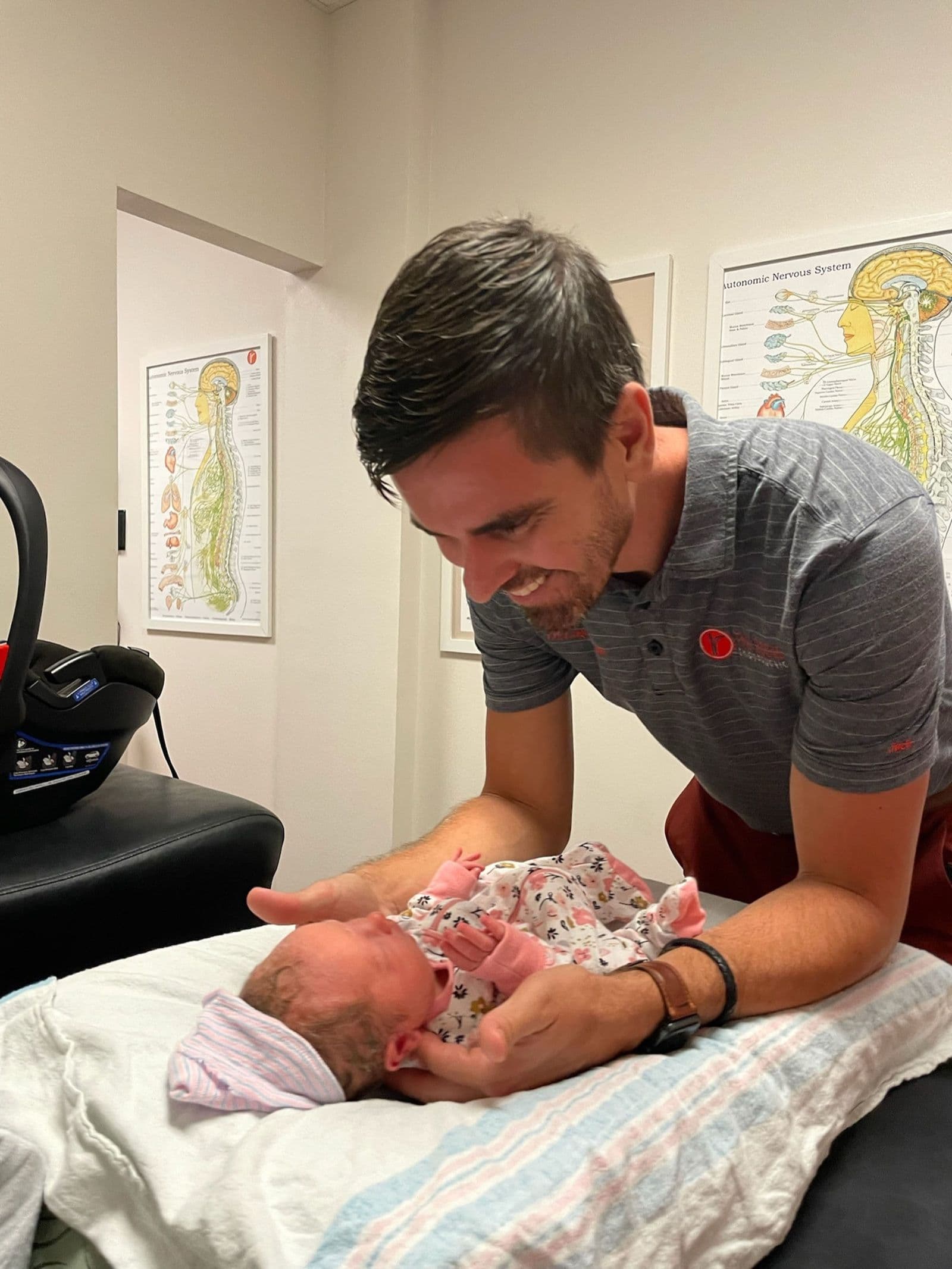
If your baby just fell off the bed, take a breath. First, check whether your baby is awake and responsive, and call 911 or go to the emergency room if you see any of the warning signs listed below. Falls from beds, couches, and changing tables are among the most common accidents in the first year, and most babies who fall are startled and upset but fine. Still, because infants can't tell you where it hurts, the goal is to stay calm, look carefully, and get medical care when anything seems off. This guide walks through what to do first, which signs mean emergency care, what to watch for afterward, and how gentle follow-up care may fit in once your pediatrician has cleared your baby. It's educational, not a substitute for medical advice about your child.
What to Do in the First Few Minutes
Parents often panic and grab the baby right away. Instead:
- Stay calm and look first. Is your baby crying, breathing normally, and moving arms and legs? A baby who cries right away is usually a reassuring sign, because it means they're breathing and alert.
- Avoid moving the head and neck more than necessary if your baby is unresponsive, limp, or you suspect a neck injury. Call 911.
- Pick your baby up gently, supporting the head and neck, if they are alert and moving normally.
- Comfort and observe. Offer a feed or cuddles, and watch how your baby settles.
- Check the body. Look over the head, face, arms, legs, and spine for swelling, bruising, or anything that looks out of shape.
Don't feel guilty. Babies wiggle, roll, and surprise even the most careful parents, and a fall is a reason to take steps, not a reason for blame.
Warning Signs: Call 911 or Go to the ER
Seek emergency care right away if your baby:
- Lost consciousness, even briefly, or is hard to wake
- Is limp, floppy, or not moving an arm or leg normally
- Has repeated vomiting
- Has a seizure, or unusual jerking movements
- Has a bulging soft spot on the top of the head, or a large, growing lump
- Has blood or clear fluid coming from the nose or ears
- Has trouble breathing, unusual color, or unusual sleepiness
- Cries in a high-pitched way that can't be soothed, or cries when you touch or move a specific area
- Fell from a significant height, or onto a hard surface
When in doubt, go. It's always reasonable to have a baby checked, and your pediatrician or an emergency team would much rather see a healthy baby than miss something.
What to Watch for in the Following Days
Some concerns don't show up right away. Even if your baby seemed fine, keep a close eye on how they behave afterward. Call your pediatrician if you notice:
- Changes in feeding, such as refusing feeds or feeding poorly
- Unusual fussiness or sleepiness compared with their normal pattern
- A swelling or lump on the scalp that grows or changes
- Favoring one arm or leg, or not wanting to be held in a particular way
- A head that seems to tilt or turn more to one side
- Any change in how your baby moves, sleeps, or reacts to being touched
A short note on your phone about what happened, the surface, and how your baby looked and acted can be very helpful if a provider asks.
Why Some Parents Also Ask About Chiropractic Follow-Up
A baby's spine and nervous system are still developing, and a fall, even a minor one, can occasionally leave a little one with subtle tension or asymmetry that a parent notices only later, like preferring to turn the head one direction or seeming uncomfortable in certain positions. We want to be clear about the order of things: a medical evaluation always comes first. Any concern about the head, the neck, or the spine belongs with your pediatrician or an emergency team before anything else.
Once your baby has been medically cleared, some families choose a gentle, pediatric-focused evaluation to look at how their baby is moving and holding themselves. If you're curious what that involves, our page on infant chiropractic care explains our approach, and our guide to your baby's first chiropractic visit walks through what a first visit looks like. The techniques used with infants are very light, closer to the pressure you'd use to check a ripe piece of fruit than anything forceful.
Signs a Gentle Evaluation May Be Worth Discussing
After your pediatrician has ruled out anything urgent, you might talk with your care team about a pediatric chiropractic evaluation if you notice a persistent head-turning preference (see our page on torticollis), frequent unexplained crying or discomfort with certain positions (our frequent crying page explores common patterns), or you simply want a knowledgeable set of eyes on how your baby is moving. Our team looks at the whole picture, including how your baby feeds, sleeps, and moves, and we'll tell you honestly when something calls for a different type of provider. We do not make promises about outcomes, and every baby is different.
How to Make Falls Less Likely
Most baby falls are preventable with a few habits:
- Never leave a baby unattended on a bed, couch, or changing table, even for a moment. Newborns can surprise you with a sudden wriggle.
- Keep one hand on your baby during diaper changes, or change them on the floor.
- Use a firm, flat sleep surface meant for infant sleep, such as a crib or bassinet that follows current safety guidelines, rather than an adult bed.
- Lower the crib mattress as your baby grows and starts pushing up or pulling to stand.
- Be careful with bouncers and carriers placed on raised surfaces, since a wiggly baby can tip them. Our post on car seat safety and your baby's spine covers seats and positioning in more detail.
- Plan ahead when you're tired. Exhausted parents are more likely to doze off while feeding. Moving to a safe spot before you feed can help.
Frequently Asked Questions
What should I do if my baby fell off the bed and seems fine?
Stay calm, gently check your baby from head to toe, and keep them comfortable while you watch closely. Call your pediatrician to describe what happened. If any warning sign appears, such as vomiting, unusual sleepiness, or a growing lump, seek emergency care.
Should I let my baby sleep after a fall?
Sleep is normal for babies, so don't worry about it on its own. What matters is whether your baby is easy to wake, feeds normally, and otherwise acts like themselves. If your baby is very hard to wake or seems unusually drowsy, that's a reason to seek emergency care.
Is a bump on the head always serious?
Not always. Small bumps are common, but a large or growing lump, or one on the soft spot, should be checked promptly. Your pediatrician can help you decide how urgent it is.
Can a chiropractor check my baby after a fall?
Only after a medical provider has ruled out anything urgent. Once your baby is cleared, some families choose a gentle pediatric chiropractic evaluation to look at movement and comfort. We always start by asking about what happened and will refer you elsewhere when that's the safer route.
Questions About Your Baby's Comfort After a Tumble?
If your baby has been medically cleared and you'd like a gentle, informed second set of eyes, our team at Little Roots Pediatric Chiropractic in Lakewood Ranch is happy to talk it through. Book an appointment and we'll listen to your story and explain everything in plain English.
Learn More
Conditions we help with
Torticollis & Head Shape
Head tilt, flat spots, asymmetric jaw — these are often the same story told from different angles. Gentle in-arms work helps the system release the holding pattern that's keeping your baby stuck on one side.
Learn moreDevelopmental Delays
Motor milestones, speech development, cognitive processing — all of it runs through a nervous system. When that system holds structural tension, it can limit what's available to your child. Gentle care creates more capacity, and more capacity compounds.
Learn moreRelated Services
Related Reading
Related articles
What to Expect at Your Baby's First Pediatric Chiropractic Visit
A step-by-step walkthrough of what actually happens at your baby's first pediatric chiropractic visit — the conversation, the gentle evaluation, and what care looks like for an infant.
Read articleCar Seat Safety and Your Baby's Spine: What Parents Should Know
Car seats keep your baby safe on the road — but long stretches in one can affect a developing spine and neck. Here's what to watch for and how to help.
Read articleKeep Reading
More for growing families
Toddler Clumsiness and Coordination: When to Pay Attention
Trips, bumps, and wobbly balance are part of being a toddler. Here's what's typical, what's worth a closer look, and gentle ways to support coordination at home.
Toddler Picky Eating vs. Sensory Food Aversion: How to Tell Them Apart
Almost every toddler goes through a picky-eating phase — but sometimes there's more going on. Here's how to tell ordinary pickiness apart from a sensory food aversion.
Sleep Regressions Beyond 4 Months: What's Normal at Each Age
If sleep falls apart again after the 4-month regression finally settled, you're not imagining it. Here's what's typically happening at 8, 12, 18, and 24 months, and gentle ways to help.
Questions about your child?
Schedule a consultation and let's talk through your family's needs together.
Book a Consultation(941) 932-4611