

Baby Hiccups: Why They Happen and Gentle Ways to Help
Dr. Grayson Fox, DC
If your baby hiccups constantly, you're not imagining it, and it's almost always harmless. Here's why it happens and gentle ways to help.
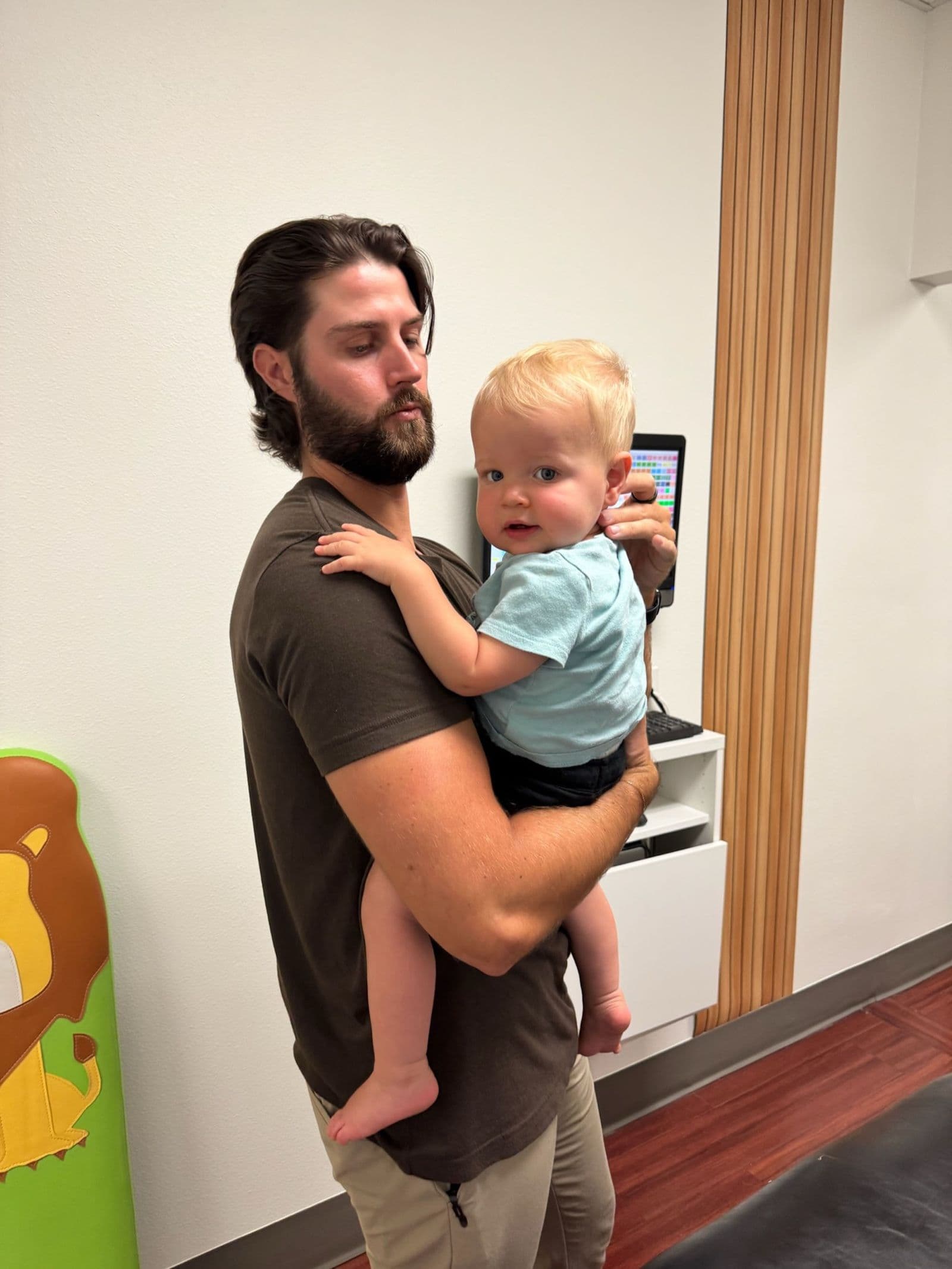
If you've ever felt your baby's whole little body jerk with a rhythmic hic-hic-hic, sometimes right in the middle of a feeding, sometimes for no reason at all, you already know how common baby hiccups are. Some babies hiccup several times a day, especially in the first few months, and it can look startling even though it almost never bothers the baby the way it looks like it might. If you've found yourself searching for how to stop baby hiccups at 2 a.m., you're not alone, and the short answer is reassuring: hiccups in babies are usually completely normal, tied to a still-maturing nervous system and digestive tract, and they typically settle on their own within a few minutes.
Why Babies Get Hiccups So Often
Hiccups happen when the diaphragm, the muscle that helps you breathe, contracts suddenly and involuntarily, causing a quick intake of air that gets cut off by the closing of the vocal cords, producing that classic "hic" sound. Babies hiccup more often than adults for a few reasons. Their diaphragm and the nerves that control it are still maturing, so the reflex is easier to trigger. Many babies also hiccup in the womb well before birth, which suggests it's a normal part of how the nervous system and breathing muscles practice coordinating with each other. After birth, hiccups often show up around feedings, when a baby swallows air along with milk, or when their stomach stretches quickly from eating.
Is It Connected to Reflux or Gas?
Sometimes. Hiccups, reflux, and gas can all trace back to a similar root cause: a still-developing digestive system and nervous system that are learning to coordinate swallowing, digestion, and breathing together. A baby who swallows air during a fast let-down, an aggressive latch, or a bottle feed may be more prone to both hiccups and gas in the same sitting. We've written more about newborn gas relief if that's a bigger piece of your day than hiccups are. If hiccups are showing up alongside frequent spit-up, arching during feeds, or noticeable fussiness after eating, it's worth reading more about what's normal for infant reflux, but hiccups by themselves, without those other signs, aren't typically a reflux red flag.
Gentle Ways to Help Hiccups Pass
Most baby hiccups resolve on their own within about ten minutes and don't need any intervention at all. If your baby seems unbothered, still nursing, still calm, still sleepy, it's usually fine to simply let them run their course. If you'd like to help things along, a few gentle options many parents find useful:
- Pause the feeding and burp your baby. A short burping break can release trapped air and sometimes stops hiccups before they get going.
- Try an upright feeding position to reduce how much air gets swallowed along with milk.
- Offer gentle, rhythmic motion, like a slow rock or a change in position, which can sometimes help a baby's nervous system settle out of the hiccup pattern.
- Slow the pace of the feed, especially with a bottle, if hiccups tend to show up when your baby is eating quickly.
- Avoid waiting until your baby is overly hungry to start a feeding, since a fast, eager feed can mean more swallowed air.
What we'd gently steer you away from: some of the old-fashioned advice out there, like startling a baby, pulling on their tongue, or pressing on their fontanelle, isn't safe for infants and isn't necessary. Hiccups, unlike in older kids and adults, rarely respond to being "surprised" out of, and babies don't need that kind of intervention.
When Hiccups Are Part of a Bigger Pattern
Occasional hiccups are one of the more harmless things a baby's body does. What's worth a closer look is when hiccups show up constantly, seem to genuinely distress your baby, or come bundled with other signs, like poor weight gain, consistent fussiness during and after feeds, or frequent, forceful spit-up. In that case, the hiccups themselves usually aren't the issue; they're one more small sign that your baby's nervous system and digestion could use some extra support working together. This is the same gut-brain connection we talk about with colic: feeding, digestion, and nervous-system regulation are closely linked in a baby's first months, and struggles in one area often show up in the others.
How Pediatric Chiropractic Care Fits In
We're careful not to promise that chiropractic care stops hiccups, because for most babies, hiccups are simply a normal, self-resolving part of development that doesn't need any care at all. What our infant chiropractic care is built around is supporting your baby's overall nervous-system regulation, the same system that coordinates breathing, swallowing, and digestion. For families who are noticing hiccups as part of a broader pattern of fussiness, feeding struggles, or a nervous system that seems to have a harder time settling, a gentle evaluation can help you understand what's actually going on, rather than guessing from one symptom alone. Each baby is different, and we take a personalized approach based on what your baby's nervous system is actually showing us.
Frequently Asked Questions
Are baby hiccups painful? No. Hiccups can look dramatic because a baby's whole torso moves with each hiccup, but they aren't typically painful or distressing to your baby, even when they last several minutes.
How long do baby hiccups usually last? Most episodes resolve within about ten minutes on their own. Hiccups that last much longer than that, or that happen many times a day, are still usually harmless, but it's reasonable to mention the pattern to your pediatrician.
Do hiccups mean my baby is hungry or full? Not necessarily either. Hiccups can happen before, during, or well after a feeding, and they aren't a reliable hunger or fullness cue on their own.
Can I prevent baby hiccups altogether? Not completely, since some amount of hiccupping is a normal part of a developing nervous system. Slower feeds, frequent burping breaks, and an upright feeding position can reduce how often they happen.
When should I mention hiccups to my pediatrician? If hiccups seem to genuinely distress your baby, interfere with feeding or sleep, or show up alongside poor weight gain or frequent forceful spit-up, it's worth bringing up at your next visit.
If your baby's hiccups, gas, or fussiness feel like more than the occasional normal moment, we'd love to help you get a clearer picture. Book an appointment at Little Roots Pediatric Chiropractic in Lakewood Ranch, and let's take a gentle look at what your baby's nervous system might be telling you.
Little Roots Pediatric Chiropractic, 8209 Natures Way, Unit 117, Lakewood Ranch, FL 34202.
Learn More
Conditions we help with
Reflux
Spit-up is normal. Arching through feeds, crying after eating, sleeping fitfully, and never seeming satisfied — that's reflux, and it's almost always a nervous-system regulation story before it's a digestion story.
Learn moreColic
Colic isn't a personality trait — it's often a baby's nervous system stuck on high alert. Gentle chiropractic care helps the system downshift so feeding, sleeping, and being held start to feel okay again.
Learn moreRelated Services
Related Reading
Related articles
Newborn Gas Relief: Gentle, Drug-Free Ways to Help Your Baby
Squirming, grunting, knees pulled up — gas is one of the most common reasons newborns get fussy. Here's what helps, gently and without medication.
Read articleColic and the Nervous System: Why Your Baby Can't Stop Crying
Colic is often a nervous system problem, not a stomach problem. Learn why babies get colic, what's really happening, and how gentle pediatric chiropractic care helps.
Read articleInfant Reflux and Spit-Up: What's Normal, What's Not
Most infant reflux is normal. Here's how to tell a happy spitter from reflux that's distressing your baby, plus gentle tips and red flags.
Read articleKeep Reading
More for growing families

Toddler Picky Eating vs. Sensory Food Aversion: How to Tell Them Apart
Almost every toddler goes through a picky-eating phase — but sometimes there's more going on. Here's how to tell ordinary pickiness apart from a sensory food aversion.

Sleep Regressions Beyond 4 Months: What's Normal at Each Age
If sleep falls apart again after the 4-month regression finally settled, you're not imagining it. Here's what's typically happening at 8, 12, 18, and 24 months, and gentle ways to help.
Nursing Strikes: Why Babies Suddenly Refuse the Breast
One day nursing is going fine, the next your baby won't latch at all. Here's what a nursing strike actually is, common triggers, and how to get through it.
Questions about your child?
Schedule a consultation and let's talk through your family's needs together.
Book a Consultation(941) 932-4611