

Postpartum Neck Pain: Why Your Neck Hurts After Baby and What May Help
Dr. Grayson Fox, DC
Hours of looking down at feeds, a car seat on one arm, and broken sleep add up. Here is why postpartum neck pain is so common, gentle everyday ideas, and the signs that mean you should call your provider.
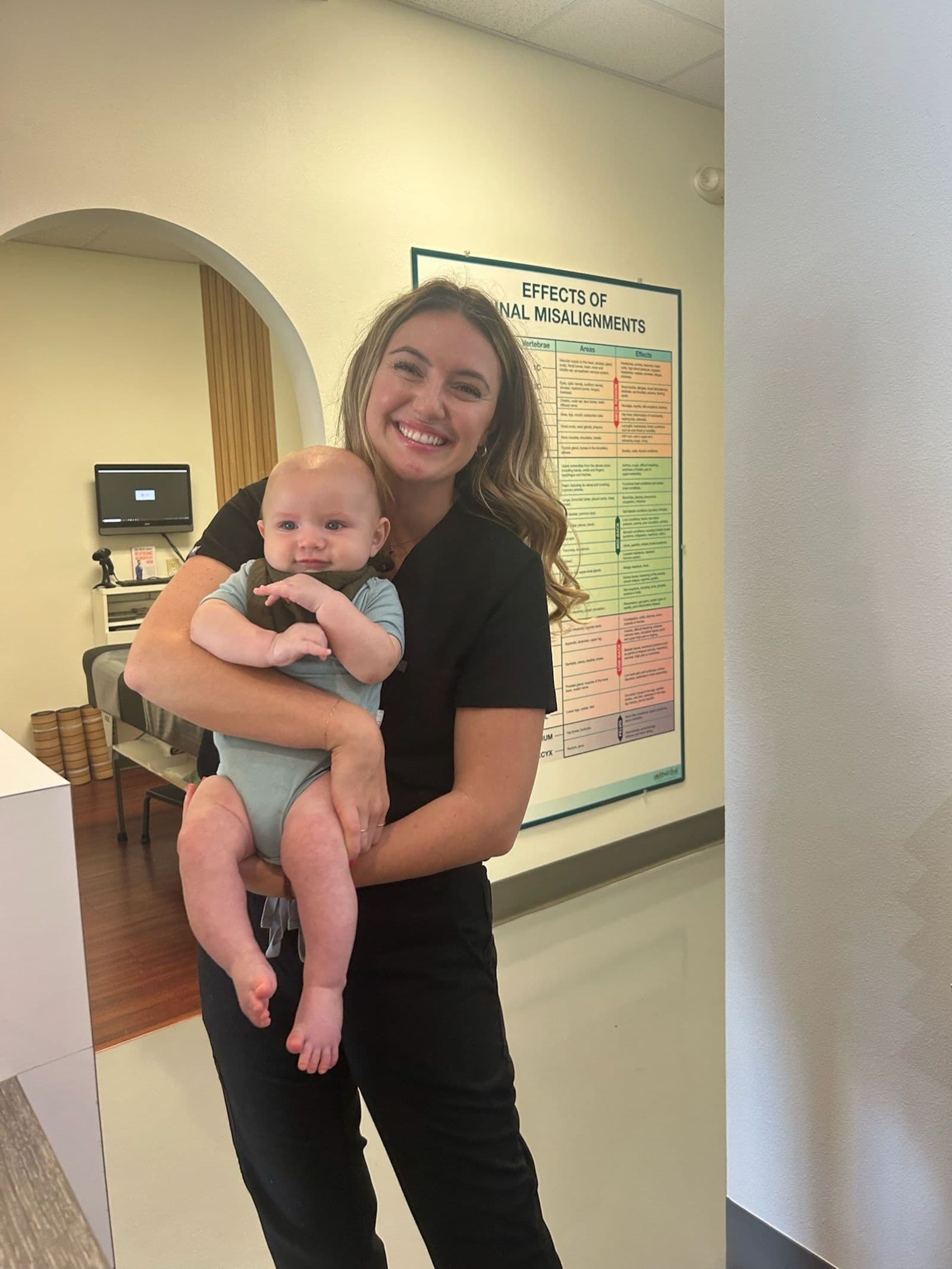
You expected tired. You maybe expected a sore back. But nobody warned you that your neck would ache, stiffen, and knot up between your shoulder blades in the months after your baby arrived. Postpartum neck pain is one of the most common complaints new moms share with our team, and it makes sense once you add it up: hours each day spent looking down at feeds, a heavy car seat hooked over one arm, a baby perched on the same hip, and sleep that comes in short, awkward stretches. The short answer to why your neck hurts after giving birth is that the muscles and joints of your neck and upper back are doing far more work than before, in positions they were not built to hold for long, while your body is still recovering from pregnancy. Below, we explain the most common causes, the warning signs that need a call to your provider, gentle everyday ideas, and how our team supports new moms in Lakewood Ranch. This is educational and not a replacement for advice from your OB, midwife, or doctor.
First, When to Call Your Provider or 911
Most postpartum neck pain is muscular and uncomfortable rather than dangerous. A few signs need attention right away. Call 911 or go to the emergency room if you have:
- A sudden, severe headache, especially with vision changes, confusion, or swelling in your face or hands, which can be a sign of postpartum preeclampsia
- A stiff neck with fever, a rash, or sensitivity to light
- Chest pain, sudden shortness of breath, or pain spreading into your arm or jaw
- New weakness, numbness, or trouble speaking
Call your OB, midwife, or the provider who placed your anesthesia promptly if you notice:
- A headache with neck pain that gets much worse when you sit or stand and eases when you lie down, especially after an epidural or spinal
- Fever, redness, or tenderness where an epidural or spinal was placed
- Numbness or tingling running down an arm into your hand that does not ease
- Neck pain after a fall or car accident
It is always okay to call. Your providers would much rather hear from you early.
Why Postpartum Neck Pain Is So Common
Feeding Posture
Whether you breastfeed, bottle feed, or pump, you probably spend many hours a day with your head tipped forward, watching your baby. Your head weighs roughly as much as a bowling ball, and every bit of forward tilt asks the muscles at the back of your neck and upper back to work harder to hold it. Do that many times a day, and those muscles get tired, tight, and sore. Many moms also hunch their shoulders forward to bring their body down to the baby, which adds to the strain. Our post on breastfeeding back pain and posture tips covers feeding setups in more detail.
Carrying and Lifting
An infant car seat with a baby inside is heavy and awkward, and most of us carry it on the same arm every time. Add a diaper bag on one shoulder and a baby on the same hip, and one side of your neck and upper back ends up doing most of the work. The same repetitive lifting that strains the neck can also show up lower down the arm, as in mommy thumb and postpartum wrist pain.
Sleep in Short, Awkward Stretches
Dozing upright in a glider, contact napping with a baby on your chest, or sleeping curled toward the bassinet can leave your neck twisted or unsupported for long stretches. Waking up with a stiff neck is a very common result.
A Body Still Recovering
During pregnancy, your posture shifted to carry your growing baby, and the hormone relaxin loosened ligaments throughout your body. Those changes do not reset the day your baby is born. If you already had neck pain during pregnancy, it may simply have carried on into the postpartum months. Weaker core muscles after pregnancy can also leave the upper back and neck picking up extra slack.
Stress and Tension
New parenthood is wonderful and also demanding. Worry, broken sleep, and constant alertness often show up as tight, raised shoulders and a clenched jaw. That tension feeds right into neck pain. If the emotional load feels heavy, our page on mom stress is a good place to start, and please talk with your provider if you notice signs of postpartum depression or anxiety.
Gentle Ideas That May Help Postpartum Neck Pain
These are simple, everyday adjustments. If you had a C-section or a complicated delivery, check with your OB or midwife before starting any new exercise.
- Bring baby up to you. Use a nursing pillow or stacked pillows so your baby comes up to breast or bottle height, rather than you folding down to meet them.
- Support your back and arms. Sit with your back fully supported and a pillow under the arm that holds the baby, so your shoulders can relax down.
- Look up between gulps. It is natural to want to watch your baby, but lifting your gaze to the horizon every so often gives your neck a break.
- Switch sides. Alternate the arm that carries the car seat, the hip you hold baby on, and the shoulder that holds the diaper bag. A backpack-style diaper bag spreads the load.
- Try a gentle chin tuck. Sitting tall, slowly draw your chin straight back as if making a double chin, hold briefly, and release. Stop if it causes pain.
- Open the front of your chest. Stand in a doorway with your forearms on the frame and gently lean forward to stretch tight chest muscles that pull your shoulders forward.
- Use warmth. A warm shower or a heating pad on low, with a cloth between it and your skin, may help tight muscles relax. Never use heat while dozing.
- Check your carrier. A well-fitted carrier keeps your baby high and close, close enough to kiss the top of their head, which spreads weight more evenly across your back and shoulders.
- Prop your phone up. Scrolling during night feeds adds even more downward head tilt. A phone stand, or simply holding the phone higher, helps.
If you are thinking about pain relievers, ask your OB, midwife, or pharmacist what is safe for you, especially if you are breastfeeding.
How Chiropractic Care Can Support New Moms
At Little Roots, our team works with moms through pregnancy and the postpartum season. A visit starts with a conversation about your delivery, your recovery, and the daily tasks that bother your neck, followed by a gentle exam and a neurological evaluation. We look at how your neck, upper back, ribs, and pelvis are moving together, because postpartum aches rarely stay in one place. If anything in your history or exam suggests you need to see your OB, midwife, or another doctor first, we will tell you.
When chiropractic care is a good fit, our approach is gentle and low-force, with no twisting or cracking required, and we pair it with practical tips for feeding, carrying, and sleeping positions. Babies are welcome at your visit. Every mom recovers differently, so we will talk through what care may look like for you rather than give a set timeline. You can learn more about how we care for moms on our prenatal and postpartum care page, and our page on pain during pregnancy explains how aches that start in pregnancy can carry on after birth.
Frequently Asked Questions About Postpartum Neck Pain
Is neck pain normal after giving birth?
Neck pain is very common after giving birth, mostly because of feeding posture, carrying, and broken sleep. Common does not mean you have to just live with it, and certain signs, like a severe headache, fever with a stiff neck, or a headache that worsens when you sit up after an epidural, need a prompt call to your provider.
How long does postpartum neck pain last?
There is no set answer. It depends on what is driving it, how much feeding and carrying you are doing, and how much rest you can get. Small changes to feeding and carrying habits often make a noticeable difference. If your neck pain is not easing, keeps you from caring for your baby, or comes with numbness or headaches, get it checked.
Can breastfeeding cause neck pain?
Yes. Looking down at your baby and rounding your shoulders for many feeds a day is one of the most common reasons for neck pain in nursing moms. Bringing your baby up to you with pillows and supporting your back and arms may help.
Can I see a chiropractor after giving birth?
Many moms do. Gentle, low-force chiropractic care can be a good fit in the postpartum months. Let your chiropractor know about your delivery, any C-section or tearing, and any concerns from your OB or midwife so care can be tailored to you.
Gentle Support for Moms in Lakewood Ranch
You spend your days caring for your baby. Your own body deserves some care too. If you are a mom in Lakewood Ranch, Bradenton, or Sarasota dealing with postpartum neck pain, our team would love to help you feel more comfortable in your new routine. Book an appointment and bring your little one along.
Related Services
Related Reading
Related articles
Neck Pain During Pregnancy: Why It Happens and Gentle Ways to Ease It
Neck pain during pregnancy usually comes from shifting posture, tough sleep, and tired muscles. Here is why it happens, gentle ways to ease it, and the signs that mean call your provider.
Read articleBreastfeeding Back Pain: Posture Tips for Nursing Moms
Hours of feeding can leave your neck, shoulders and back aching. Here is why breastfeeding back pain happens and the gentle posture changes that may help.
Read articleKeep Reading
More for growing families
Postpartum Sciatica: Why Nerve Pain Can Linger After Baby and What May Help
Shooting pain down your leg was supposed to end with pregnancy. Here is why postpartum sciatica can linger after baby, gentle everyday ideas, and the signs that mean you should call your provider.
Mommy Thumb: Why Postpartum Wrist Pain Happens and What May Help
If the thumb side of your wrist aches every time you scoop up your baby, you may be dealing with mommy thumb. Here is why it happens after birth, gentle ways to ease the strain, and when to call your provider.

Lower Back Pain in the Third Trimester: Why It Happens and What May Help
In the final stretch of pregnancy, your lower back carries more than ever. Here is why third-trimester back pain happens, gentle ways to ease it, and how to tell it apart from labor.
Questions about your child?
Schedule a consultation and let's talk through your family's needs together.
Book a Consultation(941) 932-4611