
Care at Every Stage
Same Family. Same Clinic. Different Priorities at Every Age.
A toddler's nervous system is not a small version of a teen's. Here's what changes between them — and what we prioritize at each stage.
Stage 1 · 1 – 3 years
Toddlers: The Foundation Years
Between one and three, your kid’s nervous system is under the biggest remodel of their entire life. Sleep cycles are settling in, sensory processing is wiring up, the immune system is learning who its friends and enemies are, and motor milestones — walking, climbing, throwing — are laying down lifelong movement patterns.
This is the age where minor things can have oversized downstream effects. A rough fall off the couch, a rushed birth, a kid who won’t sleep through the night — all of these shape the foundation that the next fifteen years will be built on.
How Chiropractic Supports This Stage
At this age, our work is largely about supporting clean, regulated nervous system signaling while everything is still being wired. Adjustments are short, incredibly gentle, and usually done in a parent’s lap. Scans happen quickly between songs.
Stage 2 · 3 – 5 years
Preschoolers: Emotions, Language, and Little Germs
Preschoolers are in an explosion phase — language is exploding, emotions are exploding, social worlds are exploding, and unfortunately, exposure to daycare germs is also exploding. Ear infections and recurrent colds are the most common reasons parents first bring a preschooler in.
It’s also the age where focus and emotional regulation start getting tested. A dysregulated three-year-old looks very different from a dysregulated ten-year-old. At this stage, the shutdowns are faster, the recoveries are louder, and parents sometimes wonder if something is actually wrong.
How Chiropractic Supports This Stage
Gentle pediatric care at this stage often addresses recurrent ear infections, sleep regressions, big emotional swings, and the kind of chronic congestion that never fully clears. The work is supportive, not corrective — the system is doing its job, we’re just helping it work with less interference.
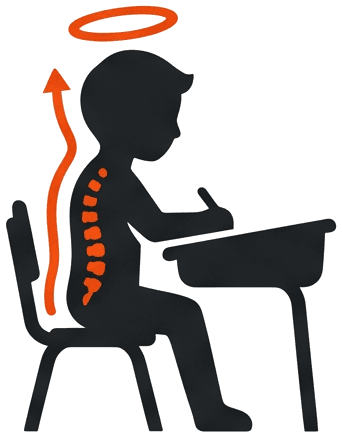
Stage 3 · 6 – 12 years
School-Age Kids: Focus, Posture, and Growing Pressure
School-age kids face the first real cognitive and physical demands of their lives. Sitting still for hours, staring at screens, carrying heavy backpacks, playing contact sports, handling social pressure — the nervous system has a lot on its plate, and the body responds accordingly.
This is when tech neck starts. We see it regularly. Posture shifts subtly, the head drifts forward, shoulders round, and a six-year-old’s spine starts compensating in ways that used to show up in adults. It’s also when sports injuries, growing pains, and the first wave of focus and attention concerns tend to land in our office.
How Chiropractic Supports This Stage
Care at this stage focuses on keeping the spine and nervous system clear so the body can handle the volume of input it’s taking in. Adjustments are still gentle and instrument-based. We also coach parents on posture, screen-time ergonomics, and simple at-home regulation strategies.
Stage 4 · 13 – 18 years
Teens: Growth Spurts, Stress, and Self-Regulation
Teenagers are a unique window. Their bodies are adding inches, their hormones are reshaping everything from mood to sleep architecture, and their nervous systems are learning to self-regulate without a parent doing it for them. Add academic pressure, social media, sports at a more serious level, and you have a system under load.
We see a lot of teens for posture concerns, recurring sports injuries, poor sleep, headaches, and — increasingly — general nervous system dysregulation that shows up as anxiety, fatigue, or just not feeling like themselves. Scoliosis screening is something parents should prioritize at this stage, and we’re happy to do it as part of a first visit.
How Chiropractic Supports This Stage
Care with teens is more collaborative — we talk to them, not just their parents, about what’s going on and what the plan is. Adjustments remain gentle and instrument-based. Re-scans at milestones help teens see their own progress, which tends to build real ownership over their health.
Every age, honored
From first curls to homework stress.
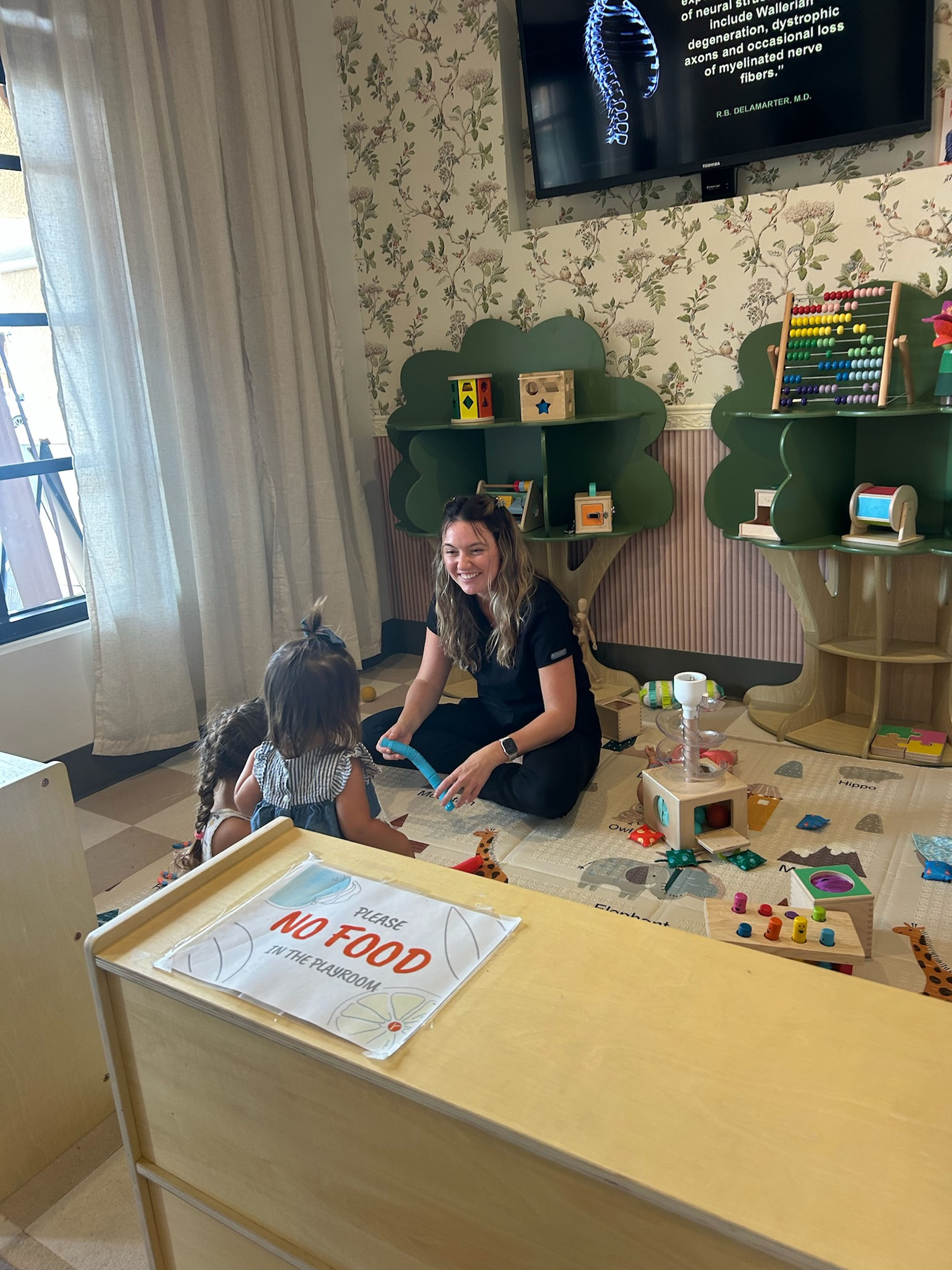
Carly — our favorite kid whisperer.
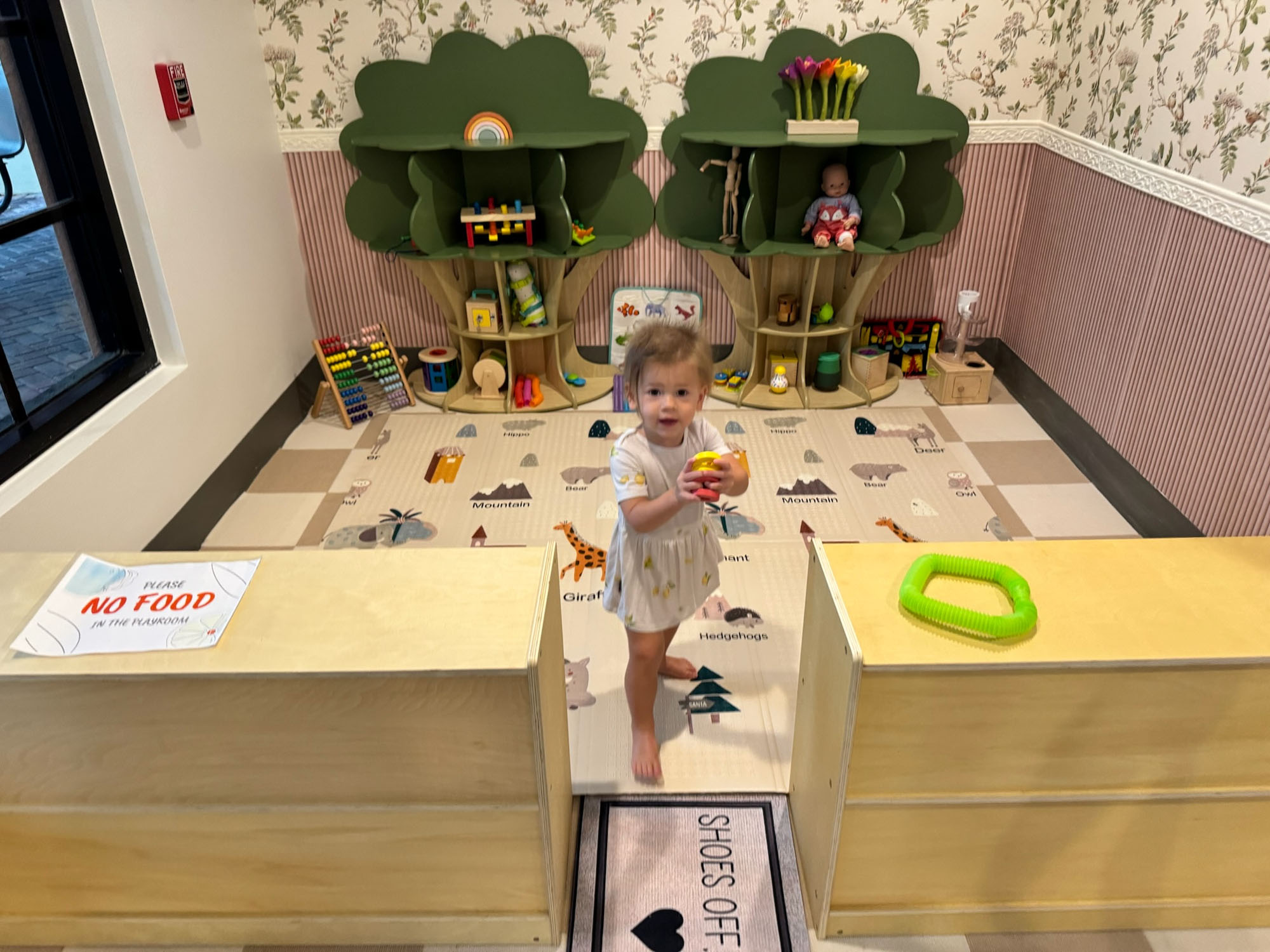
The treehouse — built for imagination.
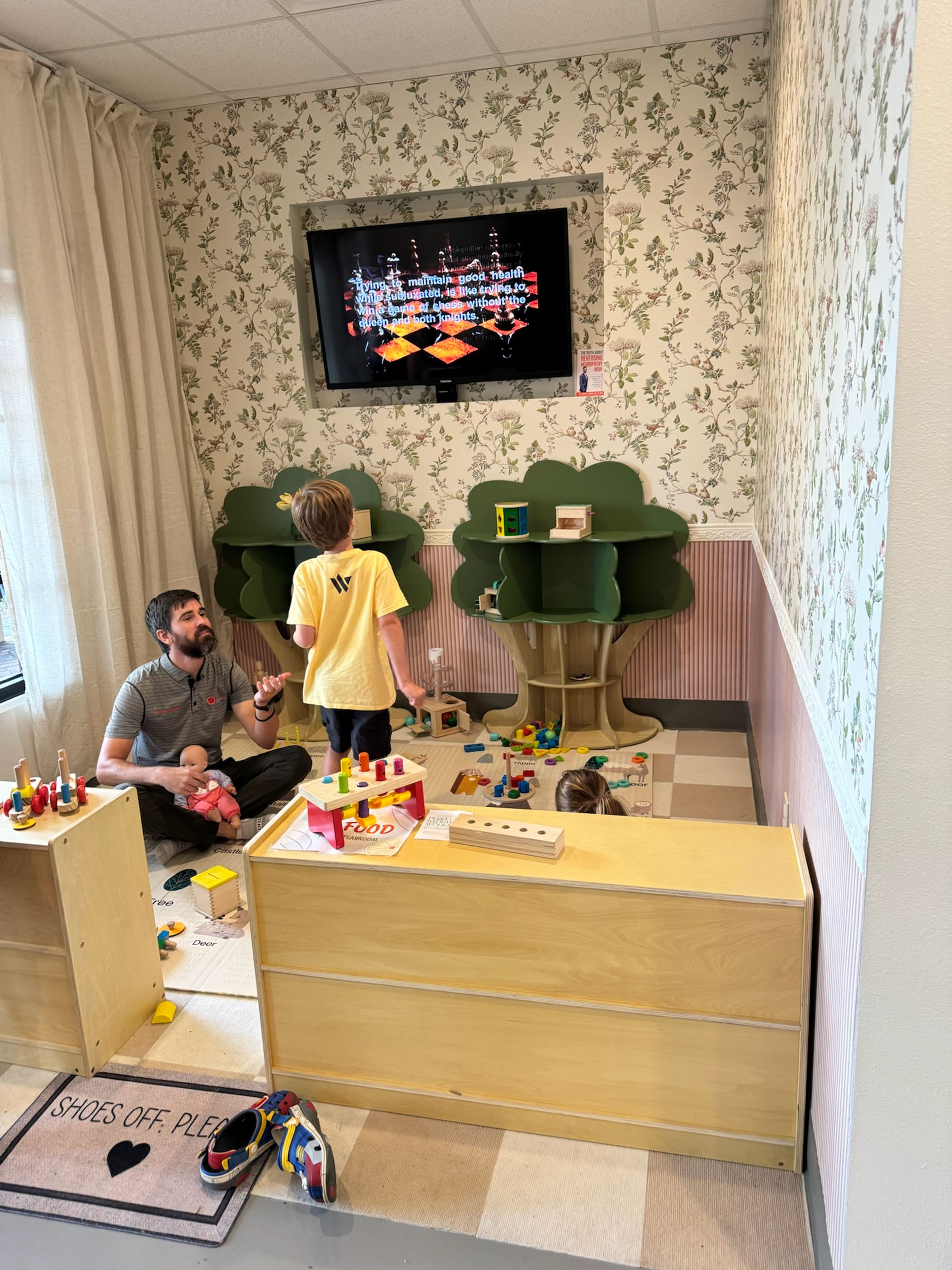
Patience is part of pediatric care.
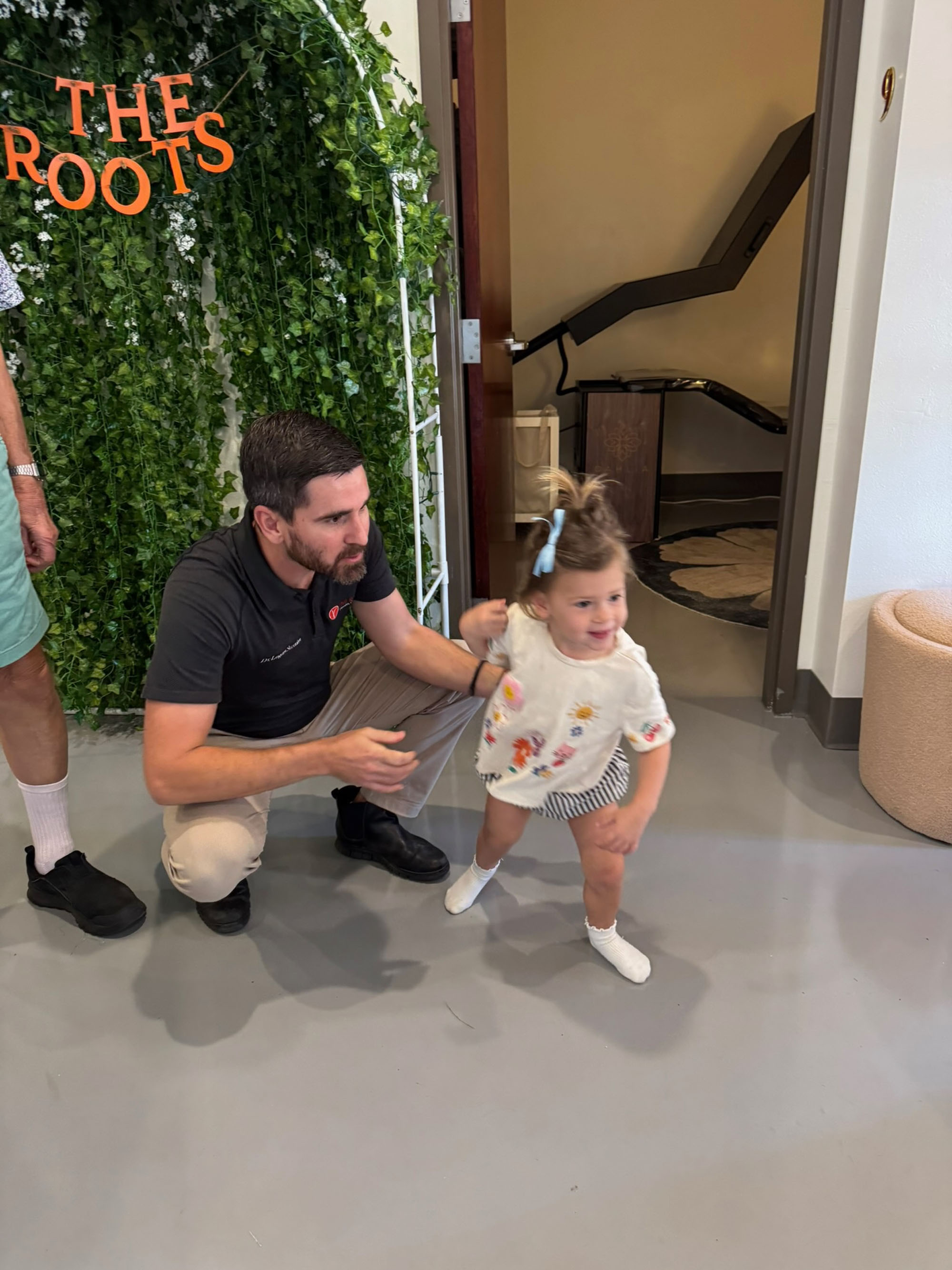
Family day — a Roots tradition.
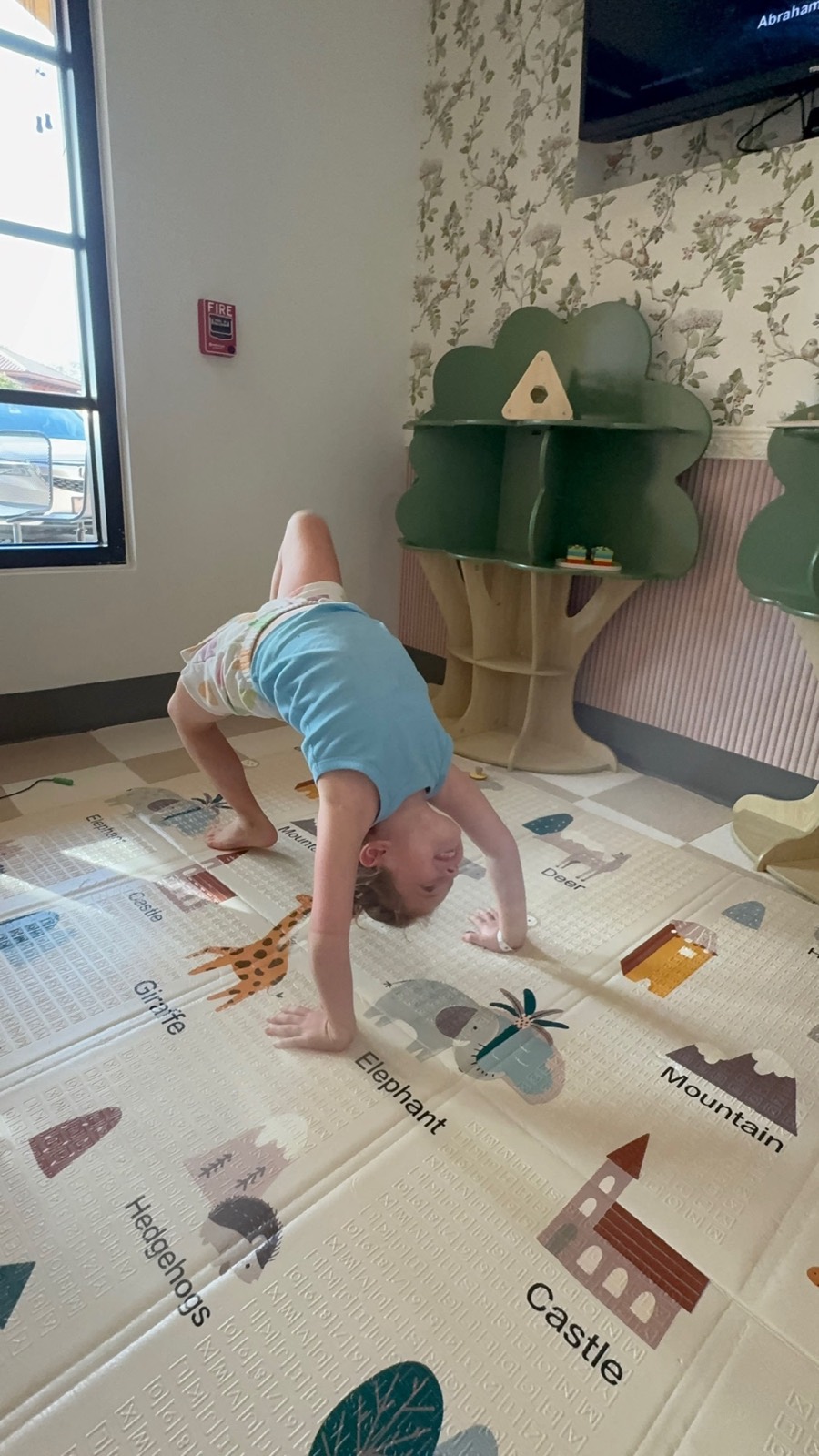
Strong, moving, thriving.
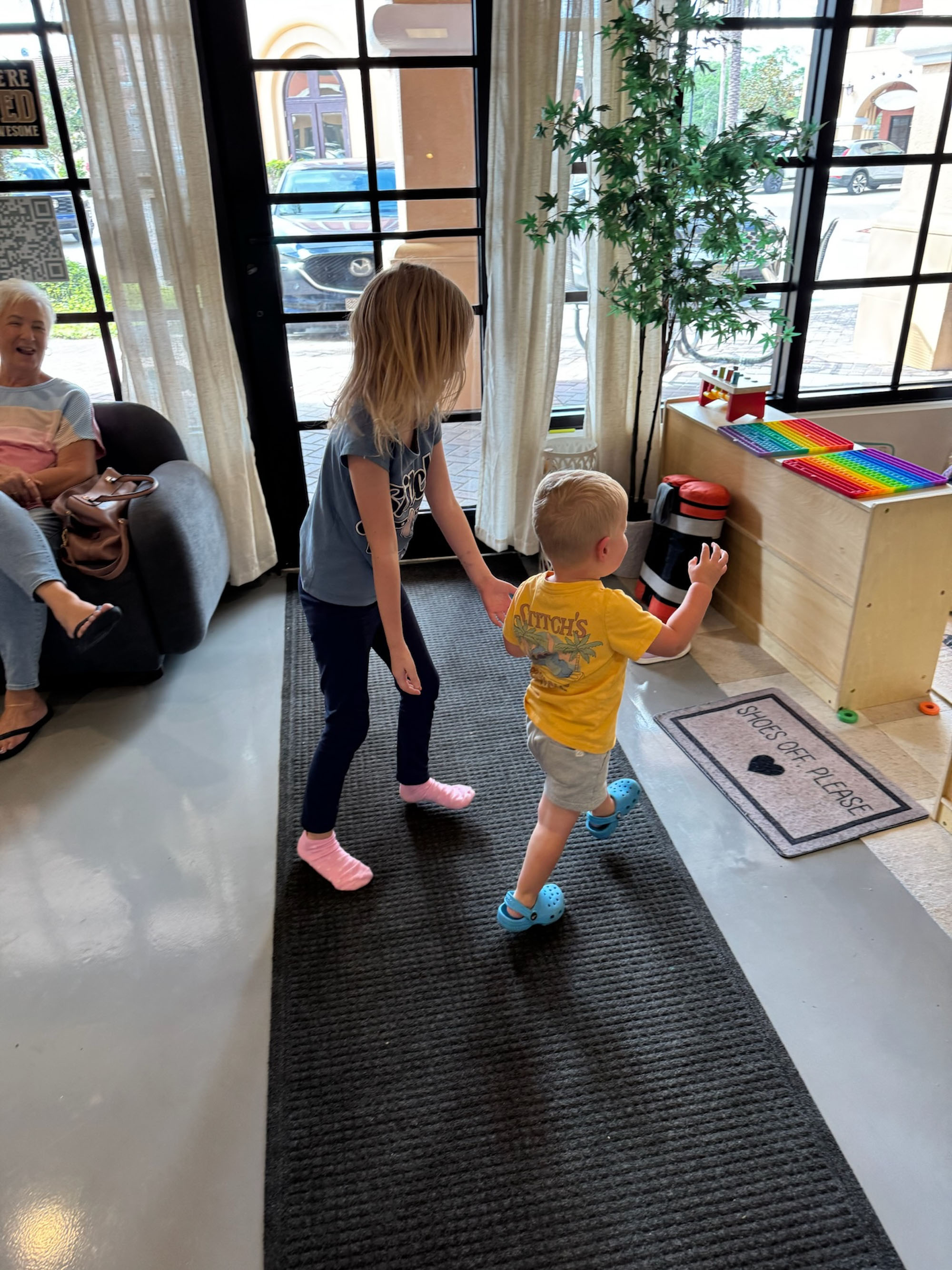
A lobby kids actually want to visit.
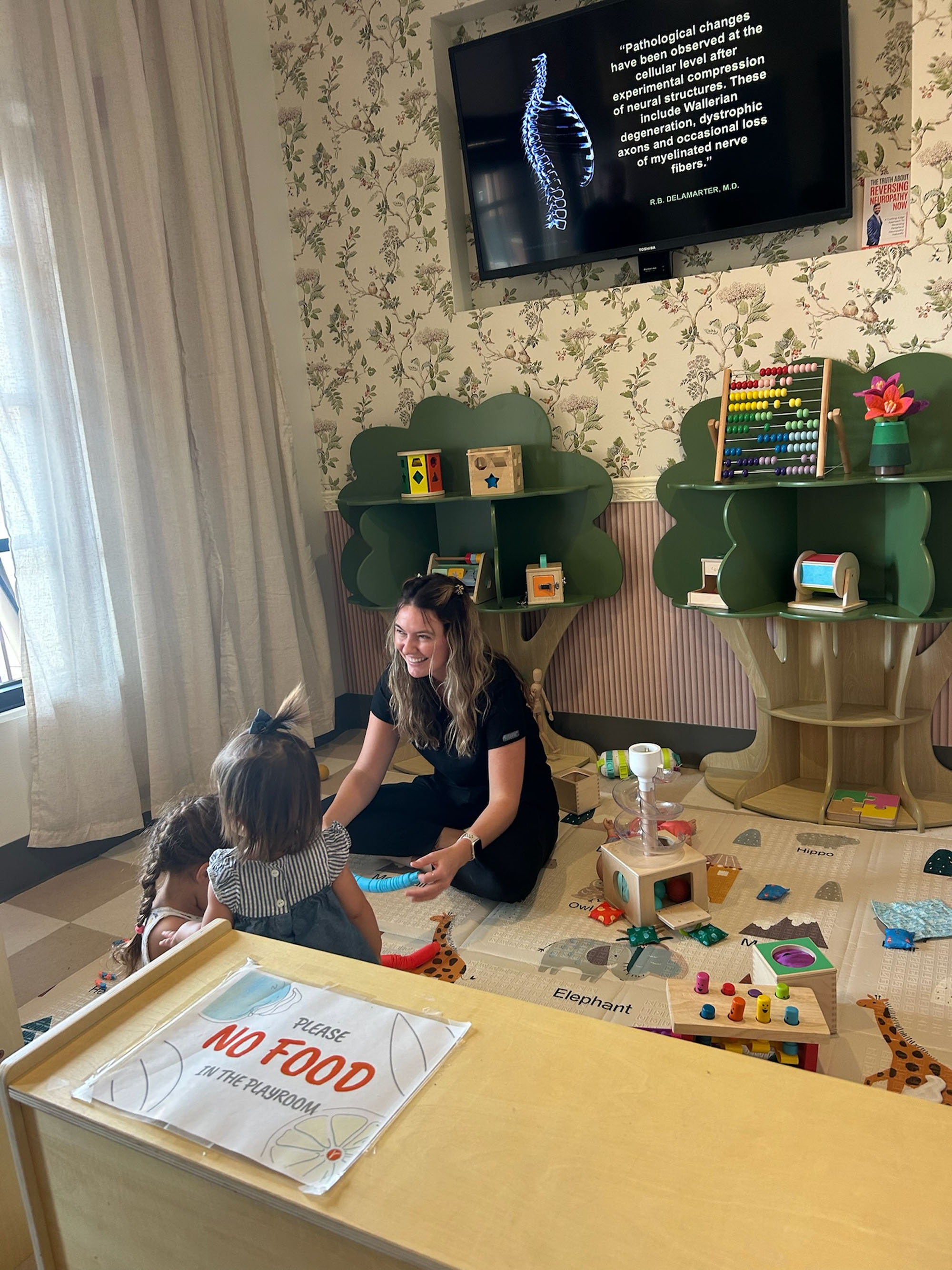
Carly — keeping the kids busy between visits.
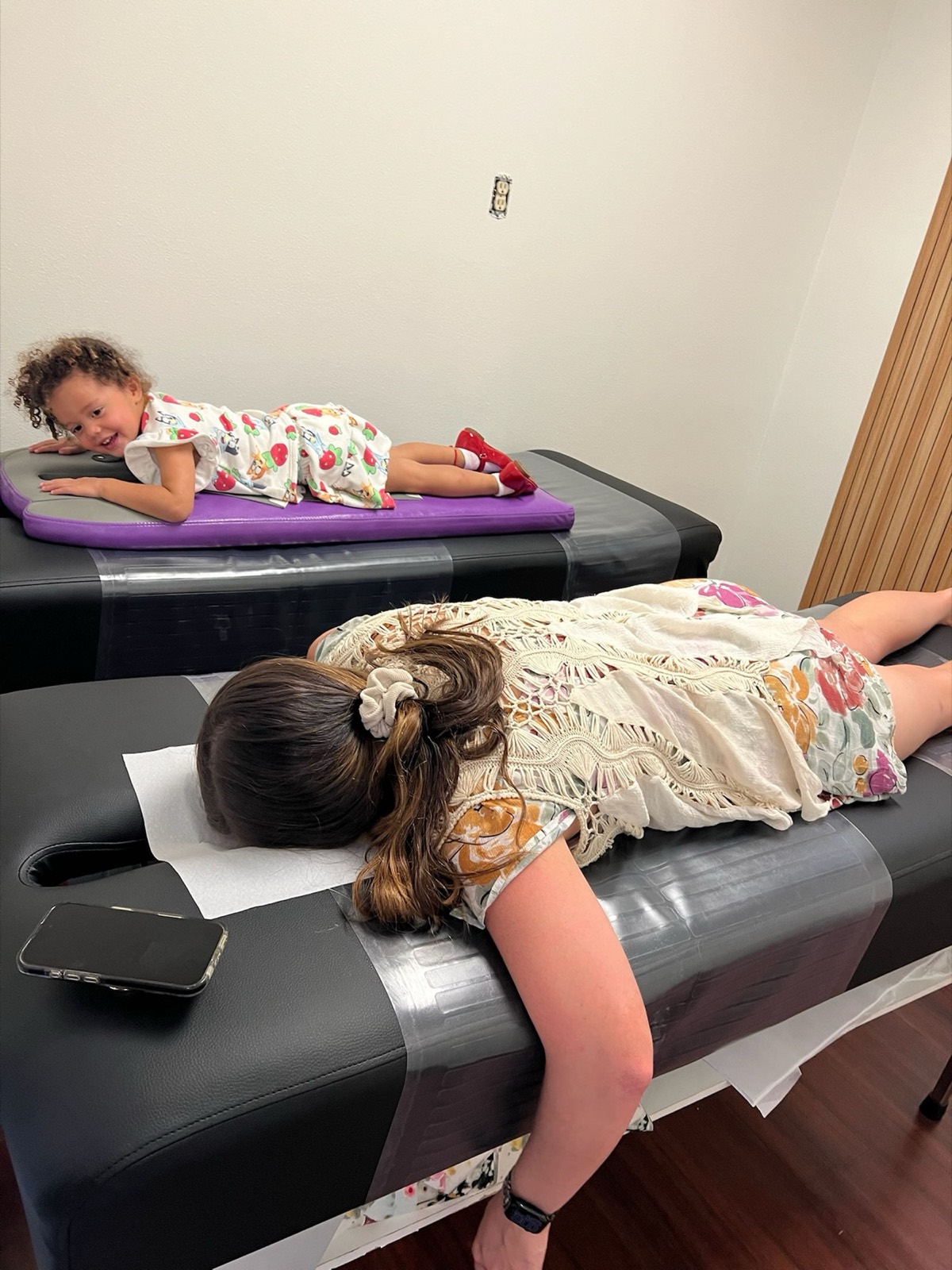
Families heal together.
Keep Exploring
The nervous system approach
Whatever Age They Are.
Book a first visit and we'll build a plan that fits your kid — not a generic pediatric schedule.