

The Webster Technique: A Complete Guide for Expecting Moms
Dr. Logan Swaim, MS, DC
The Webster Technique is a specific chiropractic approach that supports pelvic balance during pregnancy. Here's what it is, how it works, and what to expect from a Webster certified chiropractor.
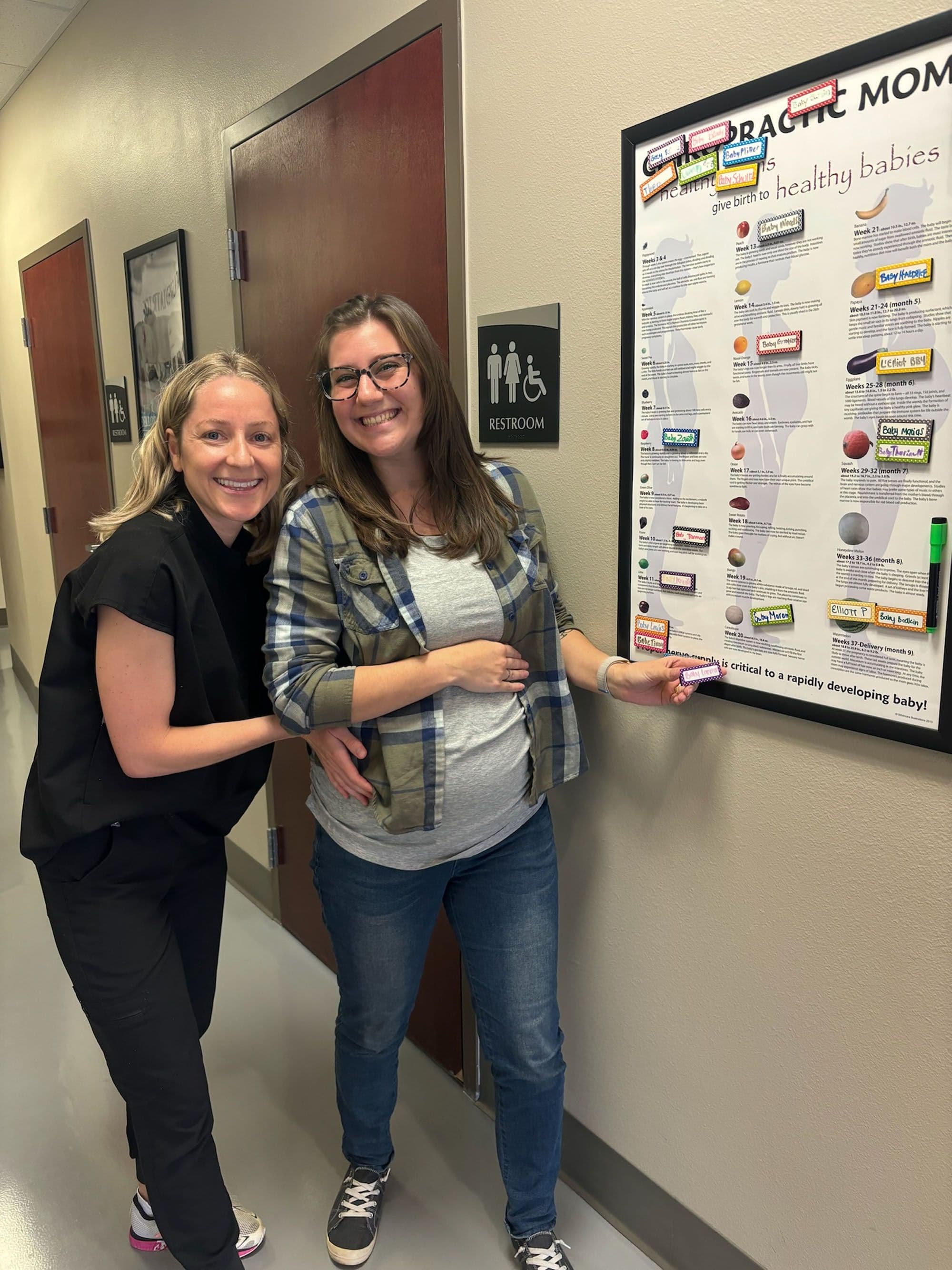
The Webster Technique is one of the most searched-for topics among pregnant women exploring chiropractic care — and for good reason. Developed specifically for pregnancy, it is a gentle, credentialed chiropractic method focused on restoring pelvic balance so you are more comfortable and your baby has the best possible space to grow and position. If you have been searching for a Webster certified chiropractor near you in the Lakewood Ranch or Sarasota area, this guide covers everything you need to know before your first visit.
At Little Roots Pediatric Chiropractic, Webster Technique chiropractic care is one of the cornerstones of how we support expecting moms. our team is ICPA Webster Technique Certified and has personally cared for hundreds of pregnancies — from the first trimester through delivery and into the postpartum period.
What Is the Webster Technique and How Does It Work?
The Webster Technique is a specific chiropractic analysis and adjustment developed by Dr. Larry Webster in the 1980s. He was a chiropractor who specialized in prenatal and pediatric care and noticed a consistent pattern among his pregnant patients: when the sacrum (the triangular bone at the base of your spine) was misaligned, it created tension in the pelvis and the soft tissues supporting the uterus — particularly the round ligaments.
That tension does two things:
- It makes mom uncomfortable — contributing to low back pain, hip tightness, sacroiliac pain, and sciatica during pregnancy
- It restricts the space available for baby to move freely inside the uterus
The Webster Technique addresses both by using a pregnancy-specific sacral adjustment combined with a round ligament release. The goal is straightforward: restore balance to the pelvis so your body can function the way it was designed to during pregnancy.
Over the decades, the International Chiropractic Pediatric Association (ICPA) formalized the training and certification process. Today, a Webster certified chiropractor must:
- Complete specific ICPA coursework focused on prenatal biomechanics
- Pass hands-on practical evaluations
- Maintain continuing education to keep the certification active
This is not a self-declared specialty. It is an earned, maintained credential — and it matters because the technique requires a level of precision that general chiropractic training does not cover.
What Happens During a Webster Technique Visit?
A Webster Technique visit has three distinct components, and understanding each one helps you know exactly what to expect:
-
A pregnancy-specific assessment — Your chiropractor evaluates sacral alignment, pelvic symmetry, tension patterns in the round ligaments, and movement of the lower spine and sacroiliac joints. This is not a standard chiropractic exam — it is a protocol designed around the pregnant body.
-
A gentle, low-force sacral adjustment — You are positioned comfortably on your side with pillows supporting your belly. The adjustment uses light, specific pressure to realign the sacrum. No twisting. No pressure on the abdomen. Ever. At Little Roots, our team uses the Integrator instrument for an even gentler approach.
-
A round ligament release — The round ligaments connect the uterus to the pelvis. When they become tight or asymmetric, they pull the uterus off-center. A soft-tissue release allows the uterus to return to a more balanced position, giving baby the maximum room to move.
Most visits take about 15 to 20 minutes. Many moms report feeling noticeably lighter and more comfortable immediately afterward — and commonly mention sleeping better that night.
Does the Webster Technique Help With Breech Babies?
This is the question almost every expecting mom asks, and the honest answer requires some nuance.
The Webster Technique does not turn babies. It does not touch the baby, manipulate the uterus, or physically move baby into any position. What it does is remove the biomechanical restrictions in your pelvis that may be limiting baby's ability to move freely.
Here is what that means in practice:
- When the pelvis is misaligned and the round ligaments are tight, the uterus can sit asymmetrically
- That asymmetry reduces the room baby has to rotate
- Baby settles into whatever position fits the available space — sometimes that is breech
- When pelvic balance is restored, baby often moves into the head-down (vertex) position on their own
The baby is not being turned by the chiropractor. The baby is turning themselves because they finally have the space.
A retrospective study published in the Journal of Manipulative and Physiological Therapeutics reported that 82% of babies presented vertex after their mothers received Webster Technique care starting around 32 weeks. The American Pregnancy Association has also discussed the technique as a complementary approach for positioning concerns.
That said, Webster does not guarantee a breech baby will turn. Factors like a short umbilical cord, placenta position, or uterine structure can keep baby breech regardless of pelvic alignment. The primary purpose of the technique is pelvic balance — not breech management. Most of our Webster patients are not breech at all. They simply want to feel better during pregnancy.
Is the Webster Technique Safe During Pregnancy?
Yes. The Webster Technique has an excellent safety record when performed by a certified provider. Here is why:
- No abdominal pressure — the adjustment is performed with you on your side, and no force is ever applied to the belly
- Low-force, pregnancy-adapted methods — the techniques are specifically modified for the pregnant body
- Safe across all three trimesters — many moms begin care in the first trimester and continue through delivery
- Very few contraindications — high-risk obstetric conditions, active bleeding, or premature rupture of membranes may require clearance from your OB before beginning care
For the vast majority of healthy pregnancies, Webster Technique care is well within the safety envelope. We always coordinate with your OBGYN or midwife and will tell you honestly if your situation requires a different approach.
What Pregnancy Symptoms Does the Webster Technique Help With?
Pelvic misalignment during pregnancy is behind more discomfort than most moms realize. As pregnancy progresses, several things happen simultaneously:
- The hormone relaxin softens your pelvic ligaments, making the pelvis more susceptible to shifting out of alignment
- Your center of gravity moves forward as baby grows, pulling the lumbar spine into an exaggerated curve
- The sacroiliac joints can become restricted on one side and overly mobile on the other
- The round ligaments stretch and tighten asymmetrically under the weight of the growing uterus
When these changes compound, they show up as:
- Low back pain — the most common pregnancy complaint
- Sacroiliac joint pain — sharp, one-sided pain in the back of the pelvis
- Hip pain and tightness — especially when sleeping on your side
- Round ligament pain — sudden, sharp pulling sensations in the lower abdomen
- Sciatica — radiating pain, tingling, or numbness down one leg
- Pubic symphysis dysfunction — pain at the front of the pelvis with walking or rolling in bed
By addressing the underlying pelvic alignment, Webster Technique care often reduces or resolves these symptoms — not by masking them, but by restoring the structural balance your body needs to carry your pregnancy more comfortably.
When Should You Start Webster Technique Care During Pregnancy?
There is no wrong trimester to begin. Here is how care typically looks across pregnancy:
First trimester: Many moms start early, especially if they had pelvic or back issues in a prior pregnancy. Early care establishes a baseline and supports your body as it begins adapting to pregnancy. Learn more about chiropractic care in the first trimester.
Second trimester: This is when most moms first notice discomfort — the belly is growing, the center of gravity is shifting, and the pelvis is starting to work harder. Starting Webster care here helps stay ahead of the common aches.
Third trimester: If baby is breech or you are experiencing significant back pain or pelvic pain, care becomes especially relevant. Many moms increase their visit frequency during this phase.
Each person and case is different, so we take a personalized approach based on what your body needs. our team evaluates where you are, what you are feeling, and what your goals are — then recommends a plan that makes sense for your pregnancy.
Some moms continue right through delivery day. A few have even come in during early labor for a final adjustment before heading to the hospital. That is not unusual at all.
What Should You Expect at Your First Webster Technique Appointment?
If you have never been to a chiropractor during pregnancy, here is what a first visit looks like at Little Roots:
- A conversation about your pregnancy — where you are in your timeline, what symptoms you are experiencing, your birth plan, and any concerns you want to address
- A neurological evaluation — this gives us objective data about how your nervous system is functioning, not just a subjective pain report
- A physical assessment of your pelvis and sacrum — checking alignment, mobility, and round ligament tension
- Your first gentle adjustment (when appropriate) — side-lying, fully supported, no twisting or cracking
- A recommended care plan — based on your specific presentation, not a one-size-fits-all template
Want to know more about what that first visit looks like step by step? Read our complete guide to your first prenatal visit.
We never pressure you into a long-term commitment. If Webster Technique is the right fit, we will explain why. If it is not — if your situation calls for a different approach or a referral — we will say so directly.
How Does the Webster Technique Differ From Regular Chiropractic Care?
Standard chiropractic adjustments are designed for the general population. Webster Technique is designed exclusively for pregnancy. The differences are significant:
- Focus: Standard chiropractic centers on spinal alignment and nerve function. Webster Technique focuses specifically on sacral alignment, pelvic balance, and round ligament tension.
- Positioning: Standard care often uses face-down or seated positions. Webster care uses side-lying with full belly support.
- Force level: Standard adjustments vary by technique. Webster adjustments are always low-force and pregnancy-adapted.
- Assessment: Standard care uses a general spinal evaluation. Webster care uses a pregnancy-specific sacral and ligament evaluation.
- Training required: Standard care requires a Doctor of Chiropractic degree. Webster care requires a DC degree plus ICPA Webster Certification.
This is why finding a Webster certified chiropractor matters. A chiropractor without this specific training may be skilled at general adjustments but may not understand the unique biomechanics of the pregnant pelvis — or the specific soft-tissue work the round ligaments need.
What About Care After Baby Arrives?
The postpartum period is one of the most overlooked windows for chiropractic care, and one of the most important:
- Relaxin stays elevated for months after birth (longer if you are breastfeeding), keeping your ligaments loose and your pelvis vulnerable to misalignment
- The physical demands of newborn care — holding, nursing, carrying, rocking — create new postural stress patterns that compound quickly
- Your pelvic floor needs support as it recovers from pregnancy and delivery
Many of our prenatal moms transition seamlessly into postpartum care and bring their newborns in for infant chiropractic alongside them. If you are curious about getting your baby checked, we offer a complimentary newborn evaluation so you can see what gentle pediatric care looks like with no commitment.
Curious what this looks like at our clinic? Our Webster-certified chiropractor page walks through Webster care at Little Roots step by step — what a visit involves, and what the certification actually means.
Frequently Asked Questions About the Webster Technique
Is the Webster Technique only for breech babies?
No. The majority of moms who receive Webster Technique care have babies in a normal head-down position. The technique is designed to support pelvic balance throughout pregnancy — helping with comfort, mobility, and overall function. While it is well-known for supporting optimal fetal positioning, that is one benefit among many.
How many Webster visits will I need?
Each person and case is different, so we take a personalized approach. Some moms come in periodically for maintenance throughout their pregnancy. Others increase frequency in the third trimester. our team will recommend a plan based on your specific needs — never a generic protocol.
Can I receive Webster Technique care if I am high-risk?
In most cases, yes — but we may need clearance from your OBGYN or midwife first. Certain conditions like active bleeding, placenta previa, or premature rupture of membranes may require modifications or a pause in care. We always coordinate with your medical team.
Does the Webster Technique hurt?
No. The adjustment is gentle and low-force. You are positioned on your side with full belly support. Most moms describe the experience as comfortable and relaxing. Many fall asleep during the visit.
Will my insurance cover Webster Technique chiropractic care?
Many insurance plans cover chiropractic care during pregnancy. We offer a complimentary benefits check at your first visit so you know exactly what your plan covers before making any decisions.
How do I find a Webster certified chiropractor near me?
The ICPA maintains a directory of certified providers. At Little Roots in Lakewood Ranch, our team holds active ICPA Webster Technique Certification and has extensive experience with prenatal chiropractic care. Call (941) 932-4611 to schedule your first visit.
Learn More
Conditions we help with
Related Services
Related Reading
Related articles
Breech Baby? How the Webster Technique Supports Natural Turning
The Webster Technique does not turn a breech baby. It restores pelvic balance so your baby has room to move into a head-down position on their own.
Read articleFirst Trimester Chiropractic Care: What Every Expecting Mom Should Know
Is chiropractic safe during the first trimester? Yes — and for many moms, it's exactly when care matters most. Here's what happens at a prenatal visit and why starting early supports a more comfortable pregnancy.
Read articlePregnancy Back Pain Relief: Why It Happens and How Prenatal Chiropractic Helps
Back pain during pregnancy is one of the most common complaints — and one of the most dismissed. Here's what's actually happening in your body and how prenatal chiropractic care can help.
Read articleKeep Reading
More for growing families
Pregnancy Hip Pain at Night: Why Rolling Over Hurts
Waking up with hip pain every time you roll over? Here's why it happens in pregnancy, gentle sleep tweaks that may help, and when to check in with your provider.

Postpartum Core and Pelvic Floor: Beyond Diastasis Recti
Diastasis recti gets all the attention, but your core recovery isn't complete without your pelvic floor. Here's how the two work together after birth.
Prenatal Chiropractic and Back Labor: What Parents Ask
Back labor can catch expecting parents off guard. Here's what it is, why it happens, and how gentle prenatal care may help support positioning.
Questions about your child?
Schedule a consultation and let's talk through your family's needs together.
Book a Consultation(941) 932-4611