

Teething and Fussiness: Gentle, Drug-Free Ways to Help Your Baby
Dr. Grayson Fox, DC
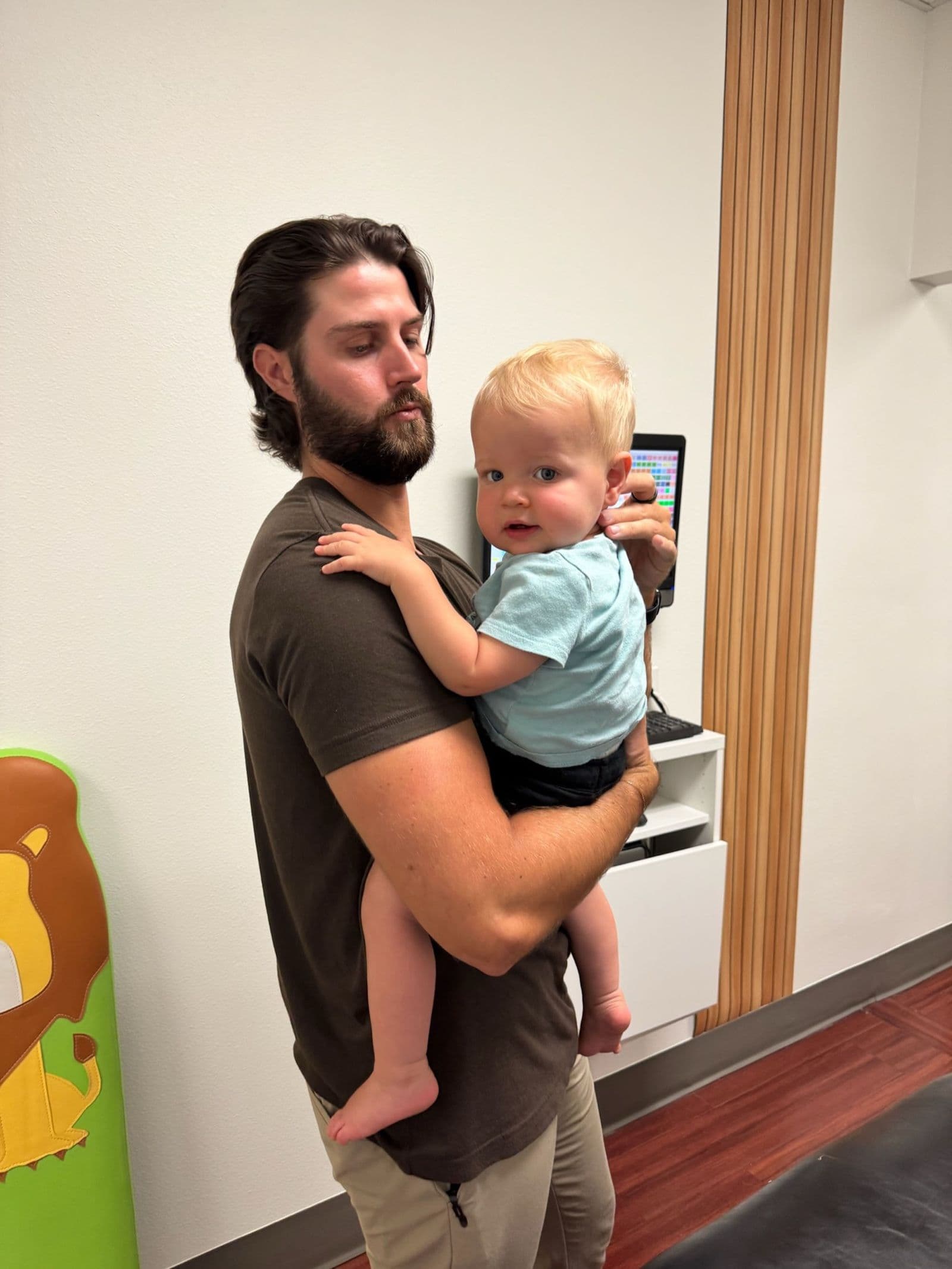
If your baby suddenly won't stop drooling, is chewing on everything in sight, and seems fussier than usual — especially at night — teething is probably the first thing that comes to mind. It's one of the most common things parents ask us about at Little Roots, and for good reason: teething symptoms can range from barely noticeable to genuinely rough on the whole family. Here's what teething actually looks like, how long it tends to last, and gentle, drug-free ways to help your baby feel more comfortable.
Signs Your Baby Is Teething
Teething symptoms vary from baby to baby, but the most common signs include:
- Increased drooling, sometimes enough to cause a mild rash around the mouth and chin
- Gnawing or chewing on hands, toys, or anything within reach
- Swollen, tender, or slightly reddened gums
- General fussiness or clinginess, especially in the evening
- Disrupted naps and nighttime sleep
- A mild, temporary rise in temperature
What's not typically a teething symptom is a true high fever, persistent diarrhea, or a widespread rash — those patterns point to something else going on, and are worth a call to your pediatrician rather than being written off as "just teething."
How Long Does Teething Last?
Teething as a whole process spans roughly the first two to three years of life, as all twenty baby teeth gradually come in — but any single tooth's active discomfort is usually much shorter, often just a few days around when that tooth actually breaks through the gum. Some babies sail through it with barely a ripple; others seem to feel every single tooth. Both are within the range of normal, and there's no way to predict in advance which kind of teether your baby will be.
The Order Baby Teeth Typically Come In
While every baby's timeline is different, teeth tend to follow a loose general order. The bottom two front teeth (central incisors) are usually first, often followed by the top two front teeth. Next tend to come the lateral incisors on either side of those front teeth, followed by the first molars further back, the canines ("eye teeth"), and finally the second molars — usually rounding things out by around age three. Some babies get their first tooth as early as four months; others don't get one until closer to their first birthday, and both are within the range of typical. The order matters more than the exact age, since it helps explain why certain stretches — like when the molars come in — tend to be some of the toughest on a baby's comfort and sleep.
Why Teething Hits Sleep So Hard
Gum discomfort alone can disrupt sleep, but there's often more going on underneath. A baby's nervous system is doing an enormous amount of organizing and regulating in the first couple of years, and teething discomfort can add one more layer of input for a still-developing nervous system to process — which is part of why teething nights can feel so much harder than teething days. We see a similar pattern with babies who struggle with sleep more broadly: when a baby's nervous system is already working hard to regulate, added discomfort of any kind tends to show up first at bedtime.
Gentle Ways to Ease Teething Discomfort
A few low-key, drug-free approaches many parents find helpful:
- Chilled (not frozen) teething rings or a clean, damp washcloth — cold can be soothing on swollen gums, but anything too hard or frozen can bruise sensitive gum tissue
- Gentle gum massage with a clean finger, using light pressure
- Extra skin-to-skin contact and cuddling — comfort alone can go a long way on a hard teething day
- Keeping the chin and mouth area dry with a soft cloth to prevent drool rash
- Offering safe, appropriate chew toys designed specifically for teething babies
Every baby responds differently, so it's worth trying a few approaches to see what actually helps yours.
What About Teething Gels and Tablets?
Many parents ask about over-the-counter teething gels, tablets, and amber necklaces. In general, current pediatric guidance advises against topical numbing gels containing benzocaine for infants and young children, due to rare but serious safety concerns, and against amber teething necklaces, due to choking and strangulation risk. Homeopathic teething tablets have also come under scrutiny for inconsistent ingredient levels. When in doubt, a conversation with your pediatrician about any product before use is always the safer path — which is part of why the gentle, non-product approaches above are worth trying first.
What We Look At During a Pediatric Evaluation
When a family comes to Little Roots Pediatric Chiropractic with a baby who seems unusually uncomfortable or unsettled, our team looks at the whole picture — not just the teeth. A full neurological evaluation considers how your baby's nervous system, spine, and overall regulation are functioning, since a nervous system that's already working hard to regulate can make any kind of discomfort, teething included, feel bigger. You can read more about what a pediatric evaluation actually involves if you're curious what to expect. Each baby is different, and our team takes a personalized approach based on what your baby's nervous system is showing us.
When to Call Your Pediatrician
Most teething is uncomfortable but not concerning, and passes with time and comfort measures. Reach out to your pediatrician if your baby has a true fever, seems unusually lethargic, is refusing to eat or drink, develops a rash that's spreading, or if you're simply unsure whether what you're seeing is teething or something else. Trusting your instincts as a parent matters — you know your baby best.
Taking Care of Yourself During a Hard Teething Stretch
A baby who's uncomfortable and not sleeping well is exhausting for the whole household, not just the baby. It's worth naming that plainly: a rough teething week can leave you running on empty, and that's a completely normal response, not a sign you're doing anything wrong. Trade off nighttime duty with a partner or family member when you can, lower your expectations for what else gets done that week, and remember that this particular stretch — however hard it feels in the moment — does pass.
Frequently Asked Questions
What are the first signs of teething?
Increased drooling, chewing on hands or objects, swollen or tender gums, mild fussiness, and disrupted sleep are usually the earliest signs. Some babies also show a mild, temporary rise in temperature.
How long does teething last?
The overall process of getting all twenty baby teeth spans roughly the first two to three years of life, but the active discomfort around any single tooth is usually much shorter — often just a few days. It varies significantly from baby to baby.
Does teething cause a high fever?
Teething can cause a mild, temporary rise in temperature for some babies, but it typically doesn't cause a true high fever. If your baby has a real fever, it's worth checking with your pediatrician rather than assuming it's teething alone.
Why does teething get worse at night?
Discomfort can feel more noticeable at night simply because there are fewer distractions, and a baby's nervous system may already be working harder to settle for sleep. Extra comfort and a calm bedtime routine can help during a rough teething stretch.
What can I do for my baby's teething besides medication?
Chilled (not frozen) teething rings, gentle gum massage, extra cuddling, and keeping the chin dry to prevent drool rash are all gentle, non-medication options many parents find helpful. What works best often varies from baby to baby.
If your baby seems unusually uncomfortable, unsettled, or you'd simply like a second set of eyes on how they're doing overall, our team is happy to help. Book a complimentary consultation at Little Roots Pediatric Chiropractic in Lakewood Ranch — we'll take a full look at your baby's nervous system and comfort, and offer honest, personalized guidance.
Little Roots Pediatric Chiropractic, 8209 Natures Way, Unit 117, Lakewood Ranch, FL 34202. (941) 932-4611.
Related Services
Related Reading
Related articles
Baby Won't Sleep? The Nervous System Connection Most Parents Never Hear About
When your baby won't sleep no matter what you try, the problem may not be environmental. Learn how a dysregulated nervous system keeps infants stuck in alert mode — and what gentle pediatric chiropractic care can do to help.
Read articleWhat a Pediatric Chiropractor Does: A Gentle Guide for Parents
Wondering what a pediatric chiropractor actually does for kids and babies? Here's a gentle, plain-English look at the care, the first visit, and the concerns families bring in.
Read articleQuestions about your child?
Schedule a consultation and let's talk through your family's needs together.
Book a Consultation(941) 932-4611