Scoliosis Screening in Kids: What Parents Should Know
Dr. Grayson Fox, DC
If you've noticed one of your child's shoulders sits a little higher than the other, or their shirt hem doesn't quite line up evenly at the hips, it's natural to wonder about scoliosis in children. Scoliosis — a sideways curve in the spine — is more common than most parents realize, and the earlier it's noticed, the more options families have for keeping an eye on it. Here's what scoliosis actually is, what typically causes it, the signs worth watching for at home, and how screening and support work at Little Roots.
What Is Scoliosis? A Plain-English Explanation
Scoliosis is a sideways curvature of the spine, often described as looking like an "S" or "C" shape from behind rather than the spine's usual straight-down appearance. Curves are measured in degrees on an X-ray, and mild curves are extremely common — many go unnoticed for a child's entire life. Scoliosis is estimated to affect a small percentage of school-age children to some degree, most often becoming noticeable around the growth-spurt years of late childhood and early adolescence.
What Causes Scoliosis in Kids?
The most common form — idiopathic scoliosis — doesn't have one clear, identifiable cause, and current research points to genetics as a meaningful factor, since scoliosis often runs in families. It is not caused by carrying a heavy backpack, poor posture, or sitting incorrectly, even though those are common assumptions. Backpack weight is still worth paying attention to for day-to-day comfort — we've written a guide to safe backpack weight — but it isn't considered a cause of scoliosis itself. Less commonly, scoliosis can be related to differences present from birth or to certain neuromuscular conditions, which is one reason a proper evaluation matters rather than assuming based on appearance alone.
Types of Scoliosis in Kids
Not all childhood scoliosis is the same, and the category matters for what monitoring looks like:
- Idiopathic scoliosis. By far the most common type, with no single identifiable cause. It's most often diagnosed in the pre-teen and teenage years, coinciding with growth spurts, and it's the type genetics appears to influence most.
- Congenital scoliosis. Present from birth, caused by how the spine's vertebrae formed during development. It's typically identified earlier and monitored closely from infancy.
- Neuromuscular scoliosis. Associated with an underlying neurological or muscular condition that affects how the spine is supported. This type is managed as part of the broader neuromuscular condition, usually by a specialist team.
Knowing which category applies helps set realistic expectations for monitoring and next steps, which is why a proper evaluation — rather than an assumption based on how a child's back looks — matters.
Signs Parents Often Notice at Home
Scoliosis usually doesn't cause pain in kids, which is part of why it can go unnoticed without specific screening. Signs parents sometimes pick up on include:
- One shoulder appearing higher than the other
- One shoulder blade sticking out more than the other, especially when your child bends forward
- Uneven waist or hip height
- A shirt hem or waistband that hangs unevenly
- The body leaning slightly to one side overall
None of these signs on their own confirm scoliosis, but noticing one or more is a reasonable prompt to have your child evaluated.
How Is Scoliosis Screened and Diagnosed?
A common first screening step is the forward bend test, sometimes called the Adam's forward bend test, where your child bends forward at the waist with arms hanging down while an examiner looks for asymmetry in the back or rib area — a similar exam many schools and pediatricians use. If asymmetry is noted, X-rays taken by a physician can measure the exact degree of any curve, which is what actually determines next steps rather than appearance alone.
When to Loop In a Specialist
Most mild curves are simply monitored over time, since many stop progressing on their own, especially once a child finishes growing. Your pediatrician or an orthopedic specialist is the right resource for measuring curve progression and discussing options like bracing, which are typically considered only for larger or actively progressing curves. If you notice new or worsening asymmetry, ongoing back pain (which isn't typical with scoliosis and is worth mentioning to your pediatrician), or changes in balance or gait, it's worth a prompt conversation with your child's doctor.
What We Look at During a Pediatric Evaluation
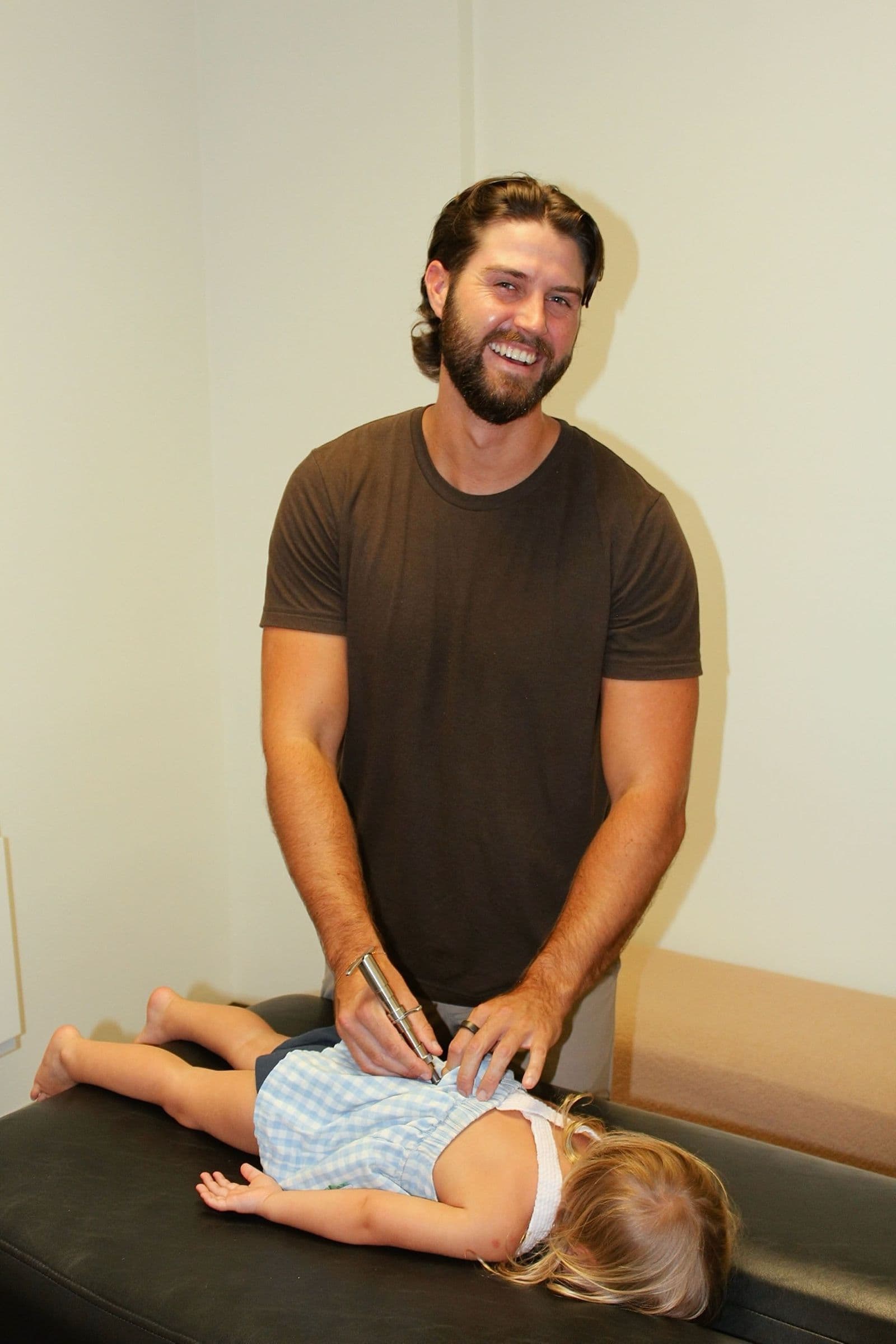
When a family comes to Little Roots Pediatric Chiropractic with questions about their child's posture or spine, our team performs a full neurological evaluation to understand how your child's spine and nervous system are functioning day to day — including posture, movement patterns, and overall spinal mobility. This isn't a replacement for orthopedic monitoring of a diagnosed curve, but many families find it a helpful complementary piece alongside whatever monitoring or bracing plan a specialist has recommended. You can read more about what a pediatric evaluation involves. Each child is different, so we take a personalized approach based on what your child's nervous system is showing us.
Supporting Your Child Day to Day
For most kids with mild, monitored curves, day-to-day life doesn't need to change much. A few things that tend to support overall comfort and body awareness:
- Encouraging varied physical activity rather than long stretches in one position
- Paying attention to backpack weight and how it's worn — both straps, snug to the back
- Keeping regular well-child and, if applicable, specialist follow-up appointments so any changes are caught early
- Talking about it matter-of-factly with your child, since scoliosis is common and manageable for the vast majority of kids who have it
Growing bodies change constantly, and occasional aches aren't automatically related to scoliosis — growing pains are a much more common explanation for general limb discomfort in kids.
Frequently Asked Questions
What is scoliosis in children?
Scoliosis is a sideways curve in the spine, often shaped like an "S" or "C" when viewed from behind. Mild curves are common in school-age kids and often go unnoticed without specific screening.
What causes scoliosis in kids?
Most childhood scoliosis is idiopathic, meaning there's no single identifiable cause, though genetics appear to play a role since it often runs in families. It isn't caused by backpacks, posture, or sitting habits.
How is scoliosis diagnosed in children?
A forward bend screening test is a common first step; if asymmetry is noted, a physician can order X-rays to measure the exact degree of any curve, which guides what happens next.
At what age is scoliosis usually noticed?
It most often becomes apparent around growth-spurt years, typically late childhood through early adolescence, though it can be present earlier.
Can anything be done for a child with scoliosis?
Most mild curves are simply monitored over time by a pediatrician or orthopedic specialist, since many don't progress further. Larger or progressing curves may involve bracing, which a specialist can discuss based on your child's specific curve.
If you've noticed anything unusual about your child's posture or spine, book a complimentary consultation at Little Roots Pediatric Chiropractic in Lakewood Ranch. Our team can take a full look at your child's spine and nervous system and help you understand what you're seeing.
Little Roots Pediatric Chiropractic, 8209 Natures Way, Unit 117, Lakewood Ranch, FL 34202. (941) 932-4611.
Related Services
Related Reading
Related articles
Kids Backpack Weight: How Heavy Should Your Child's Backpack Be?
The AAP says a child's backpack should weigh no more than 10-15% of their body weight. Most school bags exceed that. Here is what overloaded backpacks do to a growing spine and what parents can do about it.
Read articleWhat a Pediatric Chiropractor Does: A Gentle Guide for Parents
Wondering what a pediatric chiropractor actually does for kids and babies? Here's a gentle, plain-English look at the care, the first visit, and the concerns families bring in.
Read articleQuestions about your child?
Schedule a consultation and let's talk through your family's needs together.
Book a Consultation(941) 932-4611